Exeter Under Fire
In the early hours of 4 May 1942, under a clear sky and full moon, German bombers followed the Exe estuary inland, targeting Exeter’s historic heart. The city was bombed extensively, with devastating consequences for its people and heritage.
The Blitz of Exeter was part of the so-called Baedeker Raids, a series of retaliatory strikes ordered by Hitler. The raids were named after the Baedeker travel guides, which listed culturally significant cities rather than strategic military targets.
Exeter was chosen in response to the British bombing of Lübeck in March 1941 – a city of similar size and medieval character, where narrow streets and timber-framed buildings had made it vulnerable to firebombing.
Exeter’s ancient buildings, homes, and lives were caught in the crossfire of this ideological war, with several photographs in the collection revealing the scale and significance of the devastation of the bombing. Yet the city endured, and its recovery became a testament to resilience in the face of targeted cultural devastation.
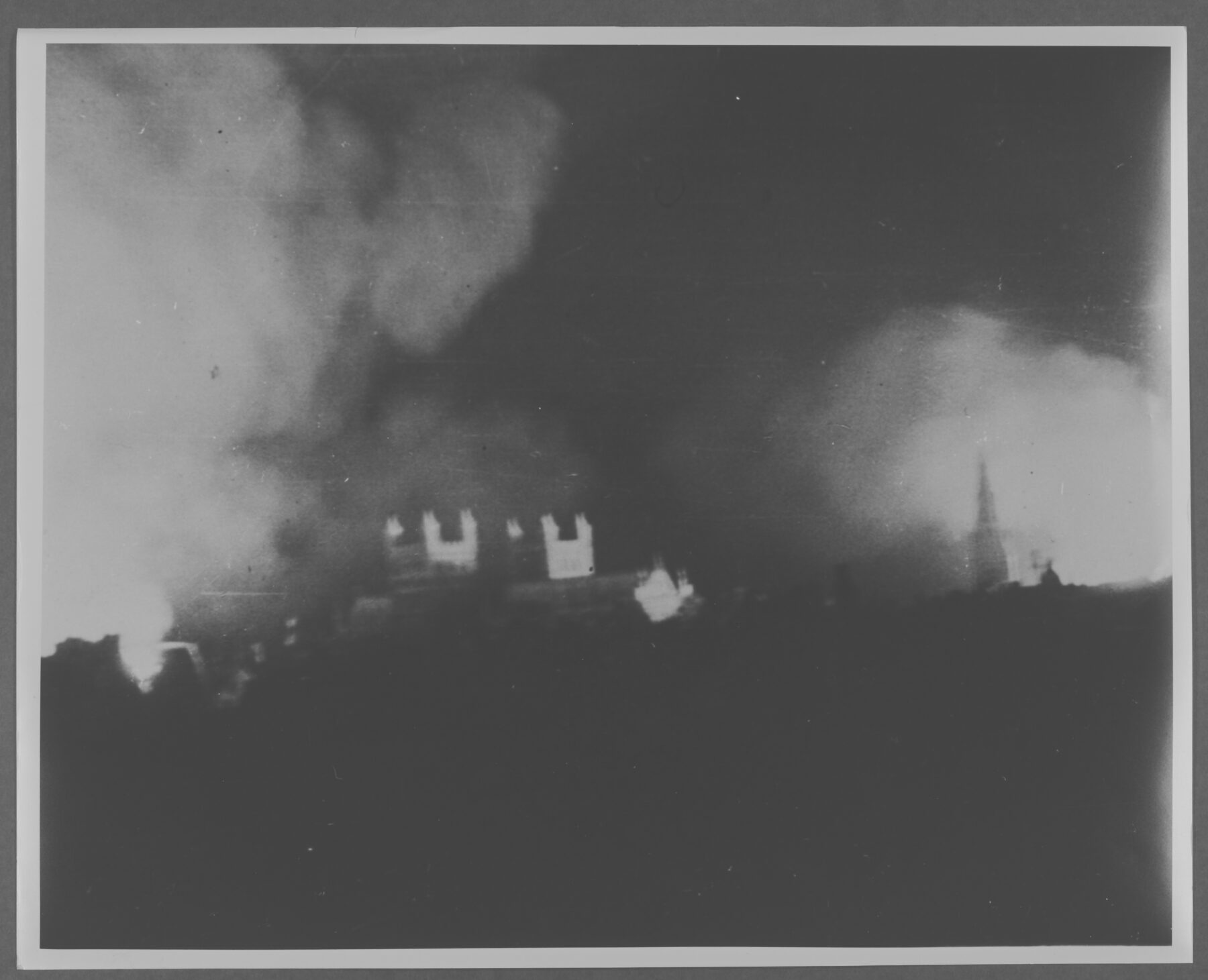
Photographed with a folding Kodak camera from the top floor of the Rougemont Hotel on Queen Street, this image captures the devastation of the Exeter Blitz. The Cathedral dominates the scene, while St Mary Major’s Church is illuminated by incendiary fires and explosions during one of the city’s darkest nights. The photographer is unknown.
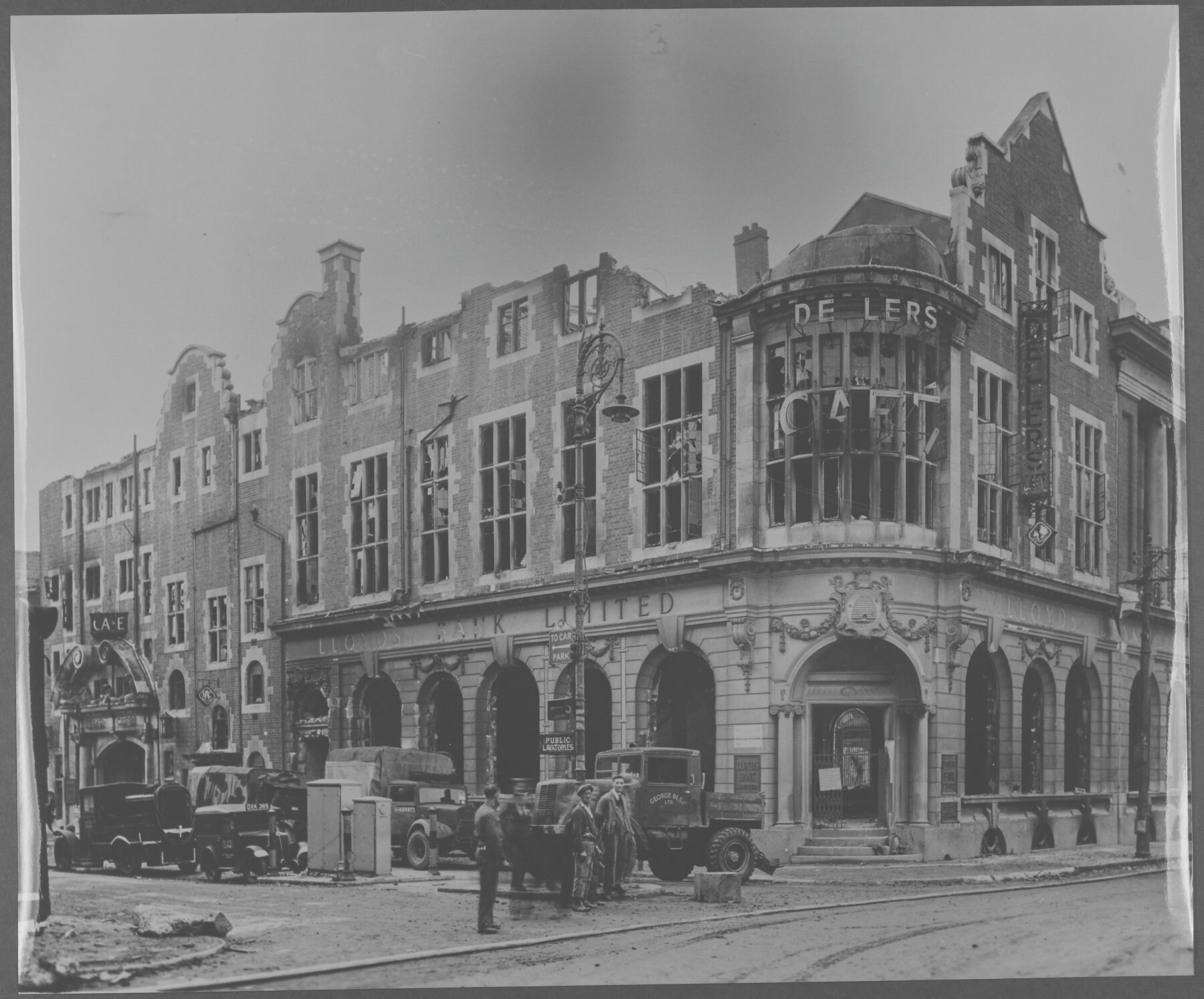
Deller’s Café, Bedford Street, Exeter, 1942
Opened in 1916 alongside Lloyds Bank, Deller’s Café quickly became one of the South West’s most celebrated venues. Known for its elegance and versatility, it hosted everything from social gatherings to grand functions. Its destruction marked one of Exeter’s greatest architectural losses.
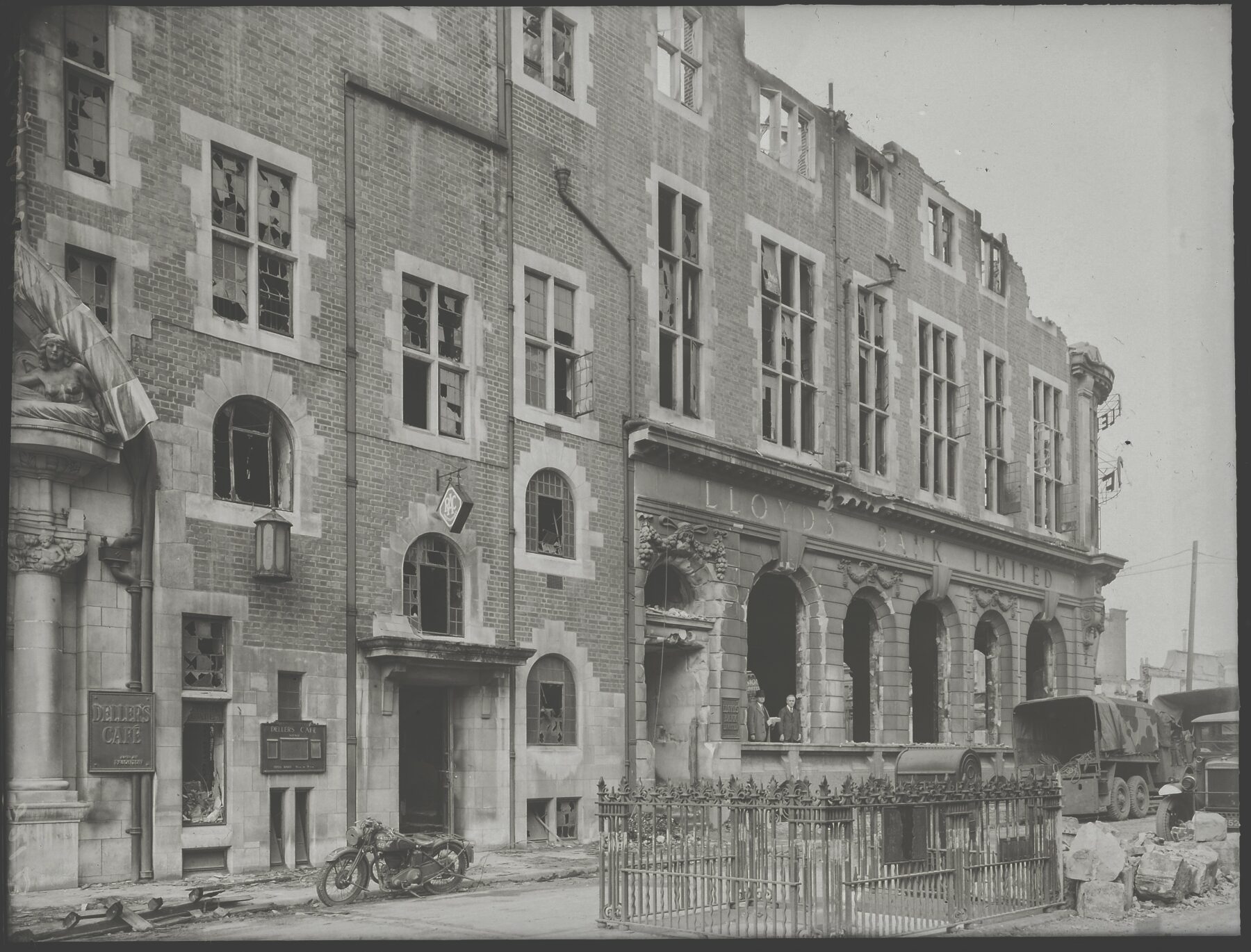
Bombed Site of Deller’s Café, Bedford Street, 1942
The remains of Deller’s Café after the wartime bombing of Exeter. In the foreground the public conveniences can be see which were underground.
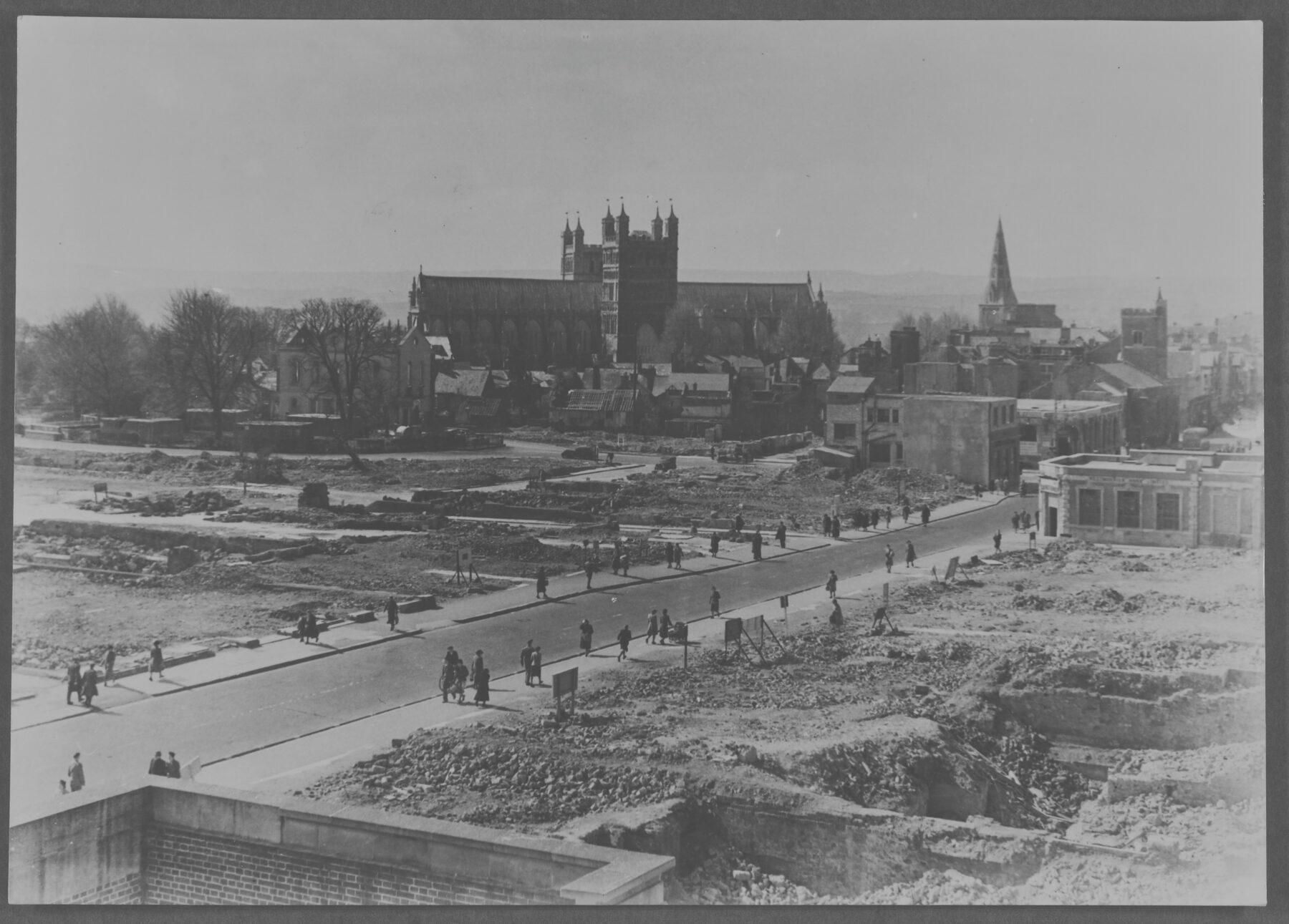
This photograph captures the aftermath of extensive demolition following wartime damage. Once bustling streets were reduced to open, desolate spaces, dramatically altering the city’s landscape.
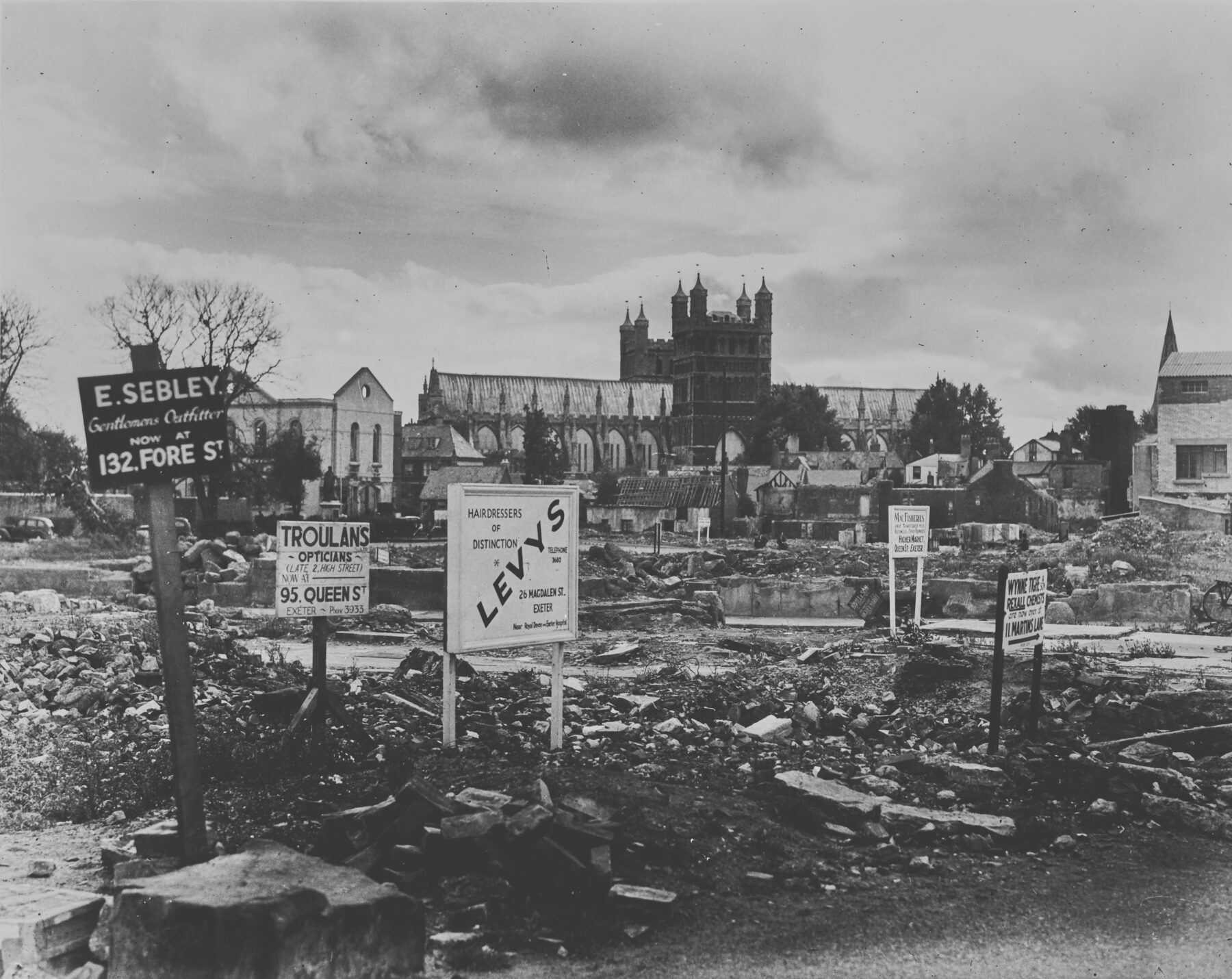
The cleared High Street, where billboards mark the sites of pre-war businesses following the demolition of unstable buildings as a result of Exeter Blitz, 1942.
Gallery
This exhibition was supported by