Capturing the Quay
Photographer Henry Wykes, whose studio overlooked Exe Bridge, was uniquely positioned to document life along the River Exe. From scenes of the river frozen solid to more tragic moments, his work captured a remarkable range of local history. Among the most significant are his photographs of the tram accident of 7 March 1917, of which only two images are known to exist. His image, taken from the corner of Gervase Avenue on the west side of the bridge, shows the wreckage with his studio visible directly behind the overturned tram.
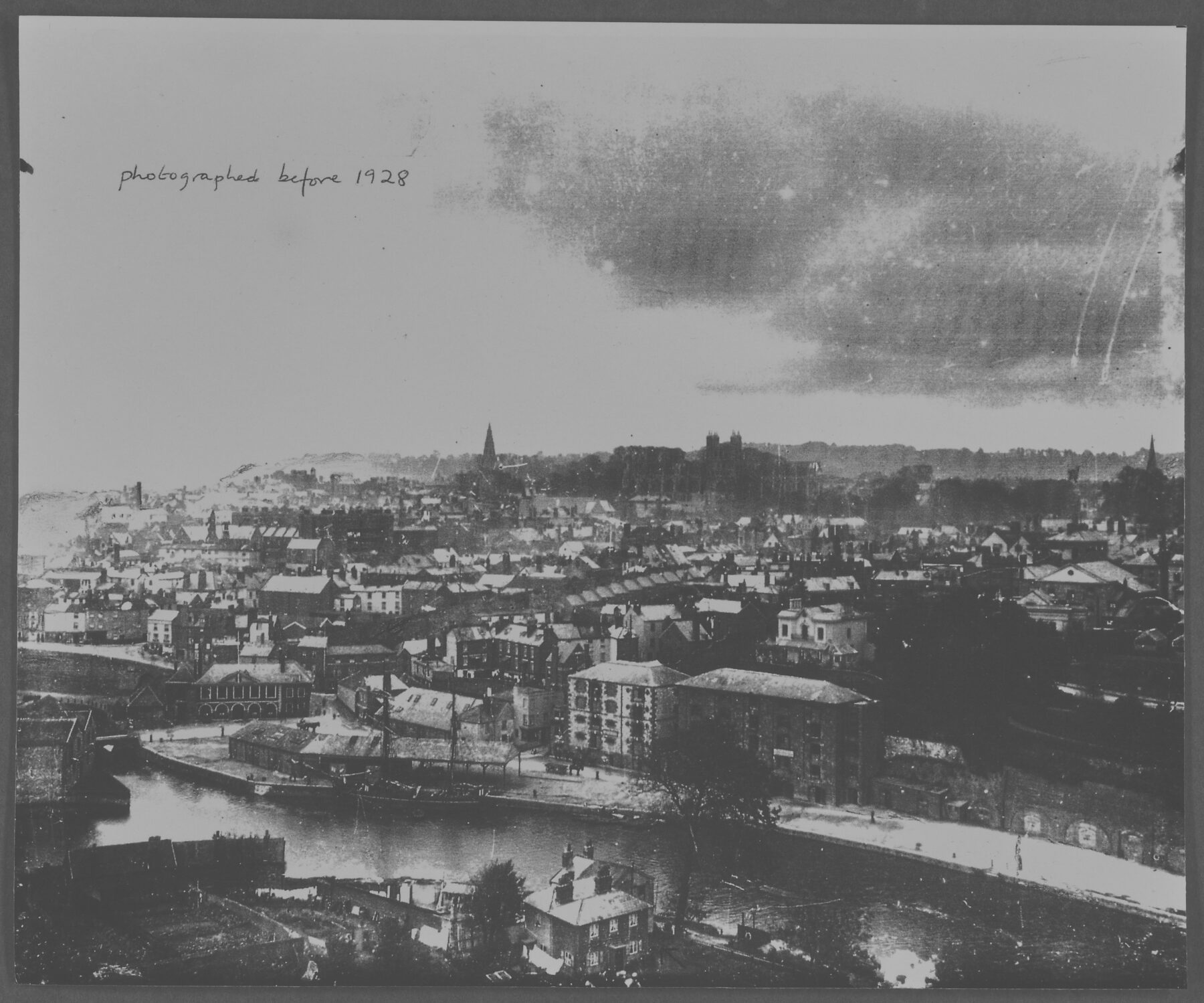
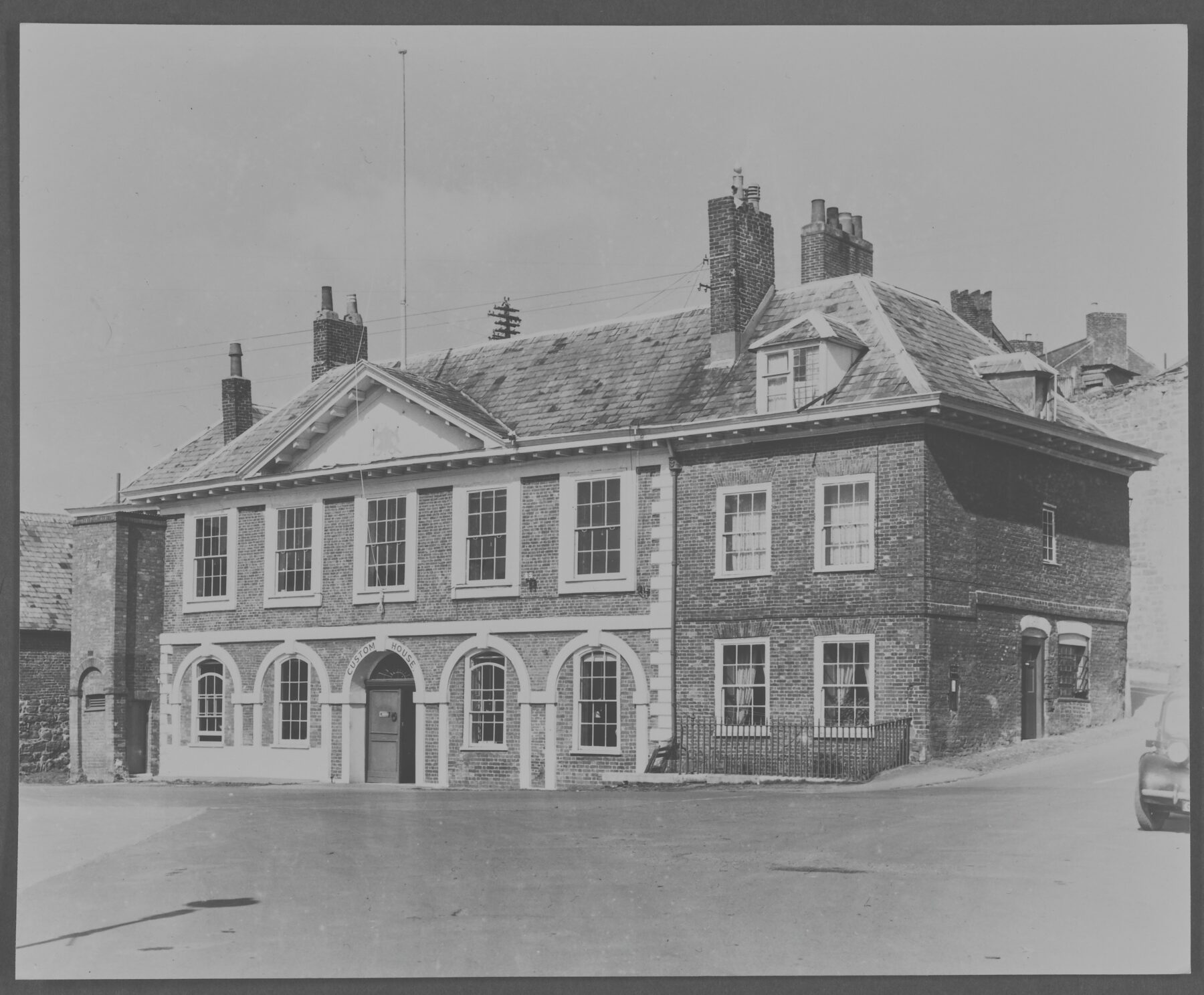
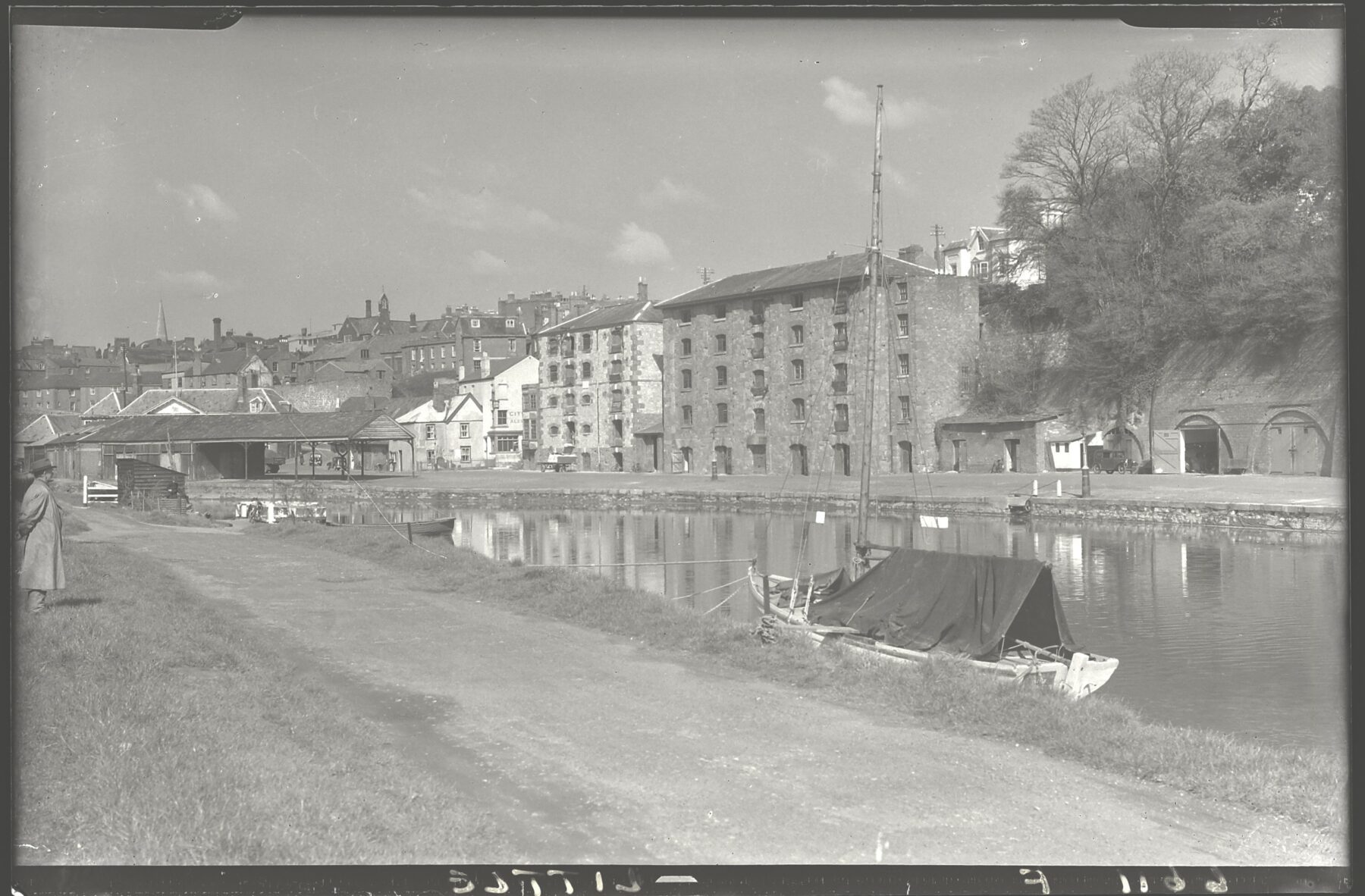
Exeter Quay is also home to some of the city’s most recognisable historic buildings, with many photographs in the Isca Collection revealing a visually significant record of key buildings spanning over a century.
At the heart of the Quay is its Custom House. Built in 1680–81, it is the city’s oldest brick building and reflects the rapid expansion of trade in the 17th century. Its prominent riverside location made it ideal for controlling imports and assessing goods before they entered the city. It remained in use by H.M. Customs and Excise until 1989.
By contrast, the Quay’s warehouses, constructed in 1835, gained a different kind of prominence in the 1970s. Repurposed as a filming location for the BBC drama The Onedin Line, they temporarily transformed Exeter into a convincing stand-in for Liverpool’s bustling docks.
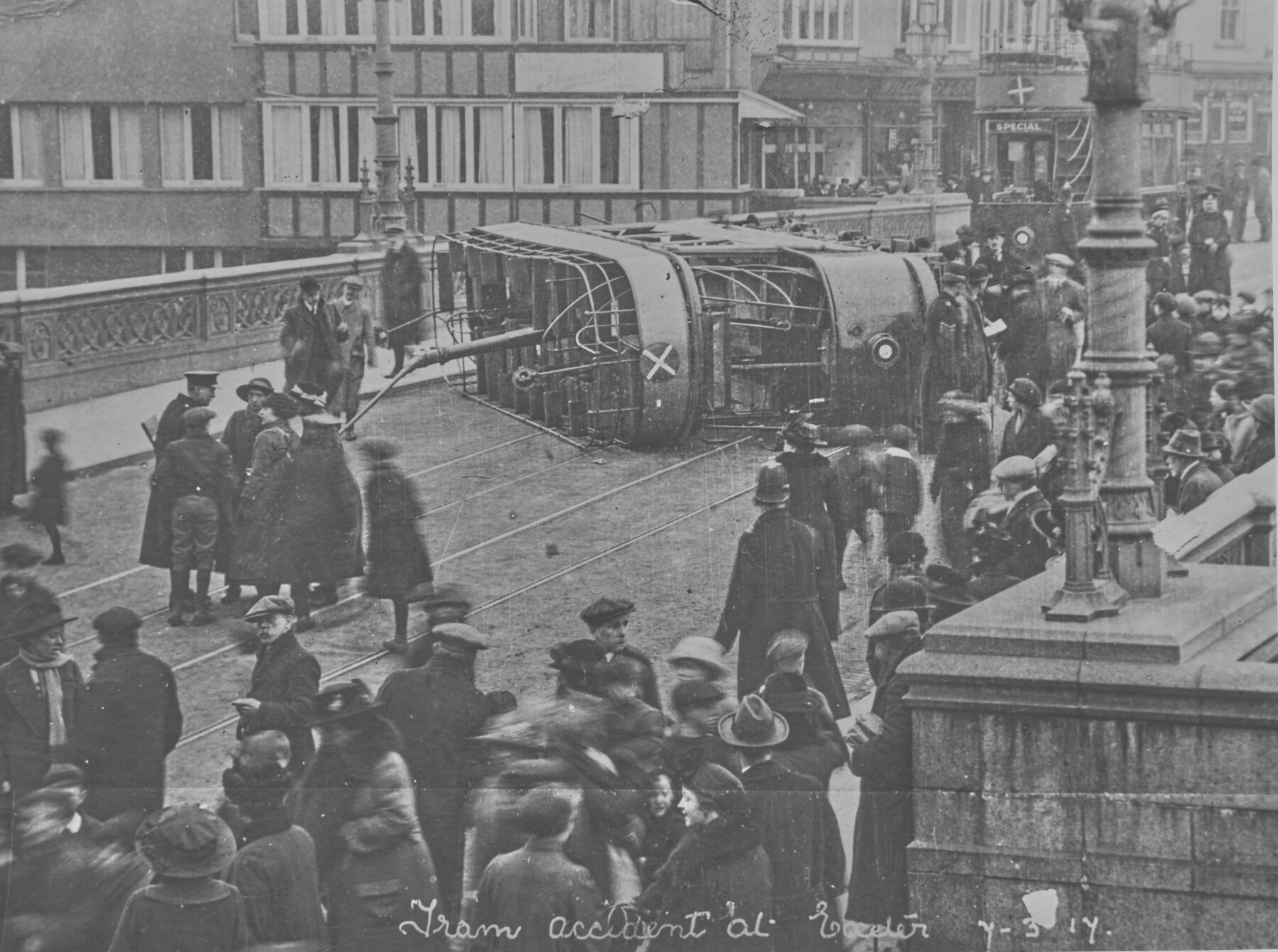
Tram accident on Exe Bridge, 17th March 1917
The Wykes Studio is seen directly behind the overturned electric tram.
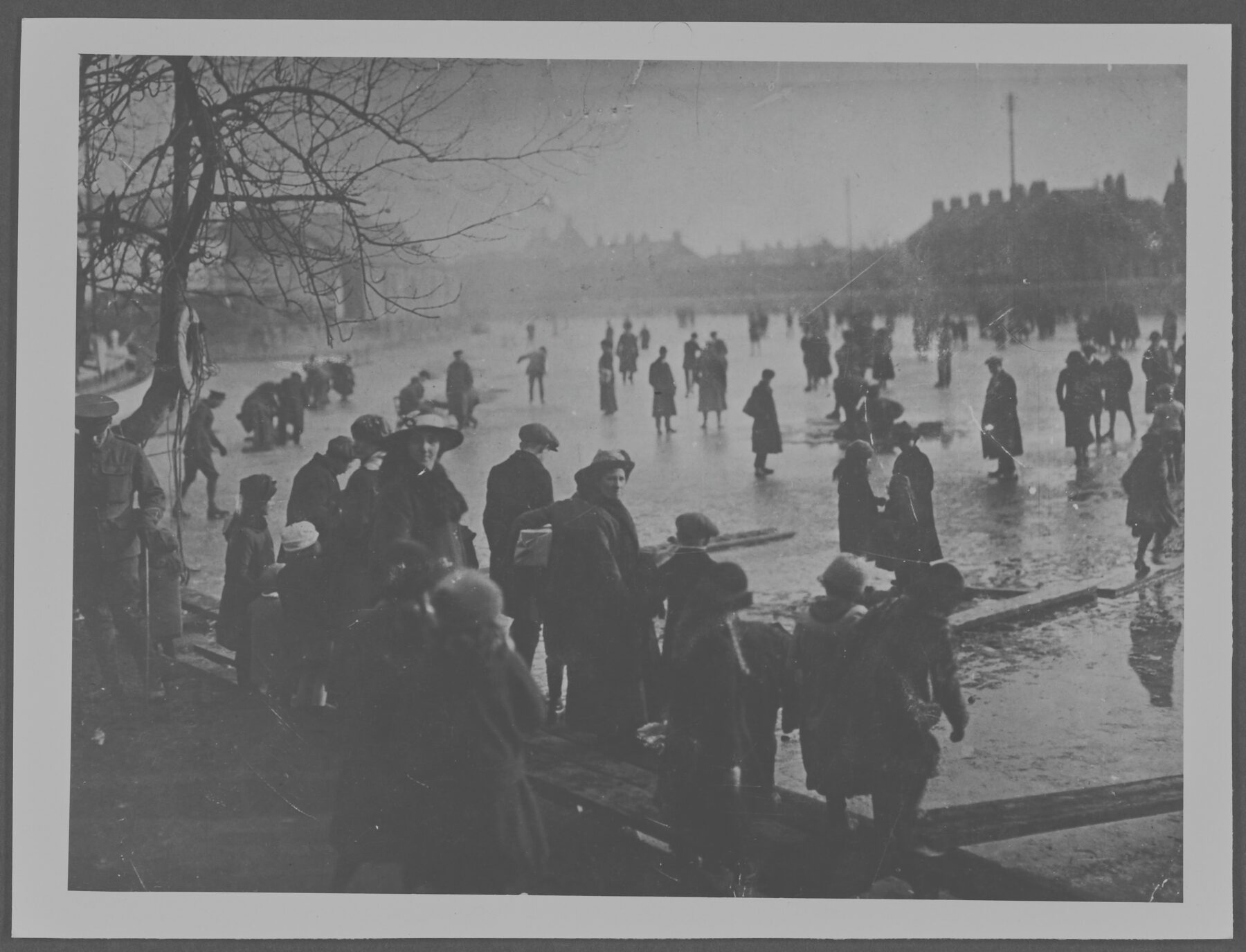
On rare occasions, the River Exe has frozen almost solid. This winter scene shows locals walking on the ice – a striking sight in Exeter, where the climate is usually mild. In the foreground, people stand on the wooden platform once used by leisure boats operating below Commercial Road.
Gallery
This exhibition was supported by