Craft, Commerce and Community
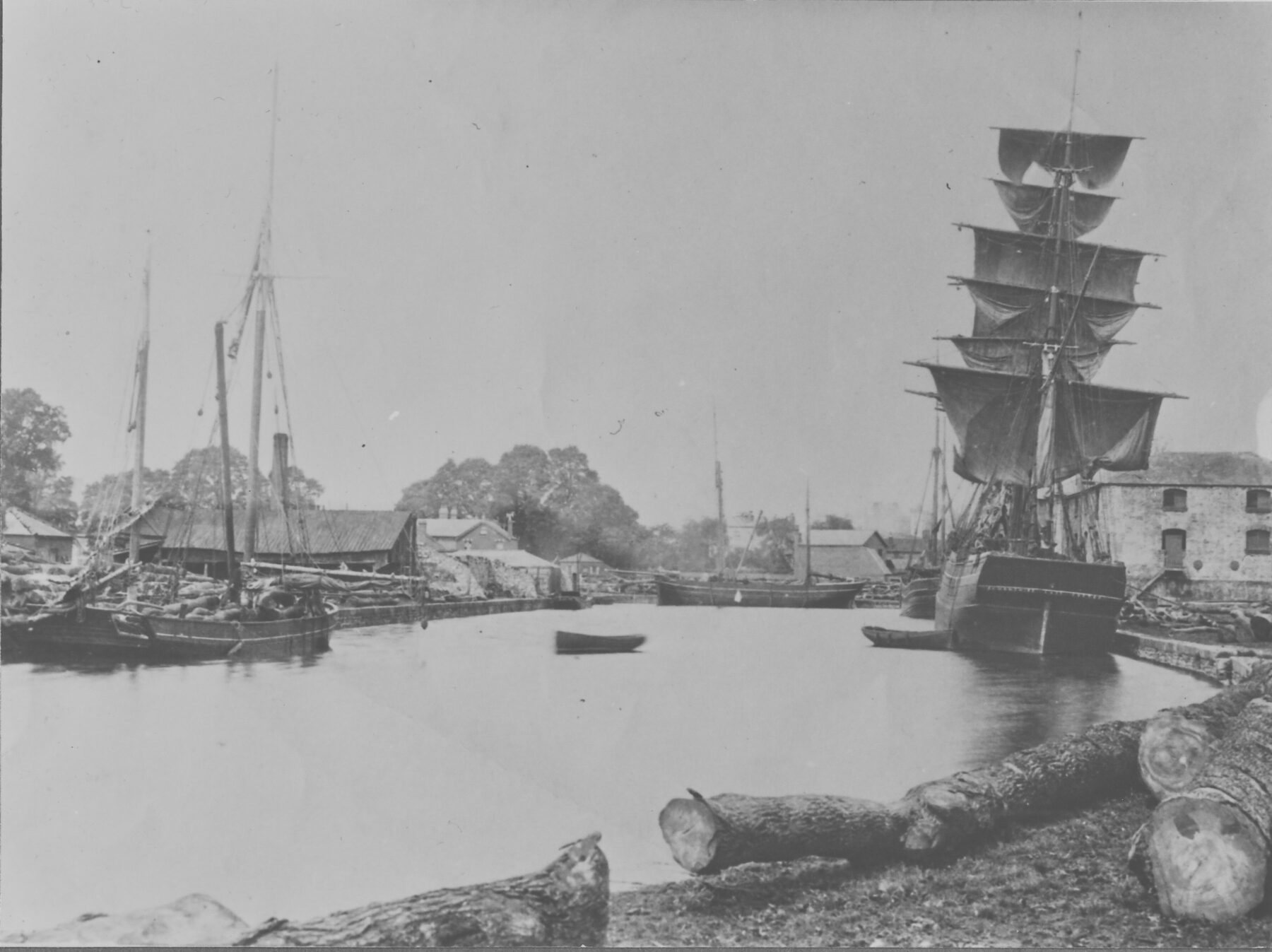
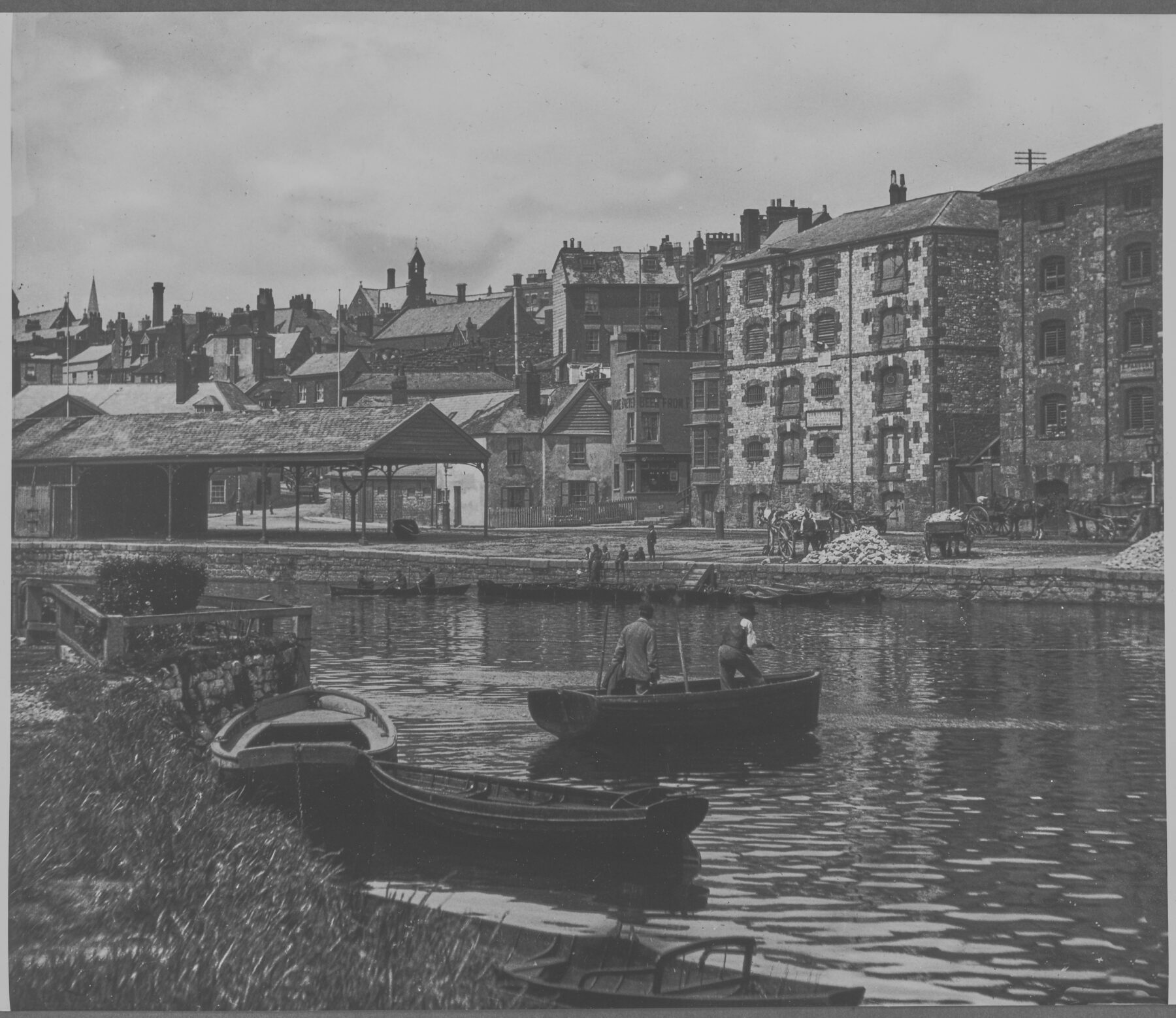
Exeter’s development as a centre of trade and commerce was closely tied to its waterways and evolving urban landscape, with the canal playing a vital role in the city’s economic growth, accommodating a wide range of vessels. Its development as an industrial waterway helped establish Exeter as a major centre for the wool and cloth trade, whilst the widening of the New Cut in 1830 gave sea-going vessels greater access to the city. At the same time, the river remained a place of small industry for local fishermen, and a quiet place of recreation for Exeter residents.
This mix of industry and daily life extended into the city itself. The West Quarter, once home to prosperous merchants, had become a hub for artisans – fullers, dyers, and weavers – whose trades relied on access to water. Though many buildings had fallen into disrepair by the early 20th century, the area retained a unique charm, with winding alleys and historic courtyards.
Exeter’s markets were central to its identity. The Higher Market on Queen Street, opened in 1838, bustled with traders selling everything from fish and flowers to meat and vegetables. It remained active until 1962, helping to ease congestion in the city’s narrow streets.
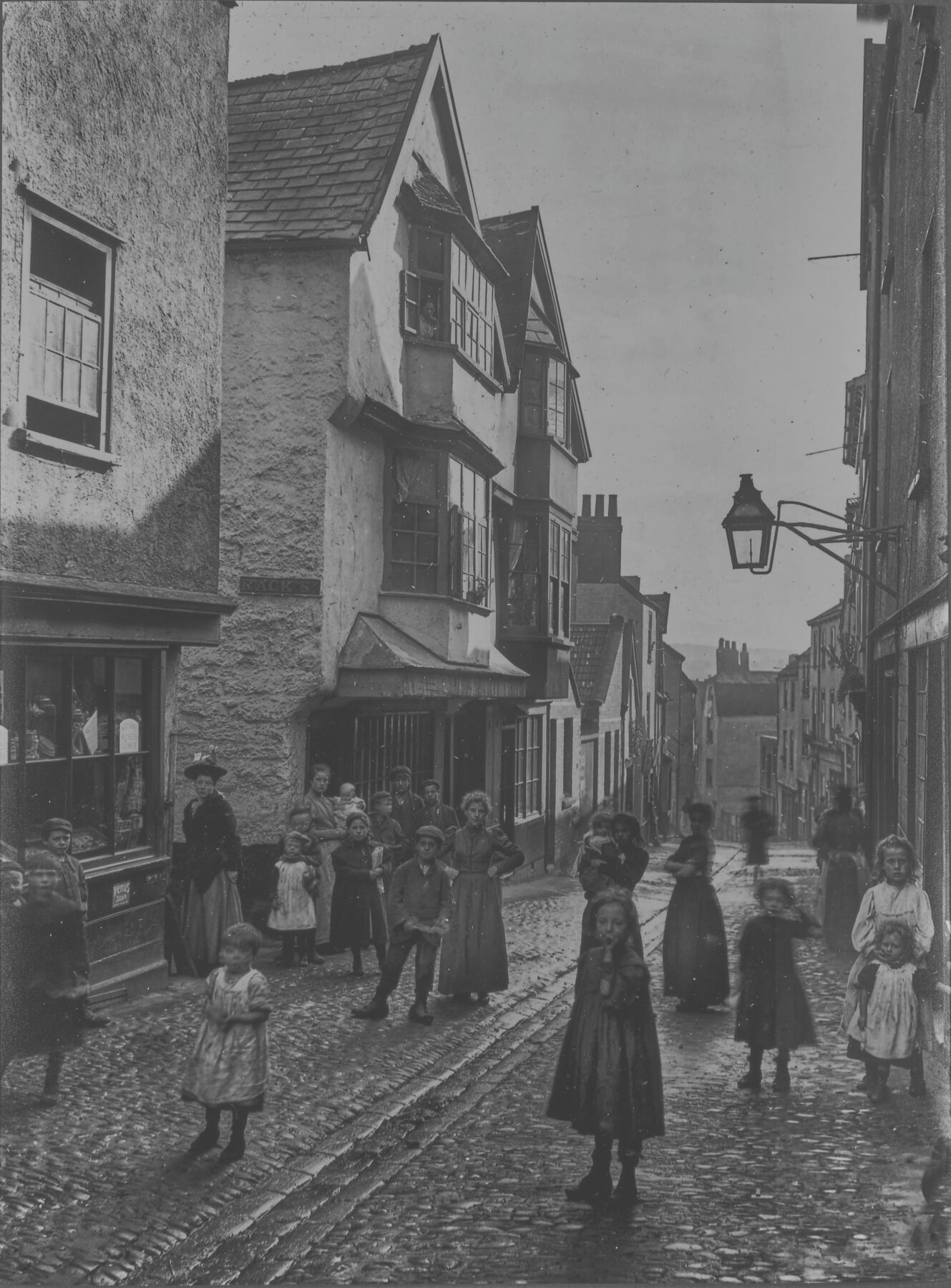
By the 1930s, slum clearance schemes reshaped the urban landscape, relocating residents to newly built suburbs and erasing swathes of historic housing, including much of Stepcote Hill. Meanwhile, the rise of electric trams, trolleybuses, and motor cars marked Exeter’s entry into the modern age, transforming both transport and daily life.
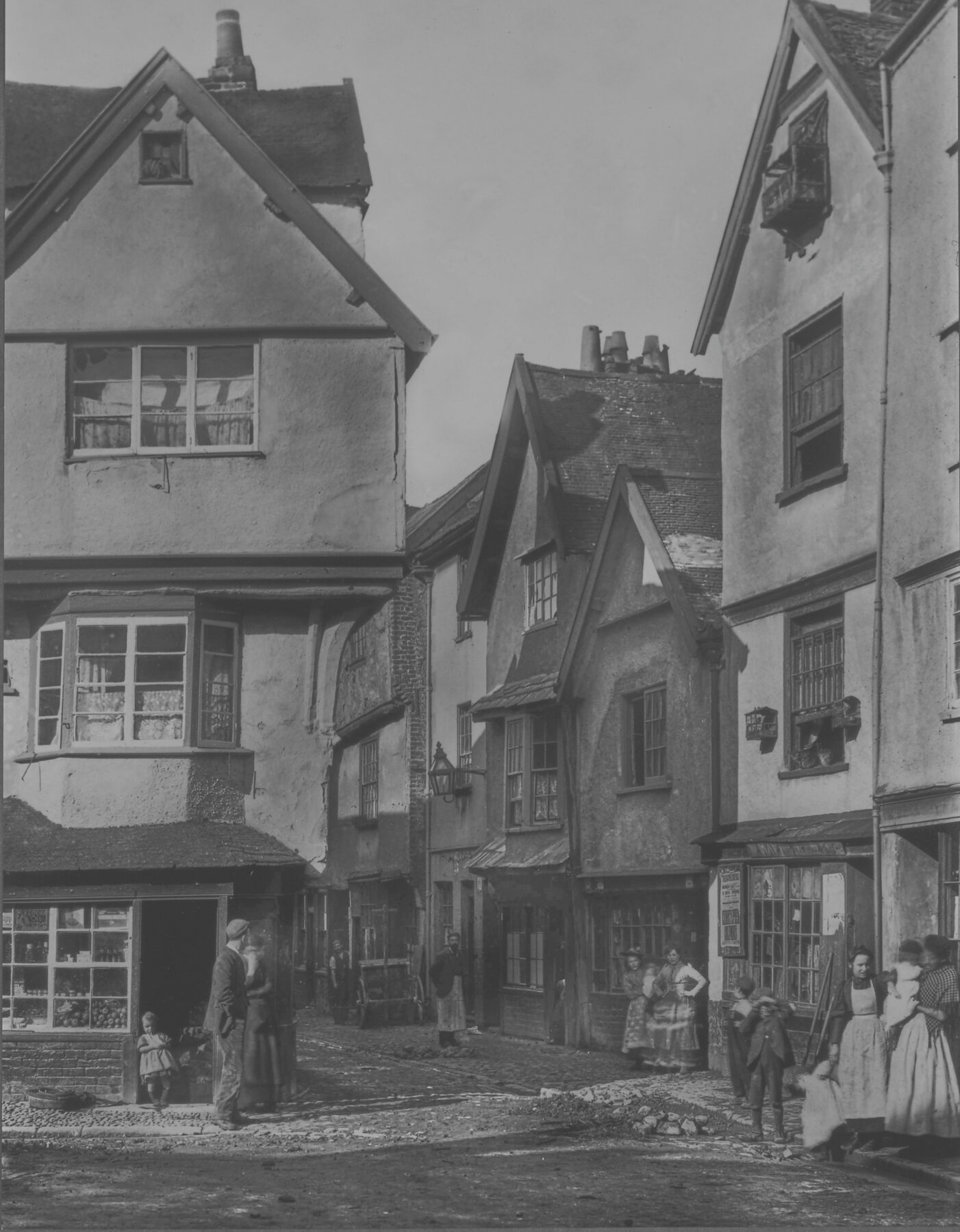
Photographs of Exeter’s back streets before 1900 are extremely rare. This image of Preston Street provides an excellent record of its early medieval timber-framed houses. It was reproduced from a lantern slide created by the Tremlett Brothers of Exeter, c.1890.
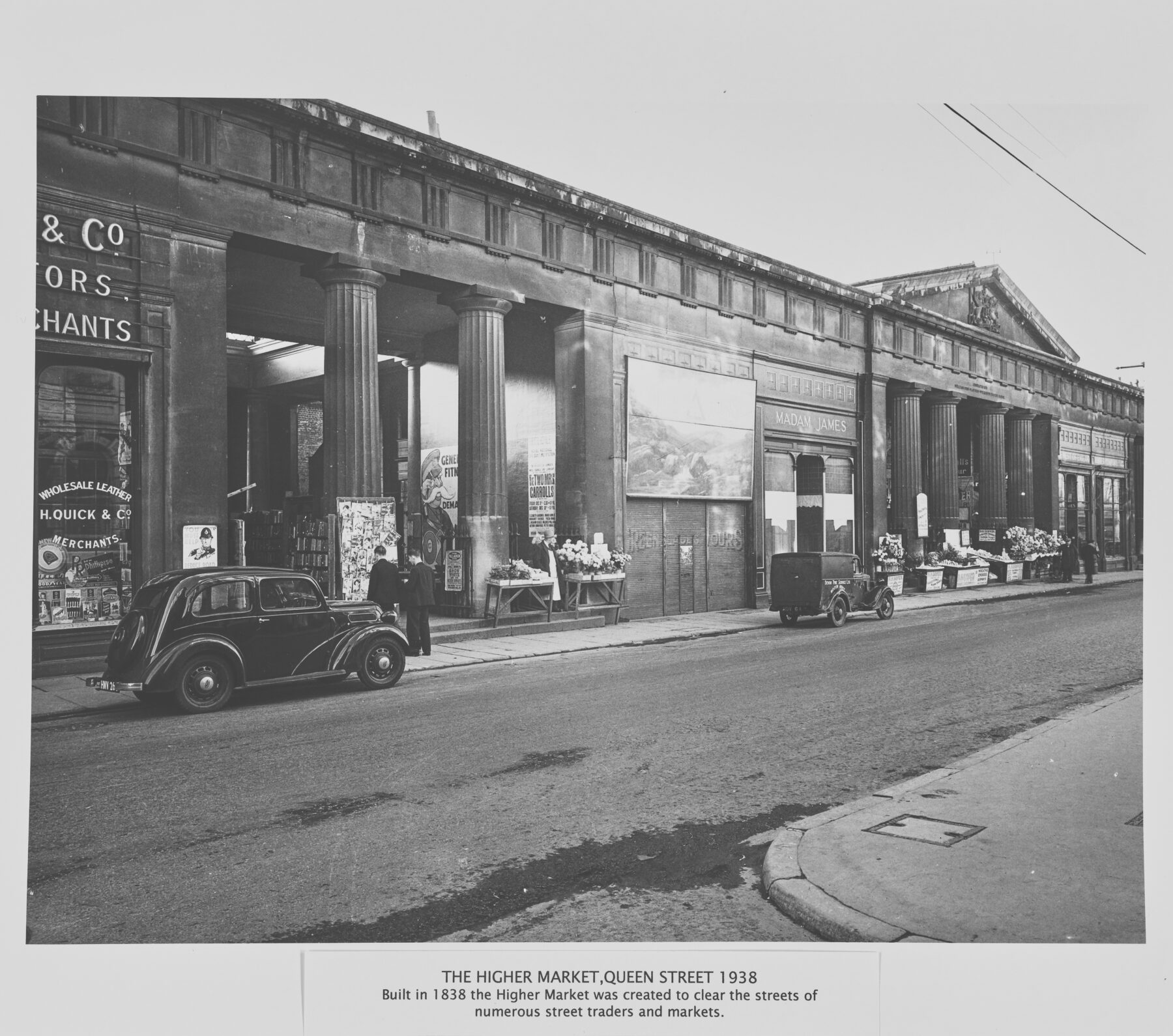
Opened on 24 July 1838, the Higher Market was designed by George Dymond to replace the city’s numerous street traders and markets. Dominating the top of Queen Street, it became a central part of Exeter’s life. Inside its open halls, traders sold meat, fish, flowers, vegetables, and second-hand goods, while country people flocked to the city every Friday to sell their wares.
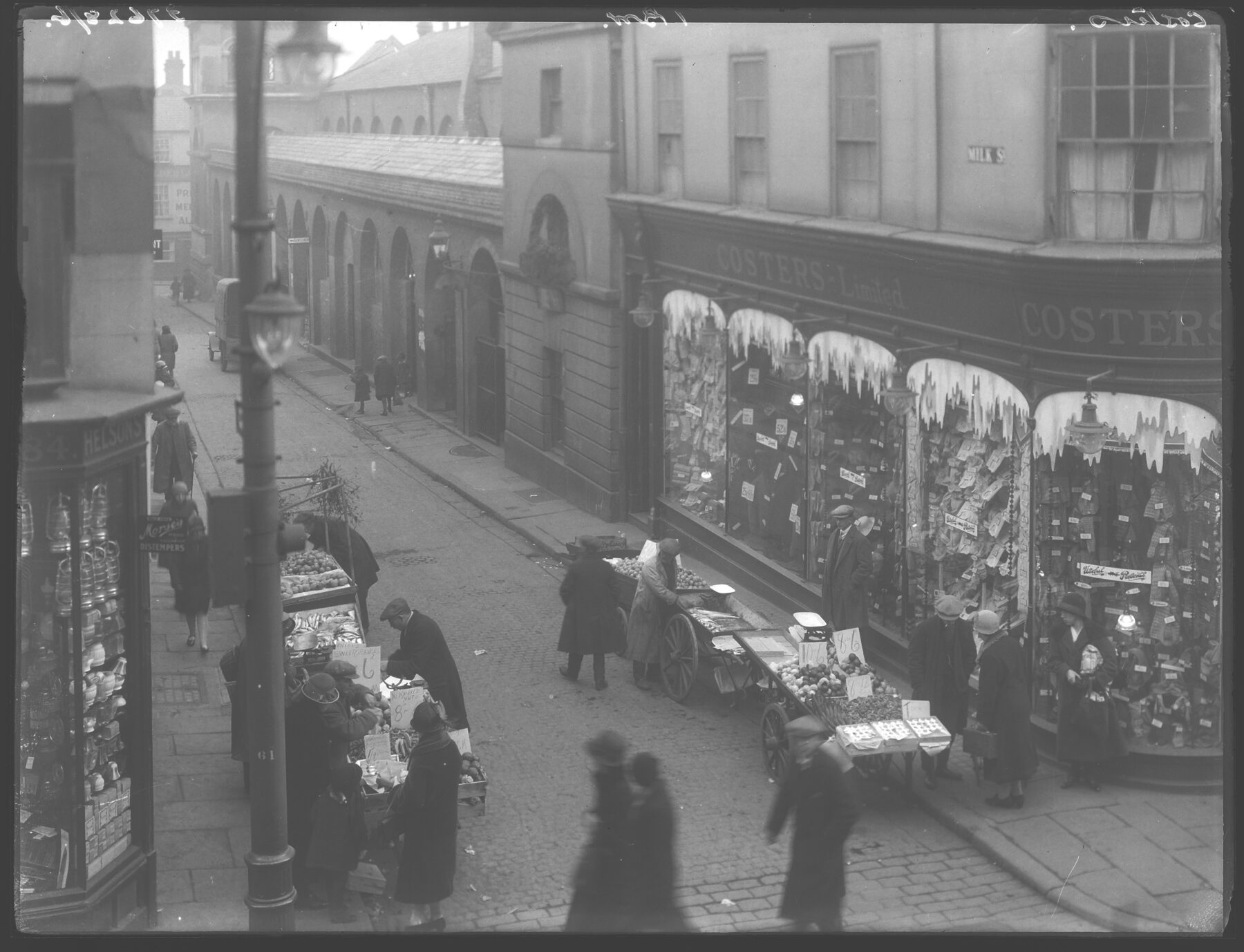
Milk Street, c. 1932
This view of Milk Street, looking away from Fore Street, captures Costers’ shop windows decorated for Christmas. Street traders sell mistletoe and other goods from their carts, while the side arches of the Lower Market are visible in the background.
Gallery
This exhibition was supported by