Engineering Exeter’s Quayside
Along the River Exe, the Isca Photographic Collection reveals the dramatic transformation of the landscape over time, with Exeter Quay providing one of the most striking examples. Having gone through significant changes from its earliest use as a prehistoric port, through to the construction of the Countess Weir in 1284 and canal in 1566, to its expansion in the 1830s as the quay we recognise today.
Further developments took place in the late 18th century with the construction of Exeter’s iconic three-arched stone bridge. Building works began in 1770 but faced early setbacks when floodwaters swept away its initial structures. Stability came only when its foundations were anchored to solid rock. Completed in 1778, the bridge served the city for over a century before its demolition in 1903.
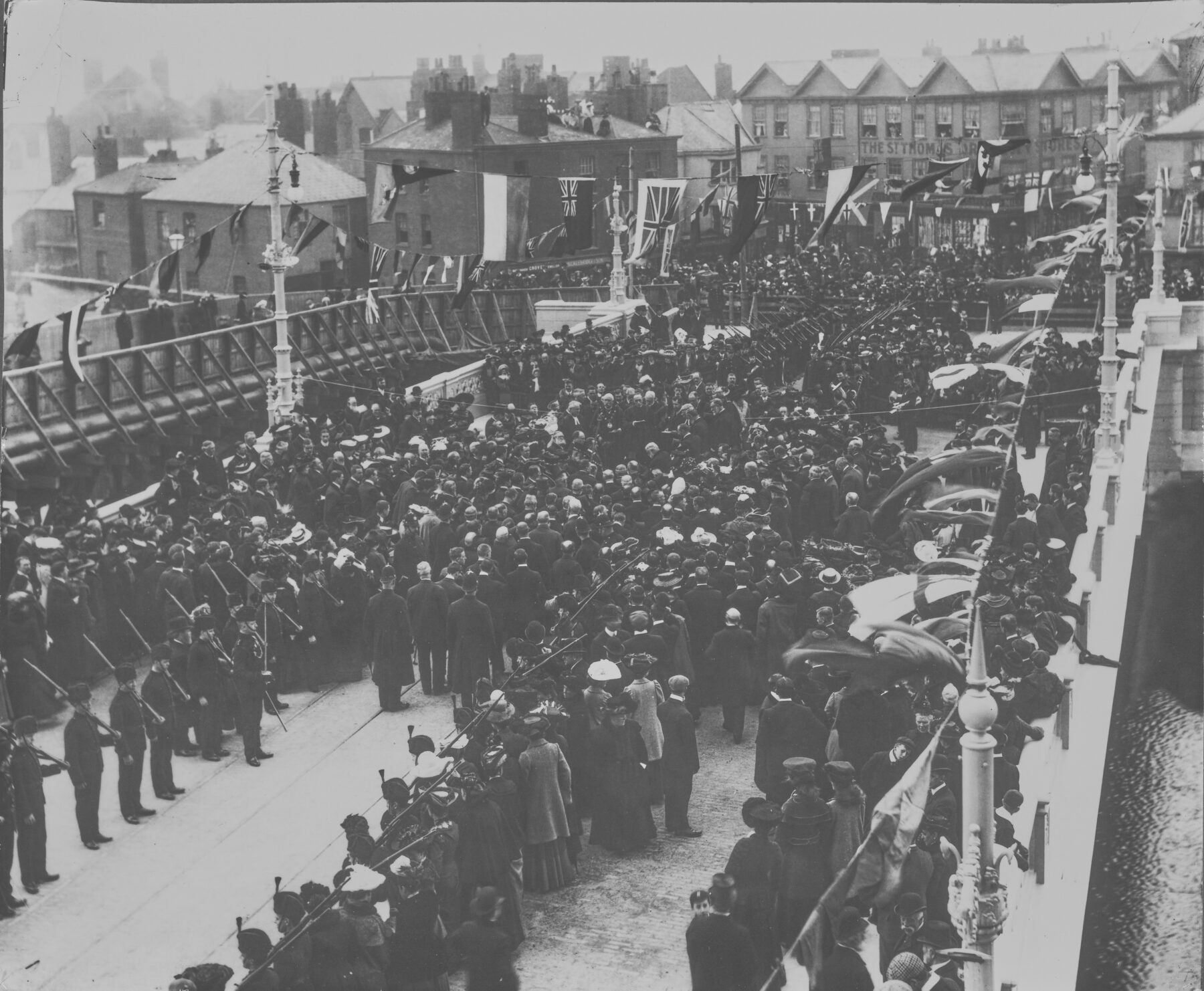
It was replaced by the steel Exe Bridge, designed to carry the new electric tram system. Officially opened on 29 March 1905 by Mayor Councillor C. Perry, the event drew large crowds, with spectators even climbing rooftops for a better view. A rope strung between traction poles was ceremonially cut by the mayor, accompanied by a military escort and city-wide celebrations.
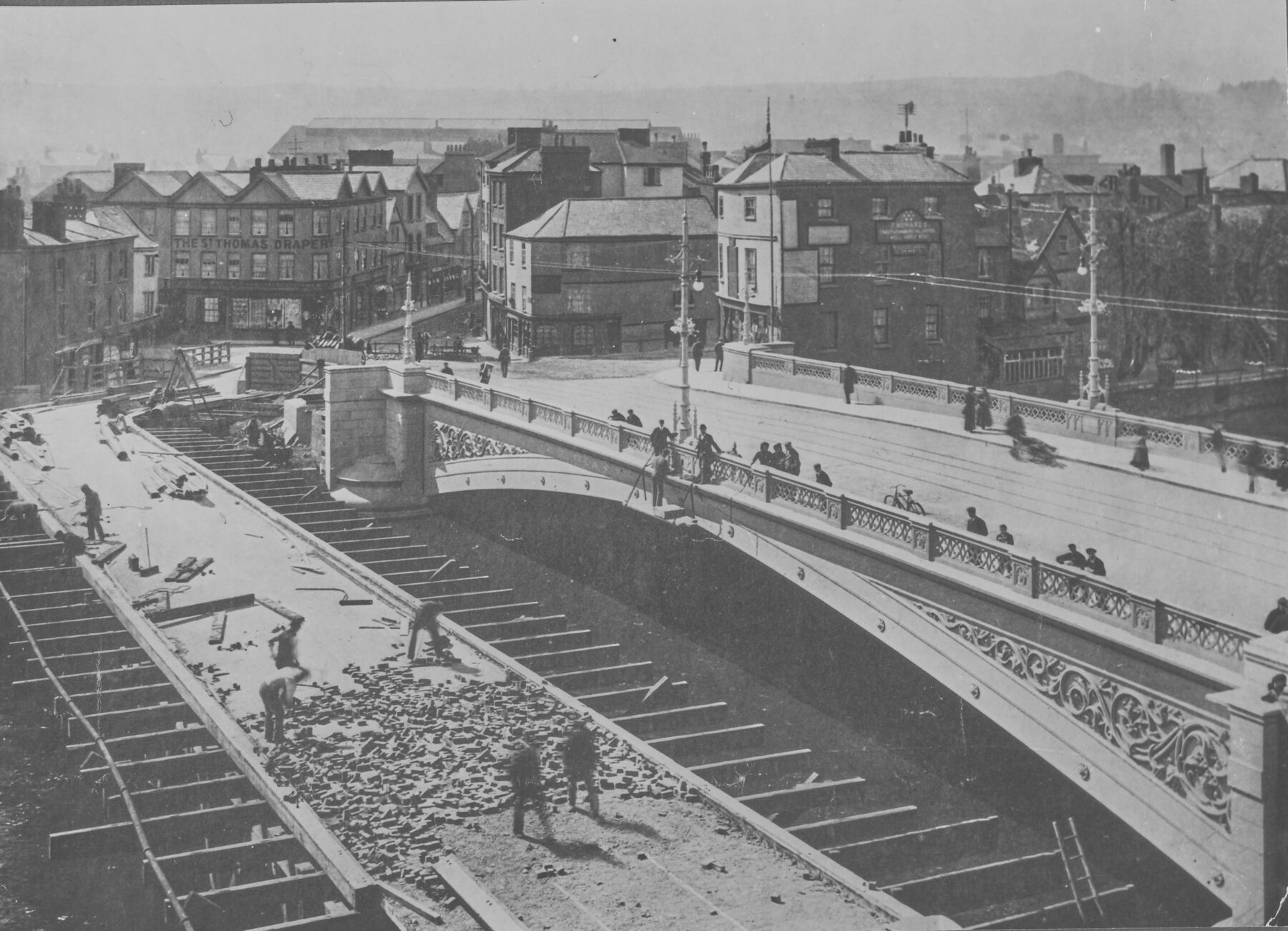
This image is looking west across the newly opened 1905 steel and cast iron bridge. In the foreground the deconstruction of the temporary wooden footbridge is underway. The 1905 bridge was built in the same location as the stone Georgian bridge it replaced, and the wooden footbridge allowed foot passage to continue during construction.
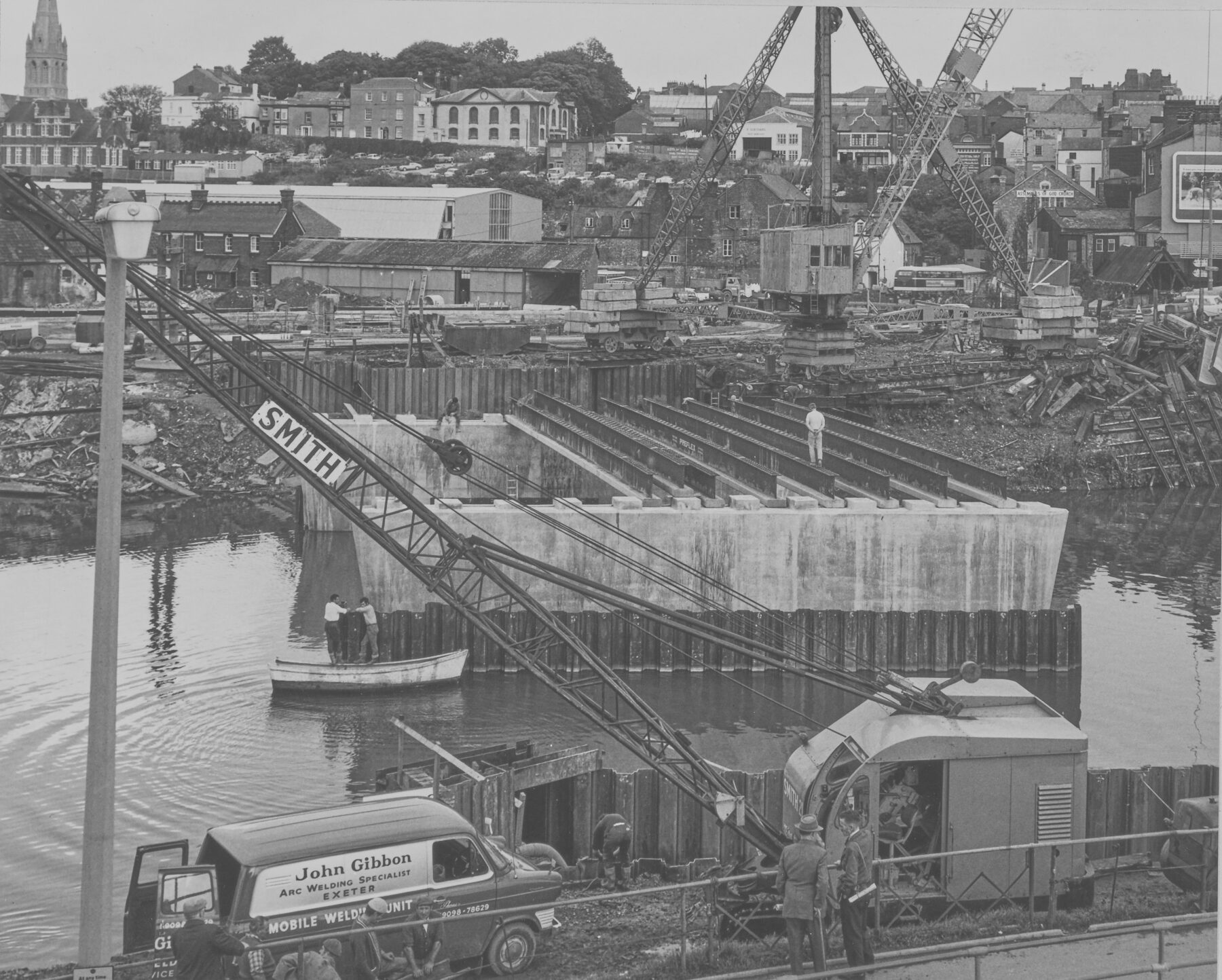
The spire of St Michaels Mount Dinham Church can be seen in the distance. The North bridge was completed in 1969.
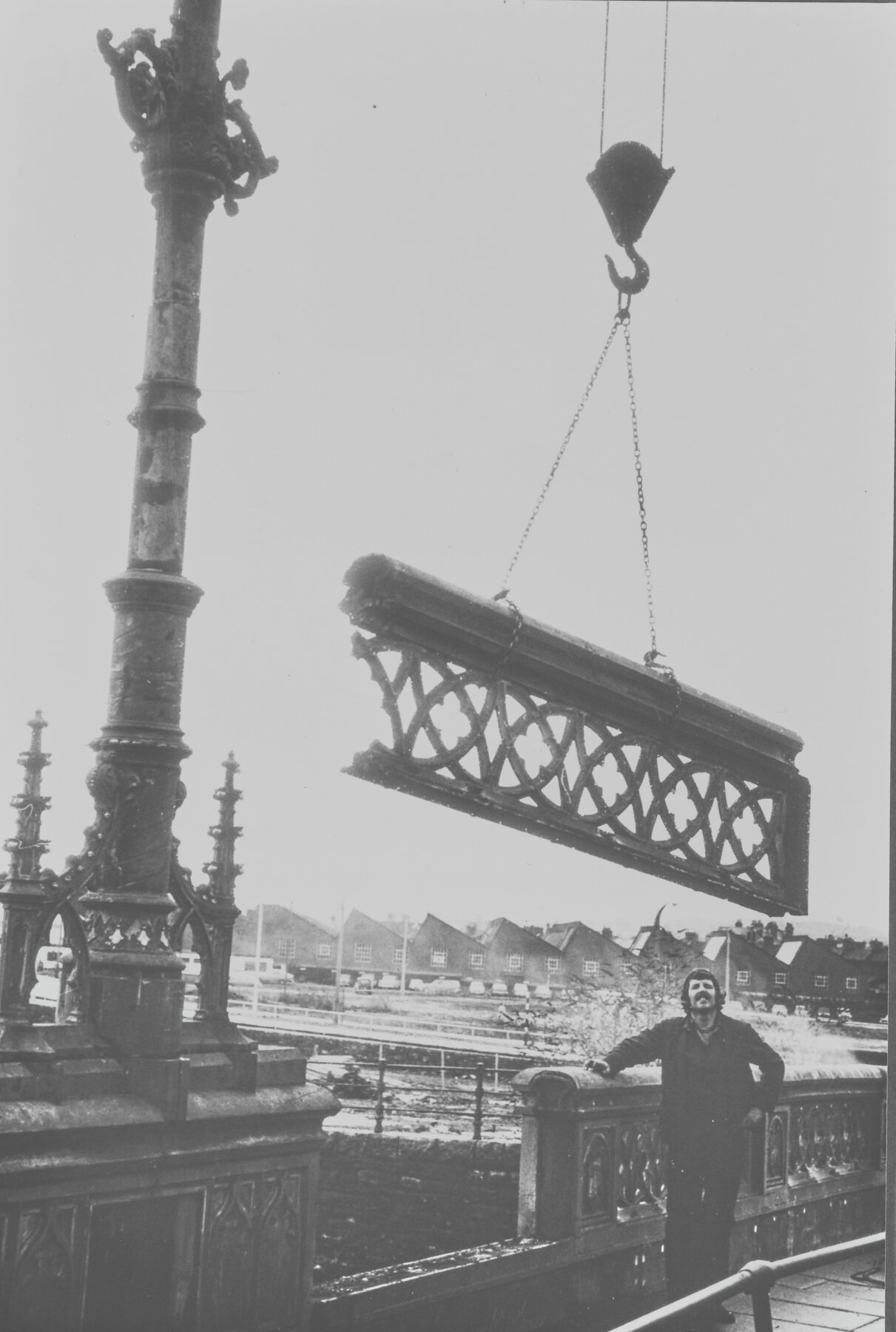
Deconstruction of the 1905 bridge began shortly after the opening of the South bridge in 1972. There is no longer any trace of the Georgian or 1905 bridge remaining, apart from two of the ornate lamps from the 1905 bridge which now stand at opposite sides of the river where Butt’s Ferry operates.
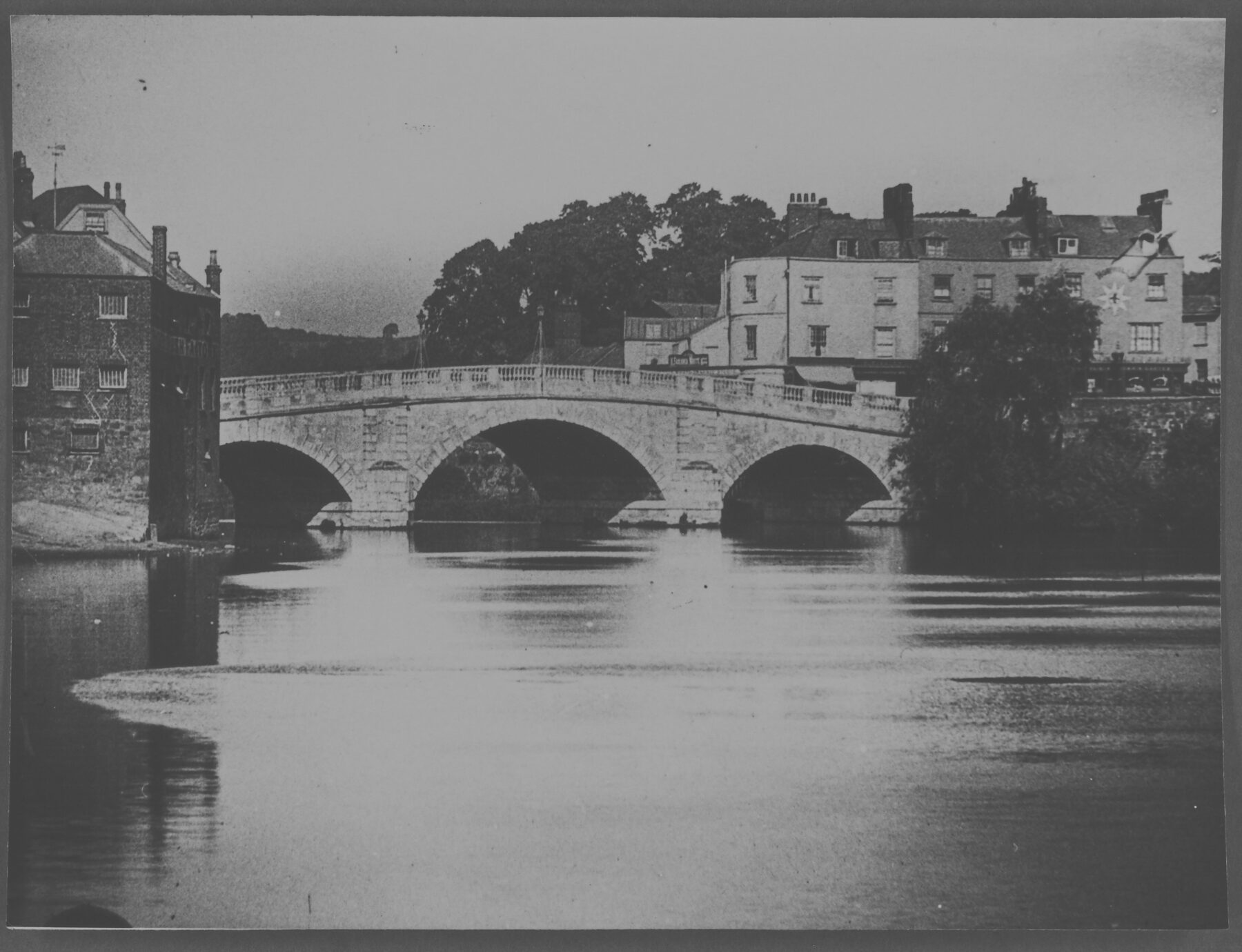
Lantern slide of the eighteenth-century, three-arched stone Exe Bridge. Magic lanterns, developed in the 17th century, were the precursors to modern projectors and influenced the birth of cinema. Images like this were painted or printed onto glass slides and projected onto walls using bright light, bringing scenes to life for audiences long before moving pictures.
Gallery
This exhibition was supported by