
Discovering the Elephants of Isca: How We Brought a 1939 Photograph Back to Life
By Kitty Vega, Project Officer, with special thanks to Helen Mason
Every now and then, an image from the Isca Photographic Collection seems to leap out of its archival box and demand attention. For us, and for pretty much every school group we’ve worked with, nothing has caused more excitement than the elephants.
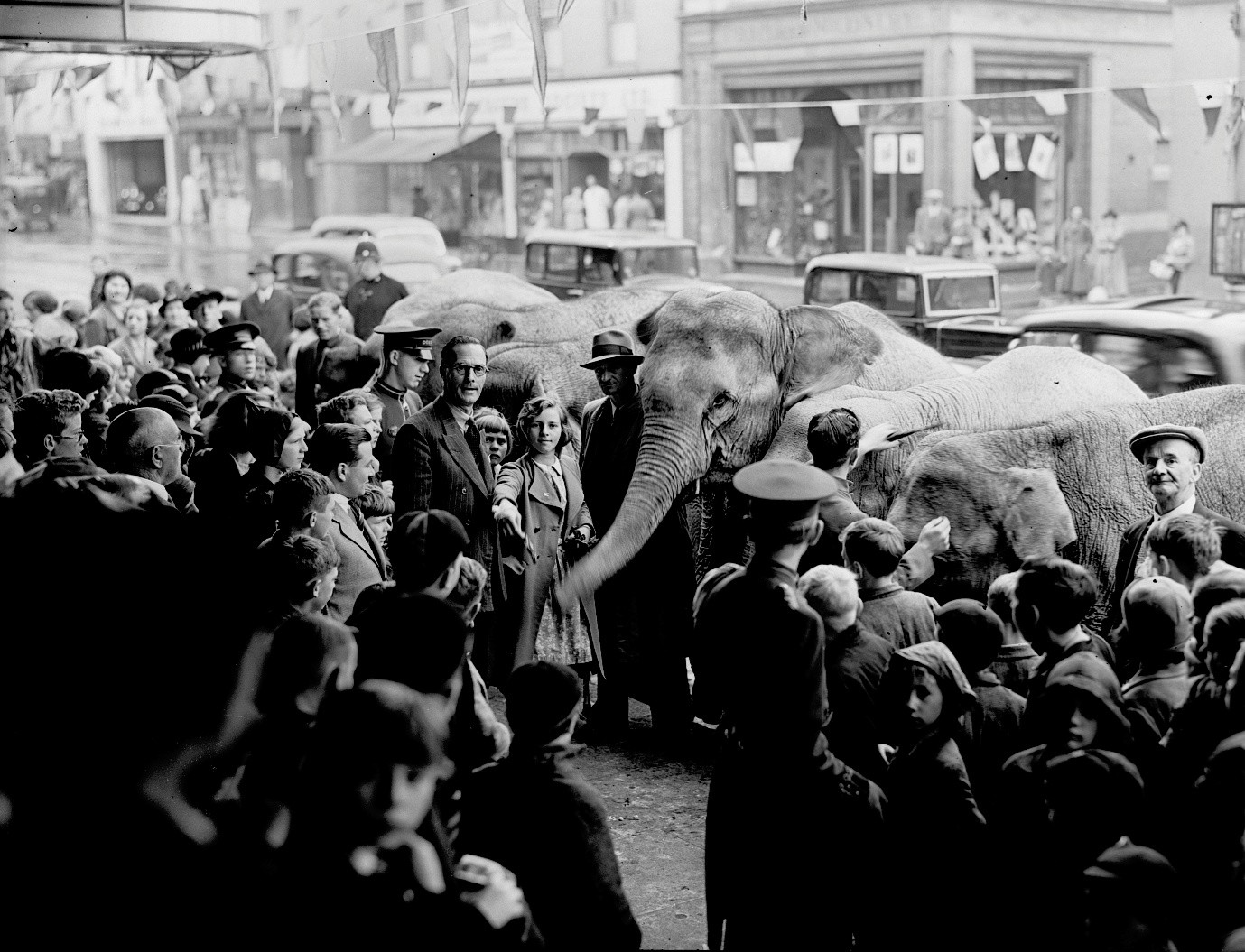
Among the 40,000 or so images in the archive, nothing has captivated audiences quite like the six glass‑plate negatives showing Bertram Mills’ circus elephants assembled outside Exeter’s Odeon Cinema in 1939. During our outreach work with local schools and colleges, these photographs became the undisputed favourites. Primary‑age children gasped, pointed, giggled, and asked a hundred questions all at once. Teenagers leaned in closer. Adults grinned with pure nostalgia. Everyone wanted to know the same thing:
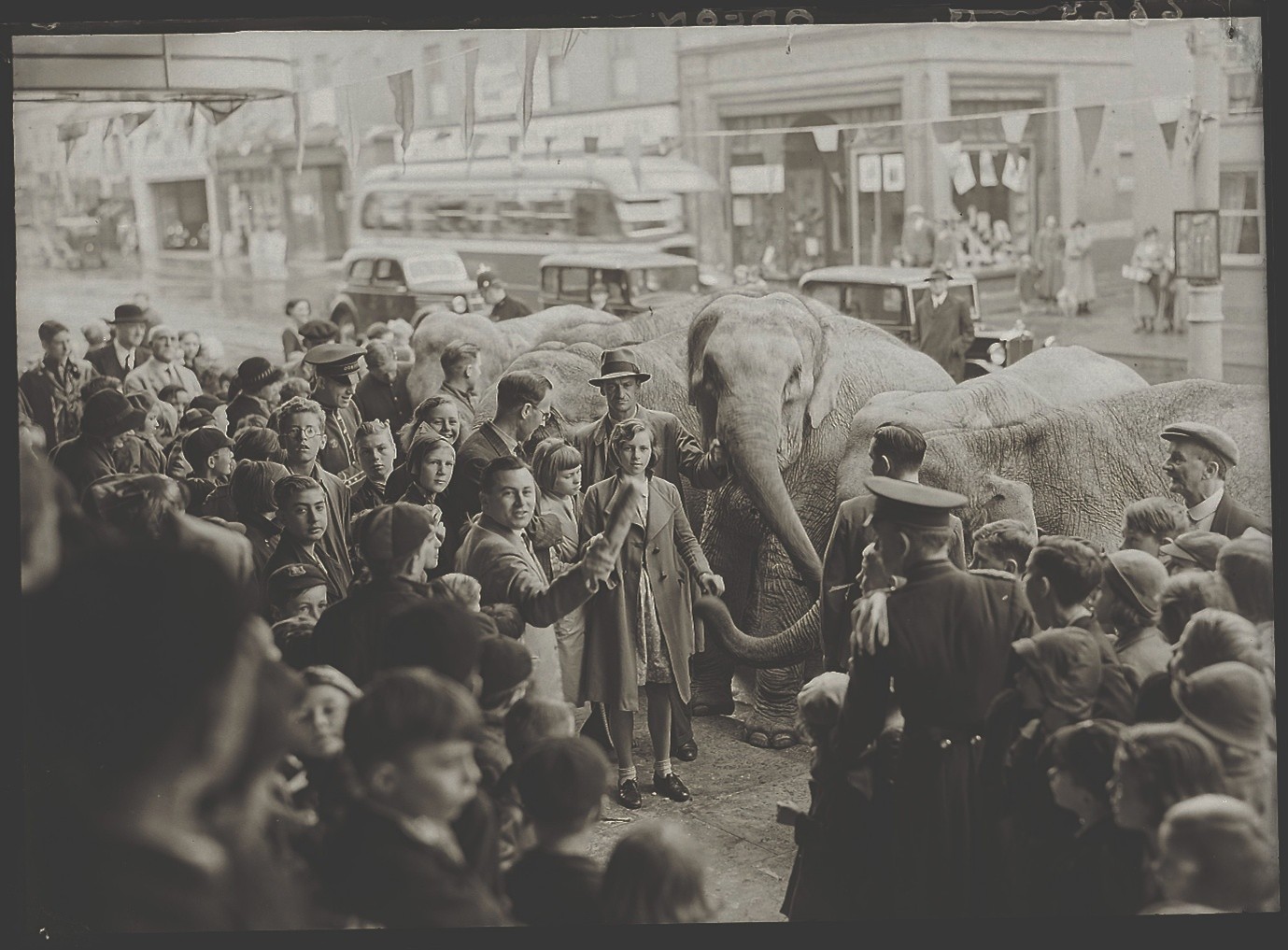
Who is the girl standing confidently beside the elephant? And why on earth were elephants at the Odeon? We were inspired to find out.
When a Photograph Begins to Speak
The images themselves offer plenty to notice: the proud elephants; the cinema façade; the trainer; and a poised young girl standing right beside one of the animals. But like so many photographs in our archive, the original negatives came to us without any identifying details. No caption. No date. No names. Just an extraordinary moment frozen on glass.
To uncover more, we turned to other archival research sources.
Bringing the Story to Life
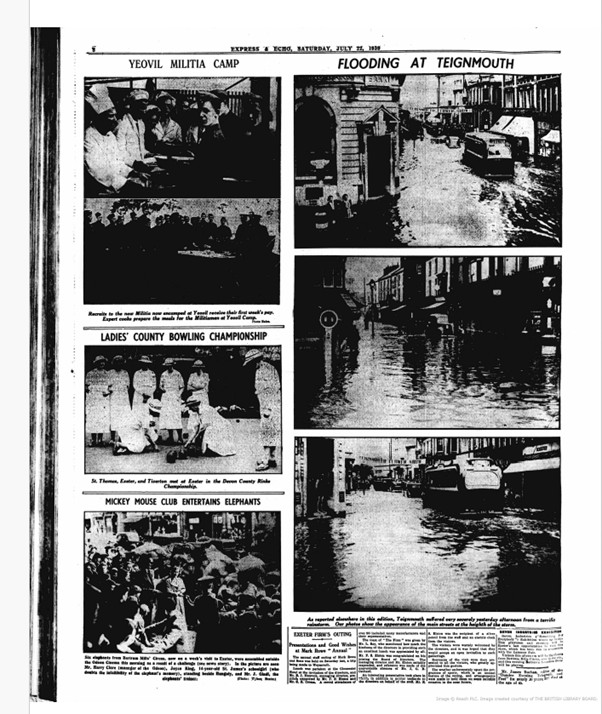
With a bit of research on the British Newspaper Archive, our colleague Helen Mason found the photograph reproduced in the Express & Echo, published Saturday 22 July 1939.
The girl was Joyce King, a 14‑year‑old St James’s schoolgirl, photographed beside an elephant called Hungoly during a publicity appearance outside the cinema. The visit was part of a challenge involving the Odeon’s Mickey Mouse Club and Bertram Mills’ Circus, which was in the city at the time.
Knowing this transformed the photograph instantly. It was no longer just an extraordinary scene, it became a moment in Joyce’s life, recorded for posterity by photographer Henry Wykes (1874–1964), and now rediscovered by new generations of Exeter residents.
How You Can Explore History Through Images
One of the pleasures of working with historic photographs is that each one can lead you down a different research path. When a picture captures your imagination, there are lots of places you can look for more information:
- Historic newspapers, which are rich with local stories, event listings, and photographs.
- Local archives and catalogues, where comparable images or records may be held.
- School records, trade directories, town guides, or old maps, depending on the subject.
- Visual clues inside the image such as posters, signs, clothing, or architecture which help narrow down dates or locations.
You don’t need to be an archivist to begin this kind of research. Curiosity is the most important tool!
Why This Story Matters
This single photograph has brought joy, laughter and endless questions from young people across Exeter. It reminds us that the Isca Photographic Collection isn’t just an archive, it’s a treasure chest of stories waiting to be uncovered.
And as for Joyce?
We’re certain she never imagined that, 87 years later, a room full of schoolchildren would still be talking excitedly about the day she stood beside an elephant outside the Odeon.
If you’d like to explore more images, or start your own research journey, you can visit us at the Devon Heritage Centre. Who knows what you might discover?
Acknowledgments
Thanks to National Lottery players

The Isca Photographic Collection project is made possible with The National Lottery Heritage Fund. Thanks to National Lottery players, we have been able to preserve an irreplaceable record of twentieth-century Exeter.
The project builds on the foundational work of historian and photographer Peter Thomas who created the Isca collection. It is supported by the Friends of Devon’s Archives.