
Bringing Exeter’s Past to Life: Isca Community Outreach Programme in Schools and Colleges
By Kitty Vega, Isca Photographic Project Officer
When we began the Isca Photographic Collection project, one of our core aims was to make Exeter’s visual history meaningful and accessible to people of all ages. One of the most rewarding parts of this work has been our partnership with Daisi, a local arts education charity, which enabled us to take the collection directly into local schools and colleges through a series of creative workshops.
Using Historic Photographs as a Creative Spark
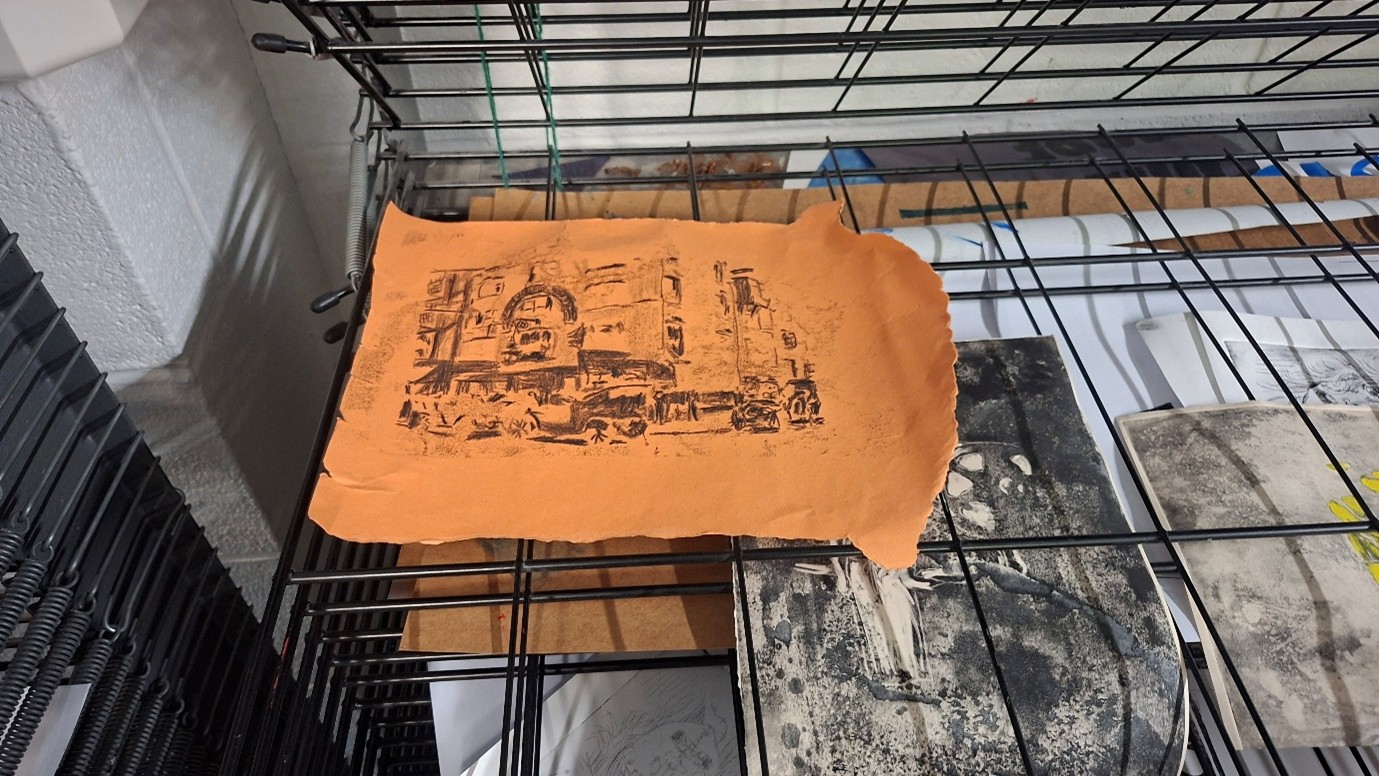
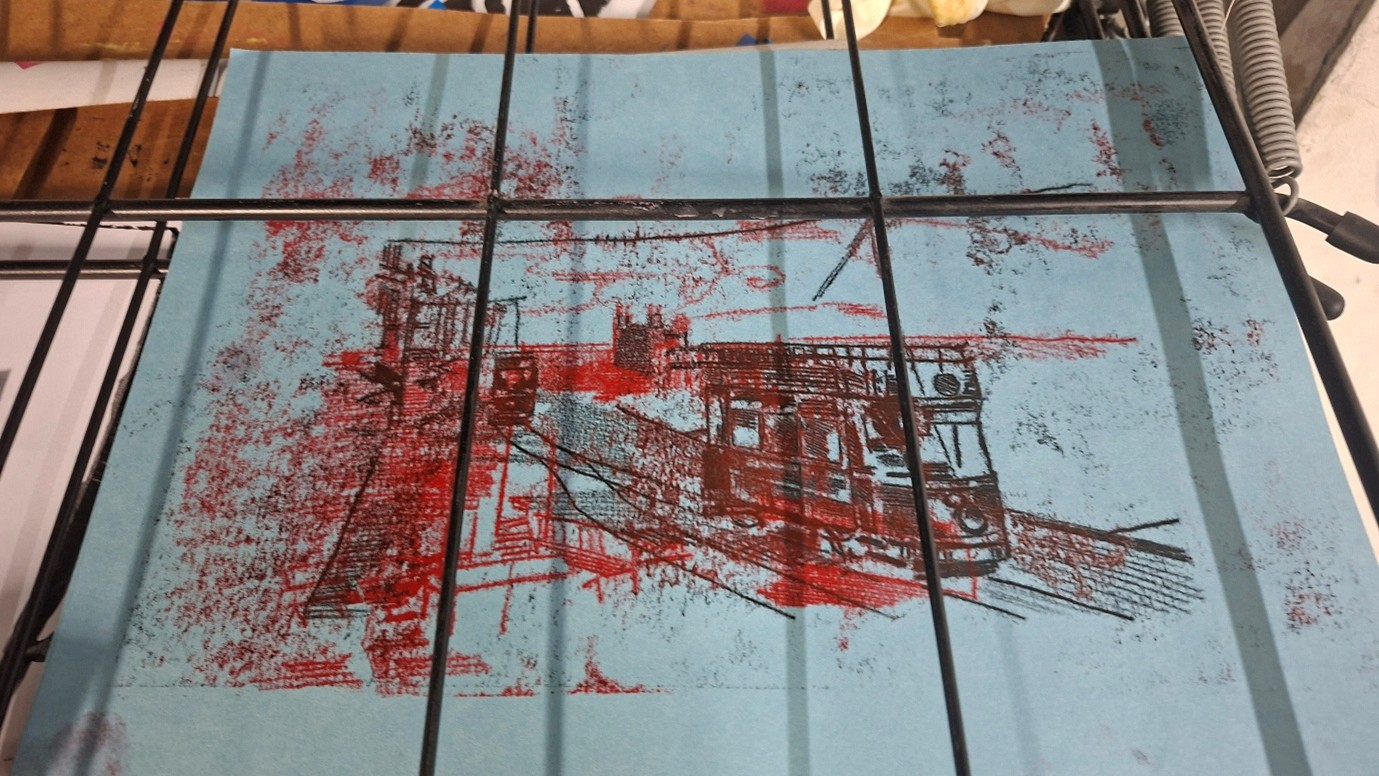
Working with Daisi and three professional artists, Helen Gilbert, Abby Stobart (both from MED Theatre) and Simon Ripley from Double Elephant Print Workshop, we delivered three full days of activity in each participating school or college. Using photographs from the Isca Collection, particularly those taken by Henry Wykes, students explored Exeter’s changing landscape, its social history, and the everyday stories captured through the camera lens.
The workshops took two main forms:
- Performance, where students created characters, scenes, and responses inspired by historical images, from wartime streets to bustling quaysides.
- Printmaking, using monoprint techniques to help pupils slow down, observe details, and make thoughtful artistic choices.
Across these sessions, students repeatedly demonstrated a strong sense of connection to the images, especially when recognising familiar places transformed by time.
Impact on Young People
In total, 246 young people took part, ranging from primary pupils to college-level performers and art students. Their responses were powerful:
- 93% of primary-age children enjoyed looking at the old photographs.
- 84% said the images helped them see Exeter differently.
- 99% enjoyed working with a professional artist.
- Among older participants, 74% said that the workshops changed the way they understood Exeter’s history.
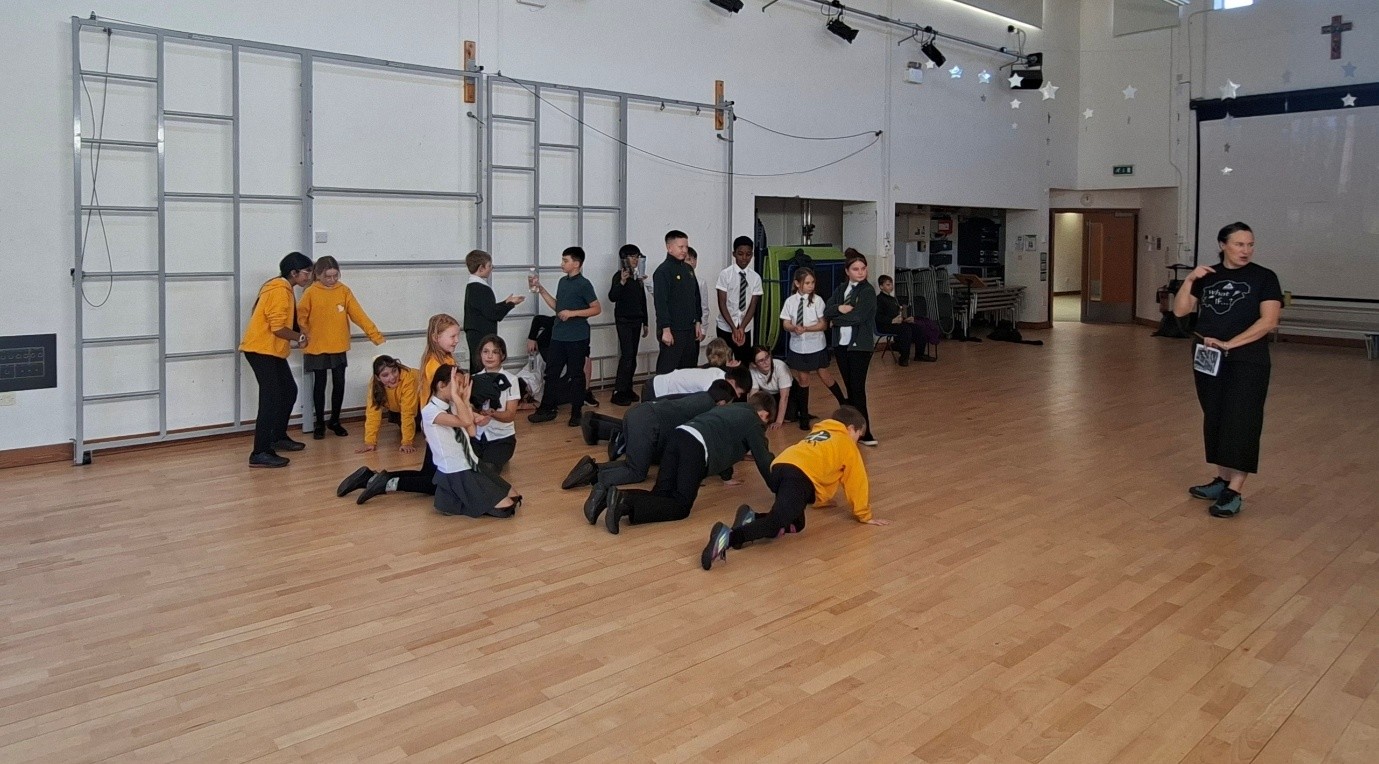
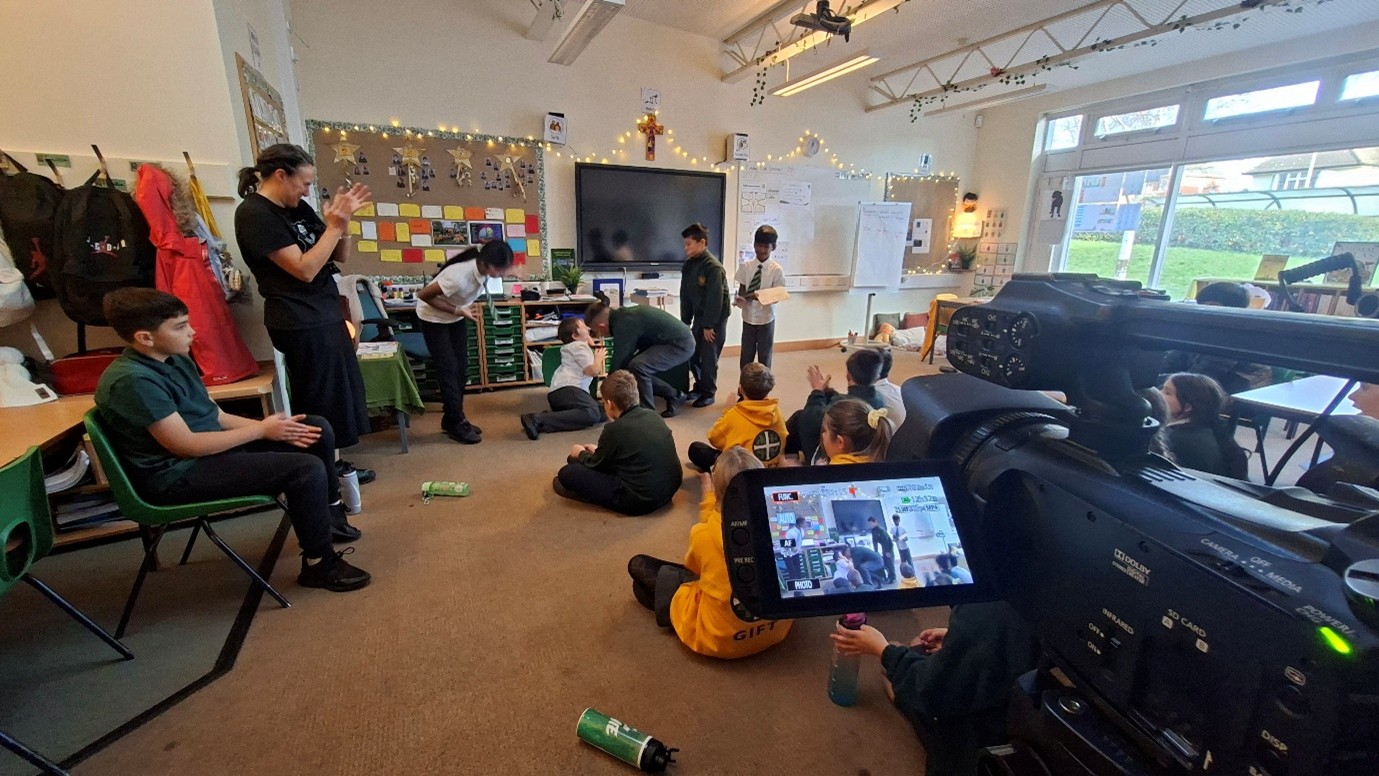
We saw firsthand how quickly the photographs sparked curiosity. Children were eager to point out details (clothes, cars, elephants outside the Odeon, even the crashed tram) and compare “then and now.” College students engaged deeply with themes of rebuilding, memory, and identity, often reflecting on how much of Exeter’s wartime and postwar story is still visible in its streets.
Why This Work Matters
For many young people, this was their first time encountering local heritage through art rather than textbooks. The workshops encouraged them to think critically, creatively, and personally about the city they live in. Teachers told us the sessions provided exciting new ways to teach local history, drama, art, and, importantly, that students left with a sense of pride and ownership over Exeter’s past.
Looking Ahead
This collaboration has shown just how powerful historic photographs can be as tools for creativity, learning, and community connection. With the Isca Photographic Collection now being digitised and preserved, we hope to build on this work and continue bringing Exeter’s visual history into classrooms across the city.
Acknowledgments
Thanks to National Lottery players

The Isca Photographic Collection project is made possible with The National Lottery Heritage Fund. Thanks to National Lottery players, we have been able to preserve an irreplaceable record of twentieth-century Exeter.
The project builds on the foundational work of historian and photographer Peter Thomas who created the Isca collection. It is supported by the Friends of Devon’s Archives.