
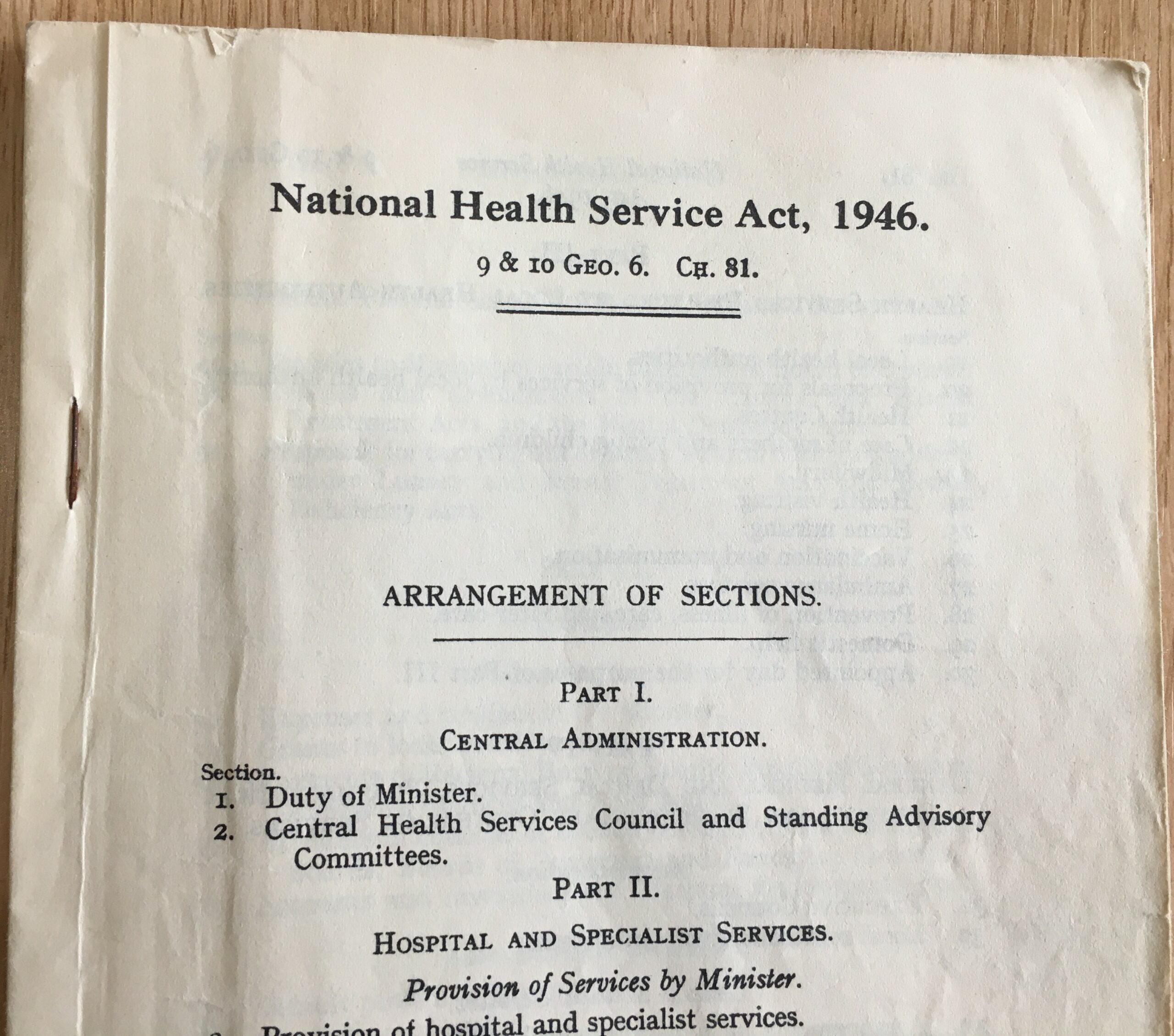
75 years on, the foundation of the National Health Service (NHS), on 5 July 1948, remains one of the most significant events in the political, social and medical history of the United Kingdom. Archivist Brian Carpenter look at records held with the Devon Archives.
Pre-NHS Records
While we hold a lot of material which relates to the foundation and growth of the NHS, perhaps our most important medical holdings come from a range of institutions which were in existence many years before the NHS came into being. These include the Royal Devon and Exeter Hospital, which was founded in 1743 and several mental health institutions which were set up during the nineteenth century. These were Exe Vale Hospital at Exminster, the ‘City of Exeter Lunatic Asylum’, commonly known as Digby Hospital, in the rural eastern hinterland of the city, and Wonford House Hospital, in Heavitree. Another such institution was Starcross Hospital, the records of which were held by Exeter University Library prior to their transfer to the Devon Heritage Centre in 2005.
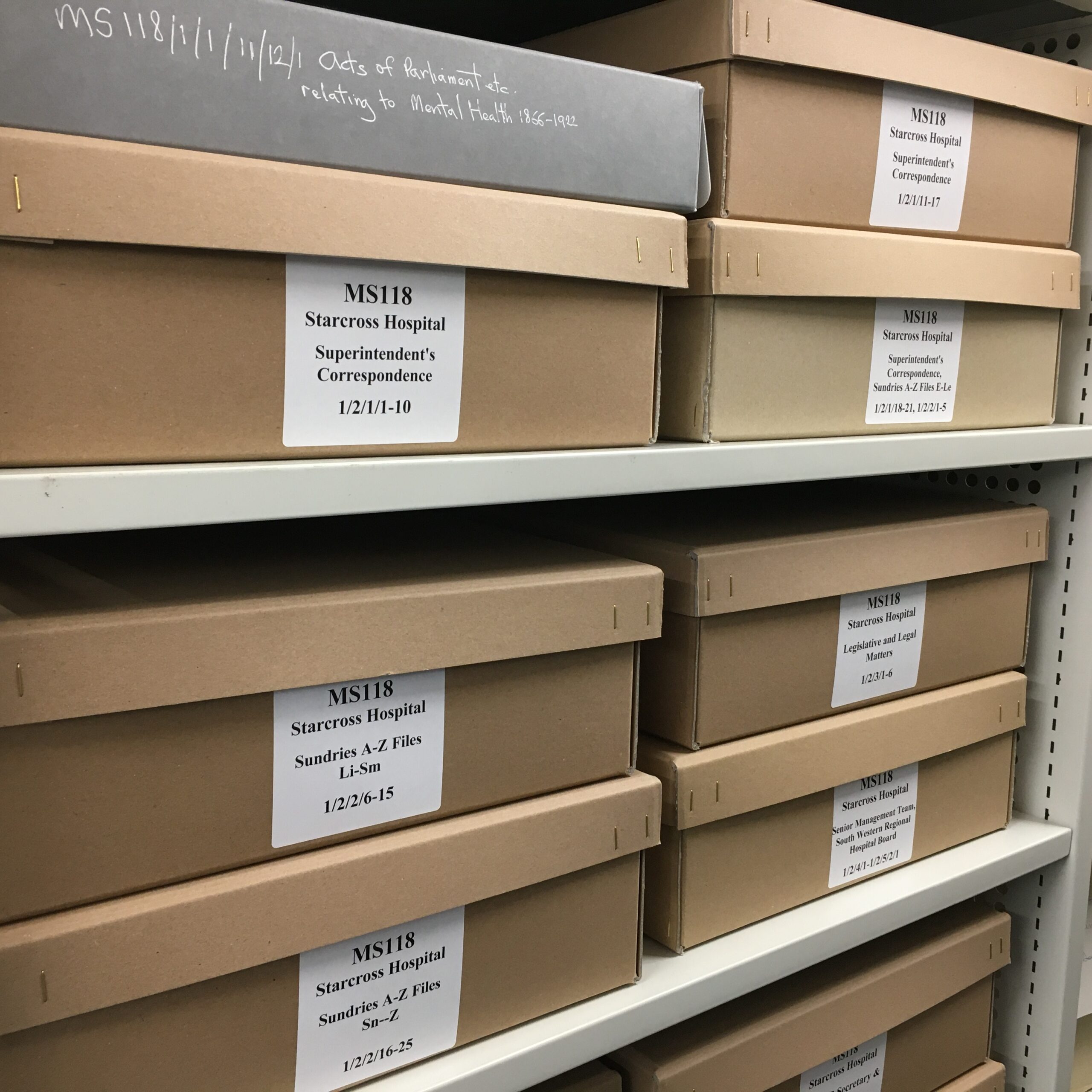
Starcross Hospital
This collection contains records relating to five institutions and organisations: Starcross Hospital; Digby and Wonford House Hospitals League of Friends; Newcourt House (the Royal Devon and Exeter Hospital Nurses’ Training School); and the Princess Elizabeth Orthopaedic Hospital.
However, many items in the collection are either fully or partly uncatalogued. We are currently working to complete the cataloguing of the Starcross Hospital portion and catalogue those parts of the collection which remain uncatalogued.
Starcross Hospital was originally known as the Western Counties Idiot Asylum, and opened in 1864 on land rented from the Earl of Devon. In 1877 a larger building opened and the name was changed to the ‘Royal Western Counties Hospital’ before, in 1914, it became the Western Counties Institution. From July 1948 it became part of the National Health Service and following its closure in 1986 it was demolished in 1990.
The Starcross Hospital archive records the development of the hospital with minutes, plans of building works and extensions, and its administration, with details of the training and activities that were provided for residents. There are patients’ records consisting of admission registers, applications for admission and case books. Staff records include details of nursing and teaching staff.
Genealogical Research
The records of all the mental health institutions are heavily used by genealogical researchers tracing ancestors who received treatment, and these, along with the many later records we hold, chart the journey of British medical provision from piecemeal private provision towards the brave new world of the NHS.