
The South West Heritage Trust was awarded a grant by the National Archives’ Archives Revealed cataloguing grants programme to enable us to catalogue the family and estate papers of the Cary family of Torquay. The Carys, who lived at Cockington Court and later Torre Abbey for almost 300 years from 1662, were significant landowners in Devon, served as MPs, intermarried with leading West Country families and were active at the royal court. In this project update, archivist Stuart Tyler tells us more about deeds.
What are deeds?
Deeds are basically legal records relating to property. They usually confirm the ownership or the tenancy of (or some other right or interest in) a property, or transfer this between people.
You may have heard some deeds referred to as ‘indentures’. This refers to the zig-zagging indents that often run across the top of the documents. Originally both parties in a legal transaction would take away half of a piece of parchment, with identical text on each part, sliced in two with this wavy, irregular line. In theory then, the two copies could be physically slotted back together in the future, should there ever been any dispute over their contents.
Deeds come in myriad different types, including the bargain and sale, feoffment, common recovery, final concord, lease and release, quitclaim or marriage settlement.
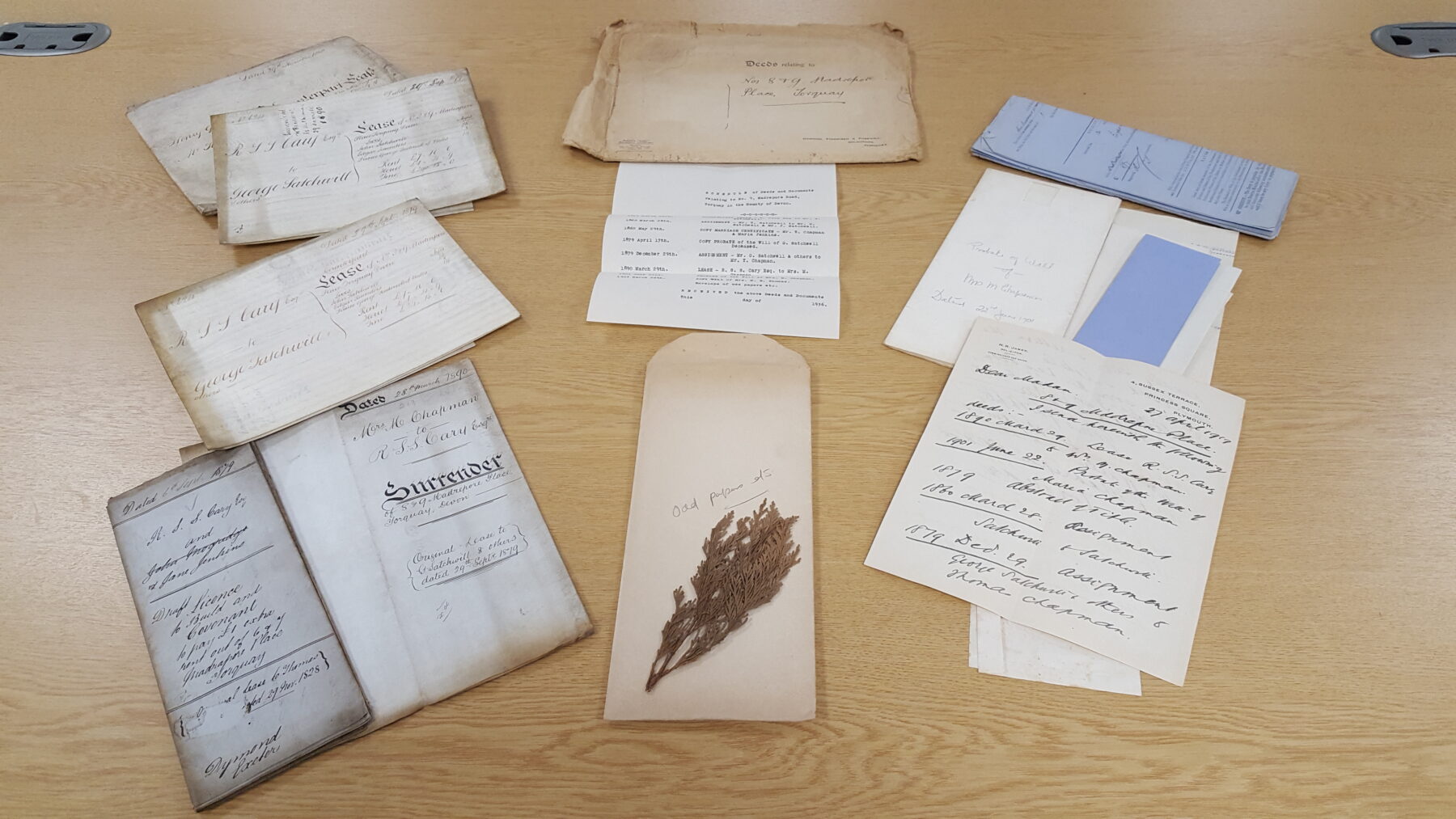
Cary deeds coverage
There are well over three thousand deeds for properties throughout Devon, with deeds for Torquay in particular making up around half of this total. Aside from deeds of surviving houses and buildings, these also documents parts of Torquay which have since disappeared – for example, George Street or Swan Street (demolished to make way for the Fleet Walk area in the 1980s), or the great iron-and-glass structure of the Winter Gardens, dismantled and then transported by barge to be rebuilt in Great Yarmouth in Norfolk in 1904!
Much of the rest of the county is also covered though, with particular strengths in parts of North Devon including Ashwater, Bideford, Bradford and Northlew, as well as other parts of South Devon like Paignton and Stokenham. The collection also includes deeds from the Cary’s out-of-county holdings including in Westminster, Wiltshire and County Durham.
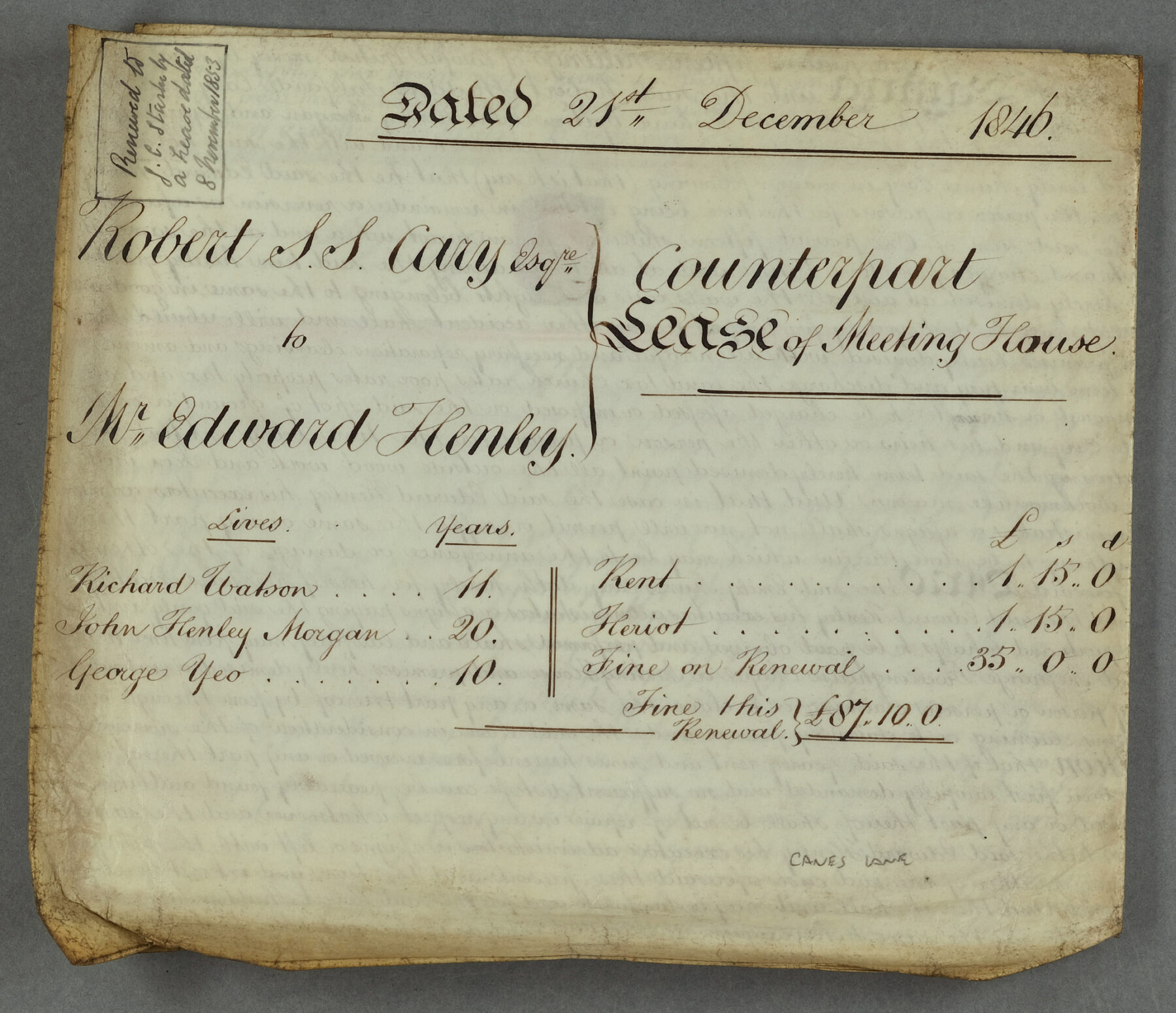
Why are deeds useful?
Naturally deeds are heavily used for house history, telling you who owned or rented your house or, if you’re lucky, even giving an indication of when it was first built.
Deeds can be useful for family history, often confirming relationships or adding extra members to a family tree.
Deeds are also helpful for wider social or economic history. The quantities of new building agreements can indicate urban growth in a particular area, whilst changing agricultural practices can be inferred from land being split up, or from certain services (carriage of stone, coal, crops etc) being demanded.
