
Dr Tabitha Stanmore is a postdoctoral researcher on the Leverhulme-funded ‘Seven County Witch Hunt Project’ at the University of Exeter, and is a specialist in medieval and early modern English magic and witchcraft. She has featured on Radio 3’s Free Thinking and BBC 4’s Plague Fiction, and written for TIME, The Conversation, The Telegraph, and many more.
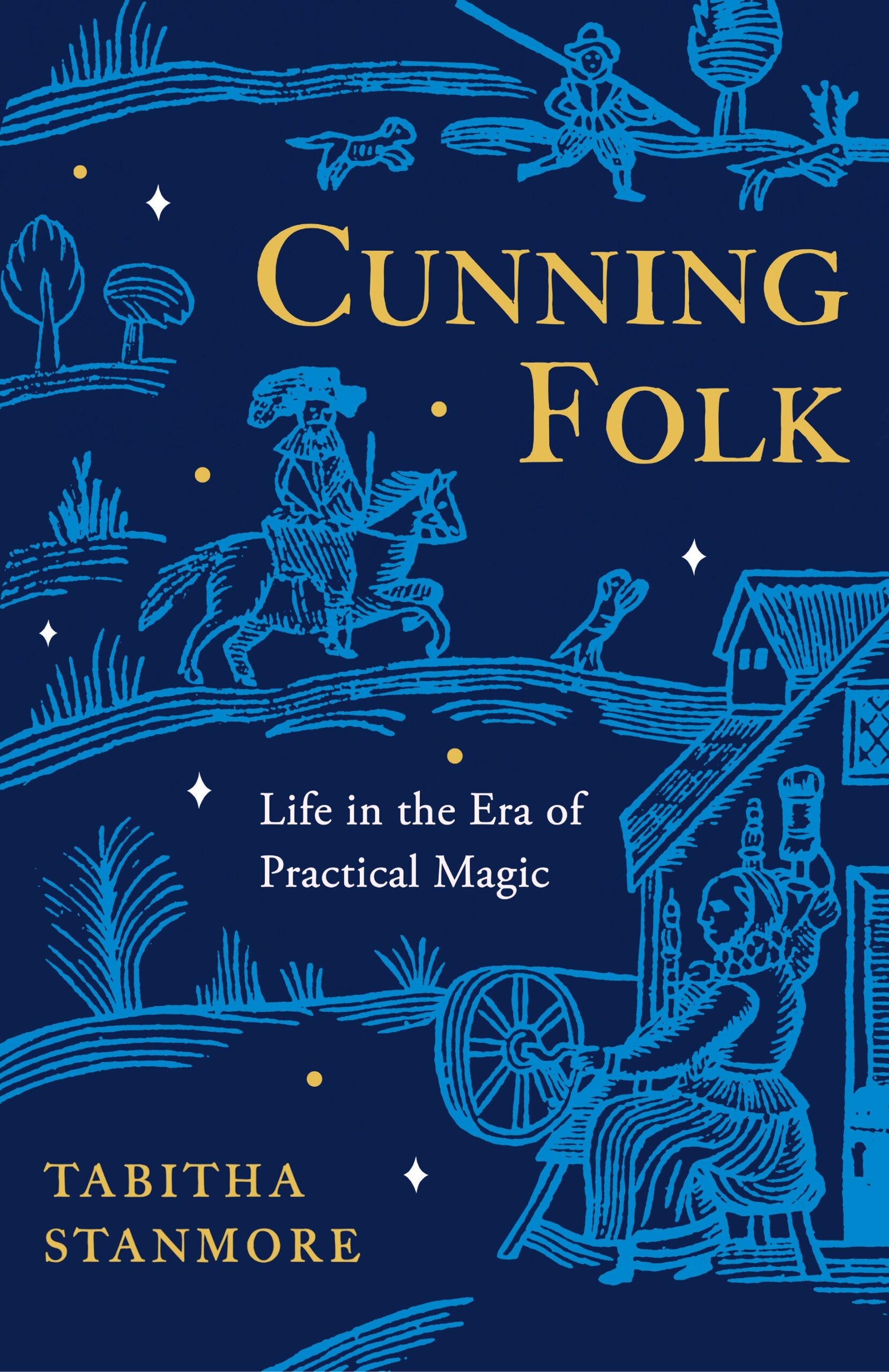
Her book, ‘Cunning Folk: Life in the Era of Practical Magic’ (The Bodley Head and Bloomsbury US, 2024), was Editor’s Pick by the New York Times and featured in History Today and Hypertext among others.
Glastonbury in Somerset is a town awash with myths and legends and on Thursday 12 June 2025 Dr Stanmore will be giving her talk ‘Life in the Era of Practical Magic’ at Somerset Rural Life Museum in Glastonbury. We spoke to Dr Stanmore ahead of her lecture.

Q & A with Dr Tabitha Stanmore
What inspired you to delve into the world of medieval and early modern English magic and witchcraft?
It’s a fascinating subject, and it’s hard not to get sucked in! My interest started when I was a kid growing up in Wiltshire, surrounded by incredible history and folklore. As I got older, I became interested in the nature of belief – particularly why people believe what they do, and what it means to them. I read history at university, mostly focussing on medieval and early modern Christian sects, and from there it was a short jump to exploring the social function of supernatural phenomena more broadly. I wrote my undergraduate dissertation on male witches, and planned to research the same topic at postgraduate level. When I started my PhD, though, I realised that there were a whole host of other magical practitioners running around medieval and early modern England, beyond witches. I fell down a magic rabbit hole and haven’t climbed back out.
What was your favourite or most surprising discovery from your research on rural magic practices?
Probably how relatable it is. The demands made of magic were things we still strive for today: health, prosperity, love, safety. In rural areas (which was most of England at the time), people were at the mercy of the weather, and if crops failed or animals got sick then people starved. Because of global trade we’re more insulated from that threat now, but whenever we get heavy rainfall or drought (as we have in recent years), it’s easy to understand why people would be tempted to use magic to try to change things.
How did communities in Somerset and beyond view the role of magic in their everyday farming life?
For the most part, communities treated magic quite practically. While the Church (and after 1542 the State as well) worried about the darker side of magical practice, most rural people would have treated magic as a tool. There were spells to make butter churn, rituals to make fields fertile, and ways to predict whether your goods would sell at the market. These were very real-world needs, and would be used on a daily basis. Many people probably didn’t even see them as magical – it just what you did to get by.
What were some common charms or spells used by farmers to protect their crops and livestock?
The charms ranged from simple and benign to downright disturbing. Blessing cattle every year was fairly common – just making the sign of the cross on each cow’s forehead might protect it from disease. A 16th century cunning woman named Agnes Howell had a different approach, though. She told her clients that if they had sick cows or chickens, they should take a branch from a specific elm tree and beat the animal with it. The elm tree was special because, sometime before, a man had made a hollow in the trunk, put in a shrew, and driven a peg in after it. Apparently this gave the wood the power to cure cattle that were “shrowe trodyn” – perhaps some kind of hoof rot.
How did the perception of magic and witchcraft evolve from the 14th to the 17th centuries in England?
In some ways, it changed quite a lot. Magic in the 14th century was not illegal: though the Church worried that it was a form of superstition and could lead people away from Christianity, it wasn’t seen as a major threat. In the 16th century, though, magical power began to be seen as more dangerous. The first Act against Witchcraft and Conjuration was introduced by Henry VIII. This law made it a hanging offence to kill or harm anyone through magic, and magical treasure-hunting, love spells, and finding stolen goods were outlawed at the same time.
Despite the harsh punishments (which were reduced slightly in Elizabeth’s reign – non-harmful magic was downgraded to a year’s imprisonment), though, people didn’t stop using magic. Clerics in the 17th century continued to complain that spells were still part of life’s daily routine, with farmers and others arguing that if magic didn’t do harm, how could it possibly be bad?
What challenges did you face while researching ‘Cunning Folk’ and writing the book?
The main challenge was finding the evidence. Because magic was so normal for most people, it wasn’t written about even nearly as much as you might expect. I ended up looking at a huge range of source types to piece together the book: things like court records and legal codes, but also diaries, recipe books (which often have spells written in the margins), plays and stories. Combined, I think these give us a pretty good picture of what role magic played in pre-modern life – but I’m always stumbling on new examples that I wish I could add to the book!
How do you think modern audiences can relate to or learn from the magical practices of medieval and early modern England?
I think we can relate to some of the magical practices pretty easily (though maybe not the ones involving animal cruelty). So many of them speak to universal, timeless human fears: will I recover from this illness? Can I find love? How can I get to the top of my career? How do I keep my family safe? We all have these worries: the question is how we cope with them. I think that magic is, at its core, an expression of hope, and we should recognise that mix of fear and hope that drives us all.
What are your thoughts on the portrayal of magic and witchcraft in contemporary media compared to historical practices?
It depends very much on which media. A lot of mainstream portrayals are Hollywood-versions of history that have next to no bearing on reality, and that makes me sad. But other portrayals are startlingly accurate. The witches in Terry Pratchett’s ‘Discworld’ series are basically rural cunning folk (minus the flying broomsticks, which rarely featured in English magic), and the kinds of interactions the witches have with their neighbours could almost be lifted out a seventeenth century record.
- Dr Tabitha Stanmore invites you to uncover the fascinating world of everyday magic that shaped rural society from the 14th to the 17th centuries at her upcoming talk ‘Life in the Era of Practical Magic’ at Somerset Rural Life Museum on 12 June 2025. Book tickets.