
How the Roundhouse was Made
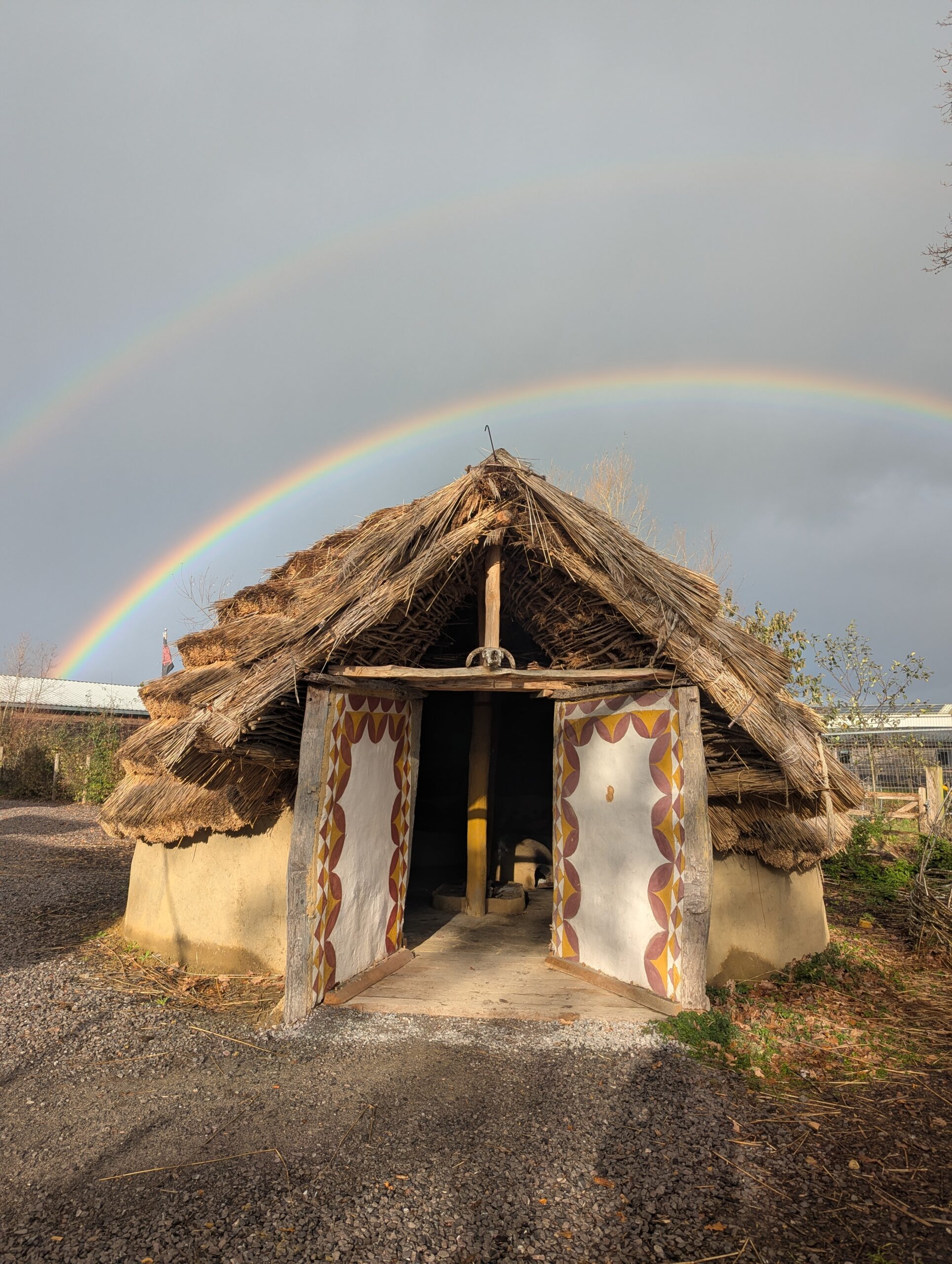
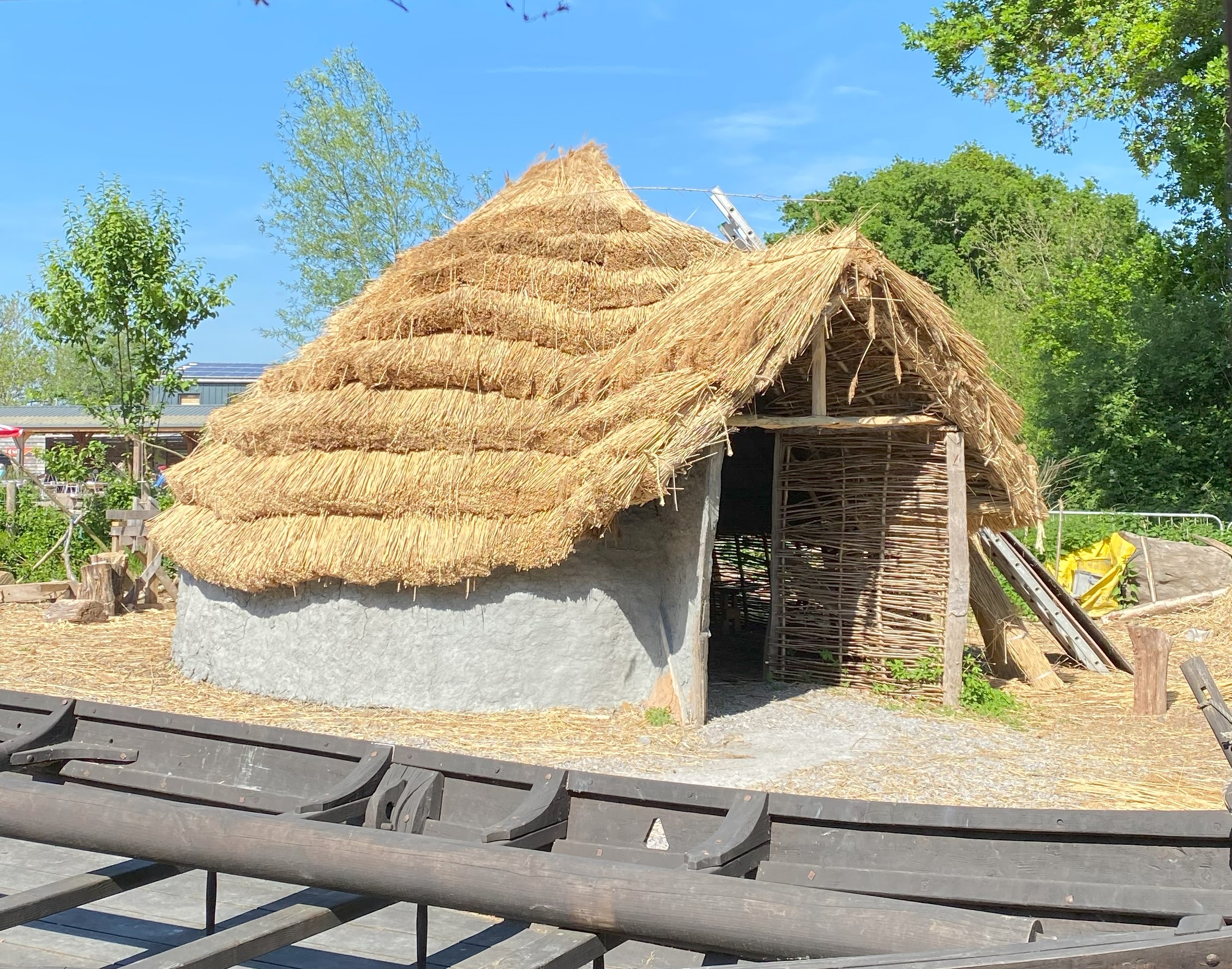
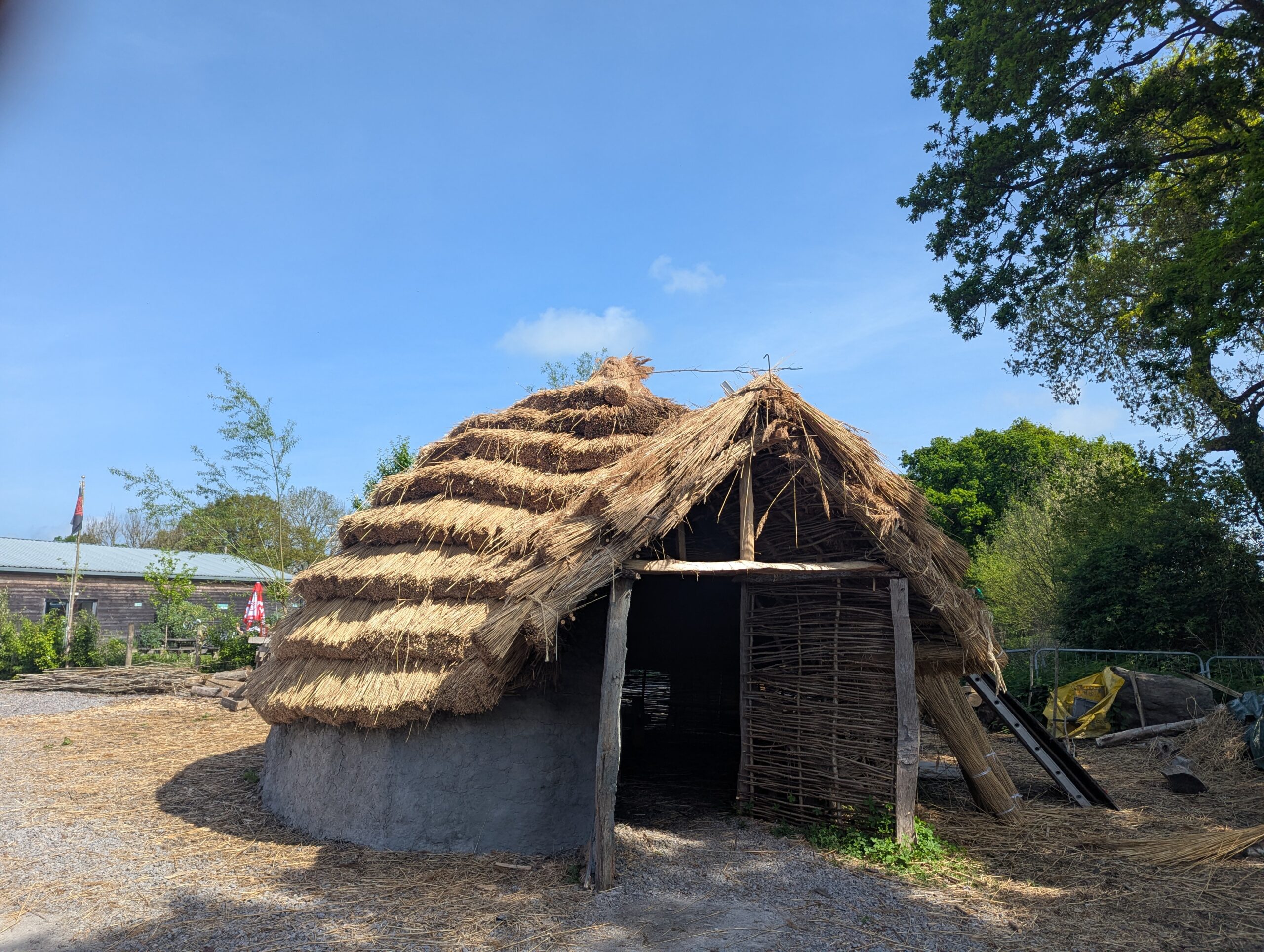
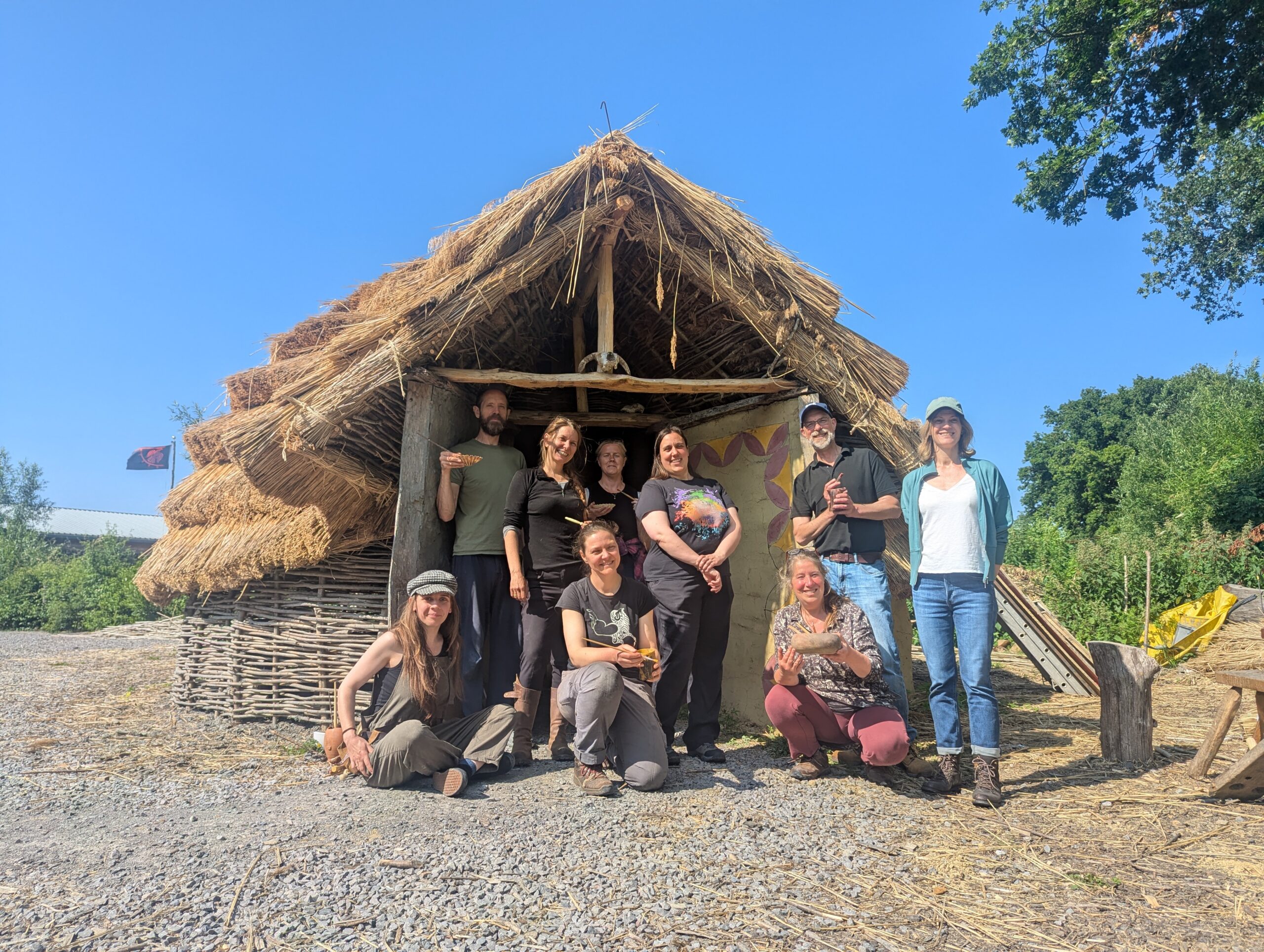
A new Iron Age roundhouse reconstruction has been completed at Avalon Archaeology. The reconstruction has been made as an experiment based on the latest detailed evidence from Glastonbury Lake Village. It was made and decorated by the Hands on Heritage Avalon Archaeology volunteers group, along with professional thatchers. Here we delve into the materials, methods, and experimental archaeology that shaped the structure from the ground up.
Construction and Experimental Archaeology
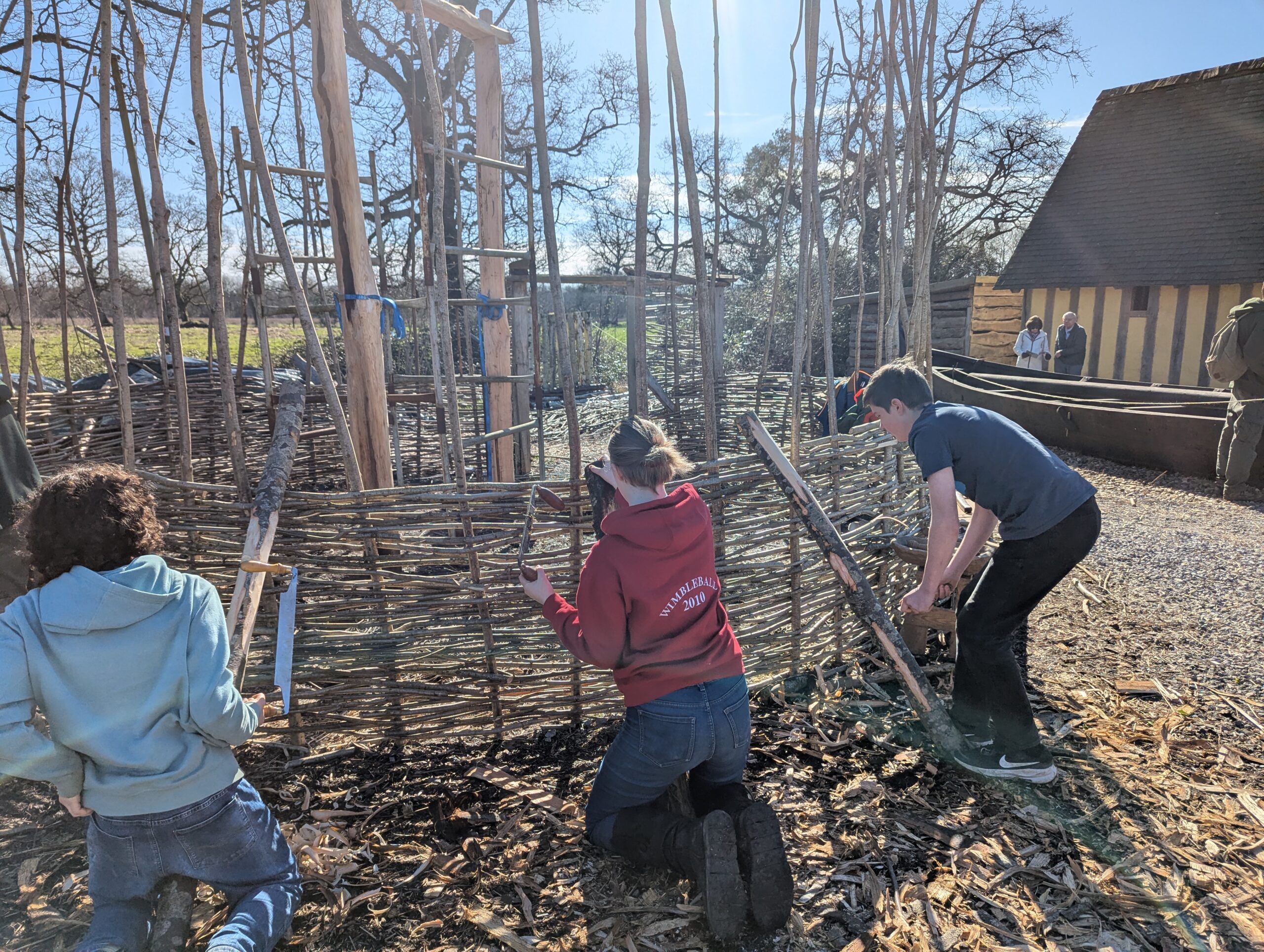
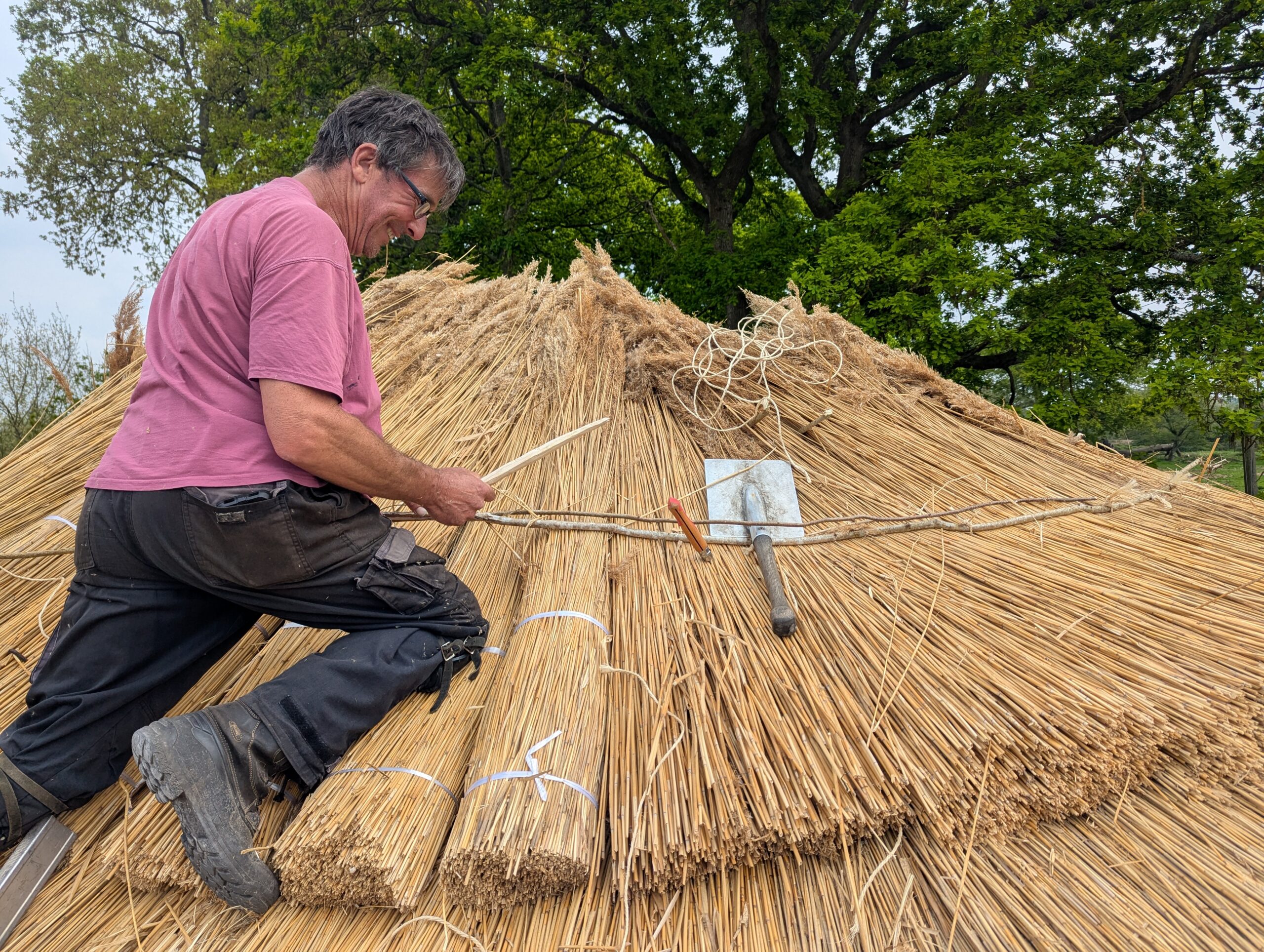
This reconstruction demonstrates authentic building techniques and materials used over 2,000 years ago, offering a rare glimpse into the craft, engineering, and problem‑solving behind Iron Age buildings. It took a team of experimental archaeologists and volunteers over 12 months to complete the project. From selecting the right timber to mastering ancient thatching techniques, the project showcases the practical challenges faced by prehistoric builders and the skill required to create homes in a wetland landscape.
Building the Reconstruction
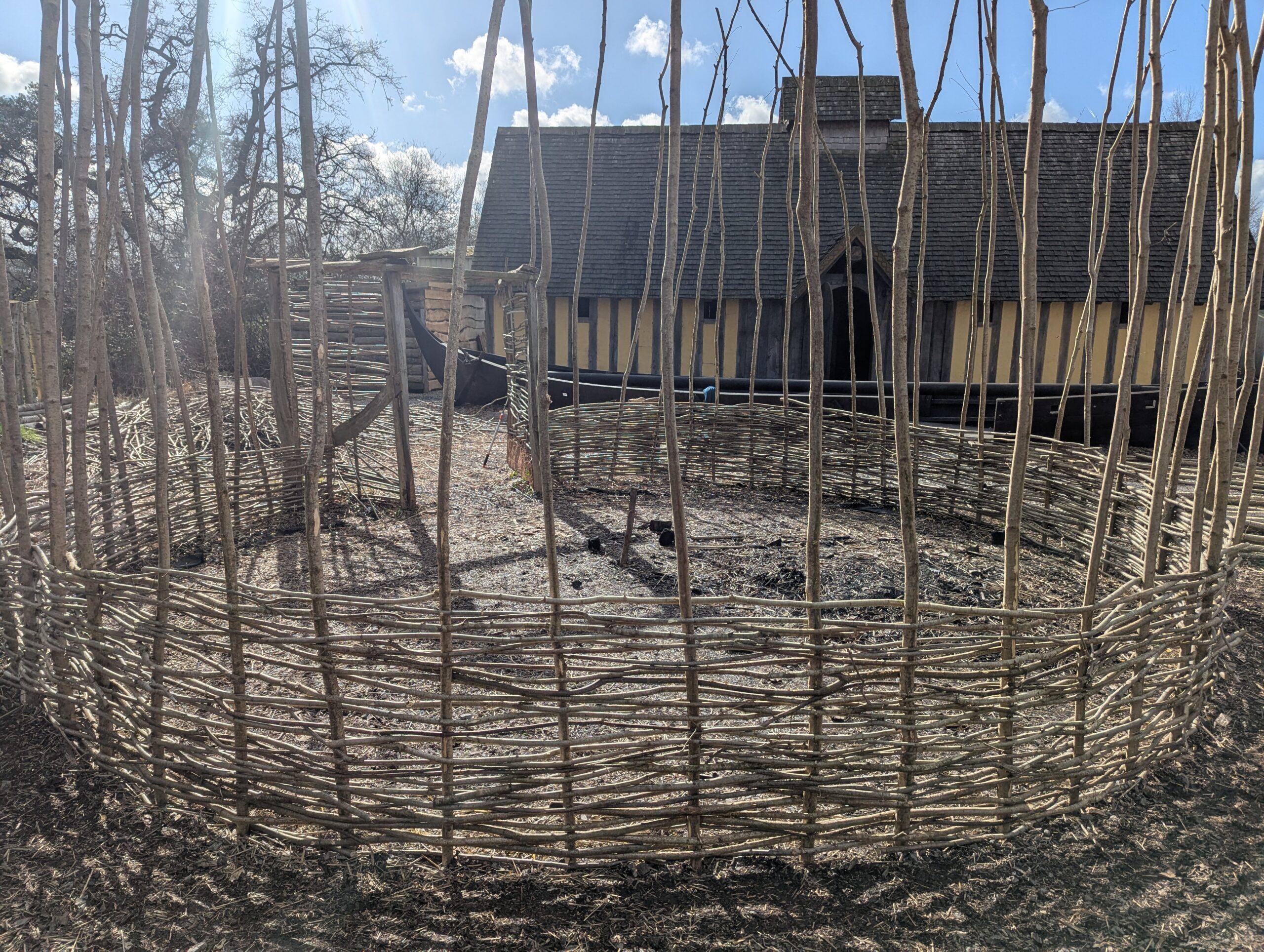
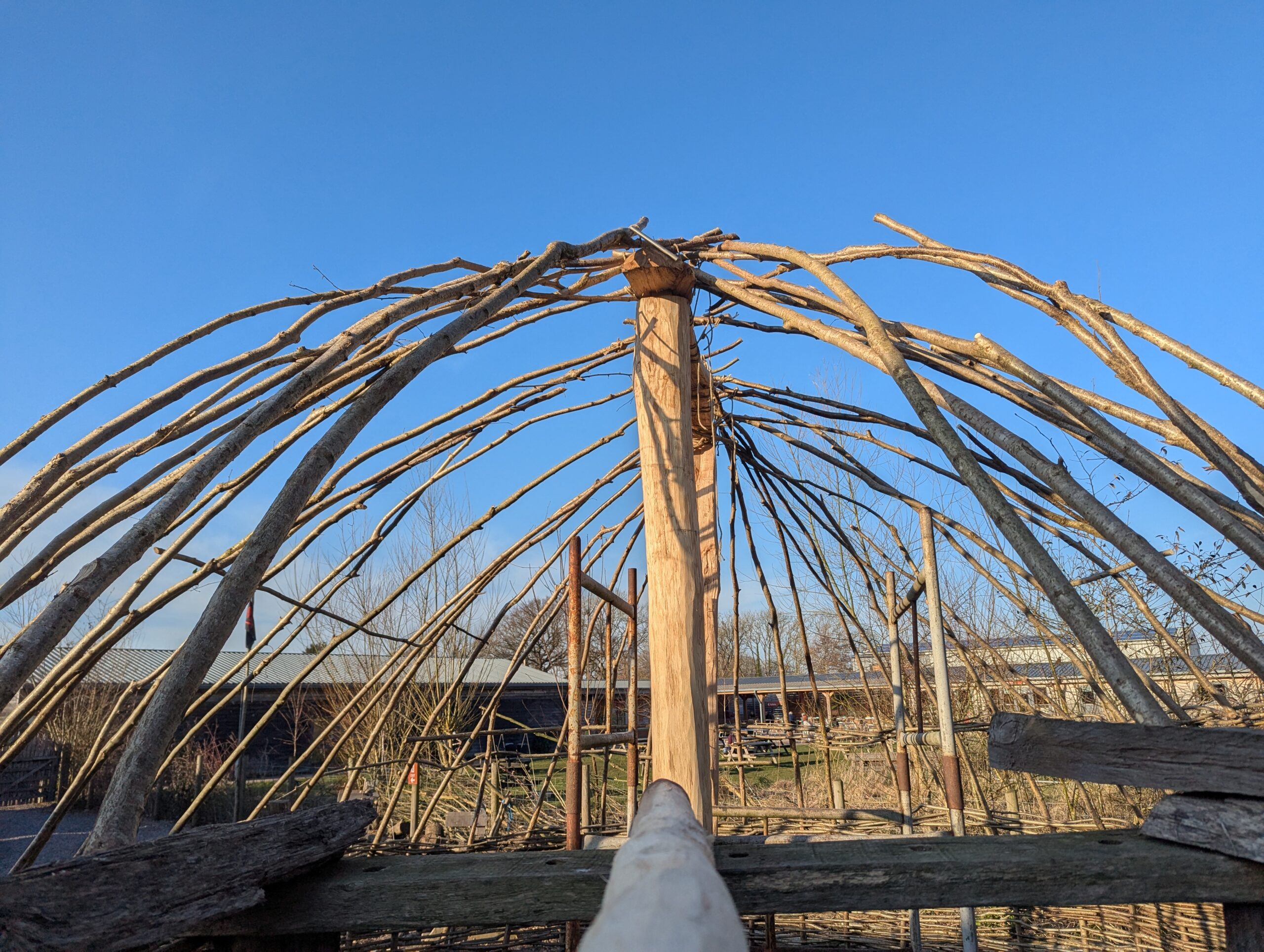
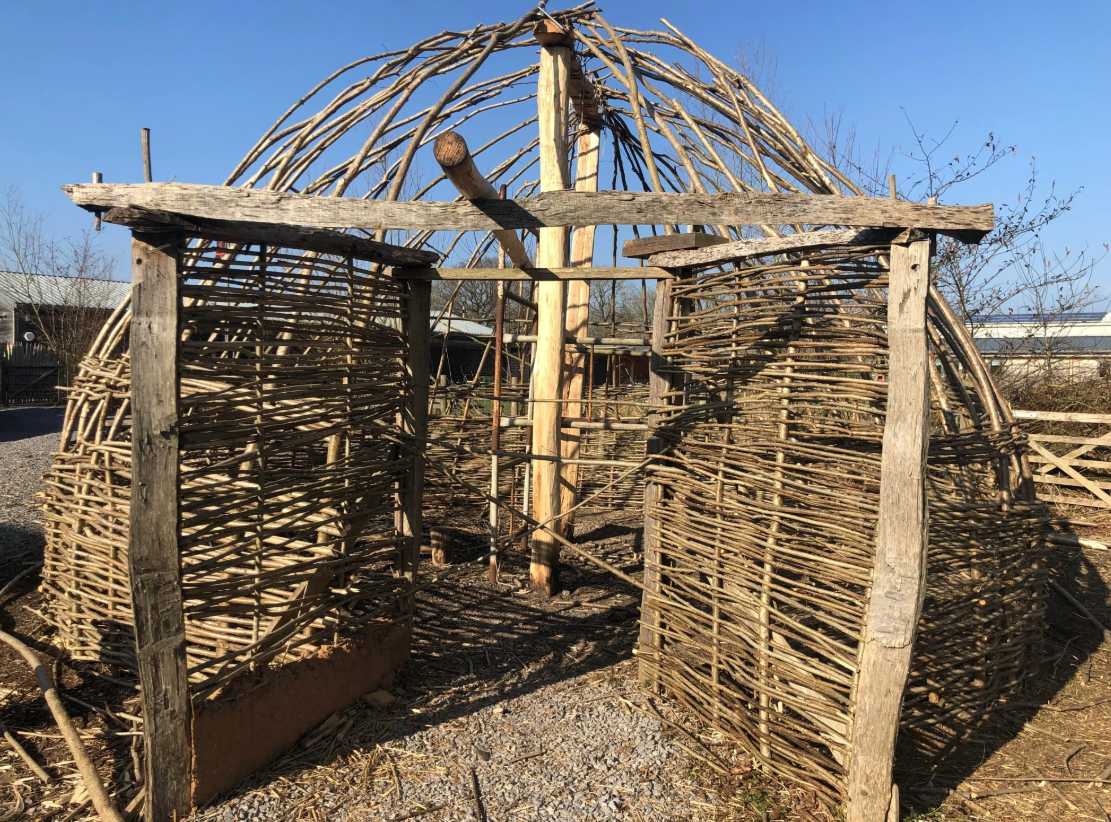
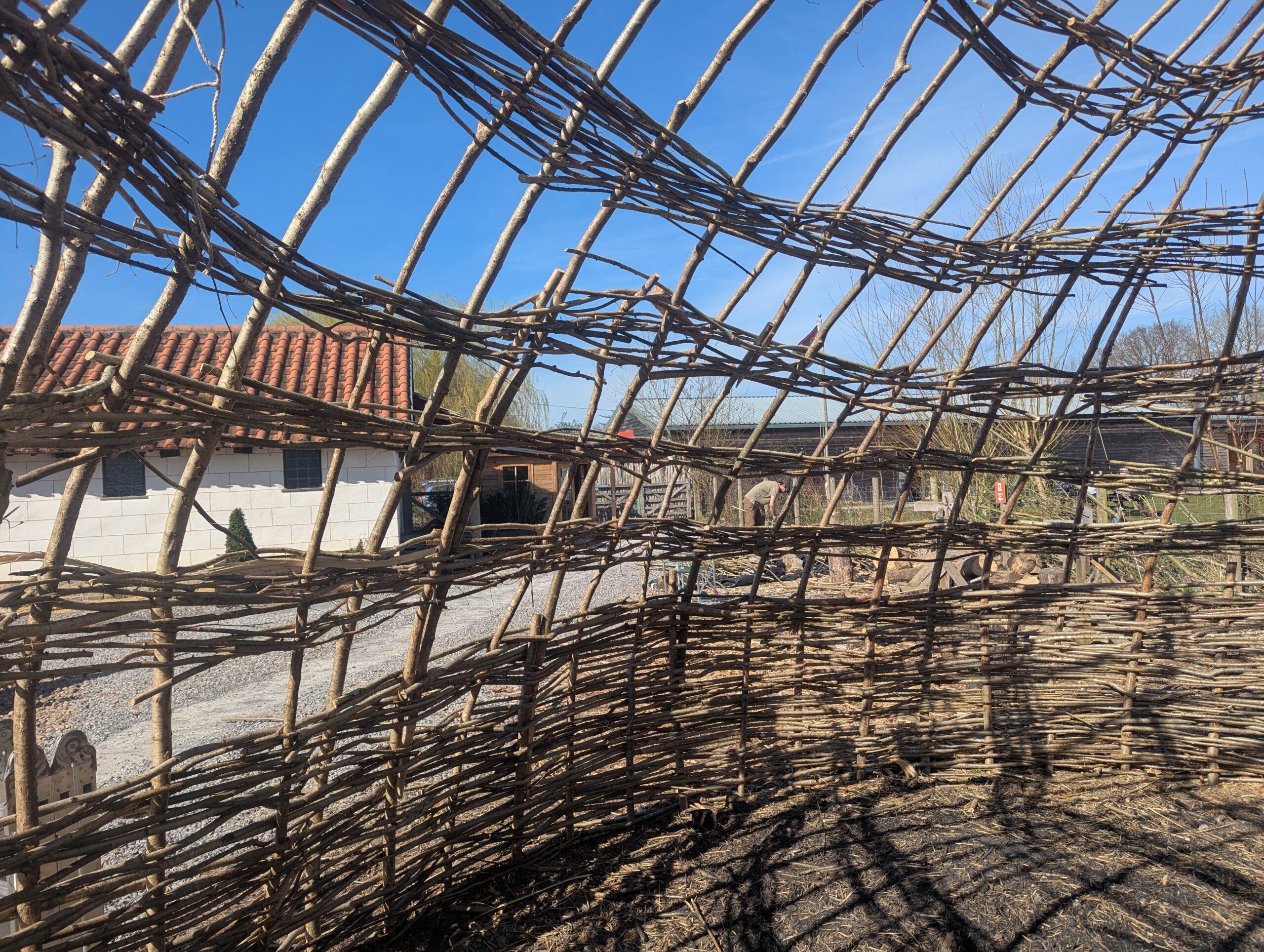
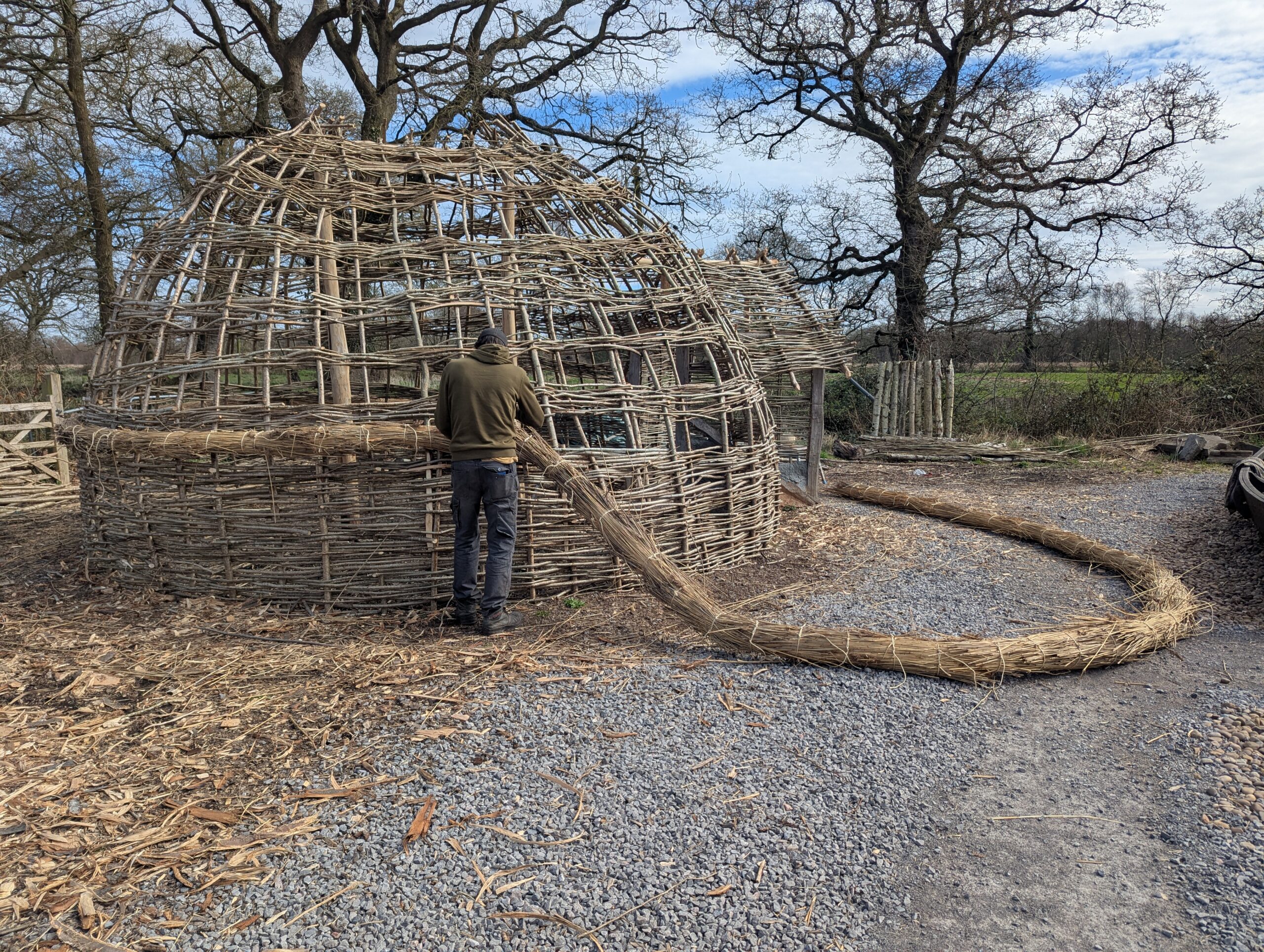
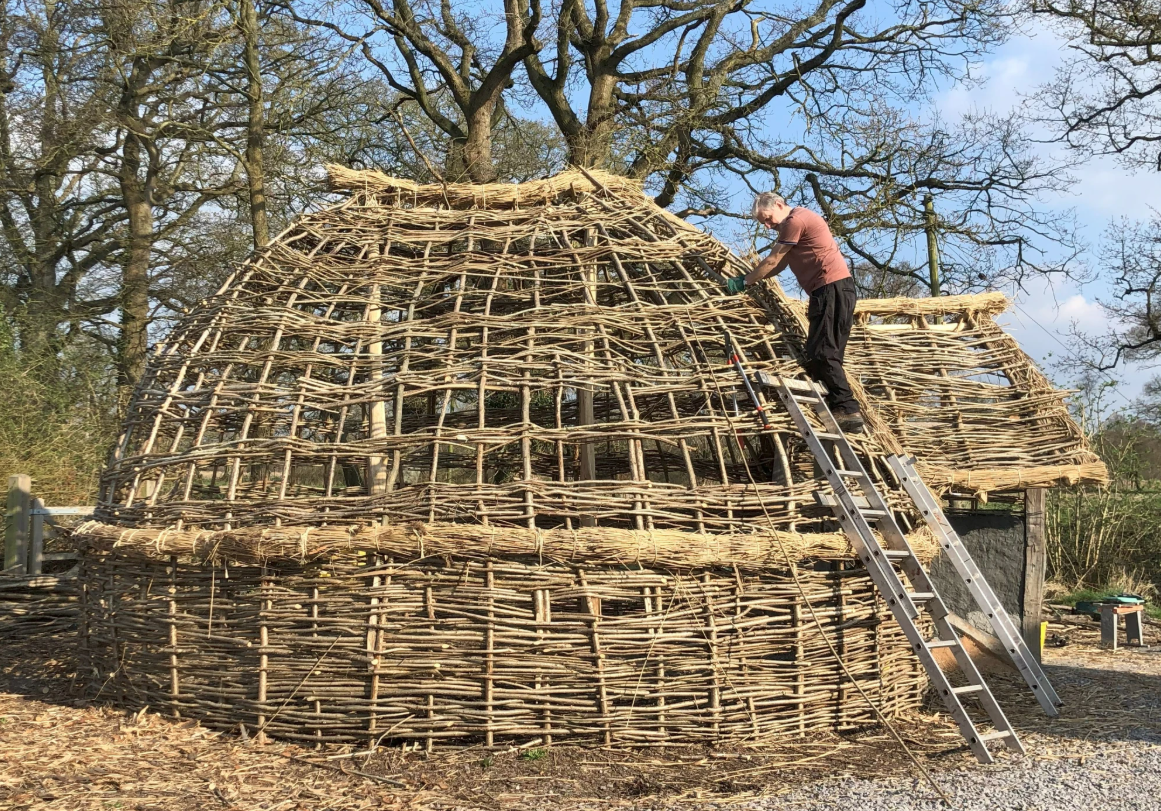
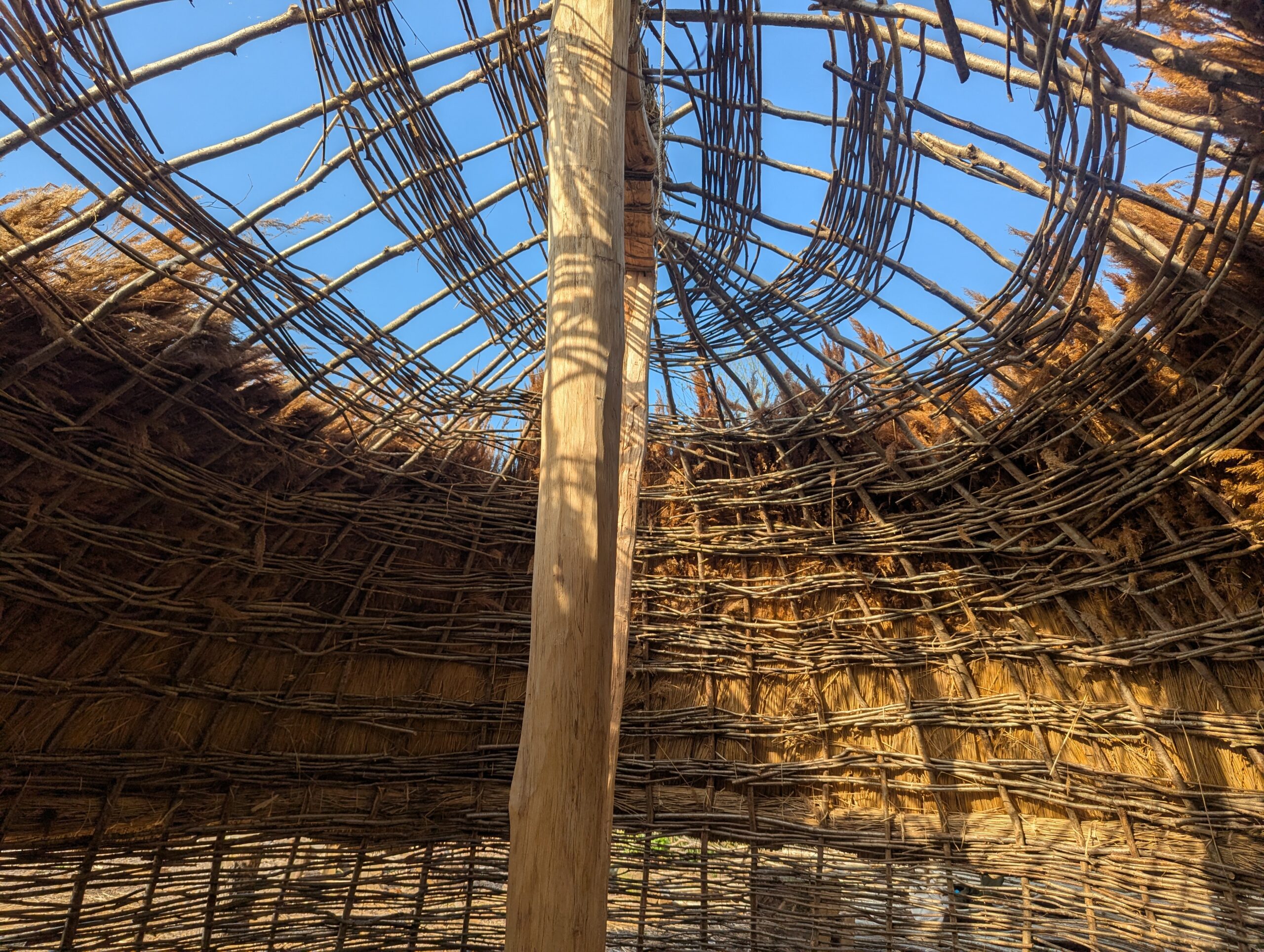
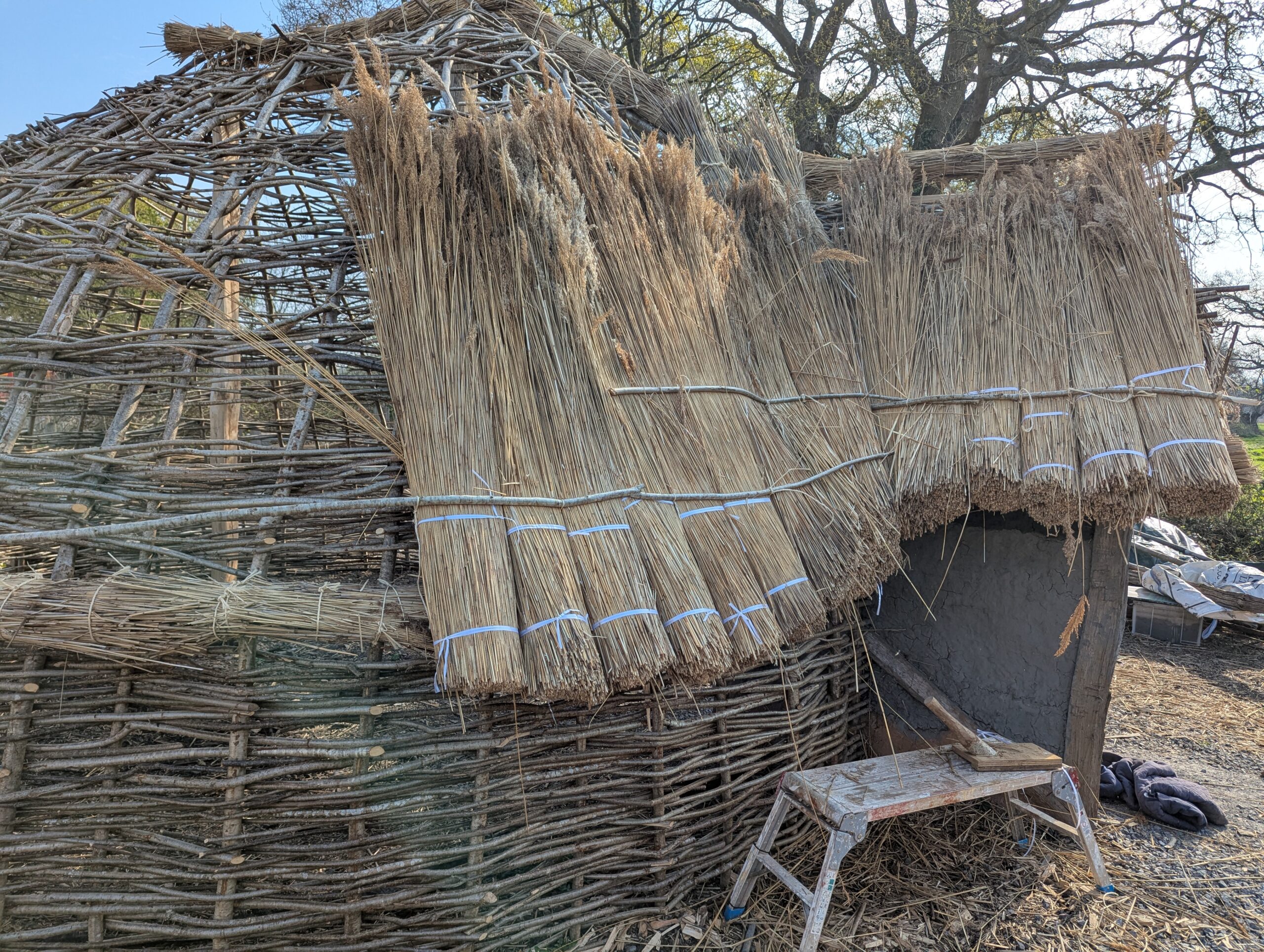
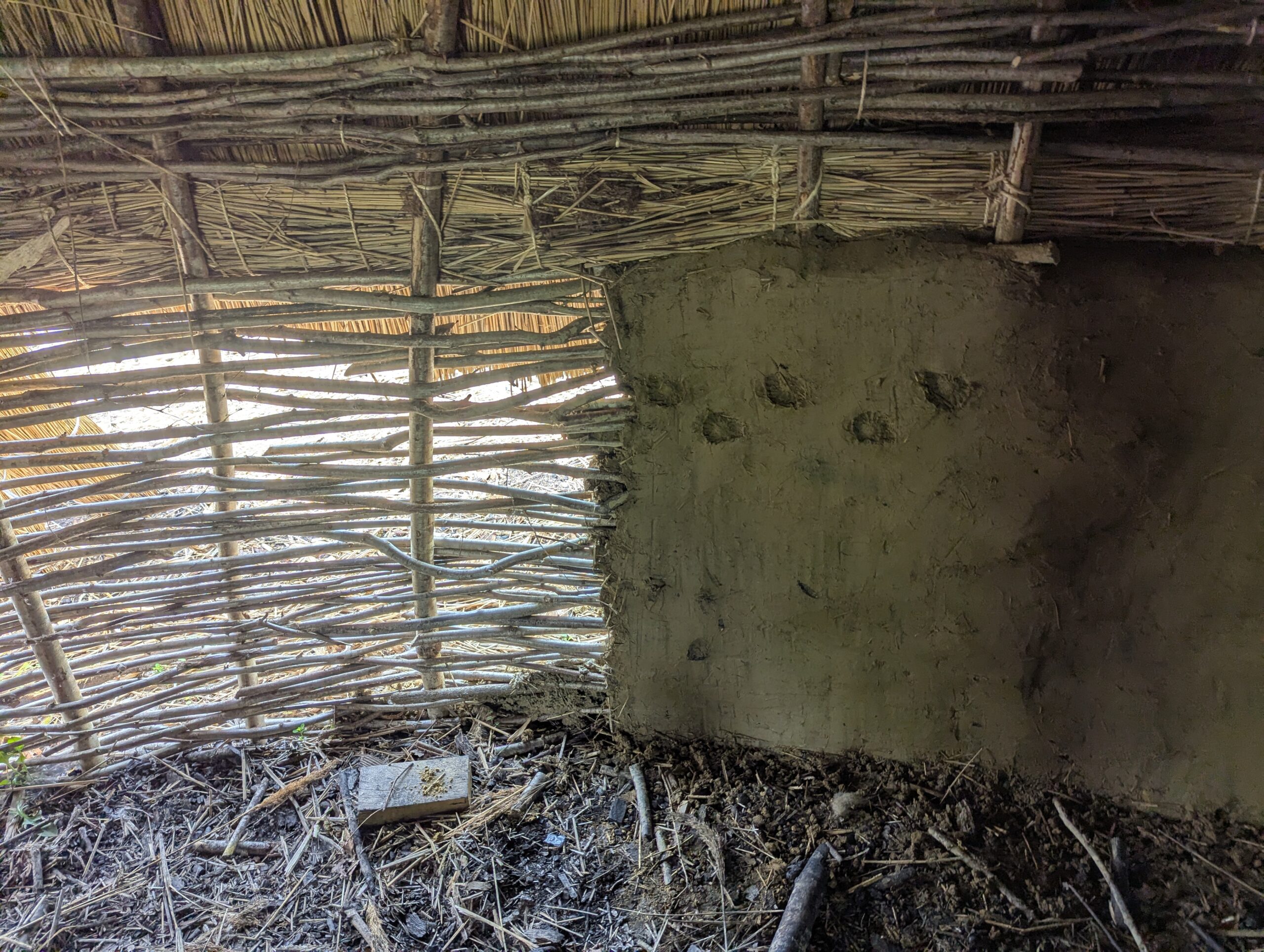
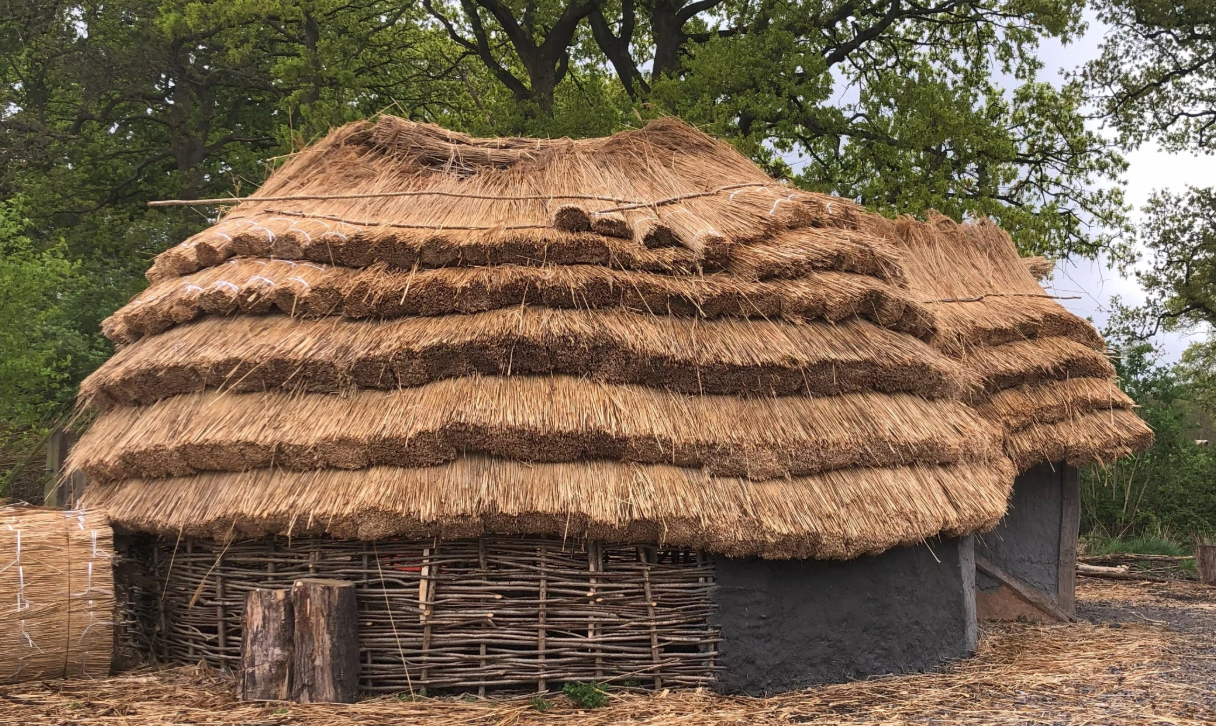
The reconstruction uses coppiced hazel for the framework, reflecting the small size of the original wall posts preserved in the wet peat. The walls reach 1 metre high before the uprights are bent over to form the domed roof. Ancient surviving wall posts indicate that Iron Age Roundhouses measured between 5 and 8 metres in diameter. The wall posts were made from willow or hazel and only inserted a short distance into the ground, suggesting the structure relied on the strength of its woven elements—much like a basket.
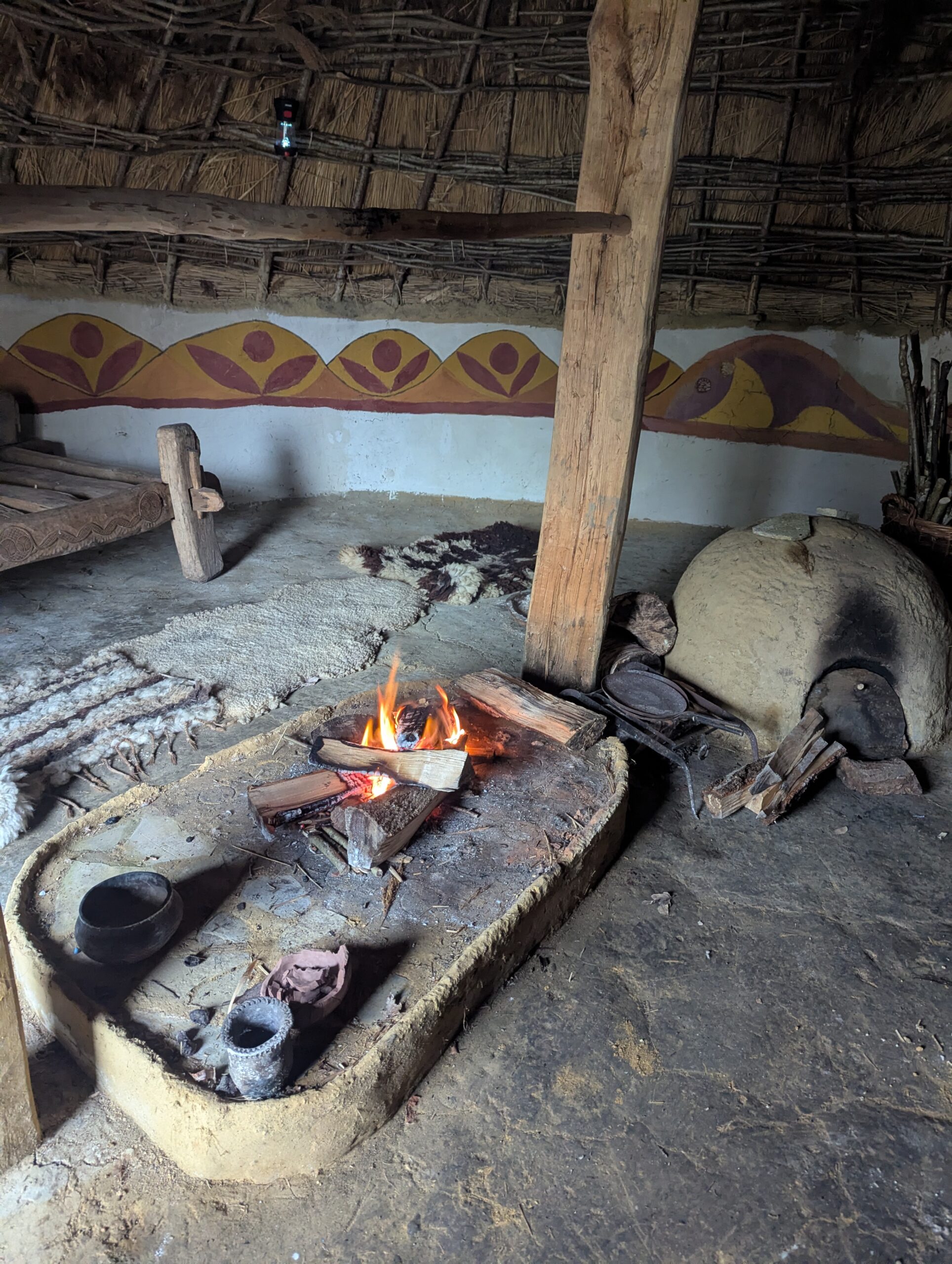
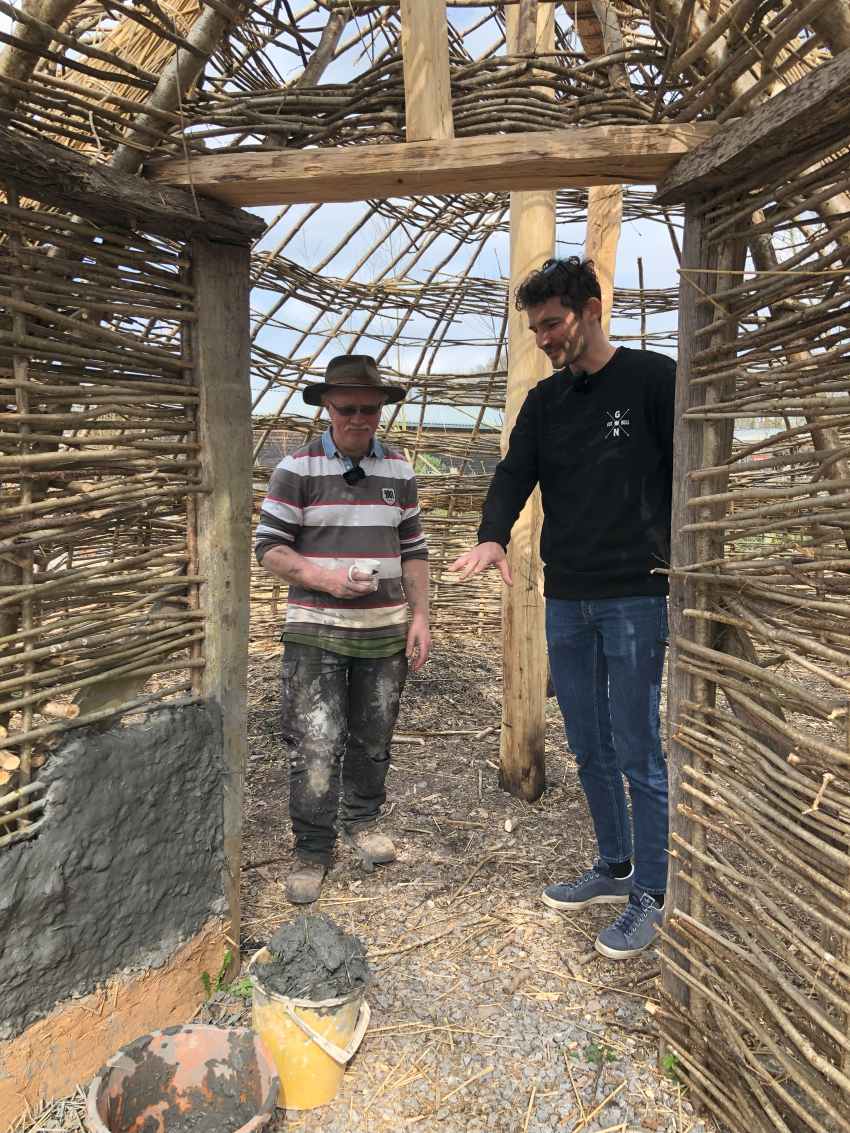
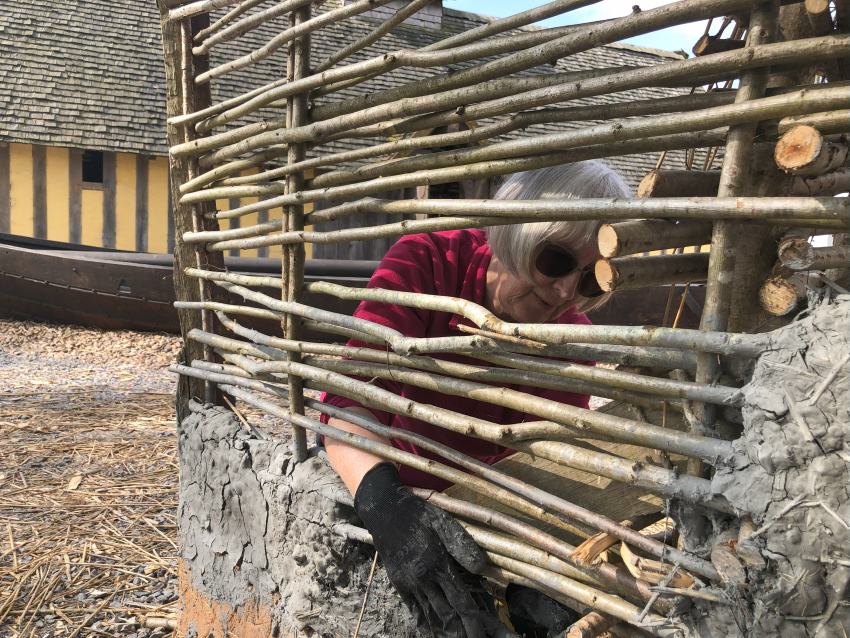
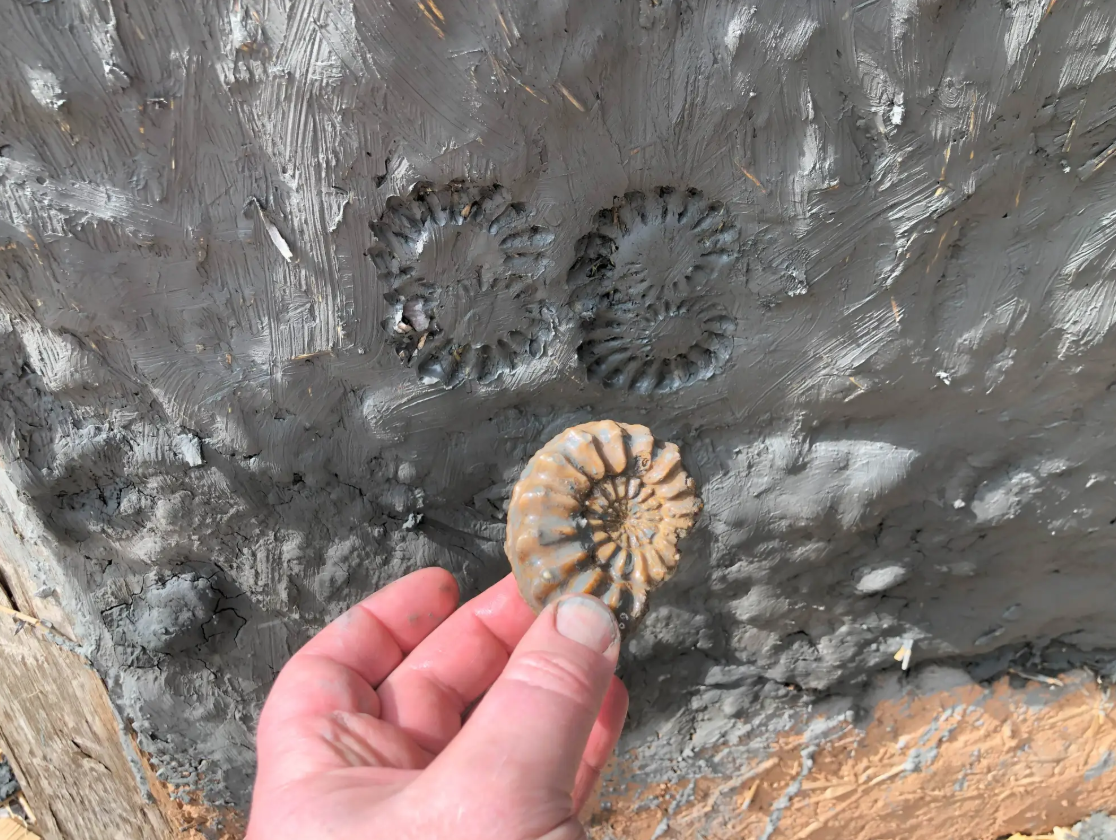
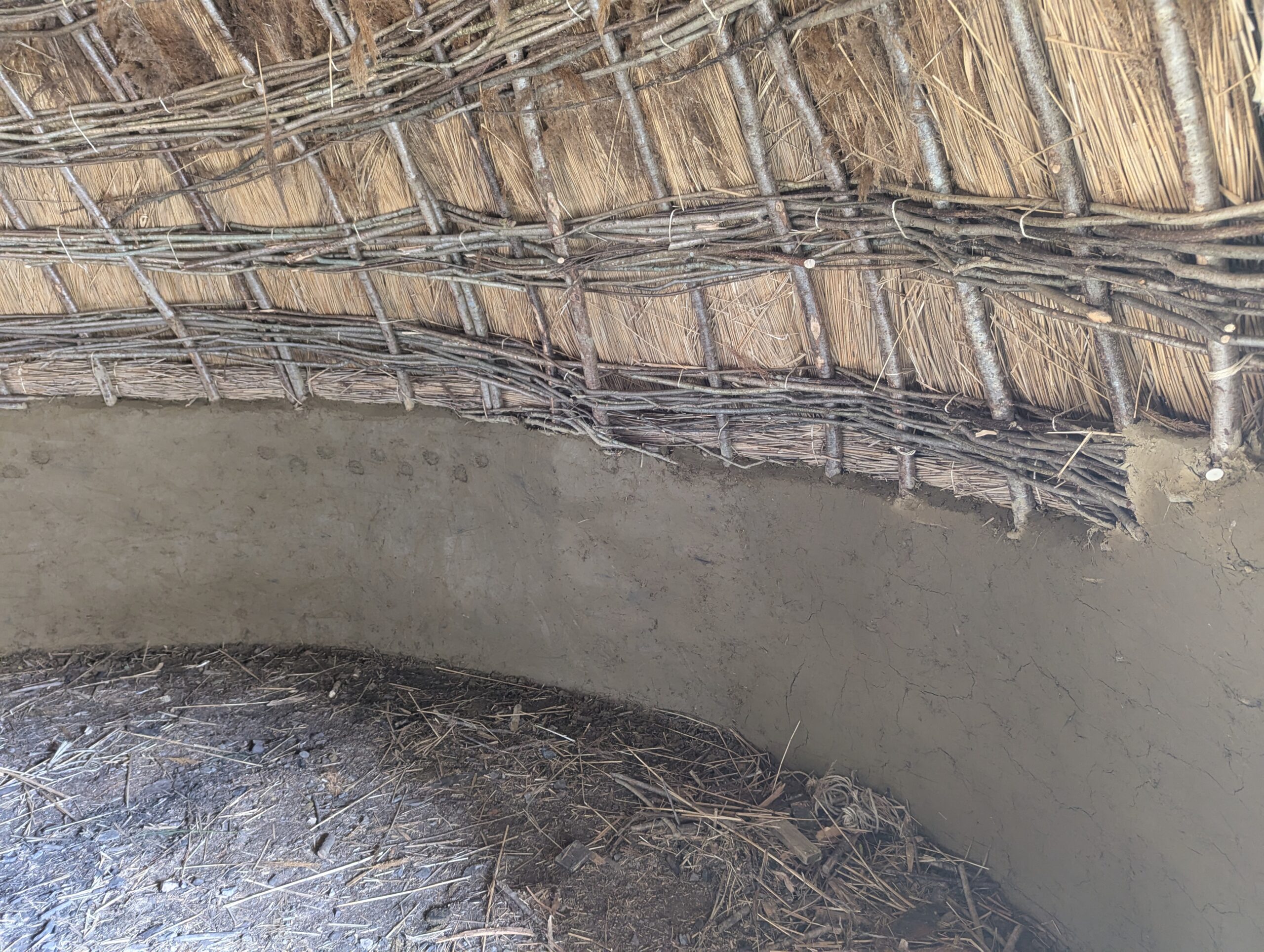
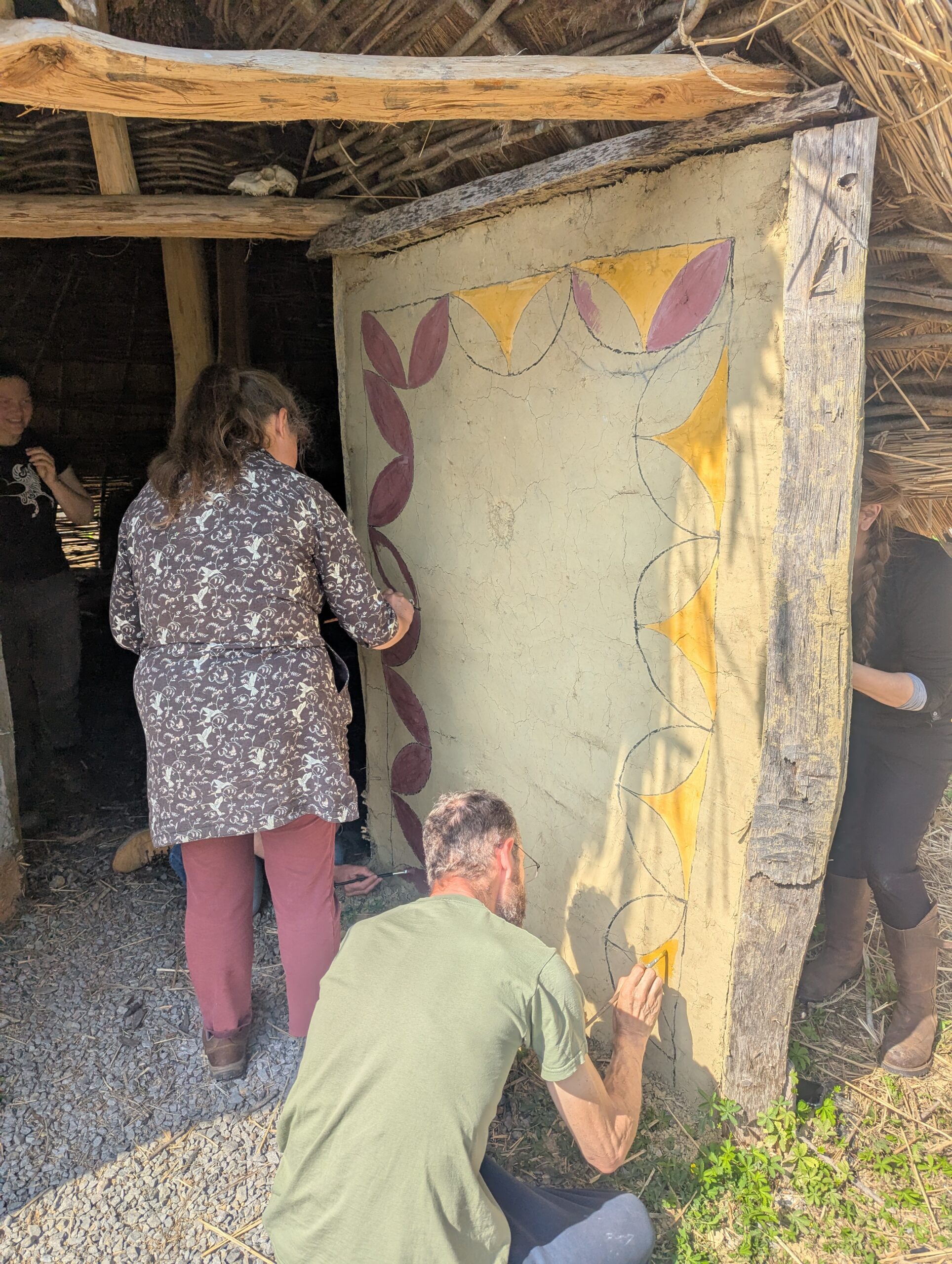
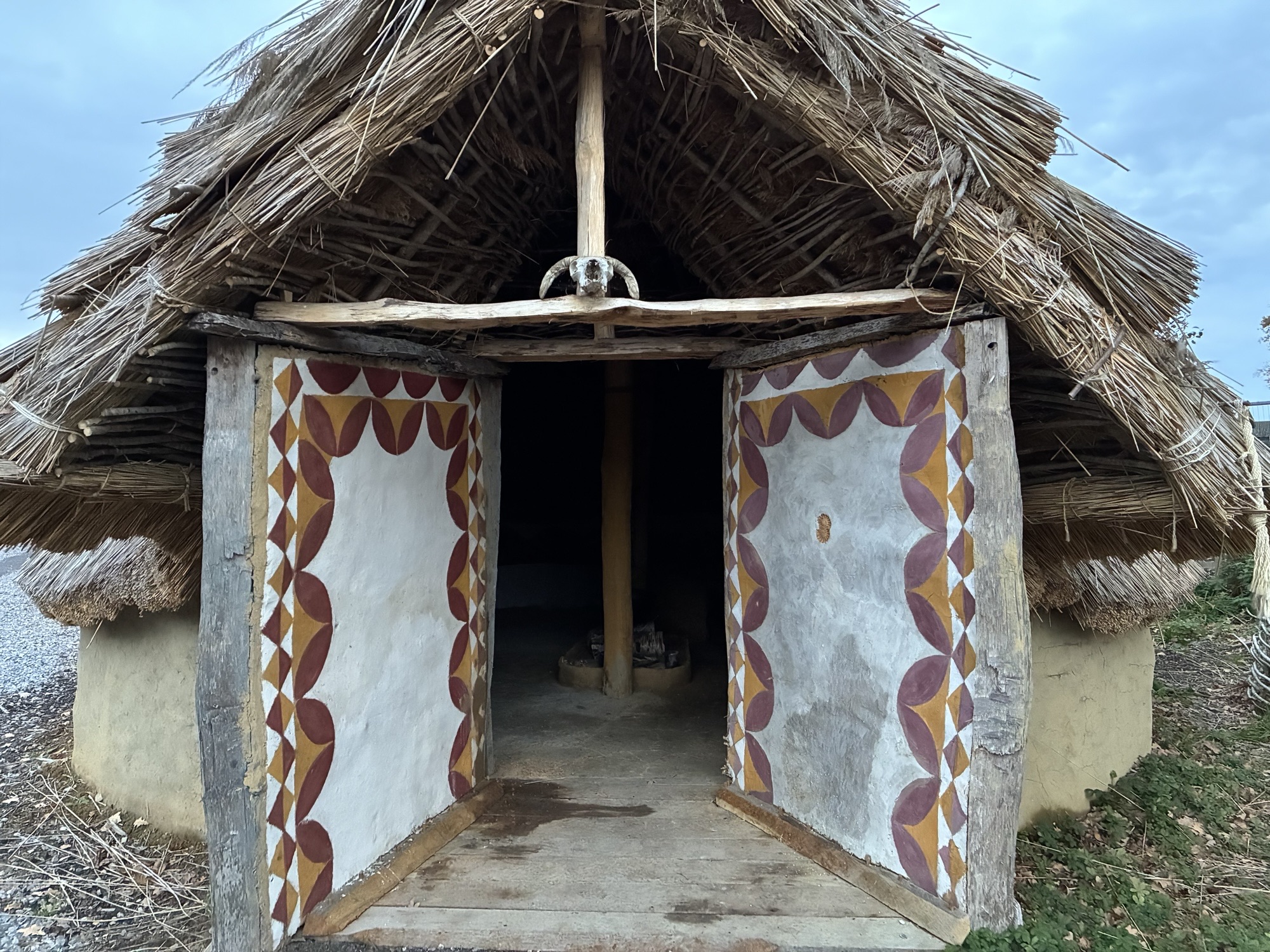
The reconstruction’s walls are covered in daub, a mixture of clay subsoil, hay and a little horse poo. Rare evidence from the Lake Village shows that the daubed walls were decorated with ammonite fossils pressed into them. This is successfully replicated on the reconstruction along with colourful designs painted by volunteers at a prehistoric painting workshop. The paint was made of natural earth pigment and milk curds as a binding agent. The patterns are taken from pottery designs from Glastonbury Lake Village.
The reconstruction is thatched with reed and has a clay floor. Historically the floors had wooden foundations topped with clay layers. Although no definitive proof survives, reed was likely used as the roof covering. The new reconstruction also has a central hearth and small bread oven.




The Opening Ceremony
The official opening of the roundhouse takes place at Avalon Archaeology on Saturday 21 March, during the Spring Equinox Weekend. Explore the latest replica building and learn more about Somerset’s prehistory with themed activities, demonstrations, and see the hand‑carved dugout canoe alondside the roundhouse.
Visiting Avalon Archaeology
- Open to visitors every Sunday from 10.00 am – 4.00 pm and Saturdays during the school holidays.
- The reconstruction is part of a wider site of reconstructions, including a Saxon longhall, a Roman villa dining hall, and a Viking trading ship, along with the oldest surviving archaeological excavation hut in the UK.
- For a deeper experience, book a guided tour.
- Try some Iron Age inspired family activities to extend the learning at home.
Join us for Spring Equinox (21-22 March) and see the official opening on 21 March at 11.30 am with a special ribbon cutting. Across the weekend there’ll be ancient woodworking in action, a hand-carved dugout canoe on display, and families activities such as building a section of the Sweet Track using Neolithic tools.