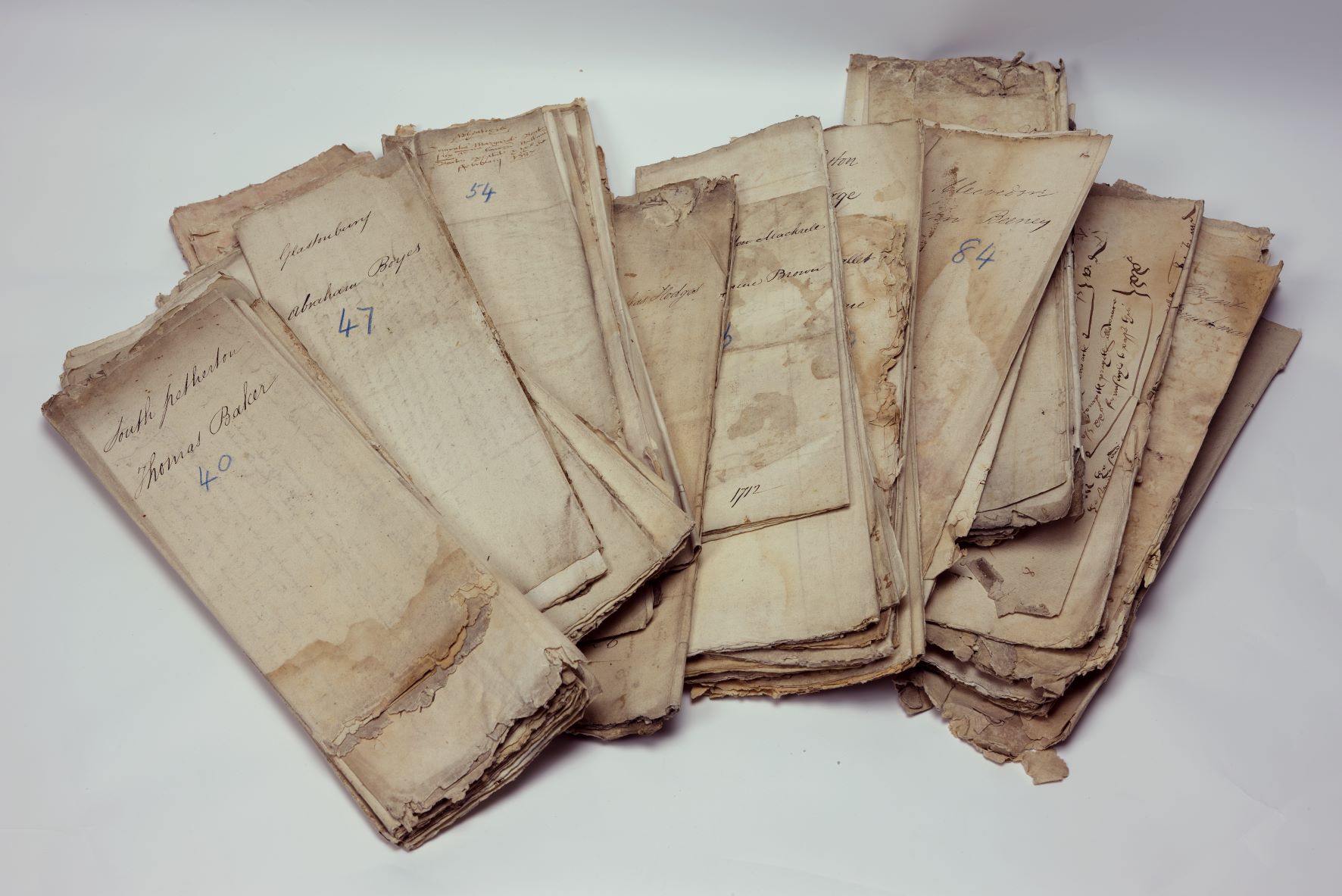
The Somerset Archives and Local Studies Service received the good news at the end of last year that we had been awarded a grant of £11,252 from The National Manuscripts Conservation Trust (NMCT) to conserve the probate administrators accounts, which are part of the archive of the Diocese of Bath and Wells.
The collection contains over 1000 accounts for the period 1577-1748, each of which record in detail how the individual’s estate was disbursed after death, including arrangements for the funeral, payments to creditors and the arrangements for the care of orphaned children. They provide a unique insight into the lives of a cross-section of Somerset inhabitants during the early modern period, with information about family members, creditors, guardians for minors, and their legacies.
Prior to the introduction of the National Probate Registry in 1858, the church was responsible for the proving of wills, with wills for Somerset being proved by the Diocese of Bath and Wells. Soon after 1858 Somerset’s wills and probate inventories, along with those for Devon and Cornwall, were relocated to a central registry in Exeter, where unfortunately they were destroyed in the Baedecker Raids during World War II. Therefore, the probate administrators accounts are the only surviving testamentary records for the individuals, giving them a much greater significance.
The NMCT grant will allow us to conserve one of the most severely damaged collections of papers held at the Somerset Heritage Centre. Prior to deposit the whole collection suffered water damage over many years whilst being stored in damp conditions. Following the conservation work we plan to fully catalogue, index and digitise the collection to make it completely accessible for the first time.
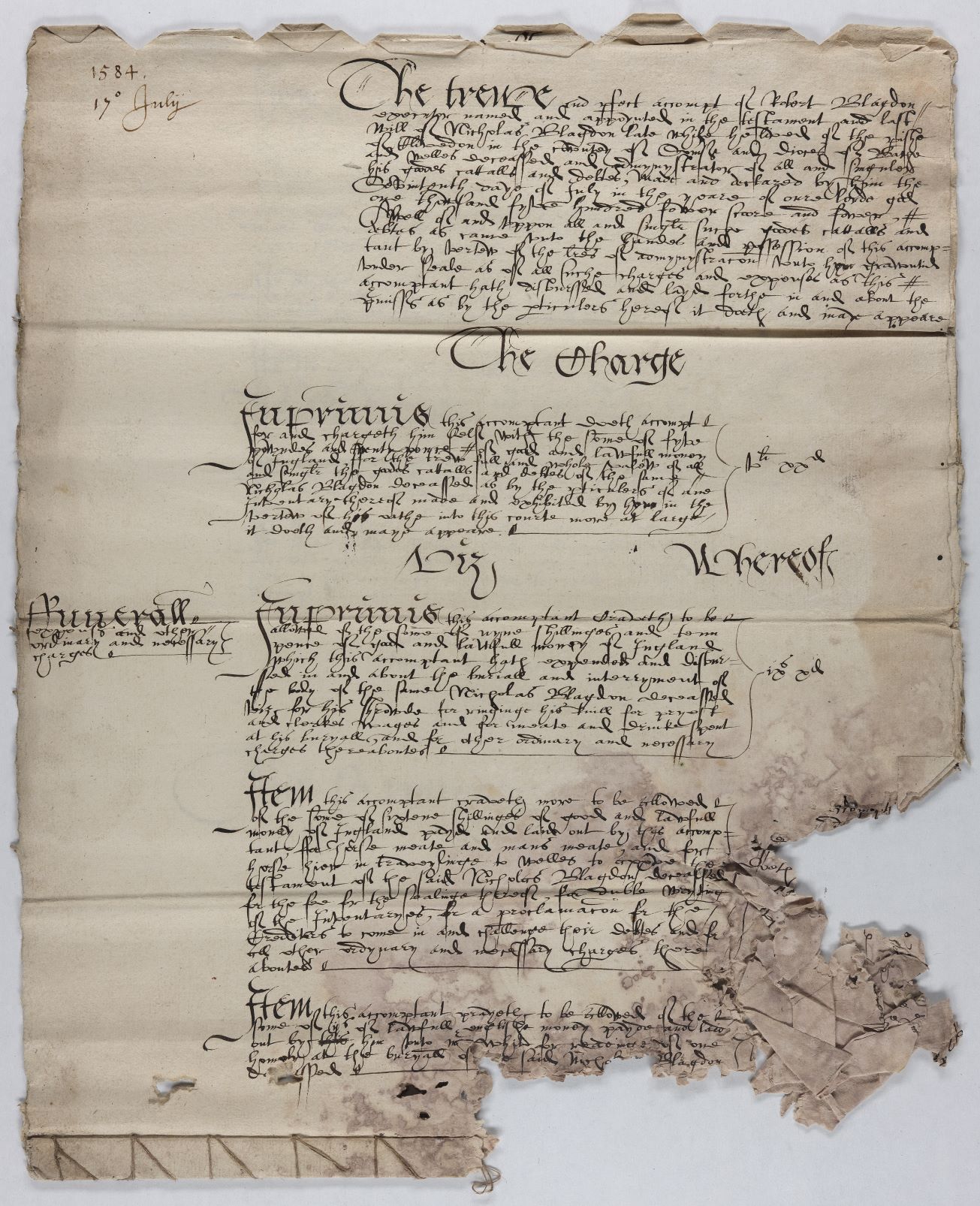
“We have just started to have a look at the probate documents and can already see lots of potential challenges, as well as opportunities for conservation volunteers. Documents in fair condition need a surface clean, basic paper repairs and consolidation. It would be great to be able to show volunteers these conservation techniques so I can concentrate on some of the fiddlier things, including humidification, complex paper repairs and ‘infilling’ the large losses. Further down the process, there will also be opportunities for volunteers to re-house the documents in folders and boxes.
“As the documents have previously lived in damp conditions, they have become a major food source for several creatures, including insects and rodents. This has left a lot of interesting patterns on the documents as well as large chunks missing! Mould had previously discoloured the documents in all sorts of different tones. At their worst, the documents are crumbling and incredibly vulnerable, and these will certainly need a bit more TLC.”
project conservator Lucy Cokes joined the team earlier this month and will spend the next fifteen months working on the collection