
Museum Futures Trainee, Dominique Gearing, is working on a project to digitally preserve the county’s oral history archive. Find out more about the Somerset Voices project and what Dominique is doing to help make these fascinating recordings accessible to many more people.
Somerset Voices
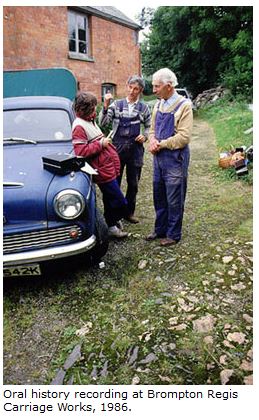
For those who don’t know, the Somerset Voices project was started in 1970 by the Friends of the Somerset Rural Life Museum, and in conjunction with members of the Somerset Museums and Somerset Archives and Local Studies teams. What started off as a desire to collect recorded interviews about rural life local to Glastonbury soon grew into a mammoth project spanning different areas, industries and perspectives across the county. This ambitious venture was conducted by the late Ann Heeley and a crew of volunteers dedicated to recording and transcribing the stories they discovered along the way.
Connect with Past Voices
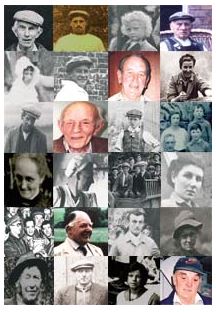
The collection is a treasure trove for someone who’s interested in regional history. Upon starting the project I have found myself too easily distracted from the task at hand by a sound recording about the art of cheese or cider making. Other recordings give you a glimpse at the challenges the county’s population have come up against over the last century, through the experiences of an Italian Second World War prisoner-of-war and a livestock veterinarian battling the scourge of foot-and-mouth disease. As someone who lives in and grew up in Somerset, it is an addictive channel through which to connect with past voices, discover new facets of my home county, and enjoy the local dialect all in one.
Restructuring
So, what am I doing, exactly? I’ve started work on the restructuring of the collection of over 850 oral history recordings looked after by the Trust, in the hopes of making them more accessible for everyone. Digital preservation as a concept is relatively new to me, but I understand how vital it is to move with the ever-advancing technologies on offer to protect digital collections and to optimise our use of them. By which I mean, I’m learning as I go!
Using the Trust’s chosen cataloguing system, Epexio (for front end viewing) and Describe (for managing ‘behind-the-scenes’), my first task is to lay the groundwork for what will be the new structure of the collection. Recordings, transcriptions, and related documentation will be separated and filed in a more efficient way, under the name of the individual interviewee. What will this mean? Everything for a single interview will be in one place, making it much easier for researchers – and us! – to find what we need. This sounds a simple enough step, but getting this right is essential for everything that comes next.
Online Availability
And, best of all, some of the transcripts will eventually be available directly through the online catalogue. The benefits of this are multiple. It means the collection will be available to a much wider audience, without necessarily having to visit the Somerset Heritage Centre to access them. The online move also has the potential to open up the collection to new audiences who might not have otherwise discovered it.
The next steps after that will be around filling in any gaps in records, digitising of paper documents and ingesting digital material through Archivematica. There are plenty more and exciting steps afterwards geared towards the Somerset Voices public platform, but in the meantime I am going to be squirrelling away behind the scenes, getting everything organised. On a personal note, the project offers me a great and very rare opportunity to train in digital cataloguing whilst engaging with a regionally significant collection of recordings. I’m looking forward to diving in!
Many years in the making, this latest stage developing Somerset Voices will span the next few months. Please check back soon for more news and updates on our progress.

Museum Futures is a three-year programme supported by The National Lottery Heritage Fund and managed by the British Museum, giving 18–24-year olds from a range of backgrounds the opportunity to receive year-long paid training. This training enables applicants without degrees or prior museum experience to pursue a career in the museum and heritage sector that might have otherwise been unattainable.