
Meet Victoria Haddock, Exhibitions and Programme Assistant
Victoria Haddock has been involved in producing Chance Encounters, the Rachel Reckitt exhibition from it’s conception. She’s given us a behind-the-scenes look at how this retrospective exhibition came to be.
Rachel Reckitt
Rachel Reckitt was chosen for the exhibition as she was a Somerset-based artist whose artwork the Trust has collected over the years. We felt that she was due a retrospective to highlight her work as an underrated female artist whose artistic output endured for 60 years. Her work as a female war artist also ties in nicely to the anniversaries marking the end of the Second World War taking place in 2025.
Initial conversations about this exhibition began a number of years ago, with research and discussions with the Golsoncott Foundation, lenders, and the Lively family starting to take place.
My Role
My involvement began with me undertaking research into Rachel, her styles of art, and the period she lived in. As we built up a longlist of known artworks, I was amazed by the variety of mediums that she practiced and her choice of subject matter. It was tricky trying to shortlist her art as the pieces were so different, but by developing themed sections for the exhibitions we were able to create strong categories with a mix of pieces.
As the Exhibitions and Programme Assistant, my role is to assist in all the curatorial aspects of the exhibition, including research, liaising with lenders and auction houses, shortlisting artwork, creating the accompanying catalogue, planning events, and working within the wider Design team to finalise images and posters.
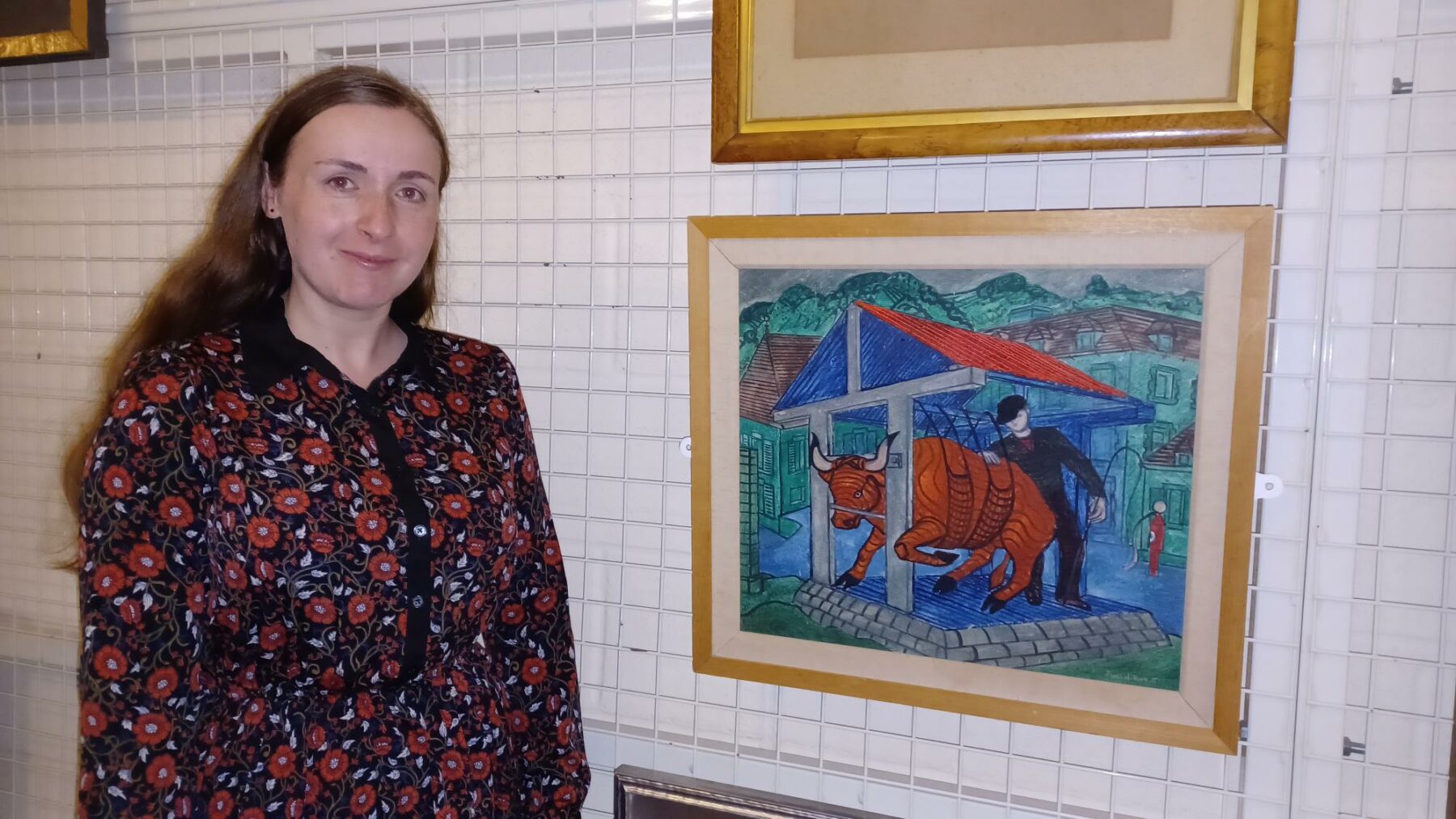
Personal Favourite
In terms of choosing which artworks to display we chose the artworks by researching the pieces that were available to us for the exhibition, before selecting those that best fit the exhibition themes and those that represented Reckitt’s changing artistic styles.
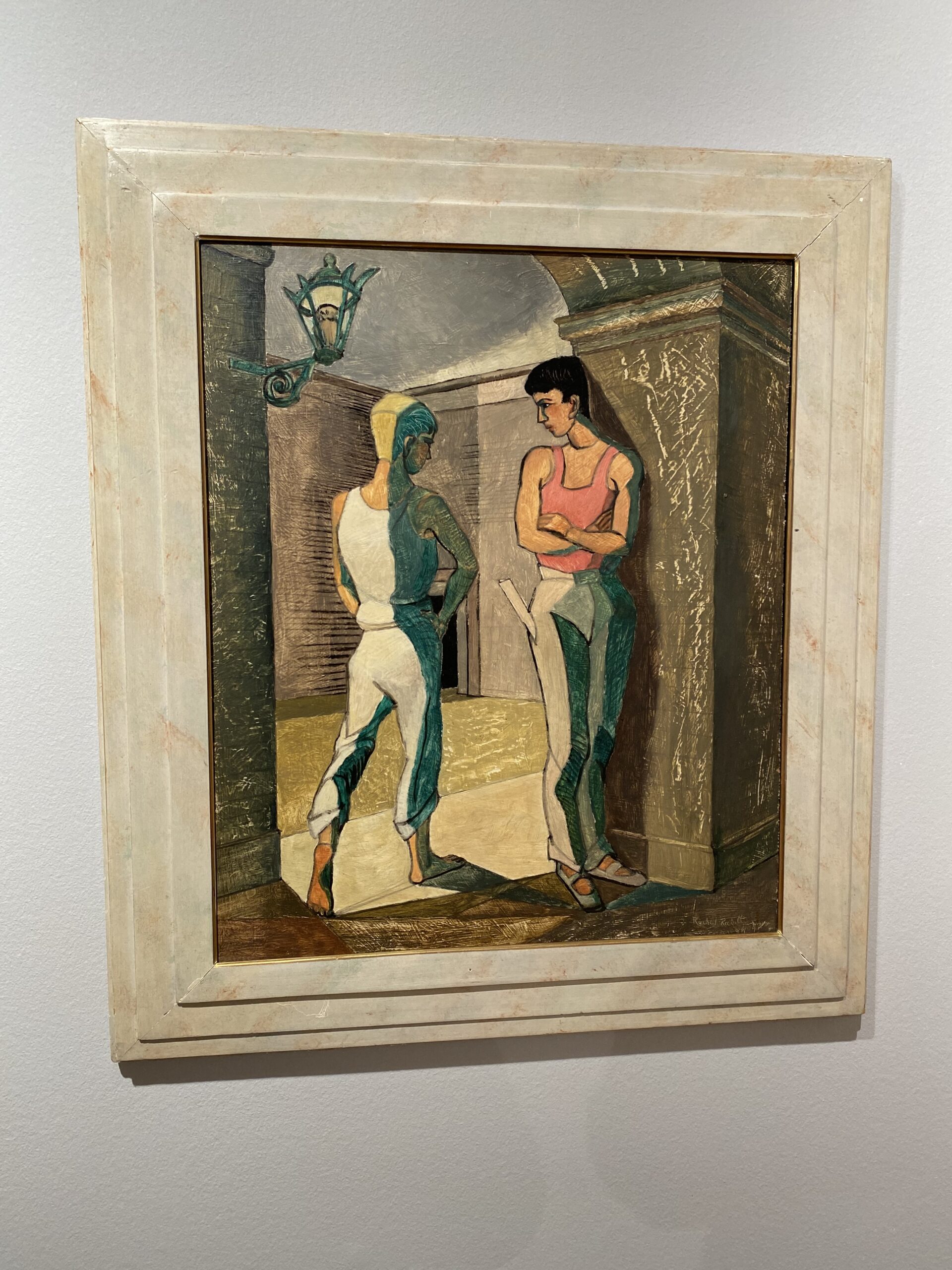
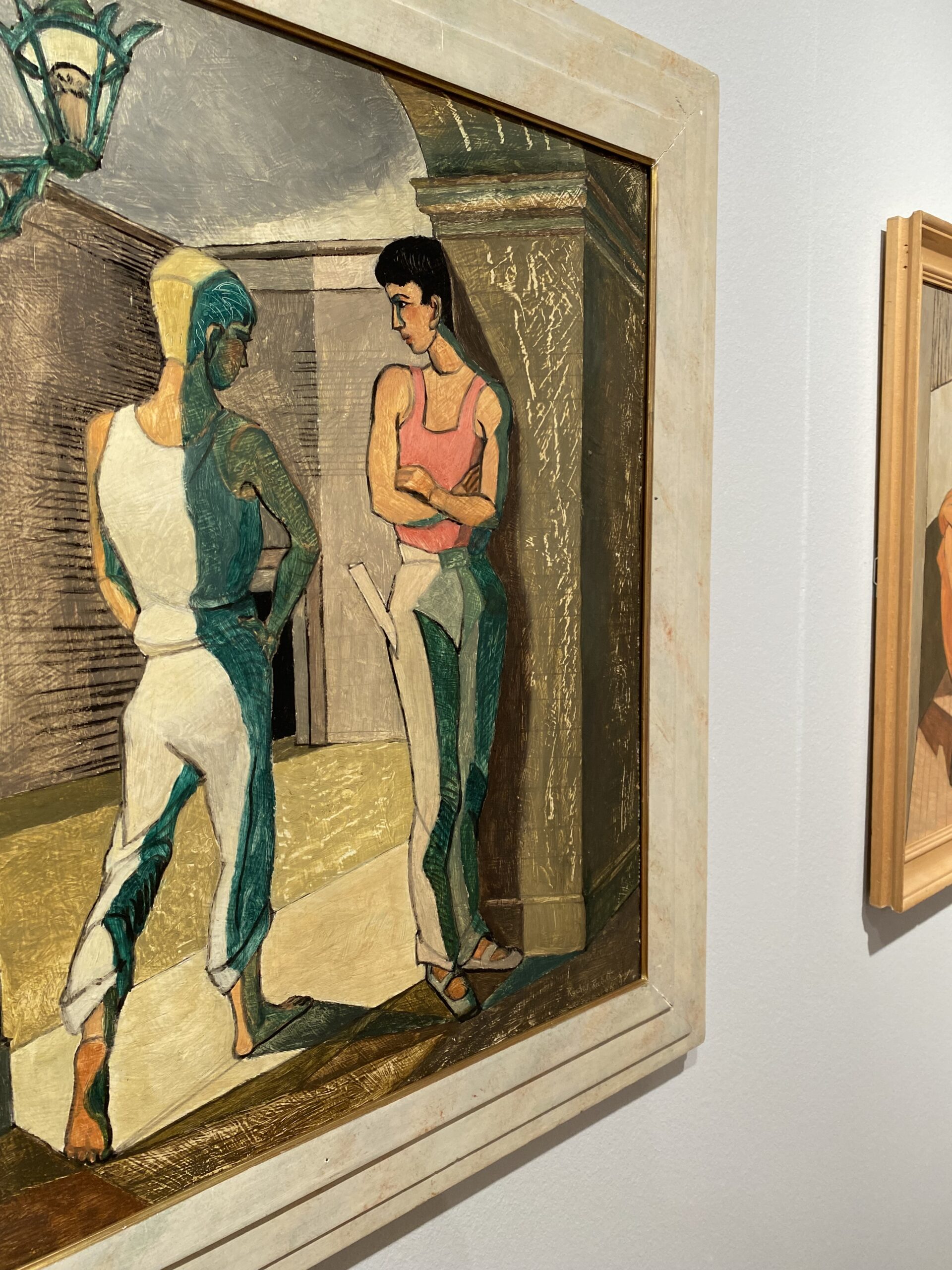
My favourite Reckitt artwork is Chance Encounter. The painting sizzles with anticipation and an intimate atmosphere. The narrative of the piece is intriguing as Reckitt has depicted the figures as gender neutral, making it unclear what their relationship may be.
We chose to focus on multiple themes that presented themselves throughout Reckitt’s work. Her skills as an acute observer of her surroundings can be seen in her depictions of people and places, with many taking inspiration from her travels around Europe. We felt it was very important to situate Reckitt as a female war artist in the exhibition, as the unofficial paintings and engravings that she created during her time in London encompass the devastation wrought on civilians by the Blitz. This side of her work has largely been overlooked, as with many female artists, and the exhibition offers us the opportunity to reframe Reckitt’s wartime artworks in response to all aspects of the war.
Discoveries and Challenges
During the research undertaken into the Spanish Refugee Family portrait (on loan from the RAF Museum), I was astonished to learn that Britain originally refused to accept any refugees from the Spanish Civil War. When the British government finally did allow 4000 Basque children into Britain, they declined to take financial responsibility for them and banned public funds from being used to support the refugees. The majority eventually returned to Spain, but those who stayed, such as the family depicted in the portrait, received no financial assistance throughout the Second World War and had to rely on the goodwill of charities to survive.
In terms of challenges, coming so quickly off the back of the Alexander Hollweg: Journeys in Art exhibition, time was quite tight during the planning and research stages of the process. We also discovered that Reckitt was a very private person, who didn’t keep diaries/journals, and wasn’t particularly fond of being photographed, and therefore there were not many primary sources available to us to gather her thoughts on events in her life. We overcame this hurdle by reading sources by her friends and acquaintances that described life at Toynbee Hall during the war, for example, or by speaking with her family to learn about Rachel as a person.
Chance Encounters
We really hope that visitors can appreciate Rachel’s adventurous spirit that is evident in her artworks inspired by her trips, often taken in her Land Rover, and by her work during World War II. I think Rachel is the perfect example of how, in a busy world, stopping and observing can open our eyes to new things.
-
Discover Chance Encounters, a retrospective exhibition of Rachel Reckitt’s artwork, on display until 15 March 2025.
-
Find Reckitt’s community artwork on a tour through Somerset. Read the blog to find out where to look.
-
Read the rest of the behind-the-scenes blog series.