
CULBONE WOOD
Click through the gallery below to discover five artists’ responses to a dramatic wooded coast with rare Whitebeam trees
Culbone Wood (Exmoor National Park) is part of the longest unbroken stretch of coastal woodland in the country. Its setting next to the sea is a geologically unstable and sometimes hostile natural environment. Evidence is plentiful of attempts to harness the land. There are ancient stub-pollards from medieval wood-pasture, coppice stools and charcoal platforms from an early industrial revolution, and lime kilns that supplied a cross-channel trade. There is also a partially-designed picturesque landscape, created to express a romanticised view of the world.
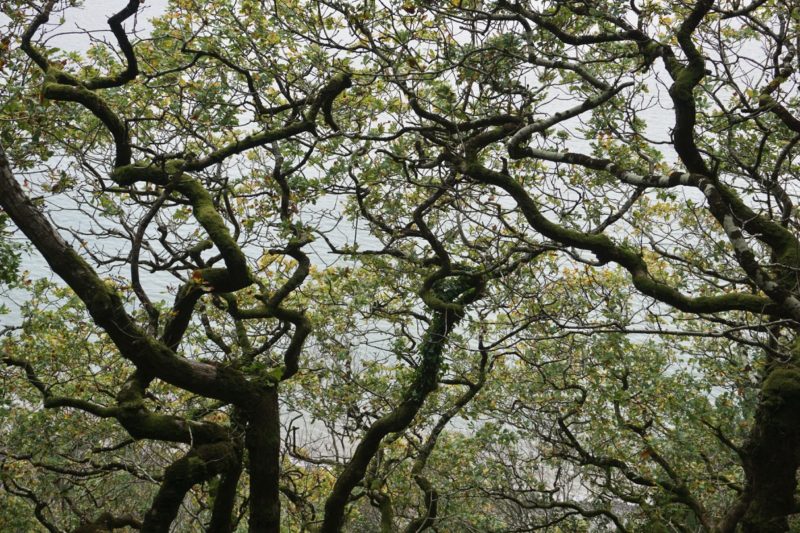
Culbone Wood, Mike Dodd 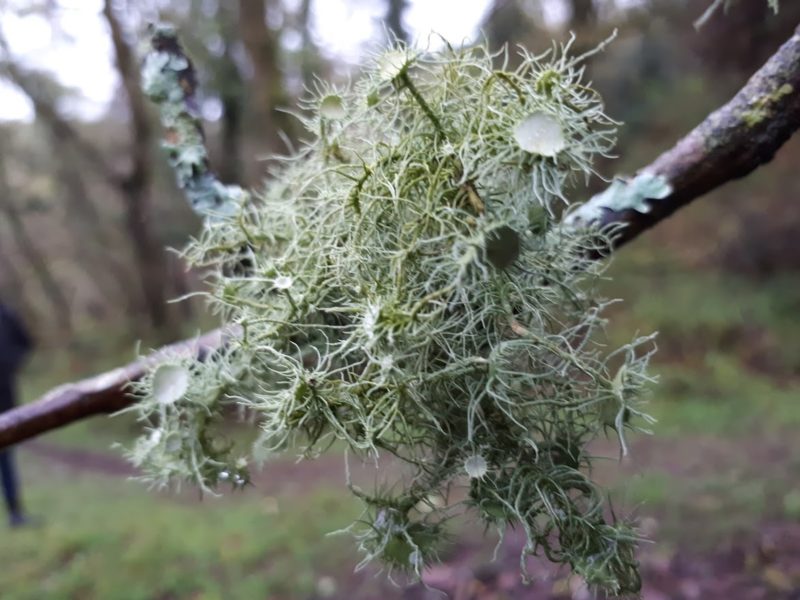
Culbone Wood Lichen, Angela Rumble


Culbone Woods, Fernery with Whitebeams
Oil on canvas, 55 x 80 cm
Trees are a continual subject in Claire Cansick’s painted landscapes. In depicting them she explores their majesty, colour and silhouette, as well as their relationship to human beings. She uses colour to express mood and to develop an atmosphere that shifts observers from their present place.
Trees are a continual subject in Claire Cansick’s painted landscapes. In depicting them she explores their majesty, colour and silhouette, as well as their relationship to human beings.
The artist uses colour to express mood and to develop an atmosphere that shifts observers from their present place.

Culbone Wood 1
Oil on canvas, 61 x 76 cm
Angela Rumble often uses a restricted colour palette to create her striking and complex oil paintings. She seeks to explore the tension between the digital image and the stubborn hand-made nature of painting. When painting she sets up obstacles for herself, including drawing around shadows. She builds up and peels back layers to reveal the spaces between the tangled confusion of the forest.
Angela Rumble often uses a restricted colour palette to create her striking and complex oil paintings.
The artist seeks to explore the tension between the digital image and the stubbornly hand-made nature of painting. This photograph documents her visit to the woods and was used as a reference image when back in the studio.

When painting the artist sets up obstacles for herself, including drawing around shadows. She builds up and peels back layers to reveal the spaces between the tangled confusion of the forest.

Culbone Wood 2
Oil on canvas, 61 x 76 cm
Angela Rumble often uses a restricted colour palette to create her striking and complex oil paintings. She seeks to explore the tension between the digital image and the stubborn hand-made nature of painting. When painting she sets up obstacles for herself, including drawing around shadows. She builds up and peels back layers to reveal the spaces between the tangled confusion of the forest.
Angela Rumble often uses a restricted colour palette to create her striking and complex oil paintings.
The artist seeks to explore the tension between the digital image and the stubbornly hand-made nature of painting. This photograph documents her visit to the woods and was used as a reference image when back in the studio.

When painting the artist sets up obstacles for herself, including drawing around shadows. She builds up and peels back layers to reveal the spaces between the tangled confusion of the forest.

Stunted Oak
Monoprint with Indian ink, 68 x 53 cm
Sebastian Chance trained as a sculptor, but lack of studio space meant that he moved from sculpture to painting and printmaking. He enjoys the directness of these media and the way they give expression to his sculptural forms. In 2016 he moved to Somerset after 23 years of teaching art in Bedford. He finds the landscapes of the Levels and the wildness of Exmoor beautiful and inspiring.
Sebastian Chance trained as a sculptor, but lack of studio space meant that he moved from sculpture to painting and printmaking. He enjoys the directness of these media and the way they give expression to his sculptural forms.
In 2016 the artist moved to Somerset after 23 years of teaching art in Bedford. He finds the landscapes of the Levels and the wildness of Exmoor beautiful and inspiring.

Underfoot
Acrylic and ink on clay board, 27 x 34 cm
Mike Dodd experimented with new forms to develop artworks that reflect the great complexity of Exmoor’s natural environment. His artistic process involved applying ink and acrylic to clay board and sraperboard, then scraping through the media to reveal the support below. The challenge of working on these surfaces was an exciting new departure for the artist.
Mike Dodd experimented with new forms to develop artworks that reflect the great complexity of Exmoor’s natural environment.
His artistic process involved applying ink and acrylic to clay board and sraperboard, then scraping through the media to reveal the support below. The challenge of working on these surfaces was an exciting new departure for the artist.

Culbone, Porlock Weir
Acrylic on board, 60 x 40 cm
Alex Egan is captivated by the energy and presence of trees, and her artistic practice is rooted in a desire to be among woodland. She spends time producing sketches and drawings ‘en plein air’ which are then transposed into new works in her studio. Her visits to Exmoor and Dartmoor with the Arborealists were hugely inspiring and fostered in her a deep appreciation of these staggering landscapes and the trees they contain.
Alex Egan is captivated by the energy and presence of trees, and her artistic practice is rooted in a desire to be among woodland.
The artist spends time producing sketches and drawings ‘en plein air’ which are then transposed into new works in her studio. This is an example of a sketch produced during her visit to Porlock:

The artist’s visits to Exmoor and Dartmoor with the Arborealists were hugely inspiring and fostered in her a deep appreciation of these staggering landscapes and the trees they contain.
Gallery
This exhibition was supported by

