
2000 – 2010: ROCK ART
In the new millennium Brian Rice experimented further with symbolic shapes found in prehistoric rock art. Triangles, concentric circles, spirals and zigzags became a focus of his work.
A key motif, called Halla, first appeared in 2001. It depicts a simple square plan of a house with linked concentric circles, post holes and rafters. The Pennant series of hybrid works were an extension of the Halla series and allowed juxtapositions of colour and shape to be explored.
In 2004 Brian Rice studied the rock art pavements at Kealduff on the west coast of Ireland and the chambered tombs of the Boyne Valley. There he encountered cup and ring marks, broken spirals, interlacing arcs and horseshoe shapes, including them in important paintings from this period.
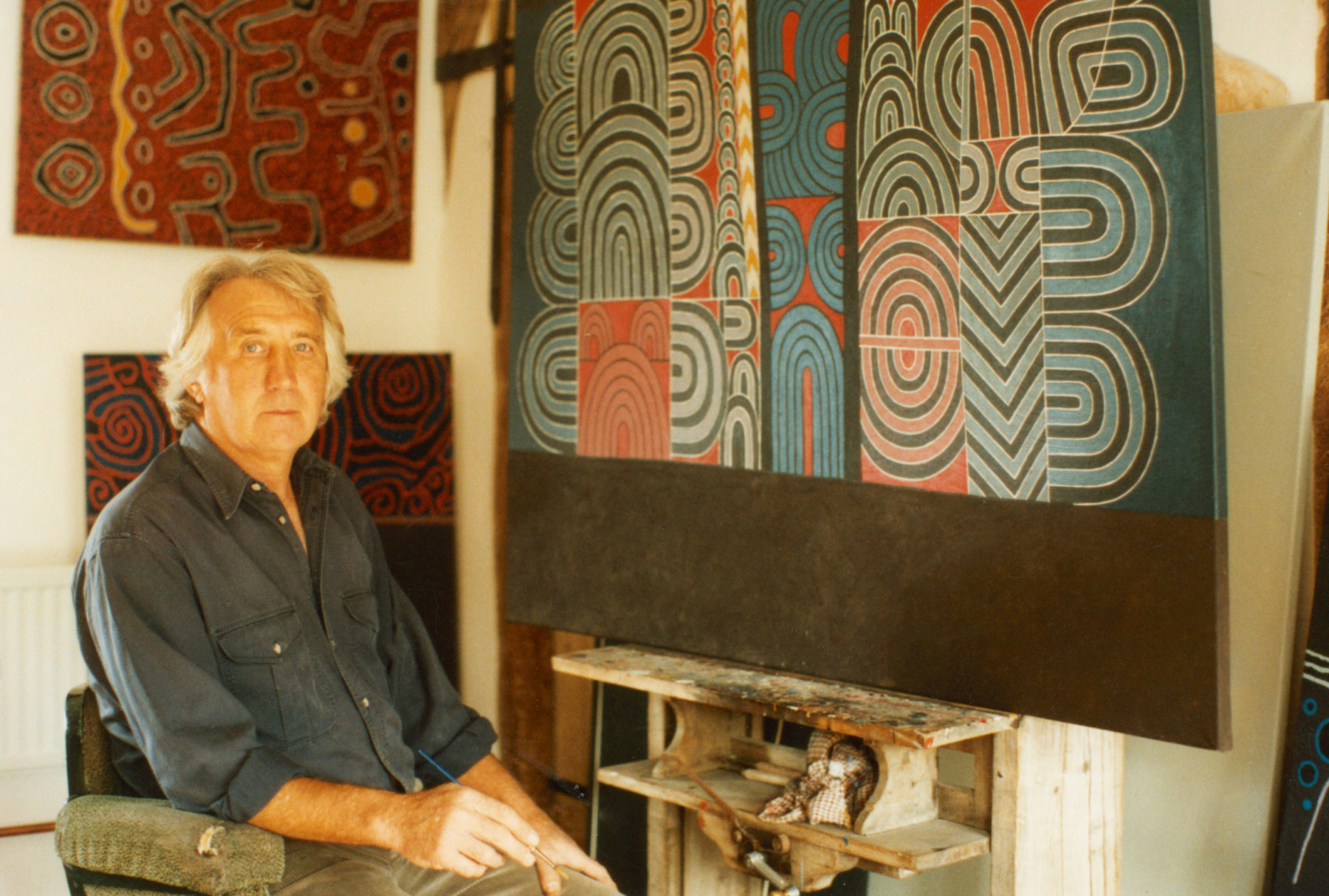
Brian Rice pictured with artwork included in his touring retrospective exhibition, 2001
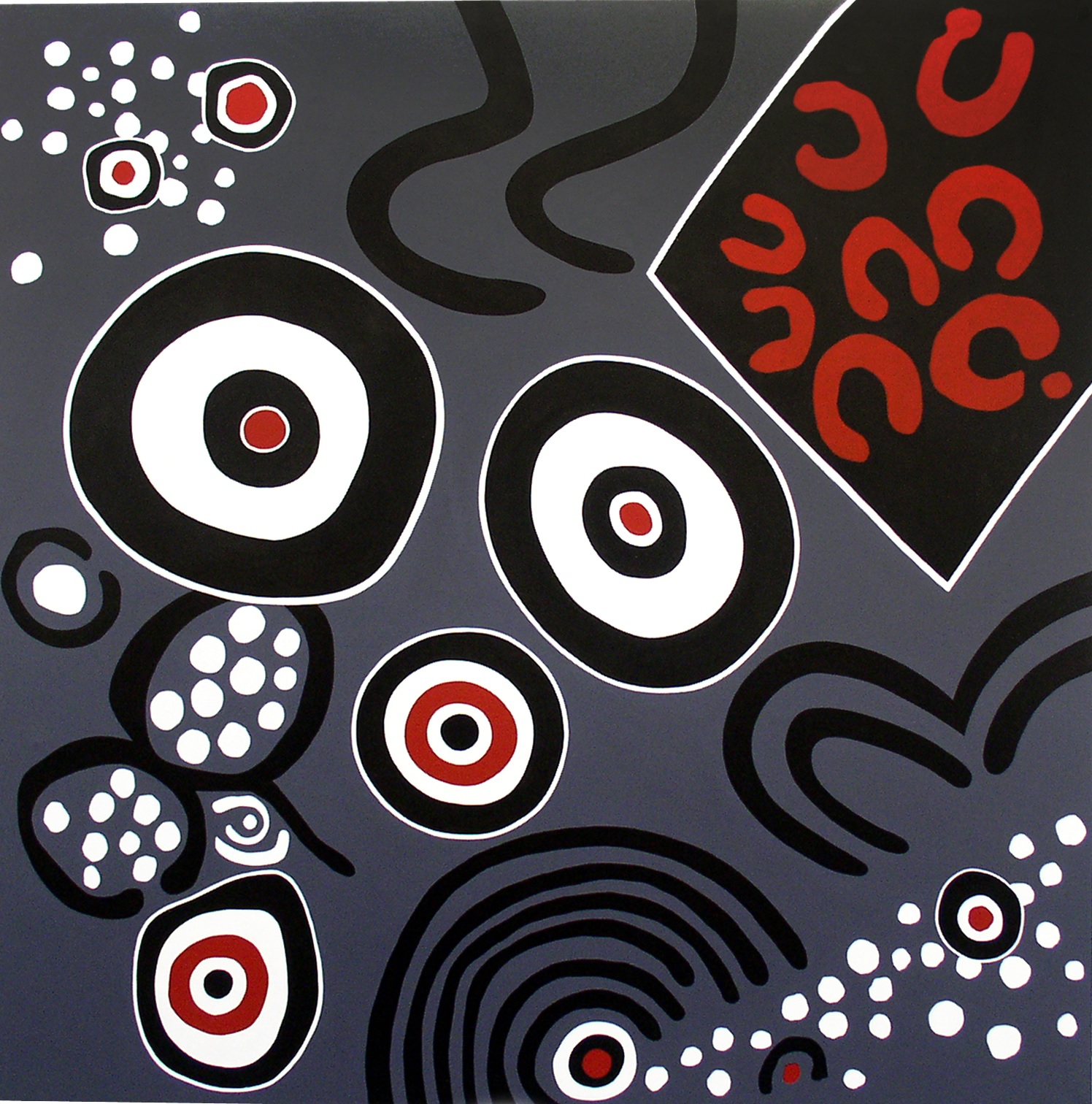
Acrylic and mixed media on canvas, 213 x 213 cm
Beginning in November 2001 Brian Rice made two series of large paintings, called the Halla series. For the next five years he developed this motif in large canvases and smaller works. Groovemaker, although made in this period, is a rare deviation from this series.
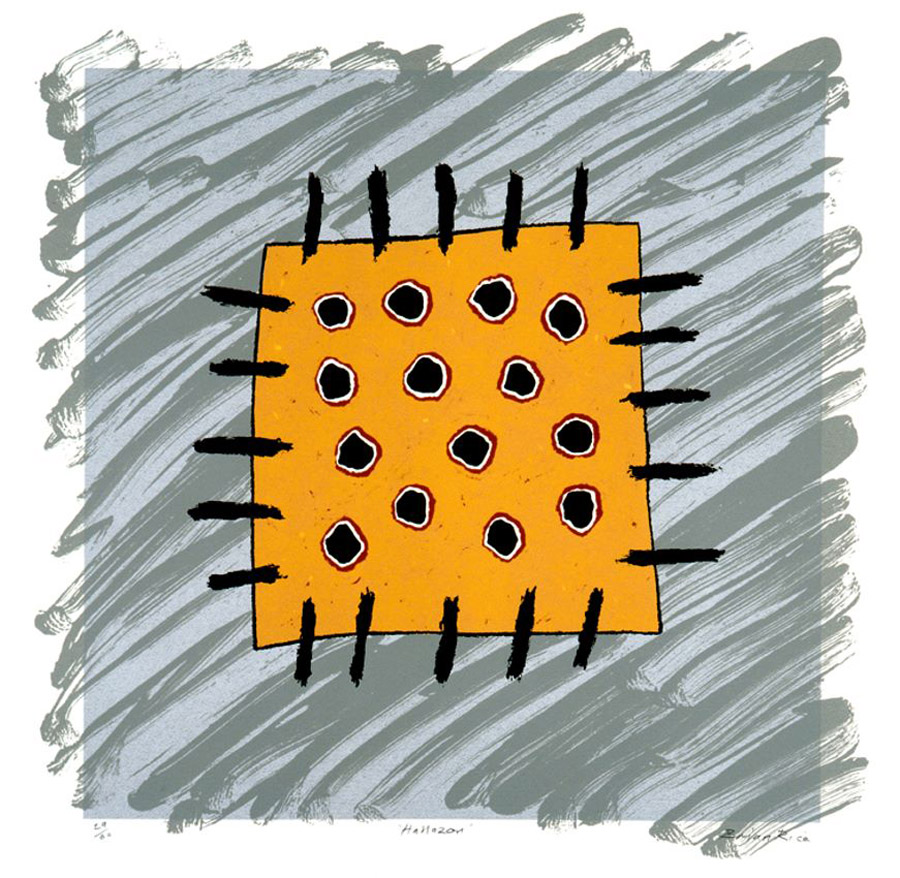
Screenprint, 80 x 80 cm
This print is from the Halla series. Its key motif is a depiction of ancient halls known as ‘quad-a-halla’. They are represented simply to allow the powerful essence of the building to shine through.
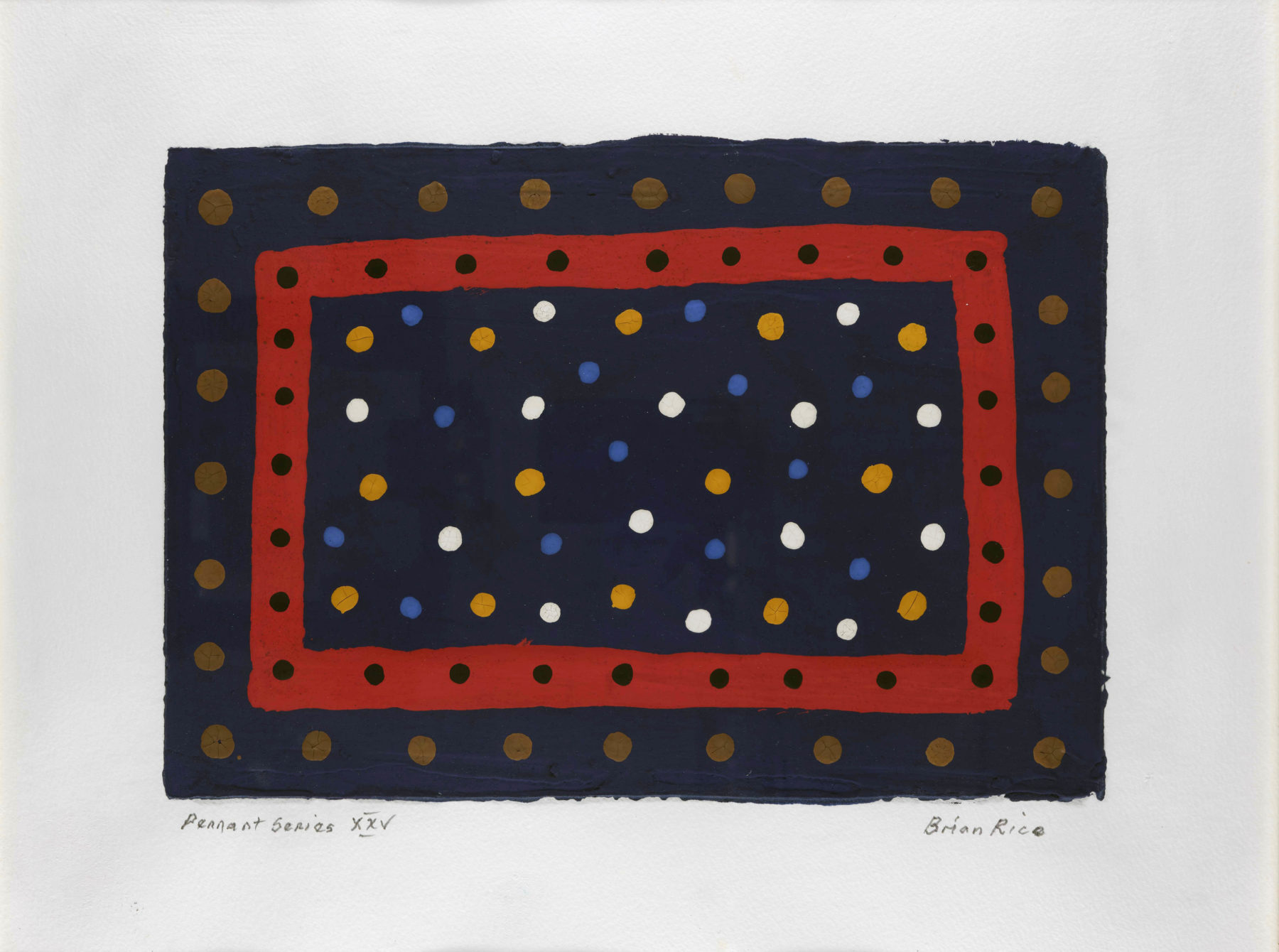
Screen print overpainted with gouache, 40 x 50 cm
This print forms part of Brian Rice’s series of hybrid works. These hybrids sit uniquely between painting and print making. Discarded monoprints are worked on over a period by hand, using acrylic or gouache paint. This process is important and changes the essential nature of the work, opening new and previously unexplored options for discovery.
Gallery