
A LANGUAGE IN WOOD AND PAINT
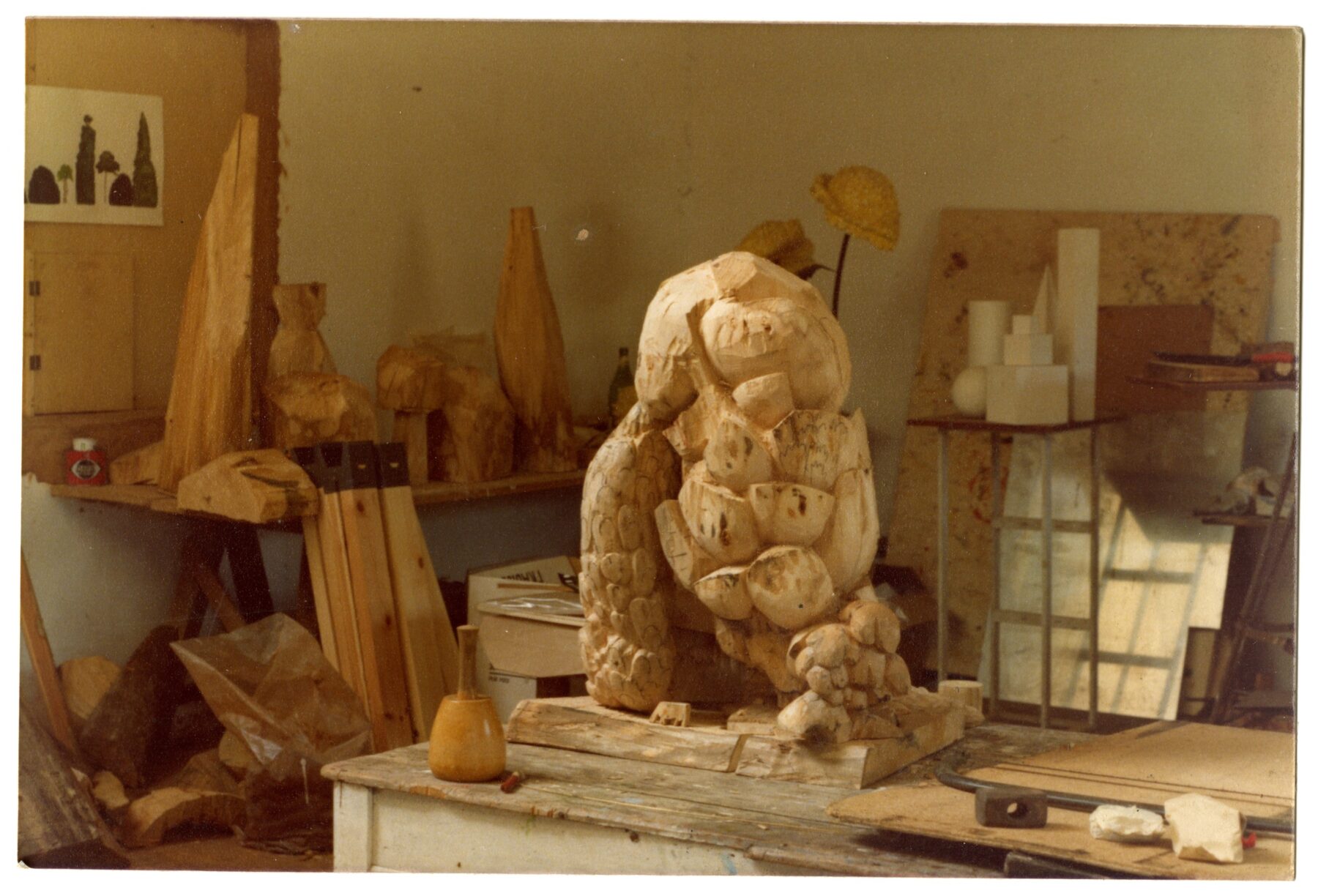
In the late 1970s Hollweg began creating large-scale relief artworks made of wood, wire and paint. The new works consisted of multiple individual panels which when placed together formed a cohesive whole. They allowed Hollweg to draw together his 2D work (the watercolours) and 3D sculptures.
Hollweg also worked on a series of smaller abstracted wooden relief sculptures. Cubism was an underlying influence, both in the use of humble materials and in the geometry of the final imagery.
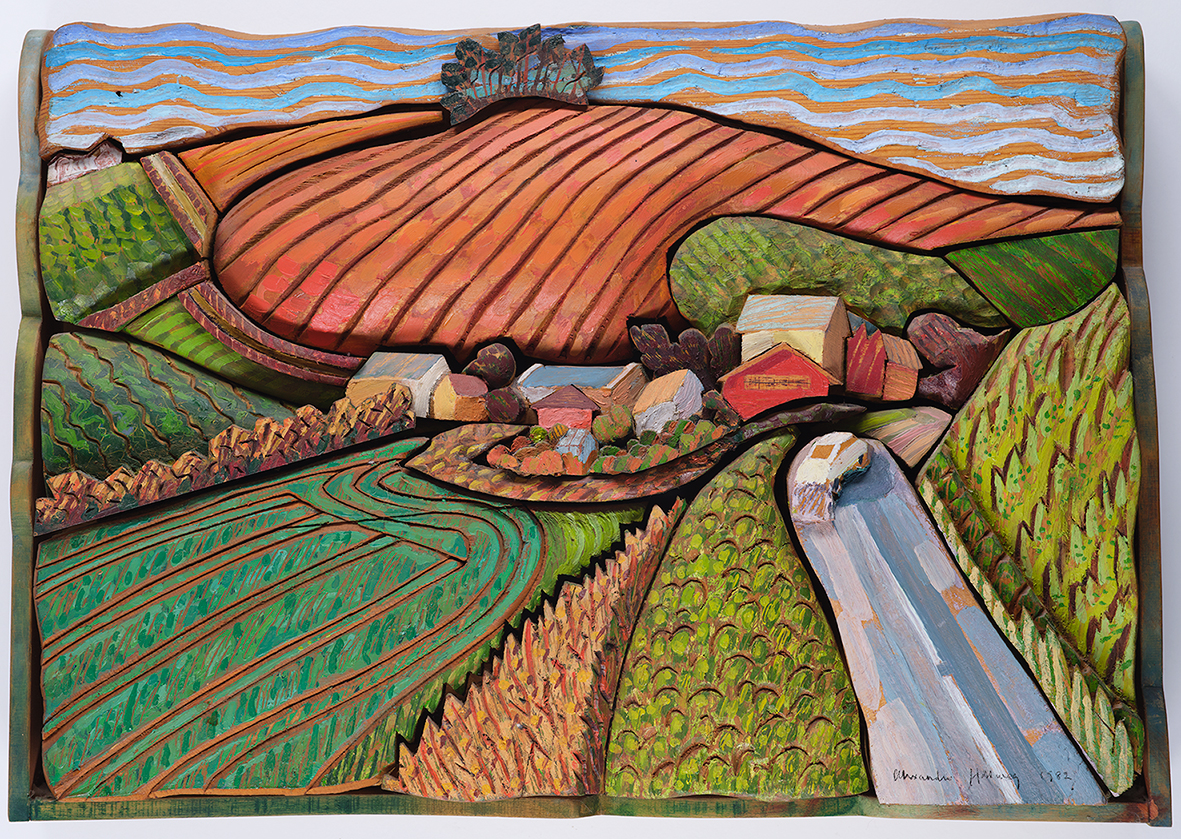
Wood and oil paint, 38 x 52 cm
Yarde depicts in wood and paint the landscape of a small hamlet just over the hill from Nettlecombe. It is divided into distinct sections: plough marks wind their way through the fields, zig-zag lines of wheat cut through the countryside, and the distinctive red soil of West Somerset sits at the top of the composition. The work is a playful and strikingly original interpretation of the Somerset landscape.
Hotspots
Zoom
Show info
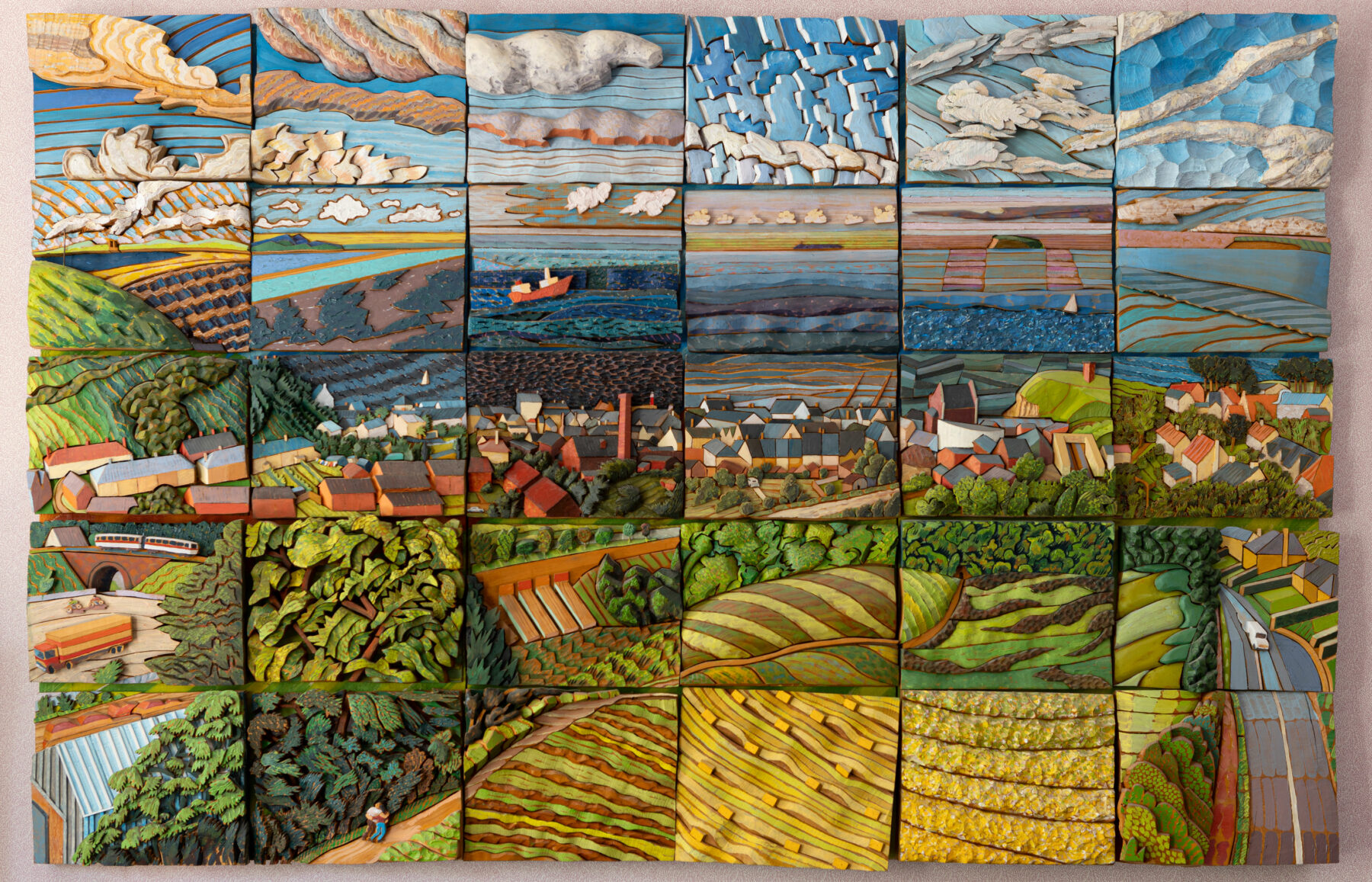
Wood and oil paint, 114 x 175 x 12 cm
This ambitious multi-panel work presents a view over the harbour town of Watchet. Its title (the French for ‘sea breeze’) is derived from a poem by the French Symbolist poet Stéphane Mallarmé. Hollweg was seeking to convey the range of sensations felt when standing before a wide view or landscape – ‘different associations of light, space, feeling, season, time of day or artistic reference’.
Hotspots
Zoom
Show info
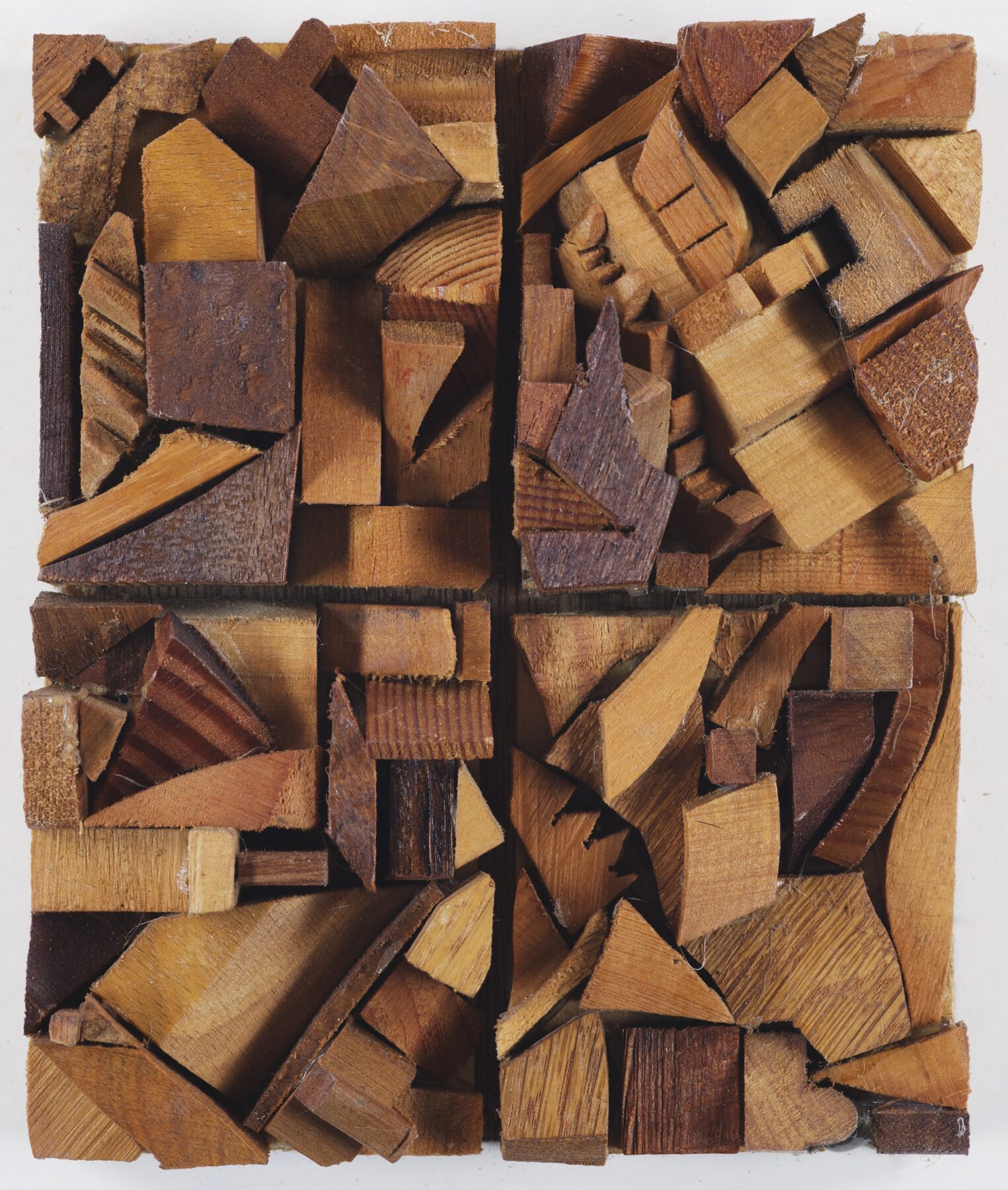
Wood and varnish (shellac stain), 33 x 28 cm
Hollweg used offcuts from his landscape reliefs to create abstract artworks exploring what he called ‘the language of wood and paint’. He regarded his approach as improvisatory and akin to his experience as an accomplished jazz musician and improvisor. He summed up by saying: ‘There is something to be read into and which defines itself in the assembled chaos.’
Hotspots
Zoom
Show info
Gallery