
Our longhall is based on a late 9th-century building excavated in the early 1960s at the Kings of Wessex School in Cheddar (Somerset). The site was probably owned by the Saxon kings of Wessex and represents a high-status residence. The longhall would have been the building where the owners ate, possibly slept and where all important formal functions took place.
It may have been enclosed by a protective bank and ditch, within which were at least three other smaller square buildings and possibly even a bell tower. These may have been used for accommodation for servants, storage, cooking, or stabling animals.
Design
The longhall is 5.5m wide, 15m long and just over 5m in height. It is slightly ‘bow-sided’, being half a metre wider in the middle than at the ends, and is ‘hog-backed’, being higher in the middle of the roof. These two characteristics are typical of Anglo-Saxon longhalls and occur in more extreme forms in Viking buildings of this period. A small room at one end of the building had its own external door and may represent a bedroom for the owners, or perhaps just a storeroom.
Timber Frame
The excavations of the Cheddar palace revealed the size and shape of the building, the spacing of its main wall posts and internal features including three doorways and the hearth. From that evidence, the oak frame was made, held together with treenails (wooden pegs securing a joint).
The framing timbers were given a carpenter’s mark to show where in the building they should go, with straight marks on one side of the building and curved ones on the other. Similar marks have been found on medieval framed buildings.
The Walls
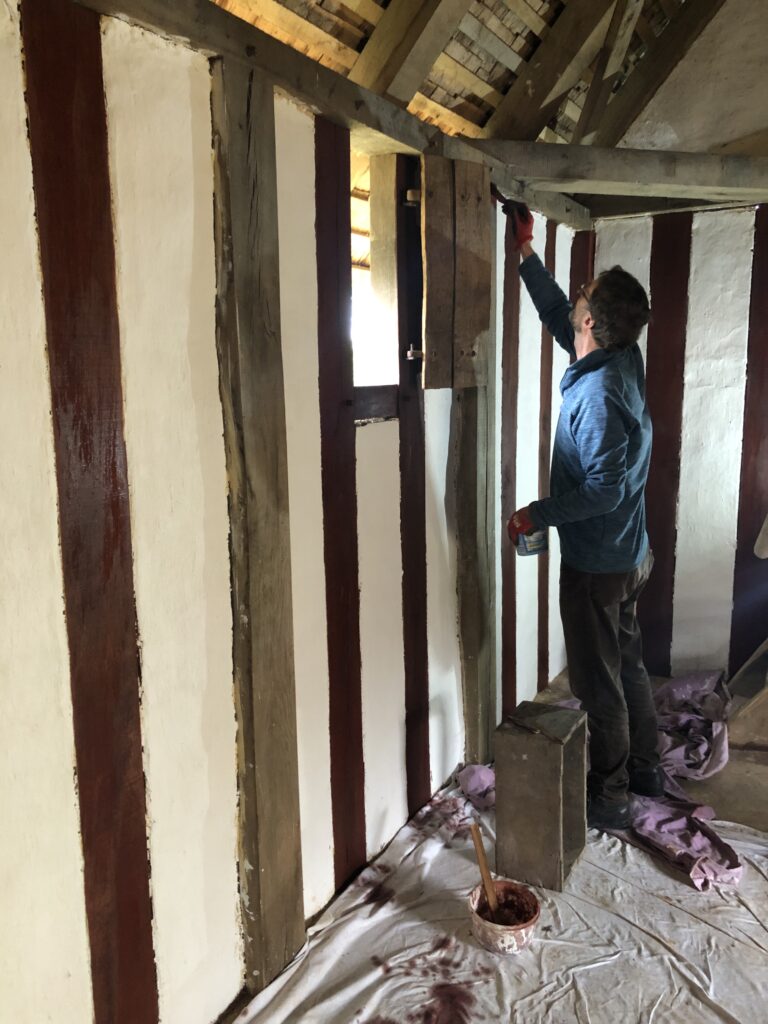
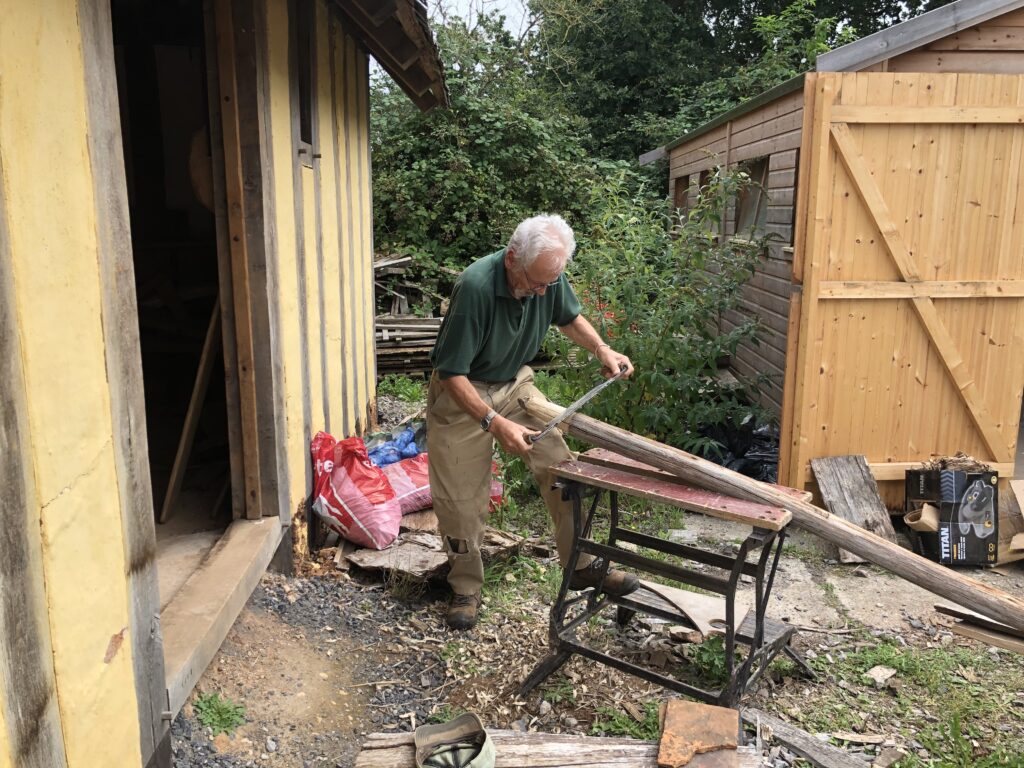
The space between the wall posts was filled with ‘wattle and daub’ – a grid of small roundwood covered with a combination of clay subsoil, straw and water to which animal dung can be added to improve elasticity and durability. This was covered with a limewash coloured with yellow ochre.
On either side of the main doors, another walling technique has been used, made of half-split oak logs, replicating the method used in the mid-11th century church at Greensted, Essex.
Oak Shingle Roof
The roof is covered with 15,000 radially split oak shingles.
Glass Windows
The small windows are shuttered but the large windows in the gable end are glazed. Evidence for the manufacture of coloured window glass has been found at Glastonbury Abbey in the late 7th century and it has often been found on monasteries and some high-status secular sites. The main pattern is from the monastery at Jarrow and the decorative lead strip replicates one from Monkwearmouth.
Floor
The top table is on an oak floor and the original hall may have been boarded throughout. Most of the floor is made of rammed earth, a mixture of sieved clay subsoil, lime, hay, milk and eggs. Some floor mixes also used blood to increase strength and longevity.
Doors
The two opposing doors in the middle of the building are based on early 11th-century examples from Hadstock church in Essex and Westminster Hall in London. The frames are secured with rivets and roves, a technique also used in boat building. The metal hinges copy designs shown on manuscript illustrations.
Furniture
The creation of furniture for the longhall is difficult because there is virtually no evidence from Anglo-Saxon England to base it on. This is because wood only normally survives in the archaeological record in the extremely rare places where it has been constantly waterlogged. Much of the furniture is therefore based on archaeological evidence from Scandinavia, where it survived in very wet conditions.
Benches and Tables
We know from stories such as Beowulf that longhalls had a high table, benches and other tables which were easily moved and were therefore probably of some sort of trestle design. The benches and tables are largely imaginary, though include some real heads from Viking art on the trestles. In the bedroom, a low table is based on a 10th-century find from a grave at Sala Hytta, Sweden.
Chairs
Two of the chairs at the top table are based on a real find from a 6th-century grave in Trossingen, Germany. The other two chairs have joints and decoration inspired by beds from the Gokstad and Oseberg boat burials in Norway (late 880s and 834 AD respectively) but the decoration on the back plates comes from Anglo-Saxon manuscript illustrations.
In the bedroom, a three-legged stool is copied from a 10th-century find from Lund in Sweden and is similar to stools known from Viking York and Dublin. The wooden chair is based on one made of beech from the Oseberg boat burial. Traces of painted intertwined dragon designs survived on the chair, a reminder that many items of furniture may also have been painted.
Bed
The bed is based on one from the Oseberg boat burial, augmented at the foot end with some extra carvings, with heads from the Oseberg cart and a pair of semi-human figures from a timber behind the helmsman’s head from the Oseberg ship. The fierce horse heads are based on the ones from the bed in the Gokstad boat burial.
Chests
Various wooden chests also survive from Viking Scandinavia and several of these will be replicated for the longhall. They were used to contain food, tools or clothing and often had metal locks to keep the contents safe.
Woodcarvings
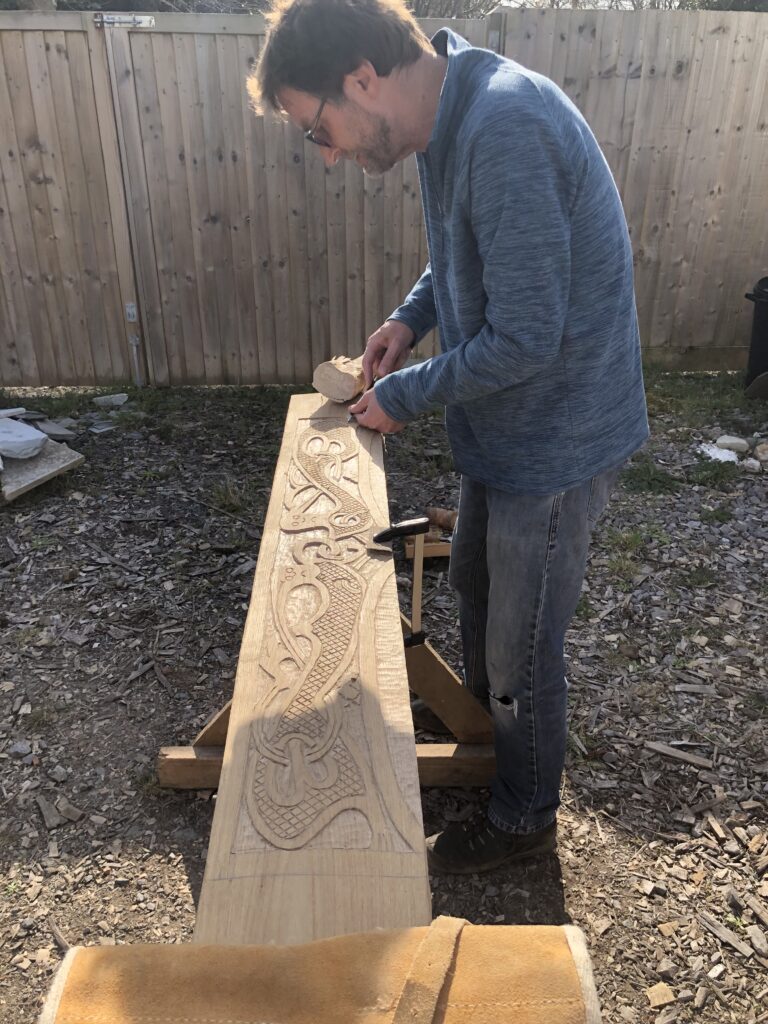
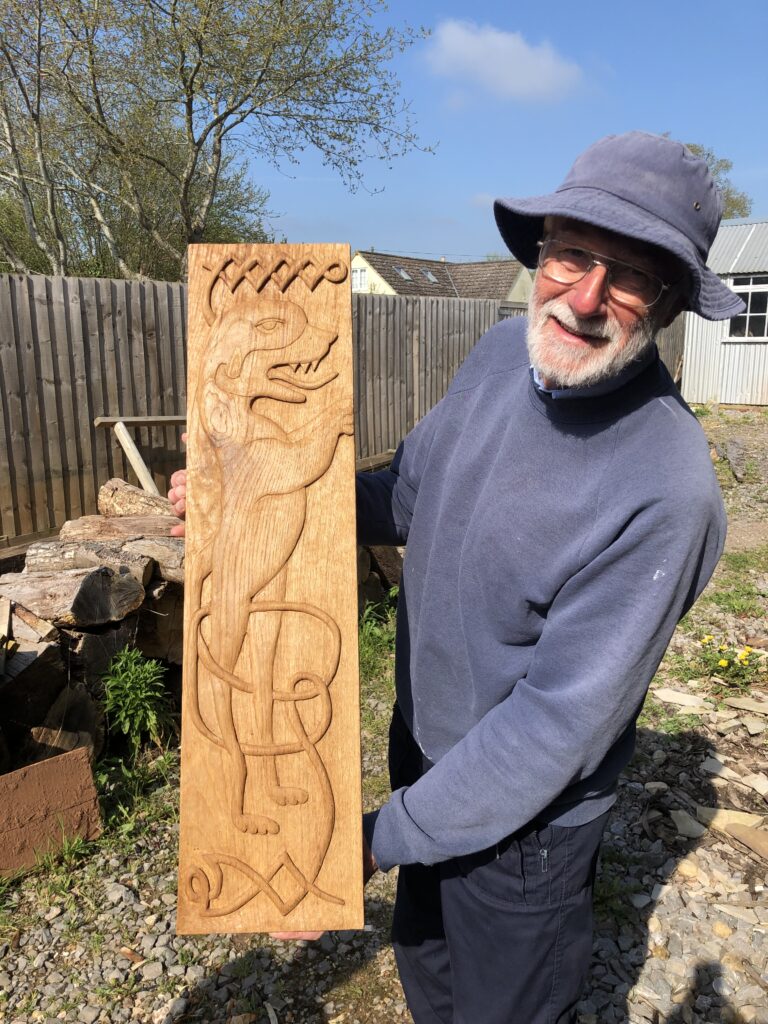
The woodcarving decorations inside and outside the building are based on contemporary designs and have been created by a team of volunteers. One or two were experienced carvers but many had never done any woodcarving before.
As wood almost never survives in the archaeological record, the evidence is drawn from other materials such as metalwork, stone carvings and manuscript illustrations. Only a few of our designs are from Somerset, the best example being the intertwined dragon design that is from a stone cross base.
The main arch between the opposing doors, is decorated with animal designs based on marginal details from the Harley Golden Gospels, an early 9th century AD manuscript made in Aachen (modern Germany). It was probably made for Emperor Charlemagne.
Some designs copy very small pieces of Anglo-Saxon art, such as the long carving on the arch facing the top table which was inspired by an exquisite 11th-century walrus ivory quill case found in London. The dragon head on the end of the longhall roof copies a tiny piece of metalwork from a Saxon sword chape.
Many stone and woodcarvings would have been decorated with oil mixed with pigment. On one of the external doorways, the animal designs have been coloured with red and yellow ochre.
The series of images depicting the story of Beowulf is loosely based on early medieval woodcarving styles from Scandinavia.