
For centuries, the Acland family of Killerton has played an important role in the history of Devon, yet their connections beyond the county are far less well known. As part of a collaborative PhD project between the University of Cambridge and the National Trust, researcher Molly Groarke is exploring the nineteenth-century Aclands and their engagement with the wider world, including their links to the British Empire.
Funded by the Arts and Humanities Research Council through the Open-Oxford-Cambridge Doctoral Training Partnership (AH/R012709/1), Molly’s research draws extensively on the Acland family archive, now held at the Devon Heritage Centre.
In this blog, Molly shares insights from her research and reflects on what the Acland archive can reveal about Devon’s place within a much wider world.
Global History in a Local Archive: The Aclands of Killerton Collection
By Molly Groarke, PhD student
In early 1971, two Devon Record Office archivists – Peter Kennedy, County Archivist from 1962 to 1977, and Victor Gray, later one of the most eminent archivists in Britain – descended into the cellars at Killerton House, a National Trust property just outside of Exeter. Watched on by members of the Acland family, who had owned Killerton before it was transferred to the National Trust, the archivists surfaced every so often ‘for occasional refreshment, covered in cobwebs and glory’, as one eyewitness later described.* For they had found, in the cellars at Killerton, the bulk of a huge family archive which stretched back centuries.
Now housed at the Devon Heritage Centre, this archive has formed the main source for my PhD research. The Aclands of Killerton are a gentry family who have owned land in Devon since the twelfth century. While the Aclands’ involvement in local history is well-documented, they rarely appear in national or global histories. Wanting to know more about the nineteenth-century Aclands and their engagement with the wider world, and particularly their involvement with the British Empire, the National Trust engaged me to research these topics, working towards a PhD.
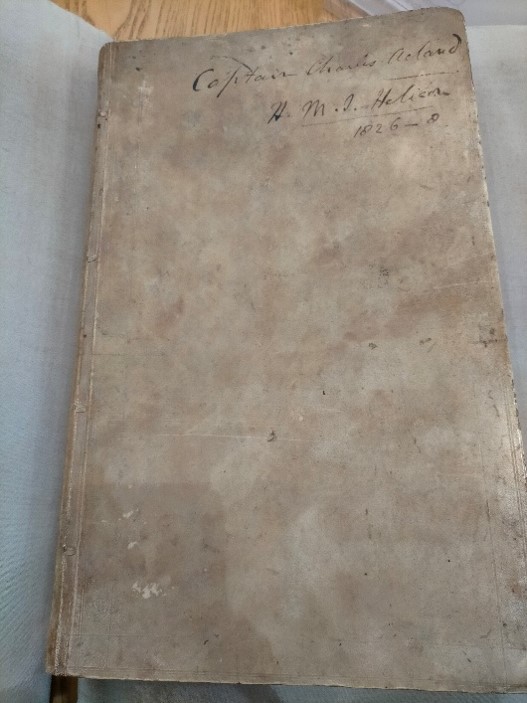
The size of the Acland archive was initially daunting, but in navigating the archive early on, I could rely on a solid foundation of archival research already carried out by the National Trust Killerton volunteers. These earlier findings pointed me towards some valuable sources and collections that had great historic significance. For example, there was a manuscript catalogued as ‘the ship’s log of the HMS Helicon’ which turned out to be a detailed, personal account written by Captain Charles Acland (1793-1828), about his experience serving in the Royal Navy off the east coast of Africa. In this journal, Charles expressed strong anti-slavery views and recorded his horror at the trade of enslaved people continuing along the coast.
Faith and Overseas Service
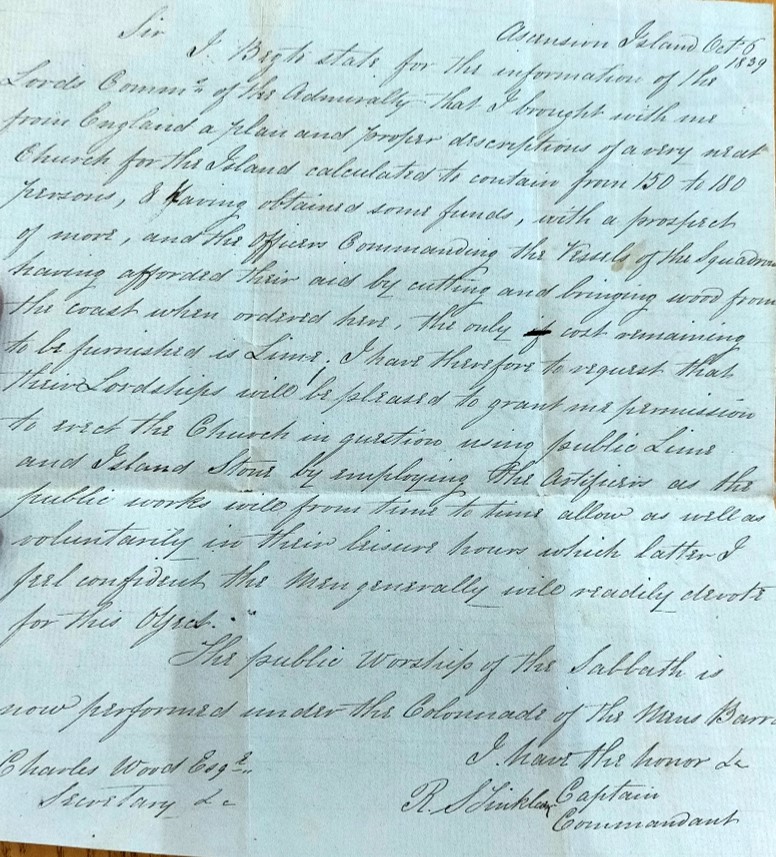
Charles’s nephew, Charles ‘Baldwyn’ Acland also served in the Royal Navy. Baldwyn died at sea aged twenty-six and was buried on Ascension Island. One collection of letters, between Baldwyn’s father and the naval commandant in charge of Ascension, records how the Aclands donated money towards building a church on the island. The archive also holds a transcription of the memorial tablet that was erected to Baldwyn and his crew in this church. This shows how faith was an important support to the Aclands in times of grief and how it was crucial to their understanding of overseas service.
Female Suffrage
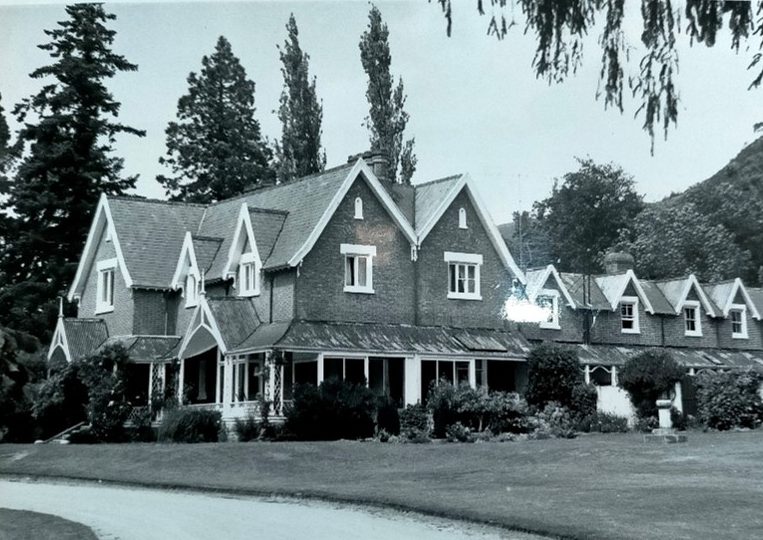
Some members of the Acland family emigrated to New Zealand. However, they kept in touch with their Devon relatives for several generations and many of these letters are preserved in the archive. Writing home, John Barton Acland (1823-1904) contrasted colonial and British politics, commenting, for example, on how New Zealand was much further ahead than Britain in debating female suffrage. John described how his wife Emily theoretically opposed votes for women, but that did not stop her from signing up to vote as soon as she could in 1893.
Values and Beliefs
In the nineteenth century, the Acland family began to define themselves not just according to their Devon estates, but through the role they saw for themselves in the wider world. Spurred by their devout Christian faith, their understanding of their gentry class identity, and their involvement in several reform movements, they became involved in high-profile imperial projects which sought to project their values and beliefs overseas.
*Letter from Anne Acland to Mr. Kennedy (3rd April 1977), DHC 1148M/Add23/Z/2/14.