
This summer The Museum of Somerset is celebrating the wonders of science through children’s books, hands on activities, and extraordinary individuals. One such figure is Ada Lovelace – a visionary mathematician whose ground-breaking ideas in the 1800s laid the foundations for modern computing. Often hailed as the world’s first computer programmer, Ada’s legacy continues to inspire generations of scientists and innovators.
But did you know she also has a surprising connection to Somerset? As part of our Summer 2025 science exhibition, we’re exploring her remarkable story and how her pioneering spirit lives on in the world of discovery and invention.
A Pioneer
Born Augusta Ada Byron on 10 December 1815, Ada Lovelace was the only legitimate child of the famous Romantic poet Lord Byron and his wife Annabella Milbanke. Though her father left England shortly after her birth, Ada’s mother was determined to give her daughter a rigorous education in mathematics, logic, and science, subjects rarely taught to women at the time.
Ada’s brilliance became evident early on. In 1843, she translated a French article about Charles Babbage’s proposed Analytical Engine, an early mechanical computer. But Ada didn’t stop at translation, she added extensive notes of her own, including what is now recognised as the first computer algorithm. Her insight that the machine could manipulate not just numbers but also symbols, letters, and even music, was revolutionary.
Ada’s visionary notes on the Analytical Engine later inspired Alan Turing, who referenced her work in his ground-breaking 1950 paper on artificial intelligence, recognising her as a pioneer in the field.
In recognition of her contributions, a programming language developed by the U.S. Department of Defence in the 1980s was named ADA in her honour.
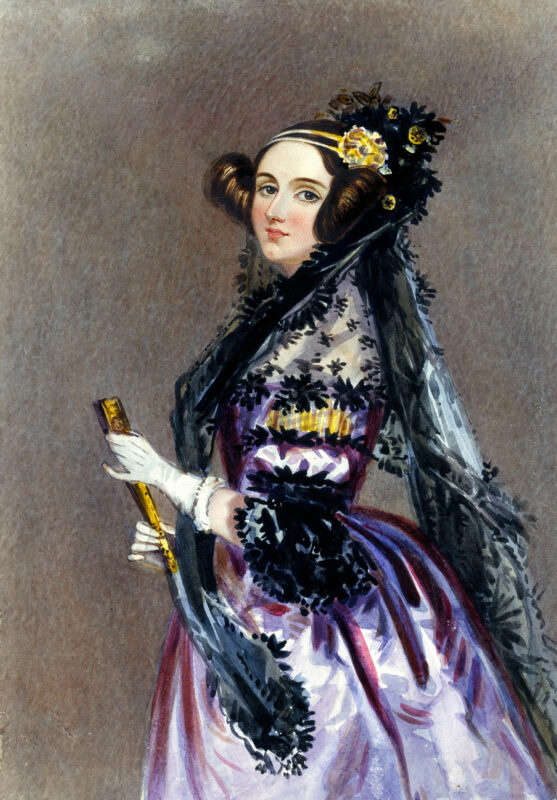
Ada Lovelace
Ada in Somerset
In 1835, Ada married Lord William King, who would later become the Earl of Lovelace. During their honeymoon, the couple stayed at Worthy Manor in Ashley Combe, near Porlock Weir on the edge of Exmoor. They fell in love with the area and made Ashley Combe their summer retreat. The King family’s main residence was at Ockham Park in Surrey, but they spent two months of the summer here in Somerset.
The Lovelace’s transformed the estate into an elegant Italian-style villa, complete with steeply terraced gardens and a network of mysterious tunnels. These so-called “fairy tunnels” allowed access to a private beach below.
Though the house was later used as a children’s home by Dr Barnardo’s and briefly became a country club in the 1950s, it eventually fell into disrepair and was demolished in 1974. Today, remnants of the tunnels can still be found along the South West Coast Path leading to Culbone Church, offering a tangible link to Ada’s time in Somerset.
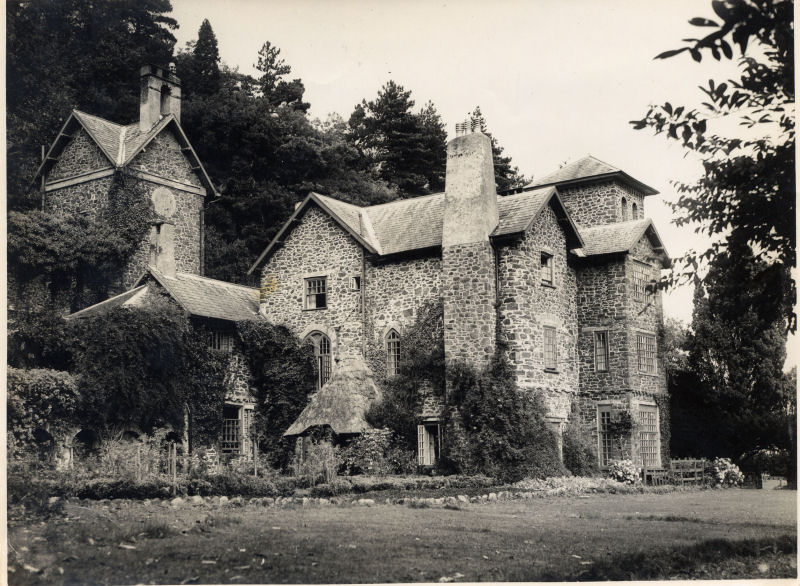
Ashley Combe, Porlock Weir. Image: Minehead Online
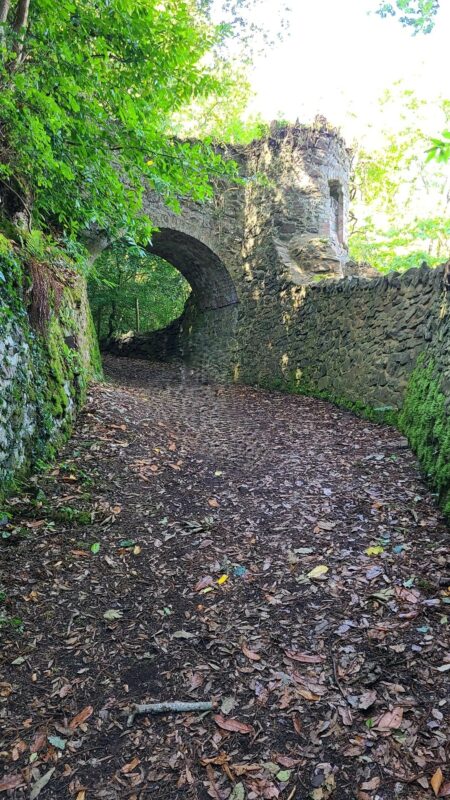
Remnants of the ‘Fairy Tunnels’ in 2023
A Legacy
Despite Ada’s early contributions, women remain underrepresented in STEM (Science, Technology, Engineering and Mathematics) fields today. Events like International Women in Engineering Day (23 June) and Ada Lovelace Day (second Tuesday in October) are vital opportunities to recognise the achievements of women in STEM, and to inspire future generations to follow in their footsteps.
Next time you’re walking the coast near Porlock Weir, take a moment to imagine Ada Lovelace strolling those same paths, her mind alive with ideas that would shape the digital world we live in today.
🎨 Owen Davey
Our summer 2025 exhibition features the work of Owen Davey, a UK-based illustrator whose bold, geometric style has captivated readers around the world. Since 2009, Owen has illustrated around 40 picture books, translated into over 25 languages, and collaborated with global names like Google, WWF, LEGO, Facebook, and National Geographic.

Ada Lovelace by Owen Davey, featured in ‘
Ada is featured in Owen Davey’s beautiful illustrations from Welcome to AI by Matthieu Dugal, which can be seen in our current exhibition at the Museum of Somerset, celebrating the incredible artwork found in children’s science books, alongside pioneering scientists and inventors.
Wow! Amazing Science in Children’s Books is running at The Museum of Somerset until Saturday 1 November 2025 before heading to the Royal Albert Memorial Museum in Exeter in January 2026.
Related Events
For further exploration of Ada Lovelace’s connection to the Somerset landscape you can join a Talk and Tea at The Museum of Somerset on 10 October 2025. Presented by Jeff Cox, Trustee of the Dovery Manor Museum and former BBC foreign news producer, whose family founded the West Somerset Free Press in 1860.
The talk will delve into Ada Lovelace’s pioneering collaborations with scientific giants such as Charles Babbage, Michael Faraday, and John Herschel, as well as her visionary role in creating a remarkable arboretum in the woodlands of Ashley Combe.
It will also shine a light on her close connections with two of Somerset’s most influential figures: Frederic Knight, the architect of modern Exmoor, and Andrew Crosse, the radical Quantocks scientist whose bold experiments with electricity captured the imagination of the age.
Also running until the end of October 2025 is the Ada Lovelace and Porlock exhibition at Dovery Manor Museum in Porlock, offering a deeper look into her extraordinary life and legacy in Somerset.