
Second World War
When war was declared in September 1939 Reckitt left the relative safety of her Somerset home and returned to the capital. ‘I must say’, she wrote from her London lodgings, ‘even though one can do so little it is something and one can’t run away even if one wanted to when everyone else is stuck here.’
Reckitt’s wartime work was mostly based at Toynbee Hall, a centre for social and educational reform in East London. Her focus was twofold: the provision of relief for bombed-out families with young children, and the evacuation of children to war nurseries in the countryside.
The voluntary work Reckitt undertook had a deep impact, exposing her to the terrible urban poverty in which many families were living. She became highly critical of the authorities and her wartime letters expressed frustration about the inequalities she witnessed – ‘They ought to move the Eastenders by thousands in the big Park Lane flats and houses, mostly standing empty and undamaged’.
Alongside her relief work, Reckitt found time to pause and sketch the realities of life during the war, later working them into powerful oil paintings and wood engravings. Her artistic output offers a unique insight into the work of a female artist, living independently in London during a time of great loss and change.
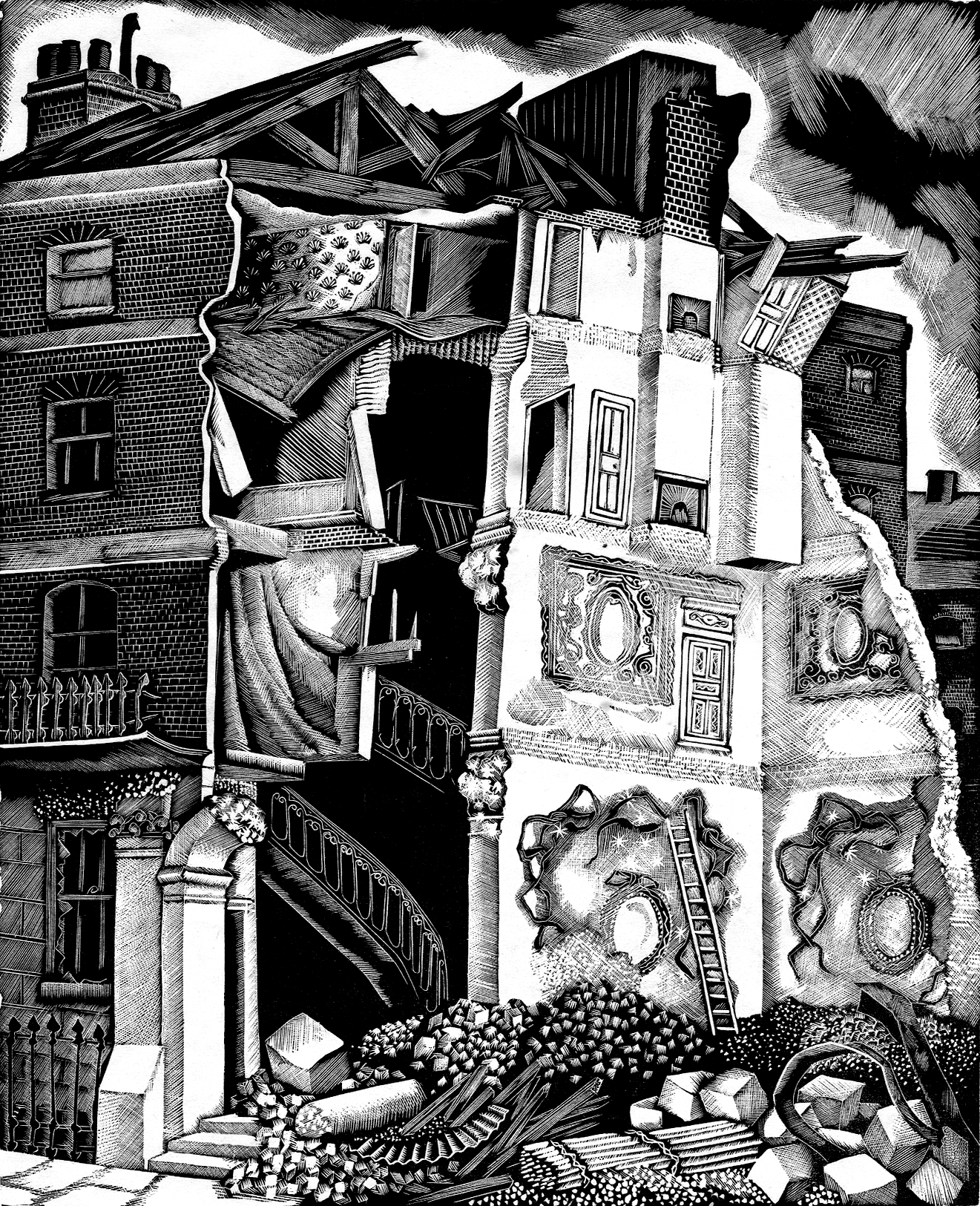
Private Collection
Wood engraving, 27 x 21 cm
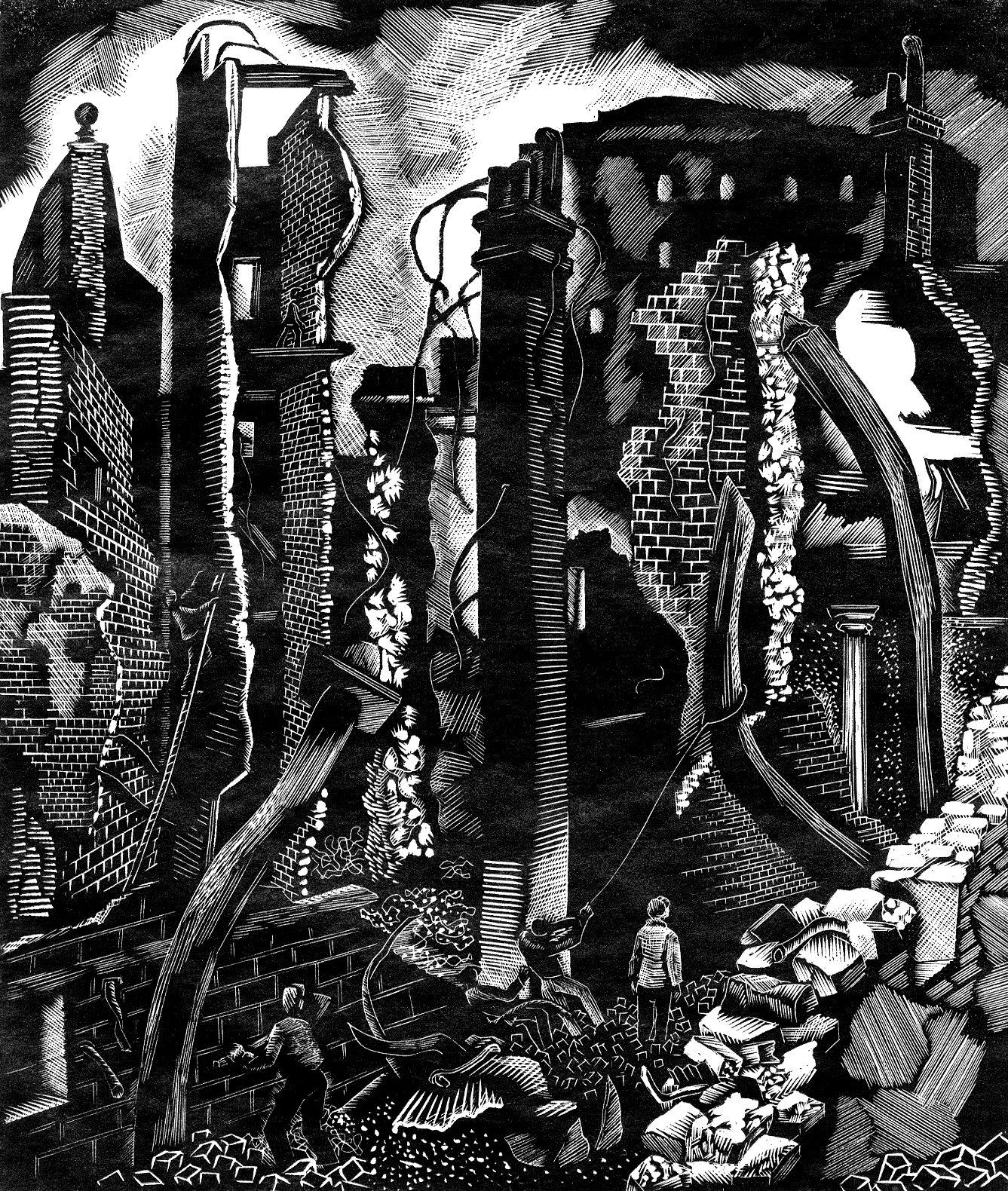
Private Collection
Wood engraving, 14 x 16 cm
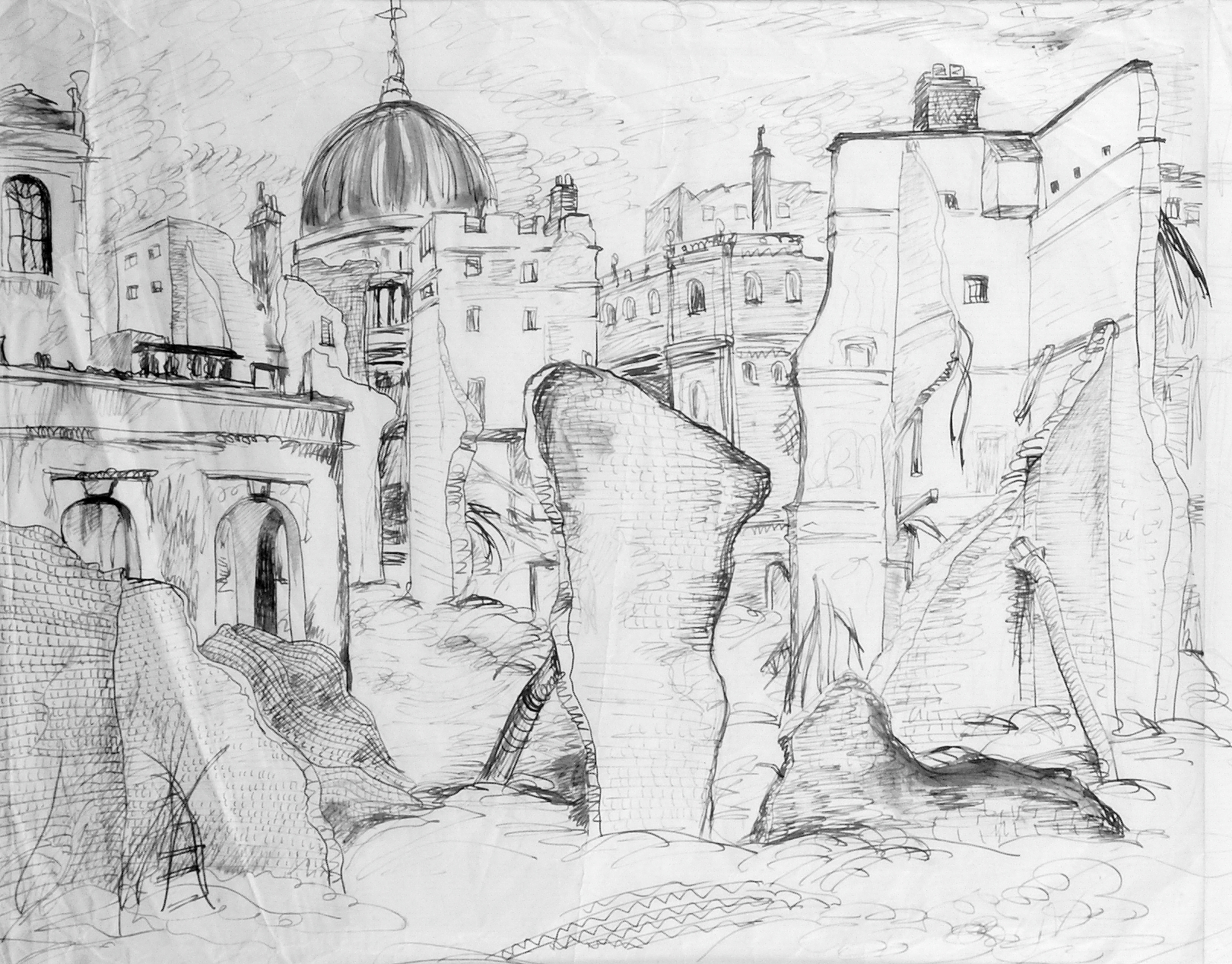
The Golsoncott Foundation
Pen & ink, 44 x 53 cm
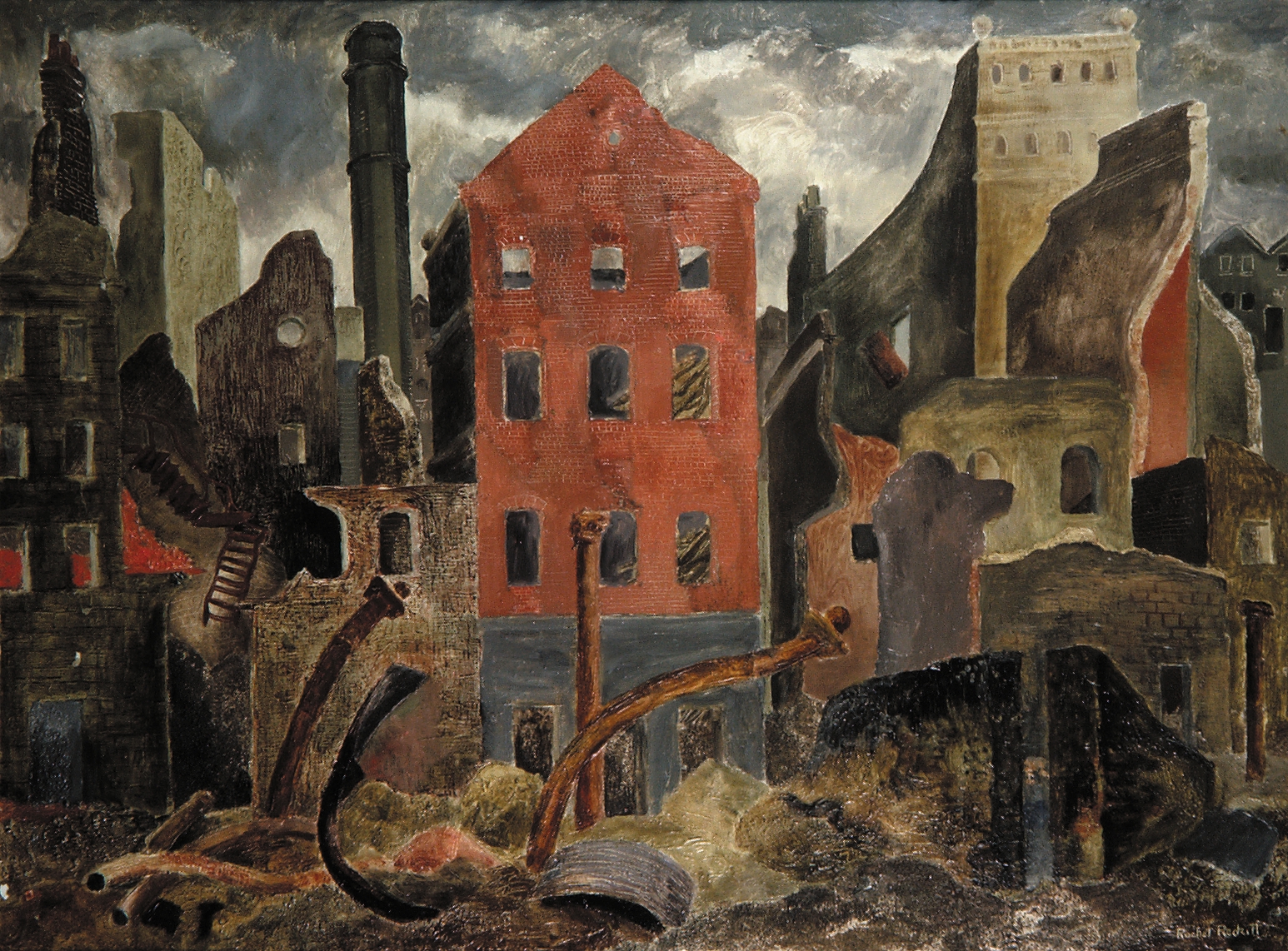
Private Collection
Oil on canvas, 76 x 116 cm
Gallery