
Archivist, Esther Chant, from the Devon Heritage Centre, explains a parish collection project leading to 5,000 new documents being listed on the Devon Archives Catalogue.
Parish Collections at the Devon Heritage Centre
In May 2023 I commenced work on re-cataloguing some of the more complex and poorly-listed parish collections held at the Devon Heritage Centre. As a place of deposit, we hold over 300 parish collections on behalf of the parish and its incumbent, ensuring their preservation and providing access to researchers and family historians alike. Some of these collections remain largely uncatalogued, however, while others present a complex, incomplete, and often incorrect catalogue. Given the perennial popularity of parish records, re-cataloguing is thus a priority.

What’s in a Parish Collection?
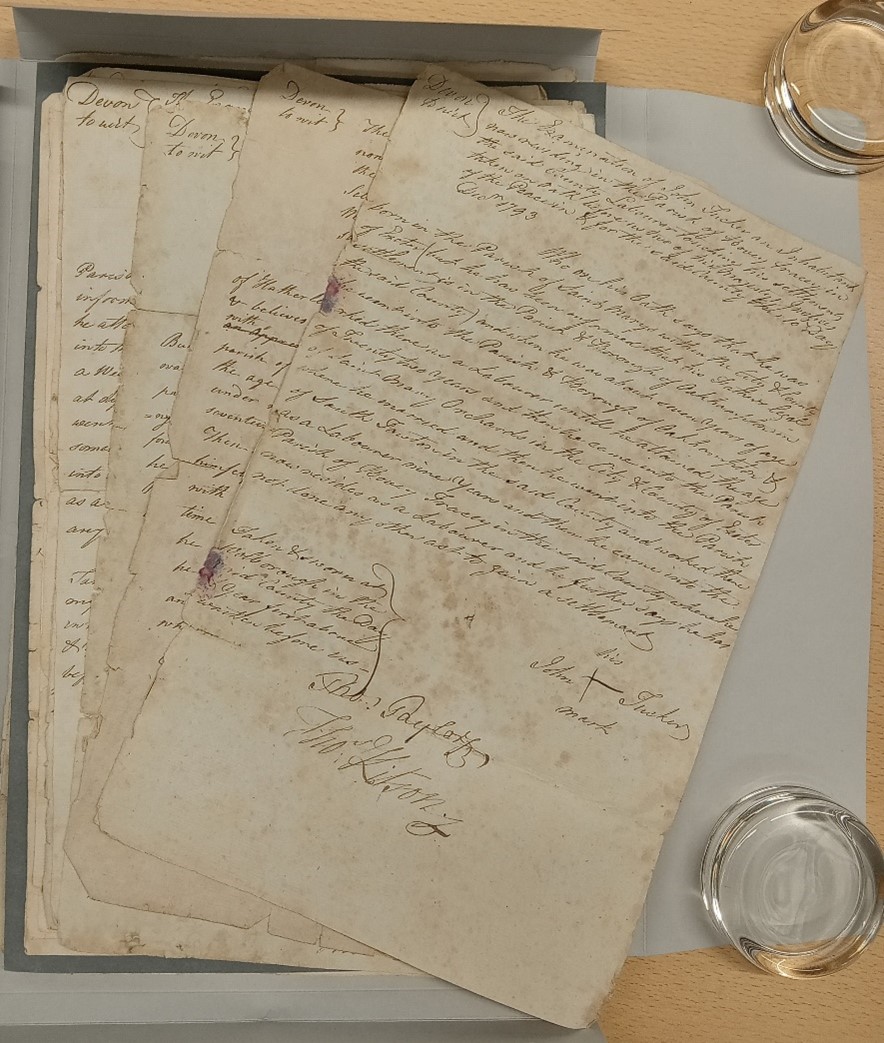
The Heritage Centre takes in material from a wide geographical area, and the parish collections held here can reveal an impressive breadth of material. While what has survived can vary wildly from parish to parish, a typical parish collection will include baptism, marriage, and burial registers; records of the Overseers of the Poor and documents relating to the vestry and, later, the Parochial Church Council. Overseers’ papers in particular are gold dust to the genealogist, sometimes revealing the name of an illegitimate child’s putative father, at other times illuminating the migration of workers to and from Devon and overseas.
Documents of Importance
Another record set of especial importance are the churchwardens’ accounts, sometimes of considerable antiquity. A collection’s survival was predicated on the fortunes and ravages of the parish’s history, and while we may mourn the loss of all of Ashbury’s parish registers to a fire in 1877, or of those of Exeter St. Martin to the Blitz, several of Devon’s parishes are well-preserved. Tavistock boasts a remarkable series of account rolls commencing in 1385, recording the expenses and traditions of the pre-Reformation church, and a number of parishes, including Exeter St. Petrock, Chagford, and Ashburton (among others), are likewise blessed with surviving medieval accounts.
Material such as church schools, incumbents’ personal and official papers, charities, and magazines may also be found in a parish collection. Parish charities are an often unmined source of information, and ancient boroughs such as Tavistock include numerous medieval deeds listing land, occupants, and relationships back to the reign of Edward I. Personal bequests for charities are also included, and Axminster has amongst its collection a copy deed of the gift of John Yonge (c1621), granting a house and garden in Chard Street for the use of the poor – unless, of course, they committed the crimes of drunkenness, adultery, fornication, theft, brawling, or scolding.

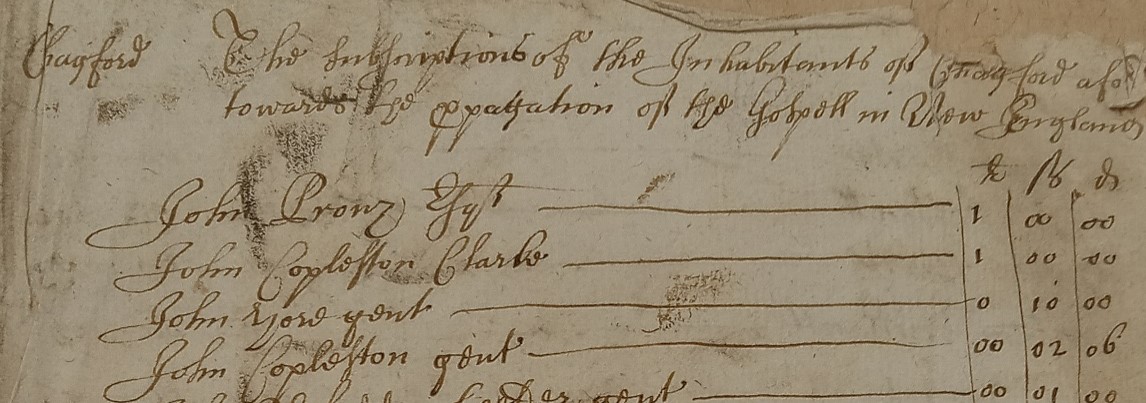
Miscellaneous items will additionally crop up amongst a collection, including a list of subscriptions made by the inhabitants of Chagford in 1652 towards the propagation of the gospel in New England, or sketch books by two young daughters of a Bovey Tracey surgeon. Even an appeal for alms by the abbot of Tavistock to maintain the repair of the stone bridge has survived from 1370.
5,000 New Documents on the Catalogue
Some 5,000 items dating from the thirteenth century to the twenty first have now been reclassified, relisted, and released on the public catalogue, improving the awareness and visibility of these documents. The parishes of Tavistock (482A), Bovey Tracey (2160A), Axminster (406A), Torquay Ellacombe (3000A), Chagford (1429A) and Paignton St. John (3134A) have all now been completed.
You can view the documents on the Devon Archive Catalogue.