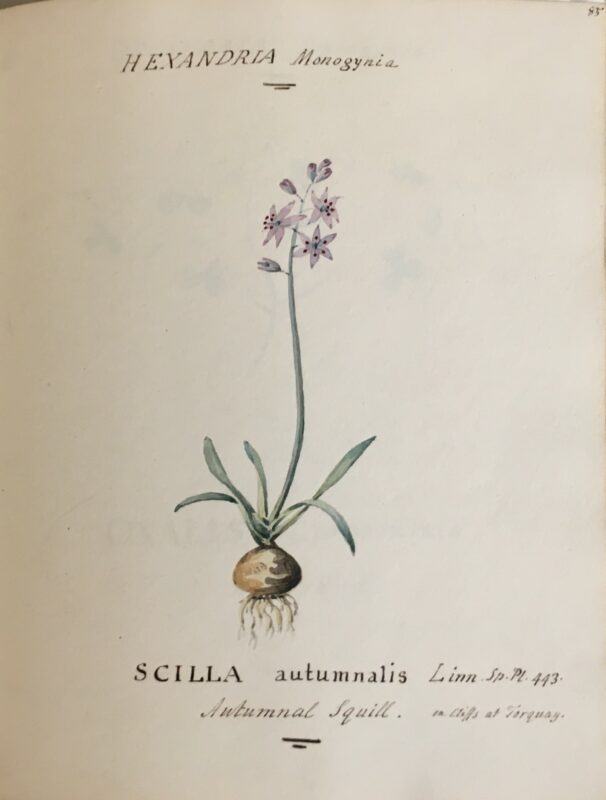
In late August we became aware of an item which was being auctioned in Cardiff. It was described as ‘Sketches of the County of Devon, handwritten manuscript on paper, dated 1793’, and it was indicated that it was the work of the Reverend John Swete. Nothing was known about its provenance apart from the fact that it came from a collection in Wales and had been sold, many years previously, by an antiquarian book dealer in Essex.


Travel Diaries in Prose and Pictures
John Swete (1752-1821) was a Devon clergyman who toured the county in the late eighteenth century compiling a series of manuscript journals which recorded his travels in prose (heavily flavoured with classical Latin and Greek) and, more significantly, in watercolour illustrations of very high quality. The Devon archive service has held the principal collection of Swete’s ‘travel diaries’ since 1959. This consists of seventeen volumes, although three others are believed to have been destroyed during World War Two. For this reason, the volume which was on sale was of huge interest to us, and we wondered if it might just be one of the missing volumes from the original collection. If so, it would prove that not all of them had been destroyed during the war, something we were doubtful about and which had never been definitively proven. Speculation about the volumes’ uncertain fate had been stimulated by another deposit relating to Swete which we had acquired in 2021. These were two sketches by Swete (of Orestone and the ruins of the Bishop’s Palace, both in Paignton) which had apparently been part of a volume which had been taken apart, and were sent to us by someone in the United States. From their dates it seemed to us as though they were likely to have come from the ‘missing’ Volume Five of the collection.
A Unique Item Dedicated to Mrs Theobald
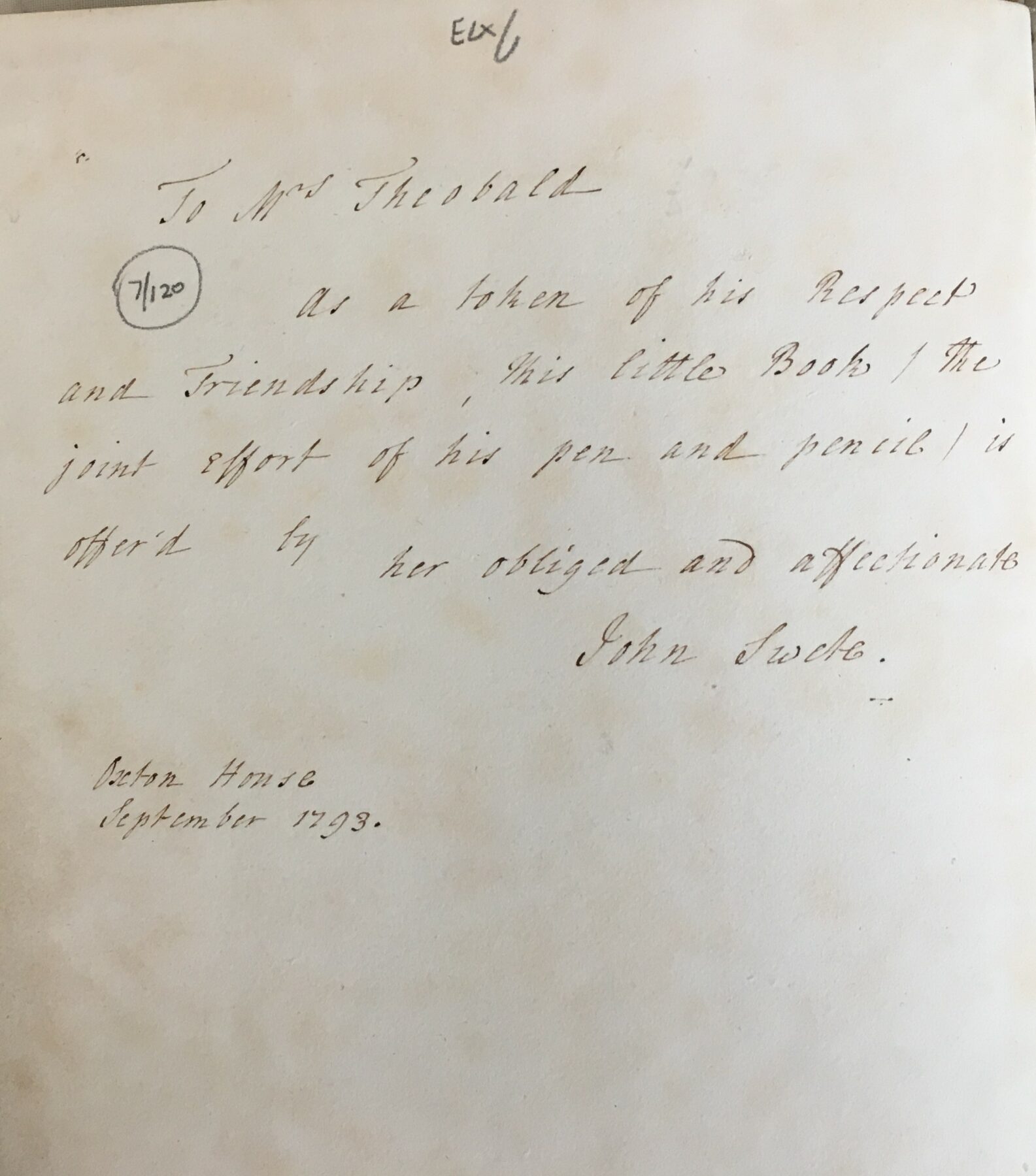
With help from the Friends of Devon’s Archives and the Kent Kingdon Trust we were able to acquire the volume. However, when it arrived it quickly became obvious that it was a unique item which didn’t form part of the existing series. At the start of the book there is a personal dedication ‘To Mrs Theobald’, ‘as a token of his Respect and friendship, this little Book/ the joint effort of his pen and pencil/ is offer’d by her obliged and affectionate John Swete’ ‘Oxton House September 1793’. The illustrations in the book are more diverse than those in the other series; as well as pictures of buildings such as Swete’s own Oxton House, near Kenton, Mamhead House and Dartmouth Castle, and landscapes, the book contains Swete’s artistic impressions of various flowers.
The volume is an extremely notable and valuable addition to our holdings relating to one of Devon’s most celebrated and versatile antiquarians, and we are very grateful to the Friends of Devon’s Archives and the Kent Kingdon Trust for their generous support.