
Stumpy Oak Hawson Cross
Click through the gallery below to discover three artists’ responses to an historic ancient pedunculate (English) oak tree
Stumpy Oak stands at Hawson Cross, near Scorriton, and is thought to be many hundreds of years old. The tree has been pollarded in the past, resulting in its present ‘stumpy’ form. Its position at a crossroads suggests the tree has historical significance, possibly as a way marker on a pilgrim route or as a boundary marker.
The stone cross next to the tree was reputedly one of several to denote the Monk’s Path running between Buckfast, Tavistock, and Buckland. It was restored by the Dartmoor Preservation Association and returned to its original location in 1952.
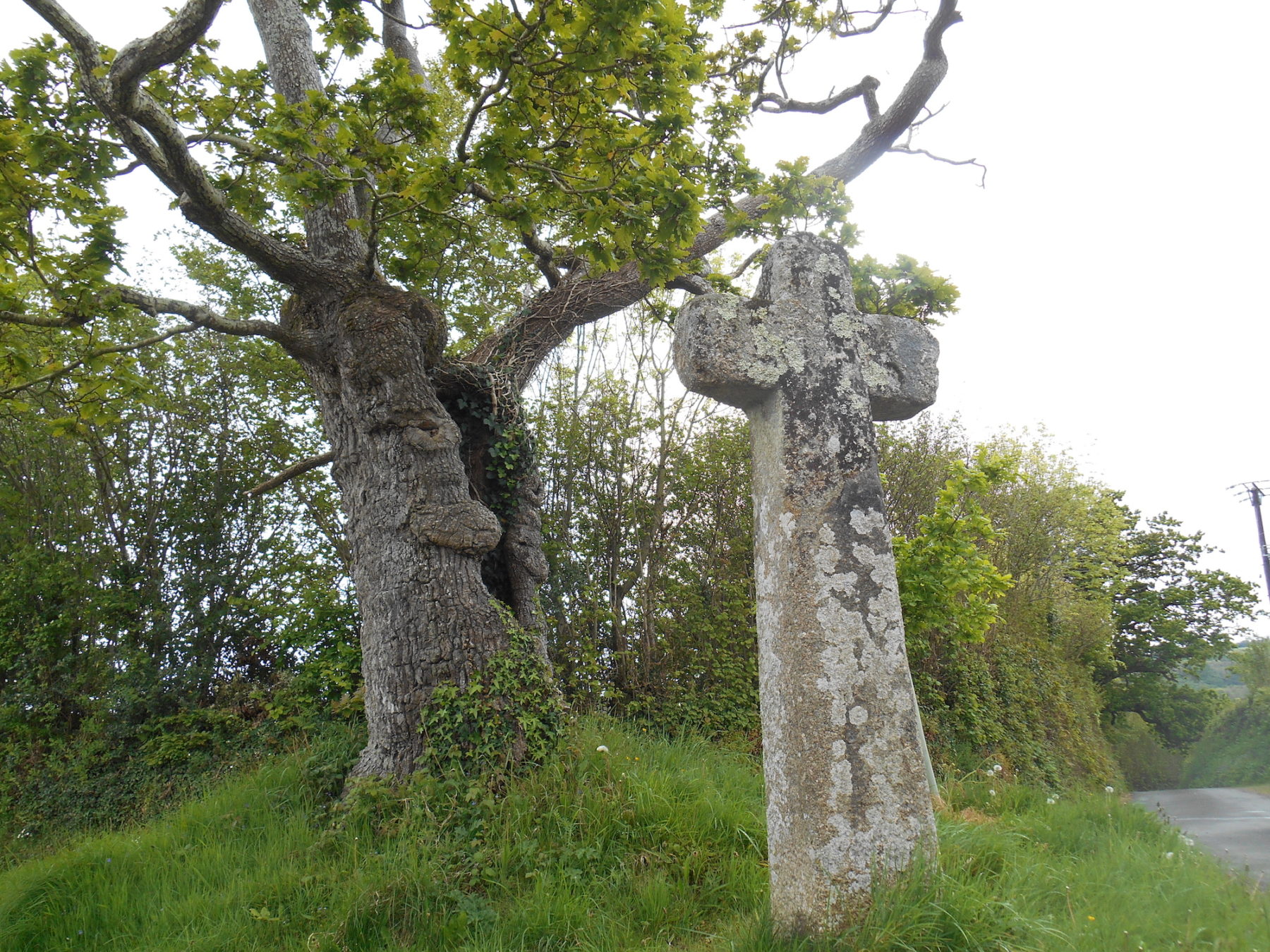
Hawson Cross, Tim Craven 
Base of Stumpy Oak, Abi Kremer
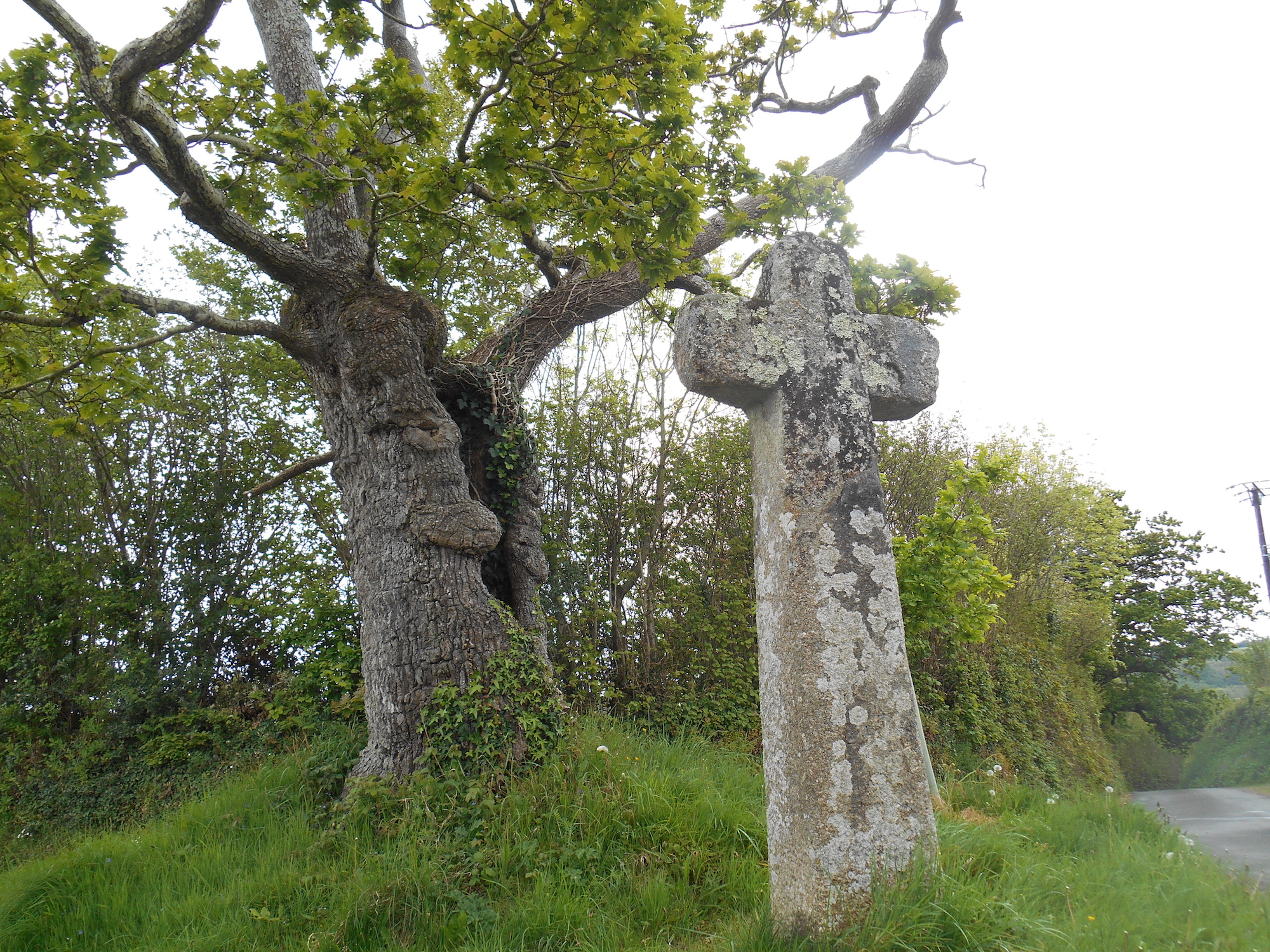
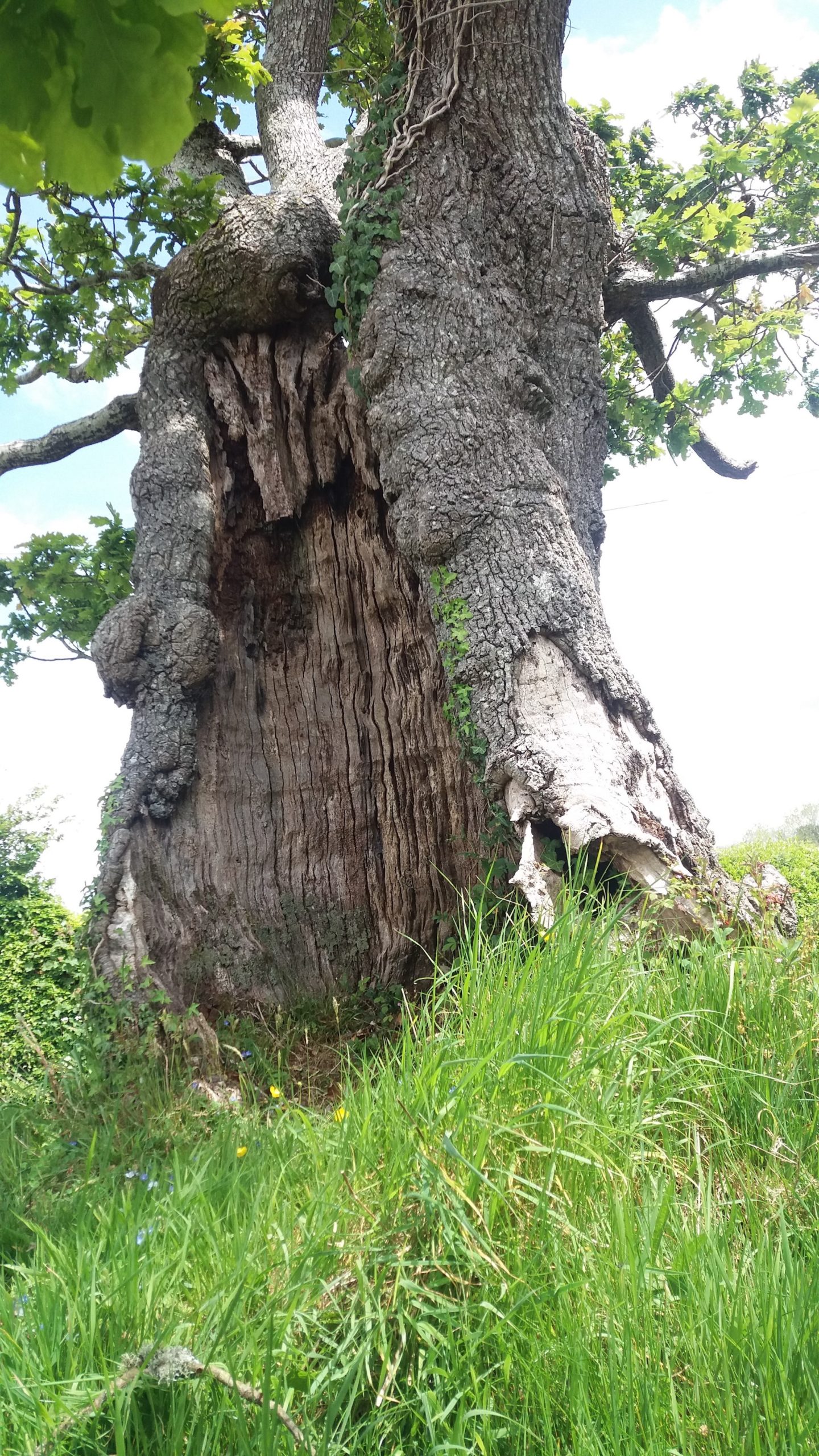

Hawson Cross, Stumpy Oak
Charcoal, earth and chlorophyll, 75 x 94 cm
Spending time exploring the landscape of Dartmoor was the perfect opportunity for Fiona McIntyre to express her love of powerful forms and dynamic compositions. She is drawn to the juxtaposition of colour and form that can be observed in the lime green/burnt orange lichen-covered boulders, the bark and branches. Painted with her recognisable gestural brush marks and bold pattern, these wild trees represent the ultimate expression of dynamic growth, movement and colour.
Spending time exploring the landscape of Dartmoor was the perfect opportunity for Fiona McIntyre to express her love of powerful forms and dynamic compositions.
This photograph of Hawson’s Cross gives a sense of the landscape which inspired McIntyre to create this artwork.


Stumpy Oak, Dartmoor
Wood engraving, 25 x 20 cm
Blaze Cyan describes her artistic process as beginning with ‘exploration, the experience of walking and connecting with my surroundings’. She creates work that reflects ‘the beauty and complexity of nature and its importance in supporting and enriching lives’. She is particularly fascinated by ancient trees, with their symbolic role in representing wisdom and the passage of time.
Blaze Cyan describes her artistic process as beginning with ‘exploration, the experience of walking and connecting with my surroundings’.
Cyan creates work that reflects ‘the beauty and complexity of nature and its importance in supporting and enriching lives’.
The artist is particularly fascinated by ancient trees, with their symbolic role in representing wisdom and the passage of time.

Hawson Cross
Watercolour, 69 x 86 cm
In response to the question ‘Why do I paint trees?’ Tim Craven says: ‘I have always been drawn to the optical fuzz of organic pattern and the spatial thrill and complexity of trees as an abstract subject. The strong verticals and diagonals of their trunks, branches and foliage give an infinite variety of form through the seasons. I also claim their Romantic associations, rich art-historical legacy and profound connections with the human condition.’
In response to the question ‘Why do I paint trees?’ Tim Craven says: ‘I have always been drawn to the optical fuzz of organic pattern and the spatial thrill and complexity of trees as an abstract subject. The strong verticals and diagonals of their trunks, branches and foliage give an infinite variety of form through the seasons. I also claim their Romantic associations, rich art-historical legacy and profound connections with the human condition.’
This photograph of Hawson’s Cross gives a sense of the landscape which inspired Craven to create this painting.

Gallery
This exhibition was supported by

