A social prescribing project to support communities in post-pandemic Somerset
Covid-19 and Beyond
‘Together Again: sharing new cultural experiences’, was an ambitious project aiming to reach and engage new or different audiences with culture in Taunton, Somerset. It took a social prescribing approach, working with new people, new partners and leading to organisational development. It was supported using public funding by the National Lottery through Arts Council England and took place during 2022.
The main activities took place at the Museum of Somerset and the Somerset Heritage Centre. Although initially intended to reach those struggling most from pandemic isolation, the increasing economic crisis and the war in Ukraine inevitably widened the project focus. It was carried out through a busy six-month programme in 2022, engaging 417 people in total.
The project was run by a project team, led by John French, Learning Officer with the South West Heritage Trust. Staff contributed to welcoming and helping to engage audiences with activities and creating content for outreach ‘goodie bags’. Freelance artists and heritage practitioners were also employed to deliver activities.
Working with Partners
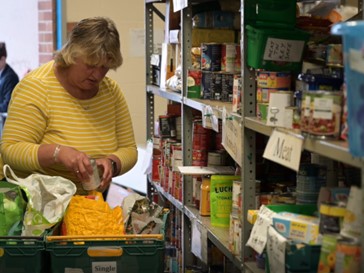
We worked with Taunton Foodbank to distribute heritage tickets.
Local agencies had shared with us how cultural activities could support what they offered, making people feel connected to their community and extending beyond providing basic food and shelter. Our project piloted how heritage stories and collections could help people in Taunton Deane who had been adversely affected by the pandemic or social deprivation, with an emphasis on improving their wellbeing. (Pictured: We worked with Taunton Foodbank to distribute heritage tickets.)
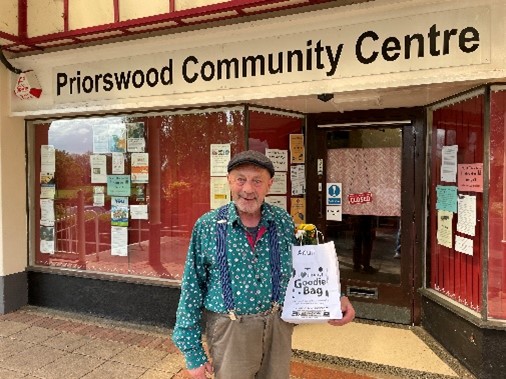
The project wanted to explore how local agencies could best signpost people to local heritage opportunities. Detailed evaluation enabled us to learn what worked, so a sustainable cultural programme which supports local people’s wellbeing could be developed for the future. This was enabled by giving out tickets for the activities in the programme. The Learning Officer worked closely with partners and at their locations, which included foodbanks, village agents, community centres, churches, and Ukrainian refugee groups.
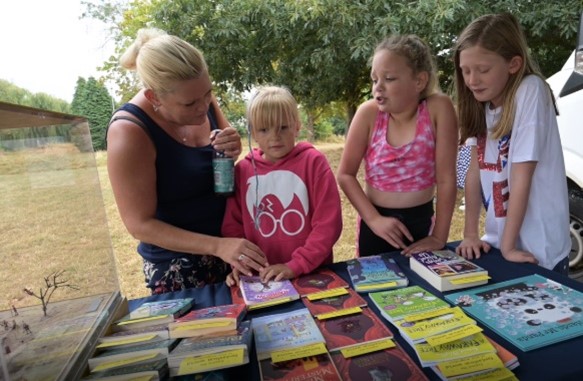
“They’ve had lots of fun; they’ve not stopped smiling. Just doing family things together. We didn’t pay to come here; we had a donation through the foodbank because obviously the cost of living going up. Even if we had to pay for it, it was affordable and having it cheaper and affordable for families to do, it means they get to come out and we get to do fun things,” Mum, participant filmed at craft session.
Outcomes
“I’ve lived in Taunton for 9 years and never been to the Museum. I’ll definitely be back, there’s so much to see and so much on, ” Participant, family craft event.
“When I went to the museum I dressed up as a Roman and it was really fun cos I thought it would be like going back in time, which would be one of my favourite superpowers if I had it,” Child participant.
The project was evaluated by the University of Exeter. A rigorous evaluation framework was created, and extensive qualitative and quantitative data was gathered and analysed from partners, artists, facilitators, and audiences. These included wellbeing measures, including the 5 Ways to Mental Wellbeing Framework.
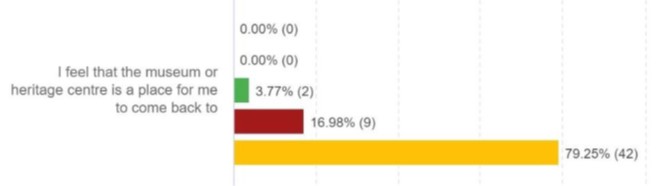

Together Again taught the Trust a great deal about working in partnership and the social prescribing approach, as well as generating a powerful sense of the value of what had been achieved.
What we have learned:
• There is a need and important place for heritage-based activities for these targeted audiences. This was highlighted by partners at the start of the project and reinforced by the attendance rates and the feedback from those who participated.
• Working directly with partners and building trust with them and their audiences was essential for reaching the audiences in need, and will need to be sustained for future success.
• It was important to be flexible and to adapt to changing needs and demands during the project. Staff gained confidence and the Trust has become braver at trying new things,
“Having the ability to be very flexible and change for things like the Ukrainian crisis, just being able to offer it to those audiences just like that, and the fuel crisis right at the end of the project, being able to flip again and offer stuff towards that immediate need of the public…it didn’t involve a lot of committees and meetings,” Museum staff member
• The time spent reaching these audiences was considerably longer than first estimated. Project staff adopted a face-to-face approach with potential audiences, and this will need to be factored into future sustainable programmes. However, this also had the advantage of fostering good and trusted relationships with partners.
Looking Forward
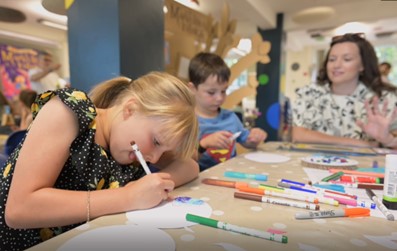
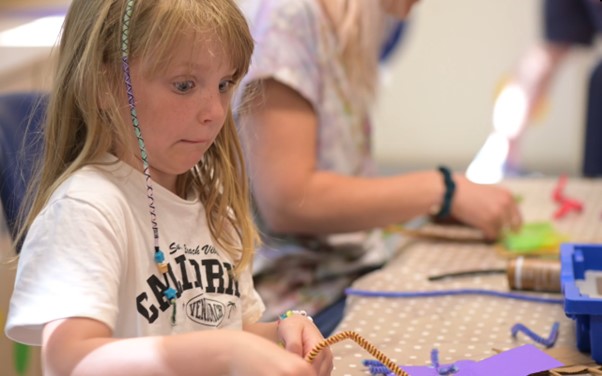
The project has demonstrated the important role that heritage organisations can play in helping to support the wellbeing needs of our communities.
‘Together Again’ took place during a time of huge local, national, and international turmoil. A key part of its success was its flexible approach. This allowed new partners, new artists and facilitators, and new audiences, such as Ukrainian refugees, to be accommodated in the project. The project team has learnt that it is vital to keep up with new audiences and needs.
Most partners expressed a wish to continue working together to support local people in need. The project demonstrated that face to face time with partners and their audiences is the best way to encourage engagement, alongside traditional marketing methods.
“Working genuinely collaboratively with a freelancer, almost starting from scratch, let’s build something together, rather than us be a host and you bring your thing, worked so well, super exciting. It was a different approach as we started collaborating right at the start of the project, slightly organic process, even they didn’t know quite how it would work,” Artist/facilitator at the Museum of Somerset.
The project highlighted the importance of cultural support in local areas of most need and the wellbeing and sense of community belonging that can be achieved.
The legacy of Together Again has already resulted in the South West Heritage Trust supporting several Warm Refuges in the local area during the winter economic crisis of 2022-23.
The Trust will use the lessons learnt and recommendations given from the evaluation to help guide future programmes, audience development work, stakeholder involvement and staff training. We have recently received funding through Arts Council England’s NPO investment programme. Over the next three years we plan to build on what we have learned to develop a sustainable programme, enabling people in need to experience creative workshops, exhibitions and heritage events.