
The North Devon Railway Line
North Devon Record Office is celebrating the history of railways in North Devon by taking part in the Rail Fest exhibition, an exhibition of rail history and model railways at Barnstaple Guildhall. The exhibition features an archives display about the history of the North Devon branch lines with original documents and images. To commemorate the 170th anniversary of the opening of the North Devon Line we’ve written a blog about Devon railway history.
The North Devon Line, also known as the Tarka Line, connects the city of Exeter to the town of Barnstaple along a beautifully scenic route following river valleys and Devon hills and stopping at a number of local villages.
Currently operated by Great Western Railway, the line originally opened in 1851 and ran from Exeter to Crediton, and in 1854 the line was completed through to Barnstaple and has linked North and South Devon ever since.

The Scenic Route
The line runs through Exmoor and Dartmoor passing through a number of scenic villages and the beautiful countryside of the Yeo and Taw valleys. The name the Tarka Line was introduced by Wessex Trains in 2001 after the novel Tarka the Otter written by Henry Williamson which is set in North Devon. The novel’s vivid descriptions of Tarka’s life within the River Taw and River Torridge in North Devon are echoed in the picturesque rail journey of the Tarka Line via the flowing river valleys of the Yeo and Taw.

Birchall (North Devon Record Office: Bx 03 050)
The journey currently takes approximately an hour and a quarter to travel the line between Exeter and Barnstaple, whereas in 1854 a stream train would have taken much longer to complete that distance. Steam trains were the main power source for roughly 100 years before diesel was introduced into the rail industry, and top train speed was around 80 mph in 1850.
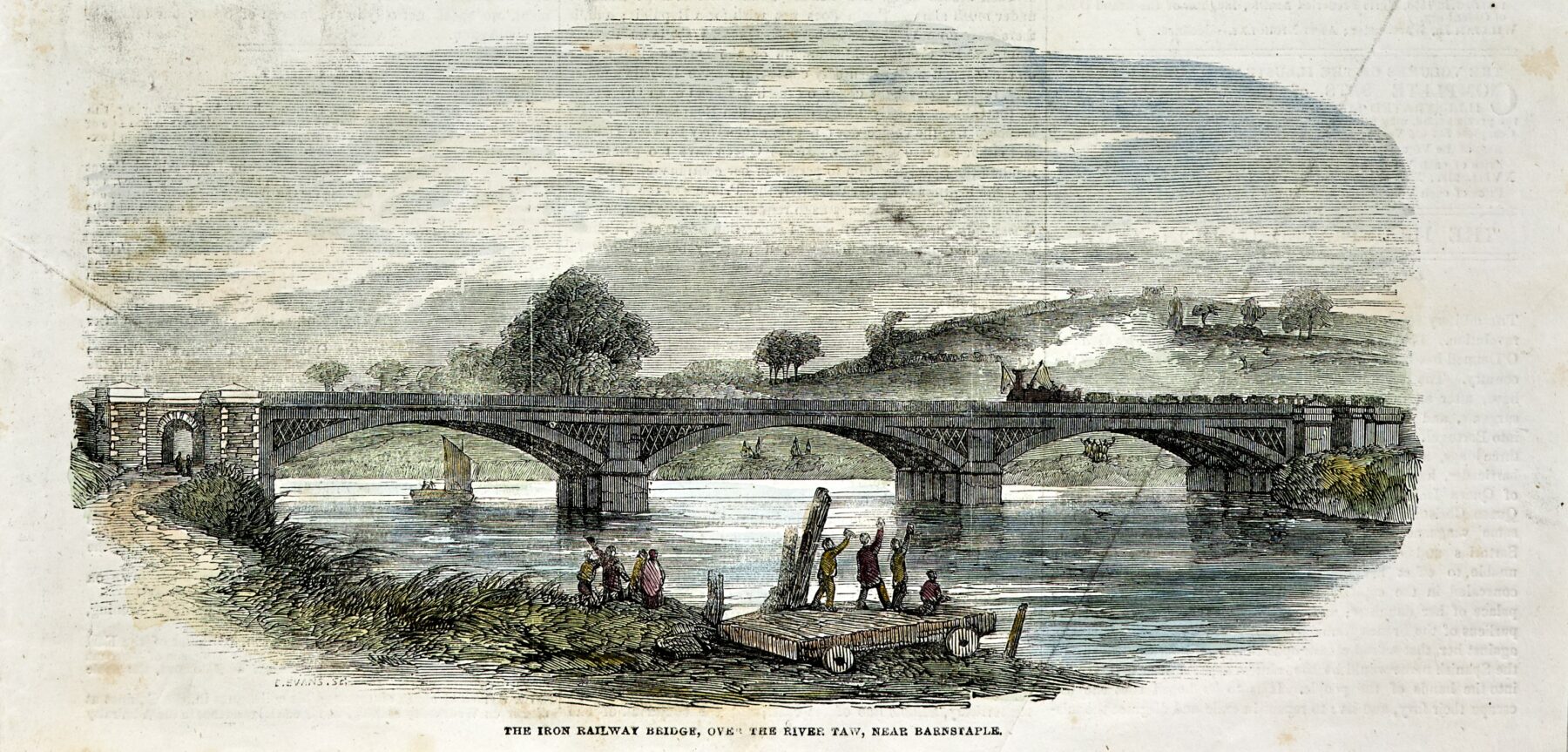
Steam Train History
Railways across Britain radically changed rural society, and industry, leisure and rural populations were all impacted by rail lines. Steam trains could carry goods and passengers much faster than previously and new lines allowed new destinations to be reached, promoting both leisure travel and commerce. By the 1870s over 300 million passengers and 150 million tonnes of goods were transported each year by British trains.
Passenger trains would also aid the postal service by carrying newspapers, parcels & post. Freight traffic also travelled along the North Devon Line, coal came from Fremington, dairy came from Lapford, timer came from Chapleton, and sweets came from the Crediton sweet factories. Not to mention cattle, meat, clothes, agricultural feed, horticultural supplies and building materials all were conveyed along this line.
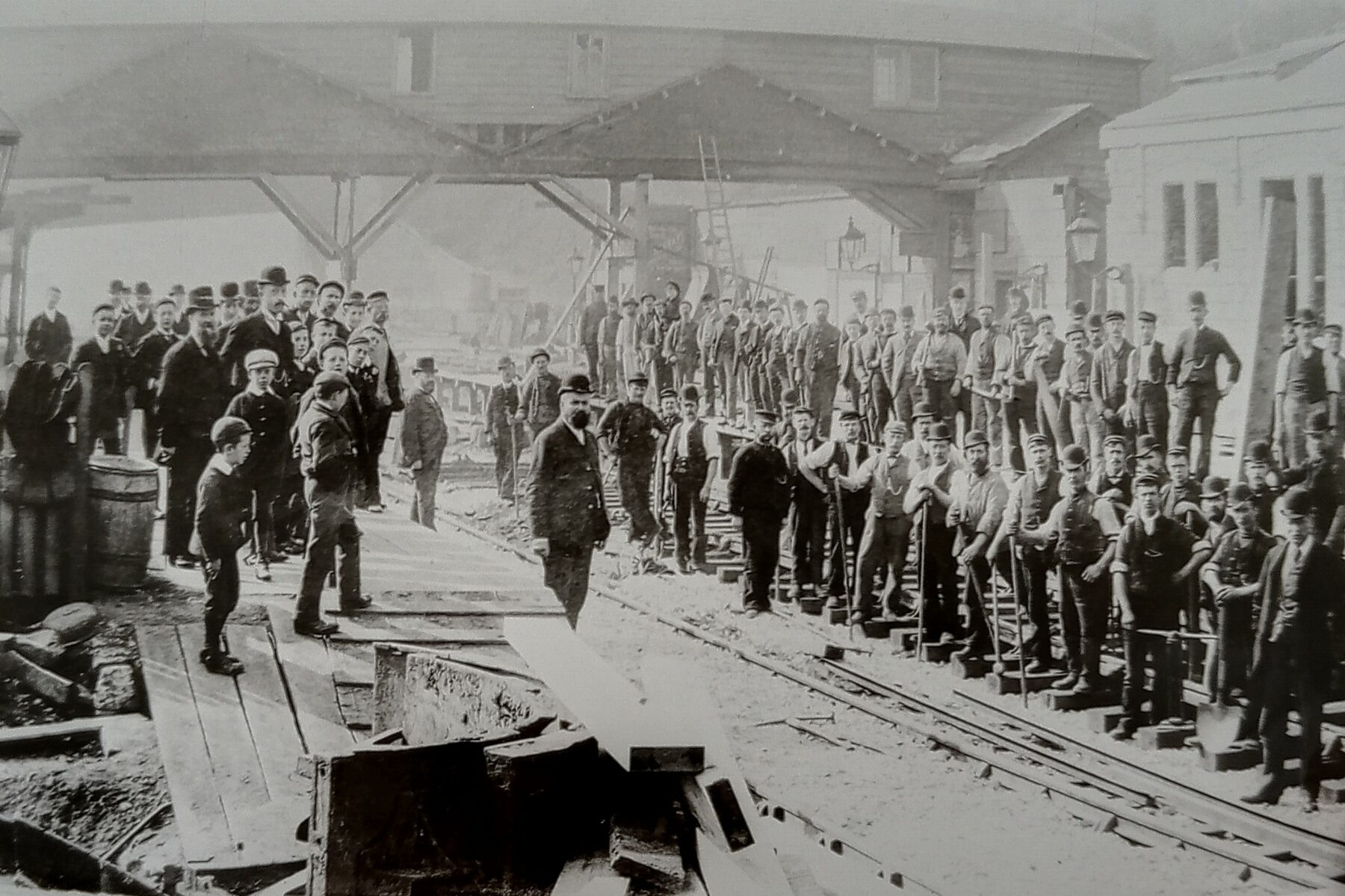
The South West Seaside Escape
Railways allowed holidays in new places that were previously expensive or too far away. The seaside towns and villages of Somerset and Devon flourished in the summer months from the growing tourist trade. The North Devon Line in particular became very popular and ran full length holiday express trains from London, Waterloo to various North Devon holiday resorts along the line. The country air, market towns, beaches and fossil coasts were all key West Country attractions, and continue to be.
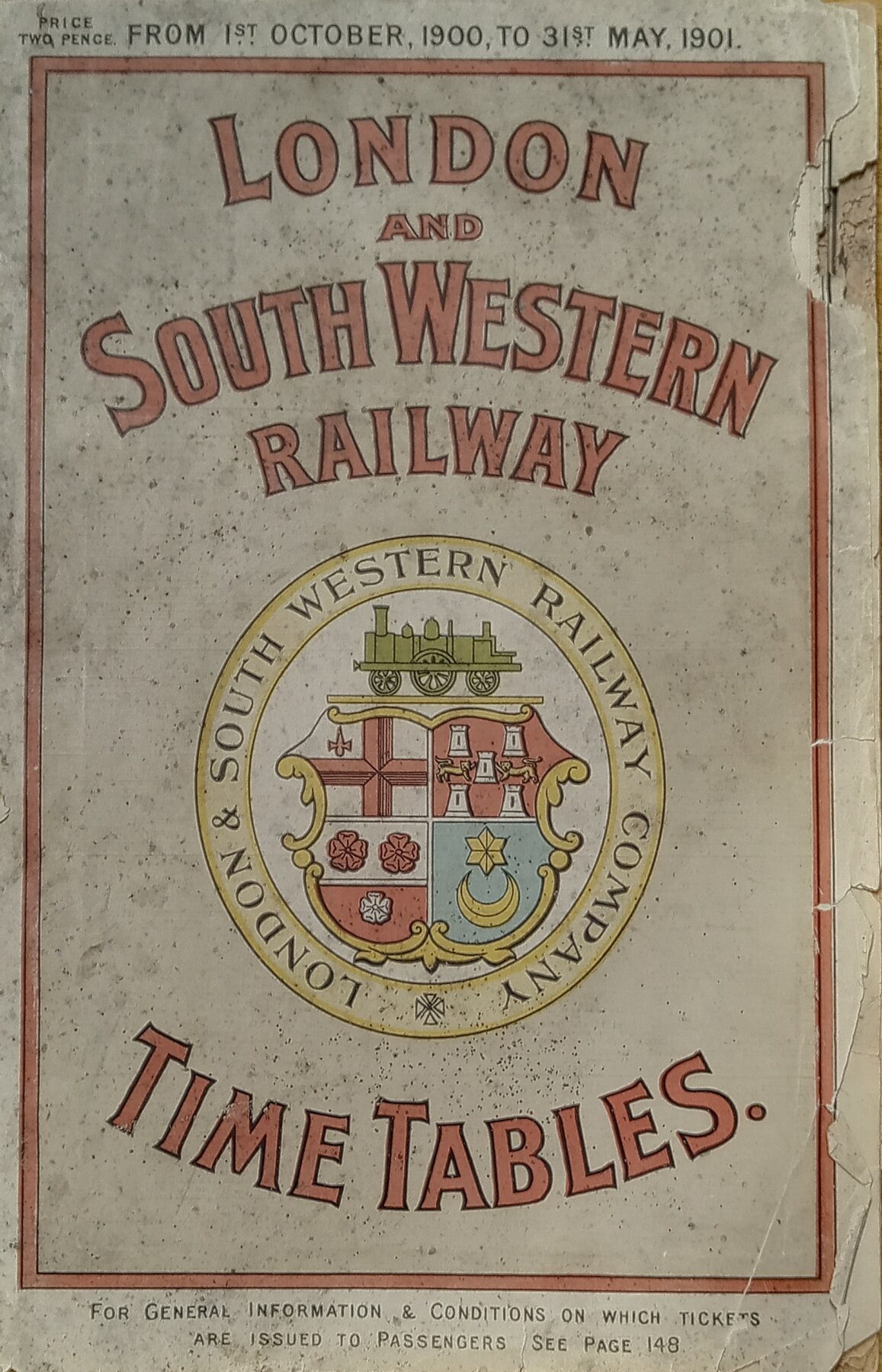
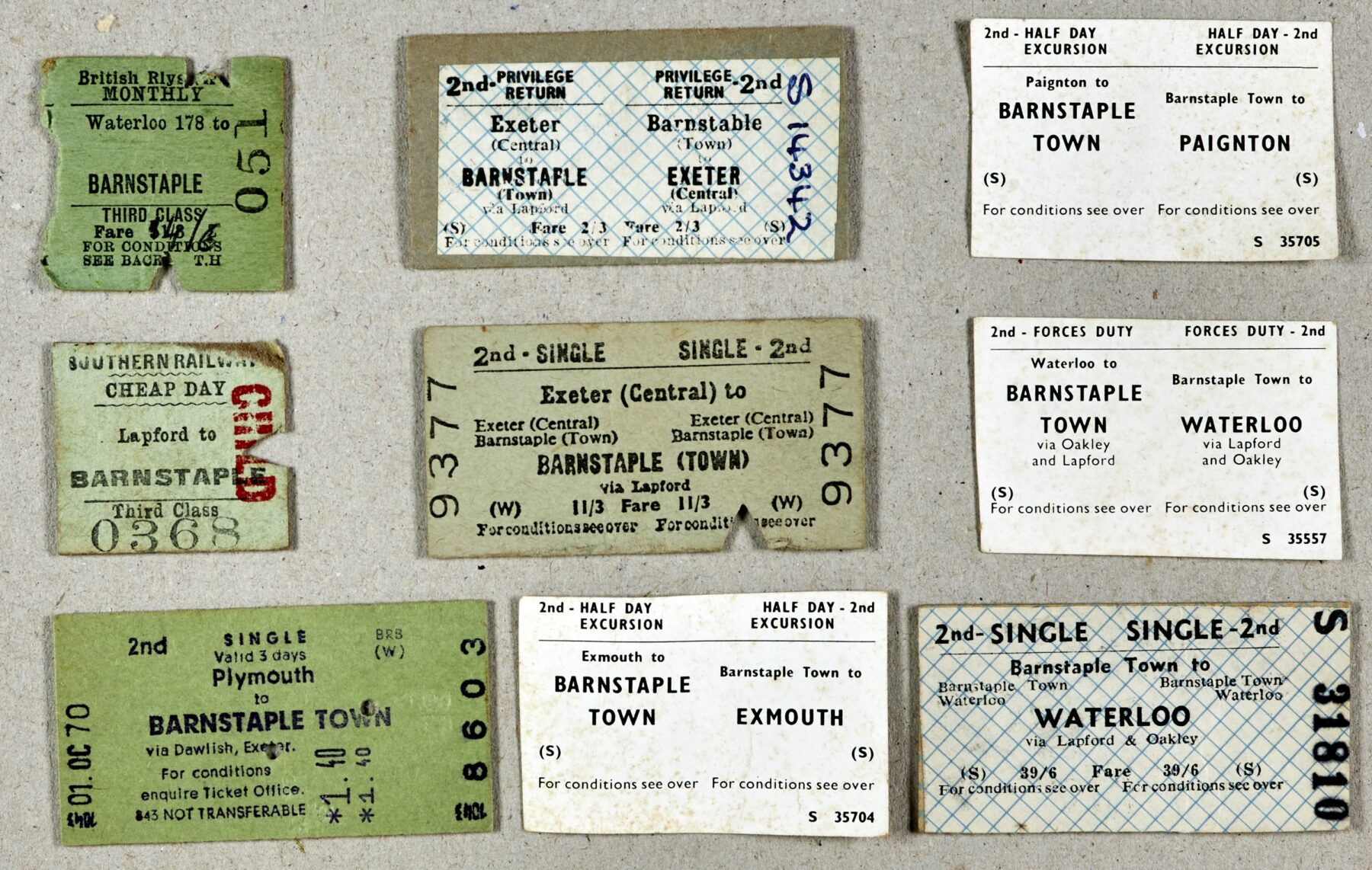
In July 1854 the London Illustrated News described how tourists “in search of the picturesque” would benefit from the new portion of the line during the summer months, as it accesses “the delightful scenery of Linton, Ilfracombe, Instow, Clovelly and the [North Devon] coast.”
The Opening
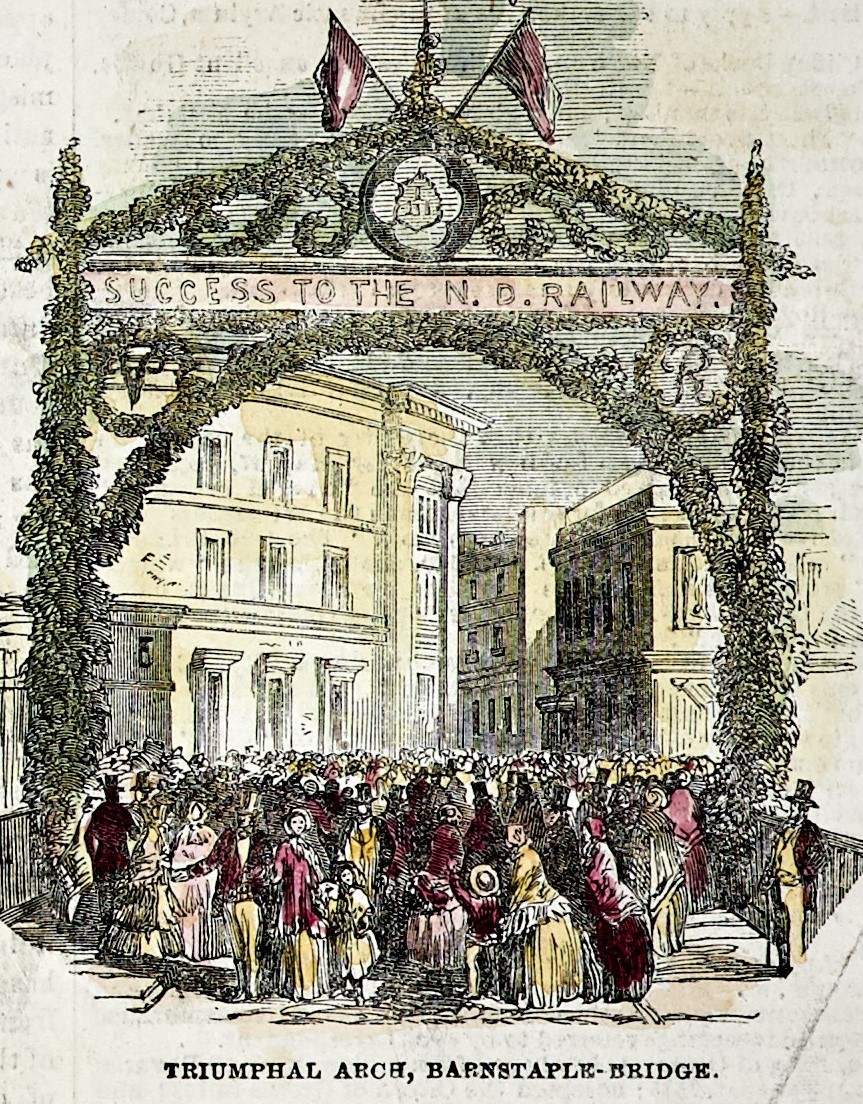
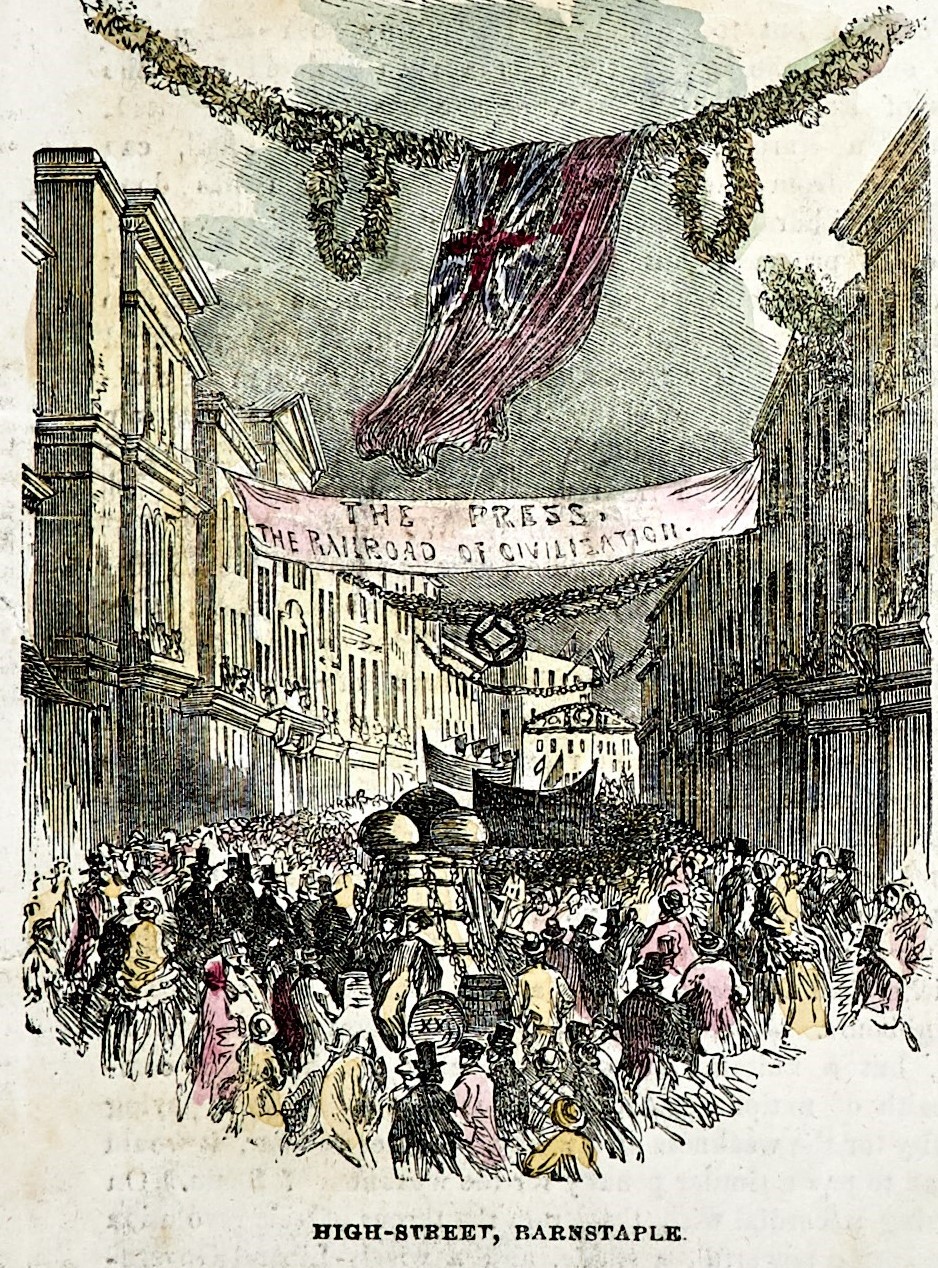
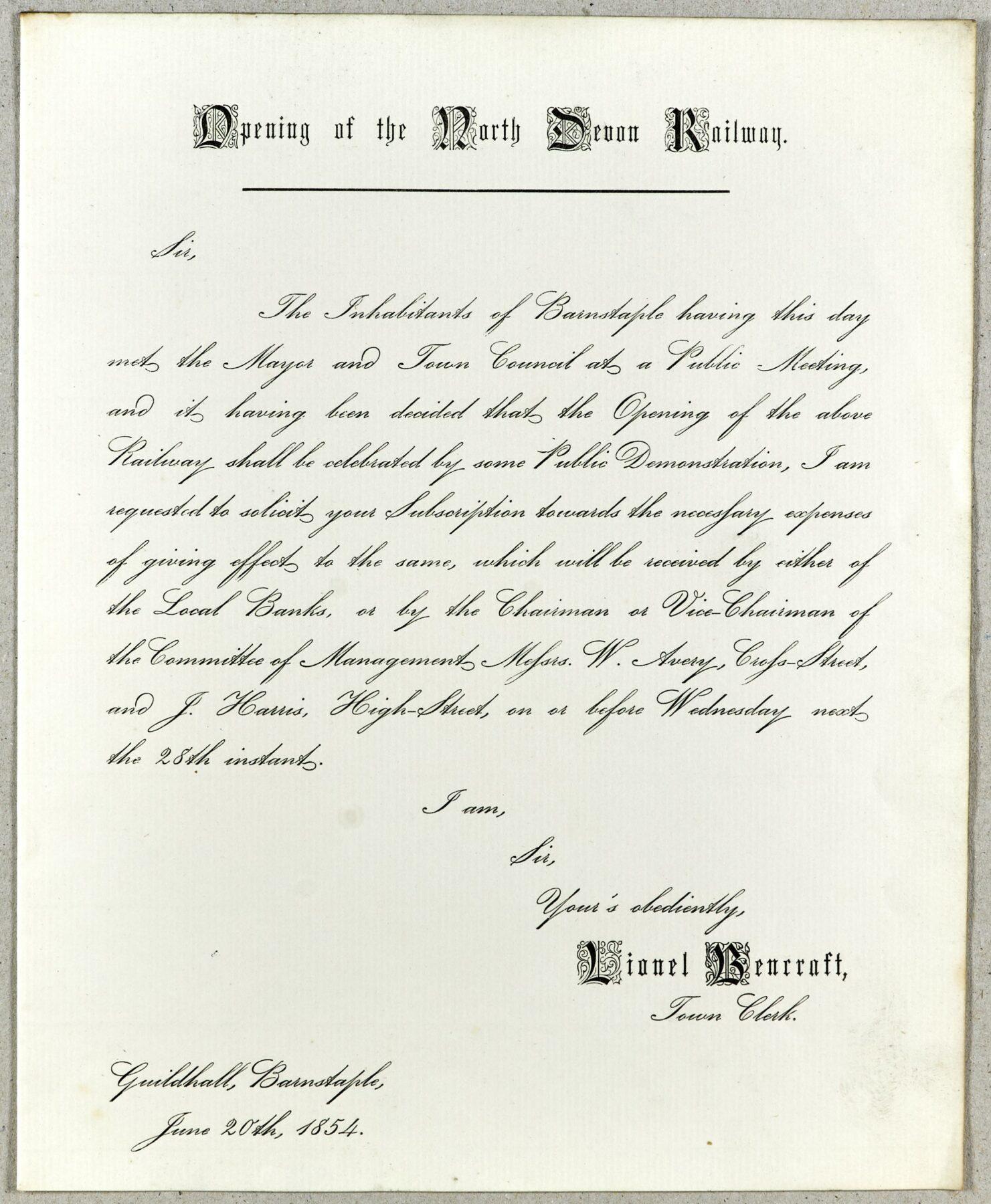
To celebrate the line’s opening Barnstaple had a whole day of merriment. When the first train arrived at Barnstaple station the Town-clerk read out a congratulatory address. The Freemasons assembled on the track in full costume and the customary coin, oil and wine were poured onto the track. A procession travelled through the streets of Barnstaple headed by a troop of North Devon Mounted Rifles and including Mayors, the Town Councils of Exeter, Barnstaple, Bideford, and Torrington, trade unions, railway magistrates, gentry, bands, flags and banners. The parade marched under triumphal arches, street decorations and past thousands of spectators. After the parade roughly 1000 guests sat down for a dinner in the Market hall, presided over by the Mayor Mr Budd. Several toasts were dunk and the admirable band and choir kept up the festivities throughout the event. A grand bazaar was also held to raise money for local churches, and to wind up the day’s proceedings there was also a ball in the evening, attended by “the rank, beauty, and fashion of the neighbourhood”.

Rail Archives of Somerset and Devon
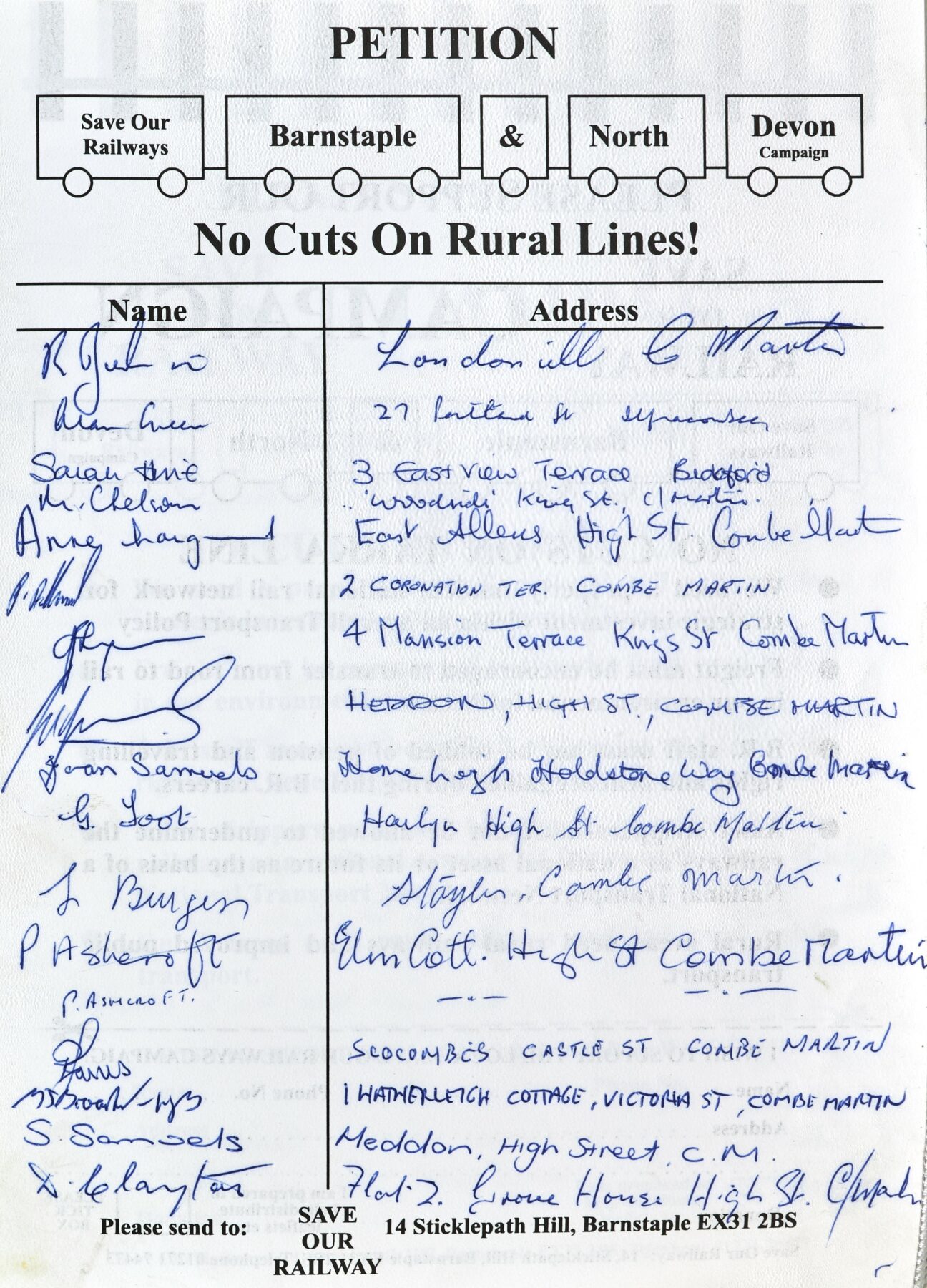
North Devon had a network of lines all across the county for transporting passengers and cargo, sadly the only North Devon railway line still to exist is the Tarka Line between Barnstaple and Exeter.
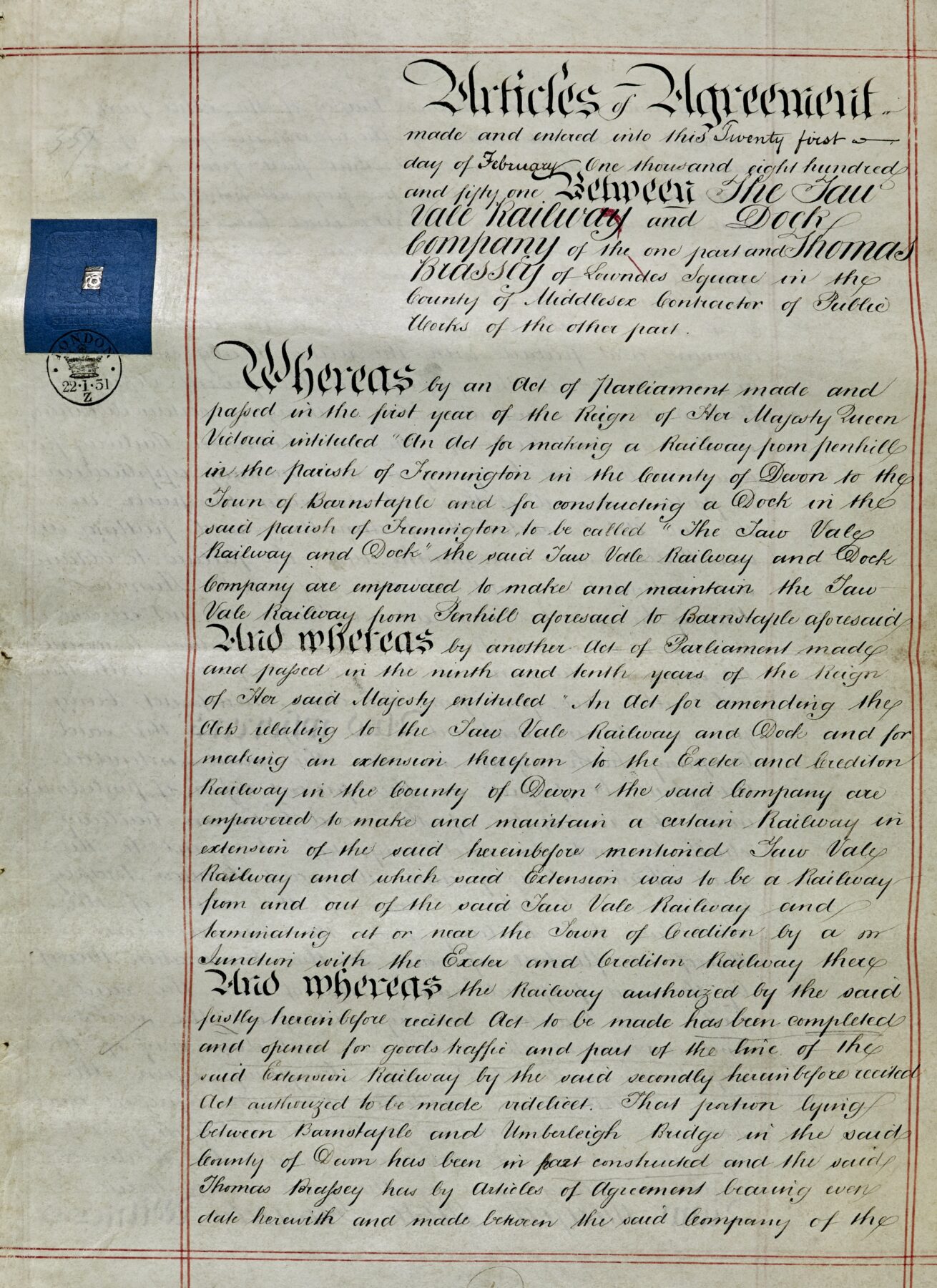
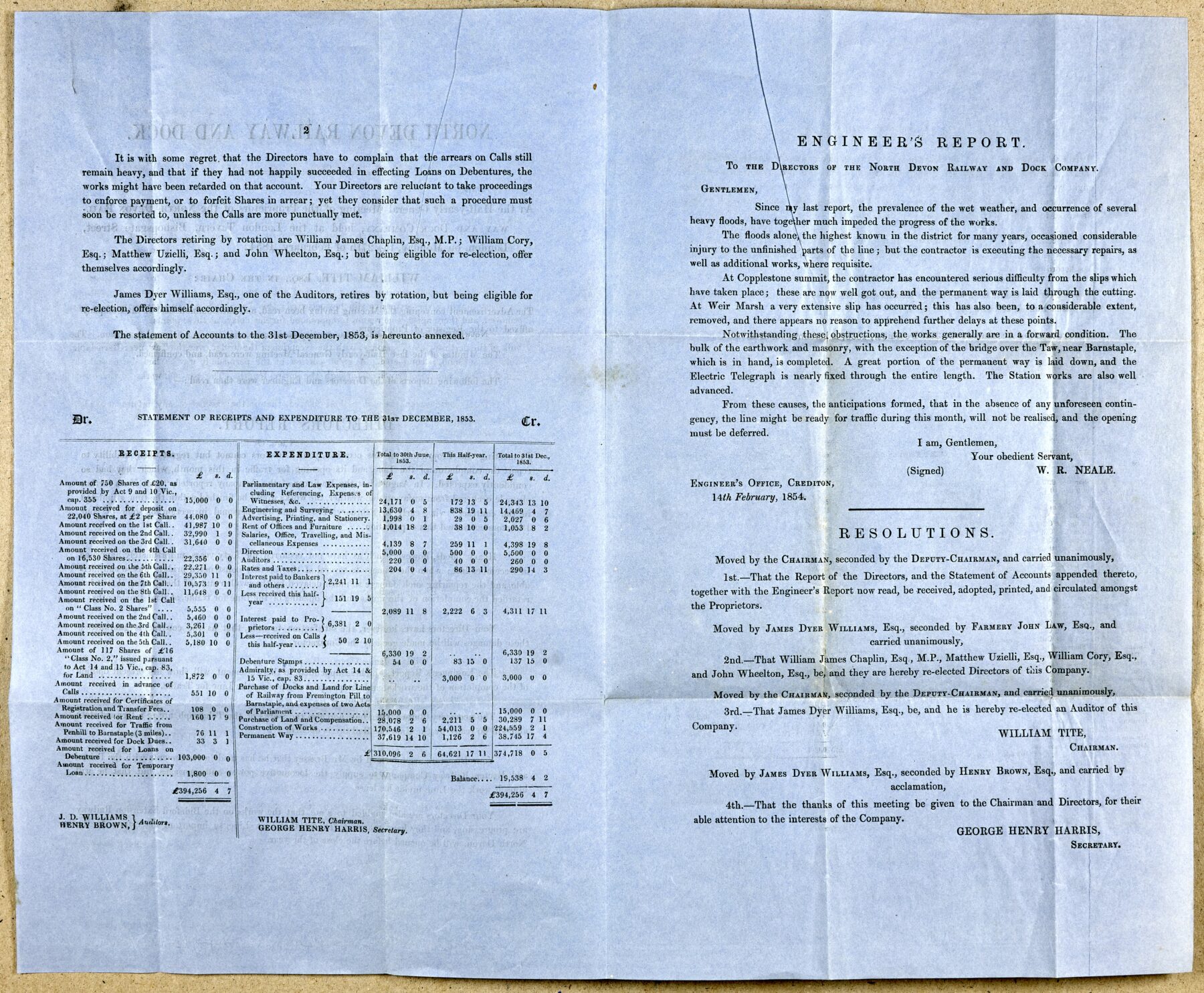
In Somerset, the Great Western Railway reached Weston-Super-Mare in 1841 and Taunton in 1842. By the late 19th Century Somerset was criss-crossed by main routes and branch lines, many of them the result of the needs of coal and aggregate extraction. Somerset and Devon Archives hold a wide range of records including plans and reference books relating to the coming of the railways. Archive deeds often shed light on local opinion of proposed railways, either revealing opposition or subscription lists showing local support.
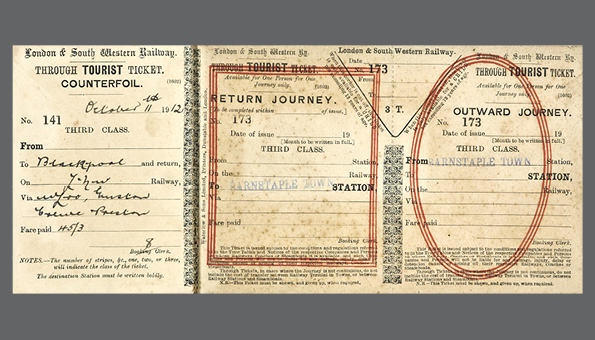
Building control plans of railway buildings, hotel expansions, along with photographs, posters, timetables, tickets, and flyers, all help to build up a picture of just how heavily these South West rail lines were used.
Archive Catalogues
You can access the Devon Archives catalogue here, or access Somerset Archives catalogue here, where you will also find research guides to help you.
The Exhibition
Rail Fest is a rail history and model railway exhibition at Barnstaple Guildhall (1 August – 5 August 2024) celebrating the railways of North Devon.
Keep an eye on our events page or join our mailing list to see what else is going on.