
What is Stir Up Sunday?
The annual tradition of Stir-up Sunday is centuries-old, and occurs on the last Sunday before Advent. Stir up Sunday is traditionally a busy day in the kitchen as the family would begin mixing the Christmas Pudding together. The mixture would be boiled then left until Christmas Day for the flavours to mature.
We’re harking back to Stir Up Sunday traditions by making a Christmas pudding in the farmhouse kitchen at Somerset Rural Life Museum – although as we’re closed on Sundays, we’re having a Stir Up Saturday. Join us to make Christmas pudding.
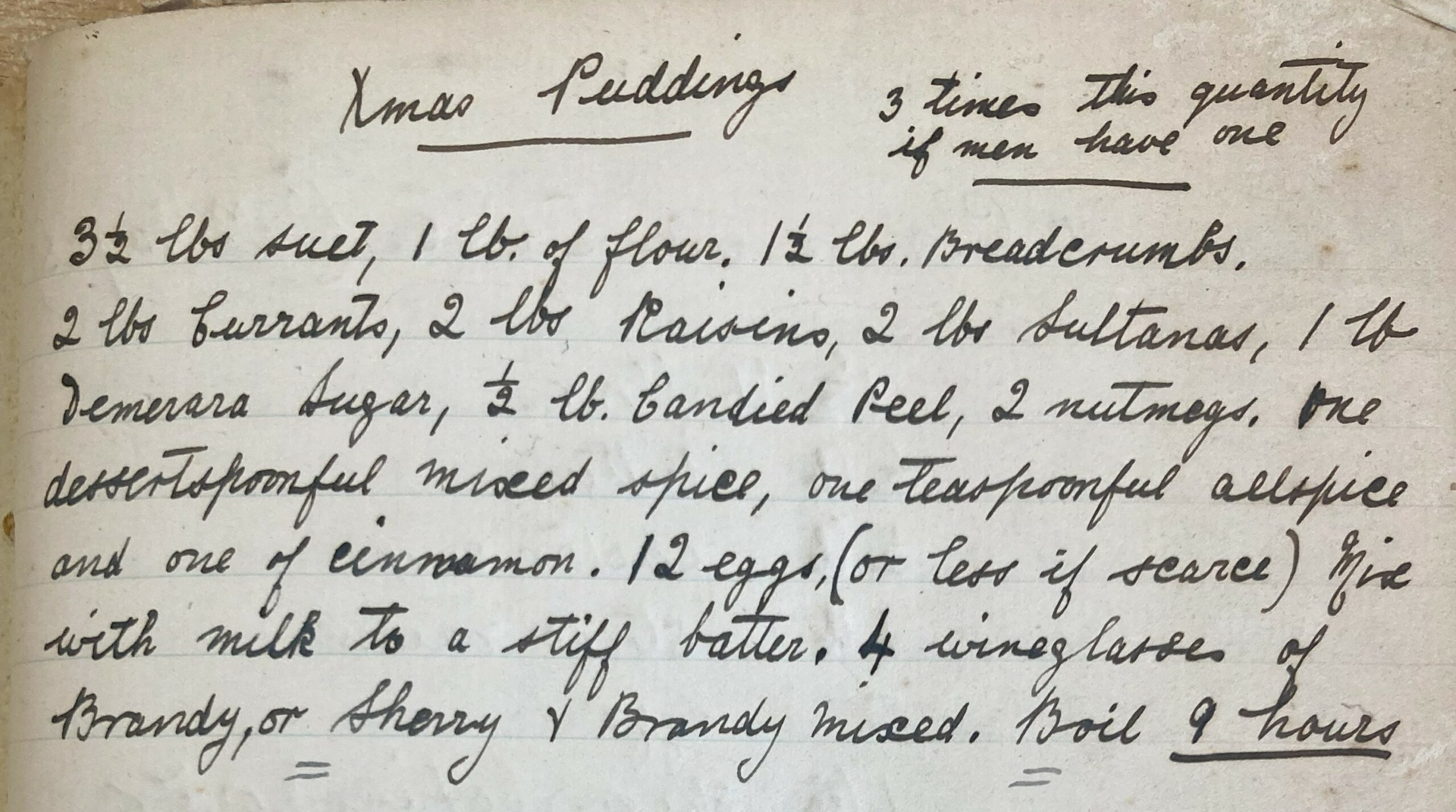
There’s no better time to fire up the stove, raid the larder and delve into grandma’s recipe book – or in our case, Hilda Bates-Harbin’s early 20th century recipe book from Somerset Archives.
The Christmas Pudding Recipe
Most historic recipes for Christmas pudding would have included these standard ingredients: sugar, suet, eggs, flour, breadcrumbs, mixed spice, dried fruit and candied peel.
Here’s a recipe from the Somerset Archives:
3 ½ lbs suet, 1lbs of flour, 1 ½ lbs breadcrumbs, 2lbs currants, 2lbs raisins, 2lbs sultanas, 1 lb demerara sugar, ½ lb candied peel, 2 nutmegs, one dessertspoonful mixed spices, one teaspoonful allspice and one of cinnamon. 12 eggs (or less if scarce) mix with milk to a stiff batter. 4 wineglasses of brandy or sherry. Boil 9 hours.
The Tradition
The process of making an original Stir Up Sunday Christmas Pudding is steeped in traditions with religious origins. Historically there were 13 ingredients, as in the archive recipe above, each would have represented Jesus and his disciples. The mixing bowl full of ingredients would have been passed between all family members, each making a wish as they stirred. And to honour the Wise Men’s journey to visit baby Jesus the pudding mixture had to be stirred from east to west. Sometimes coins were added to the mixture to bring luck into the household.
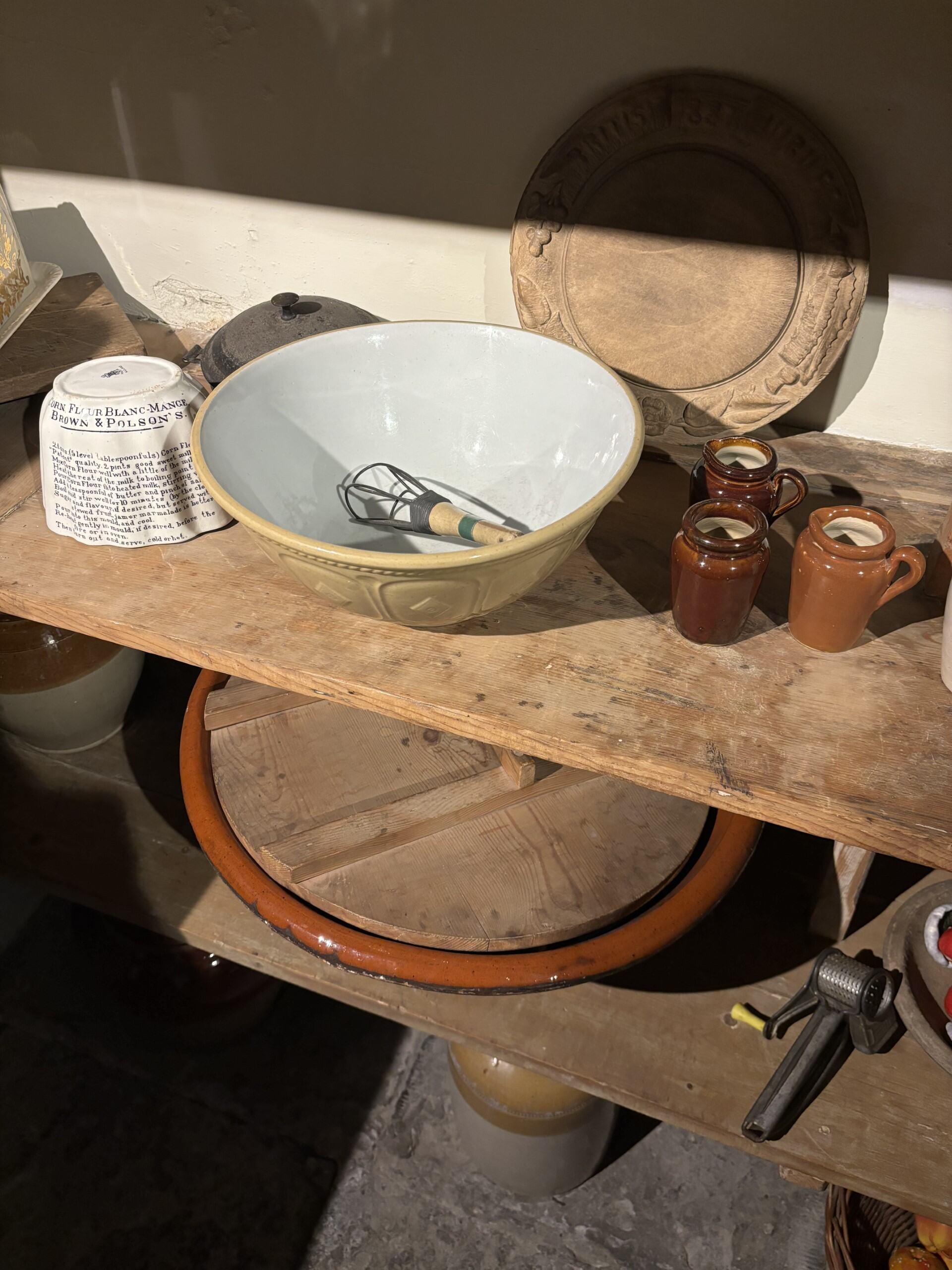
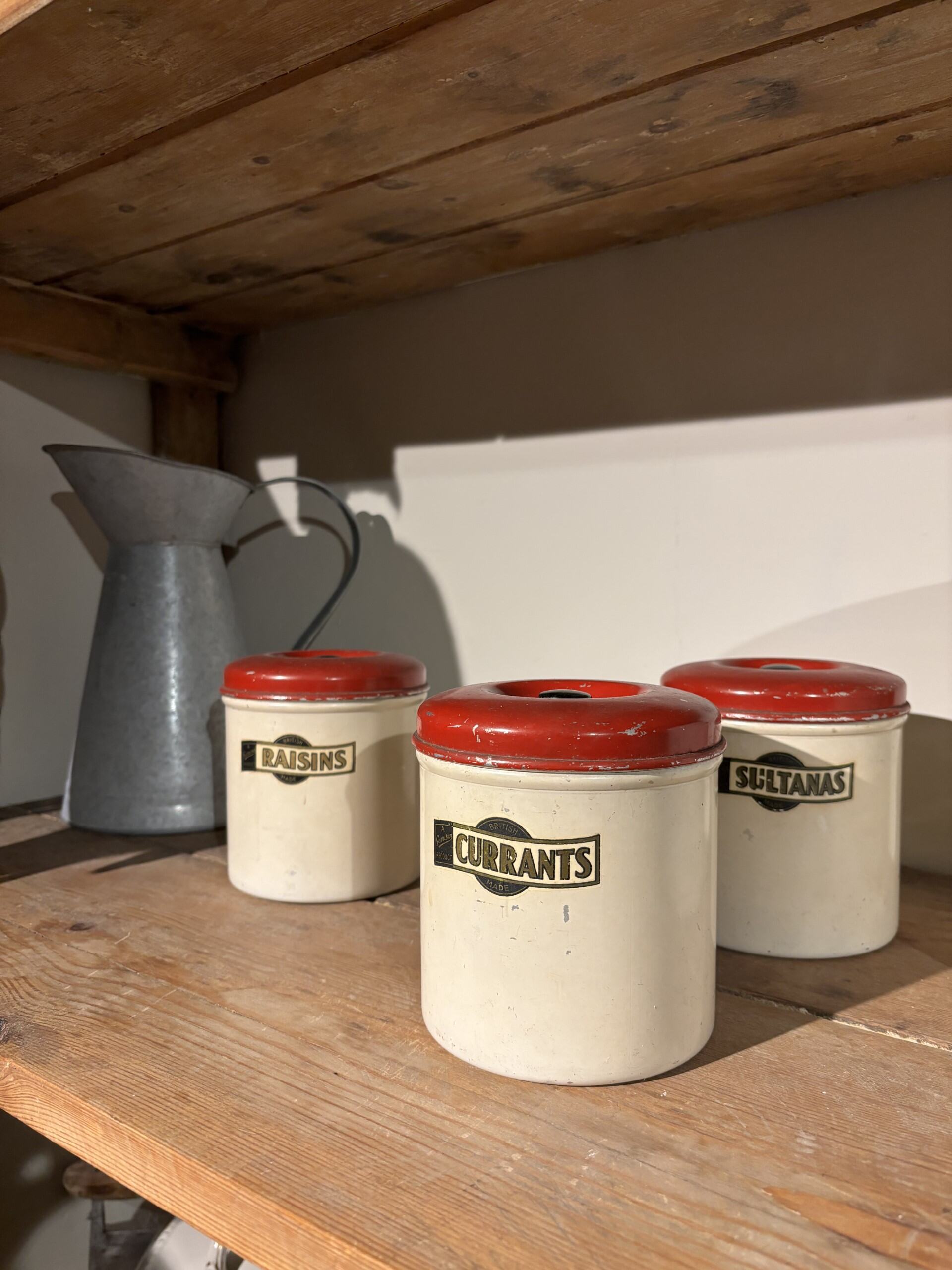
The Farmhouse Kitchen
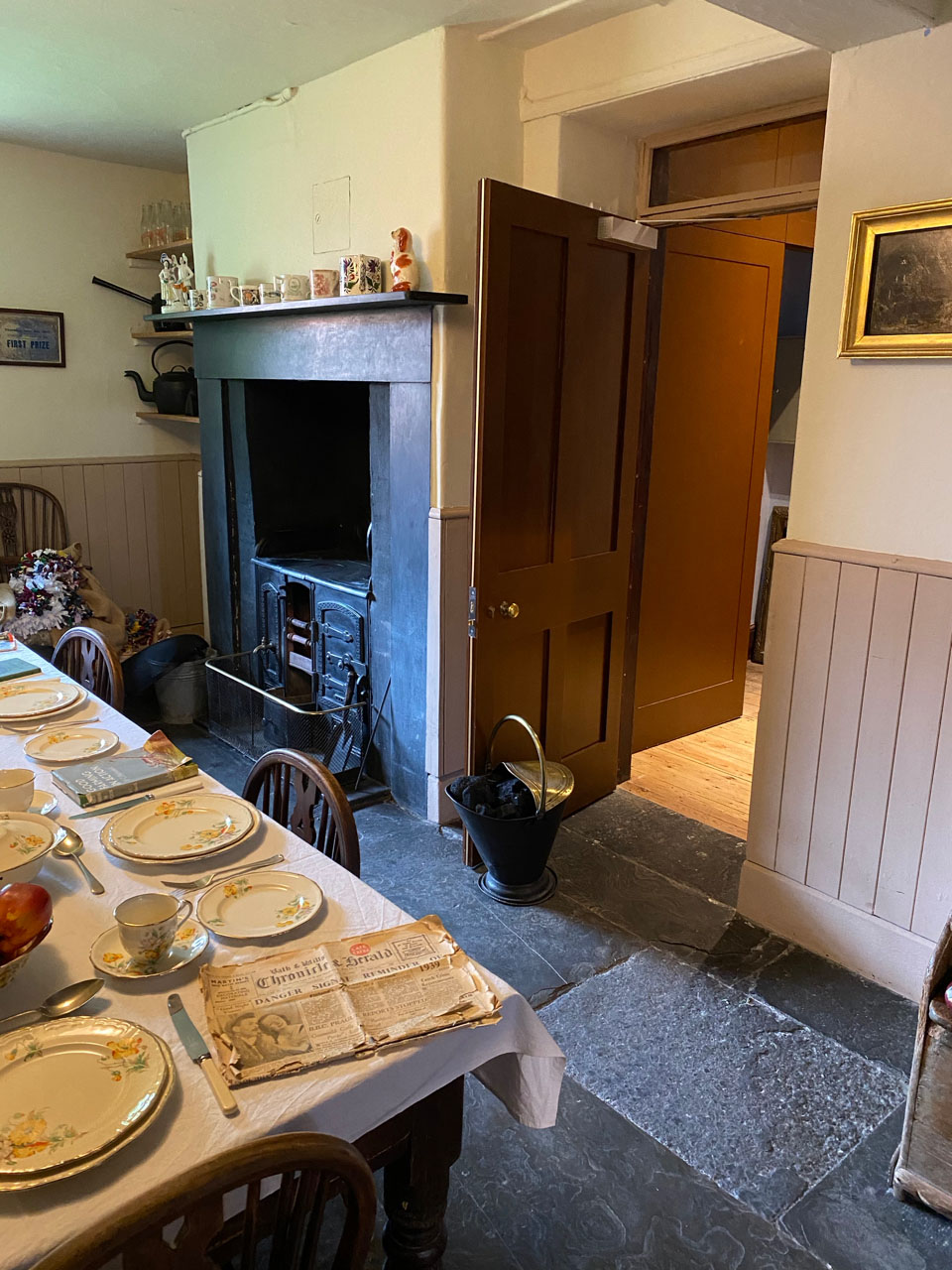
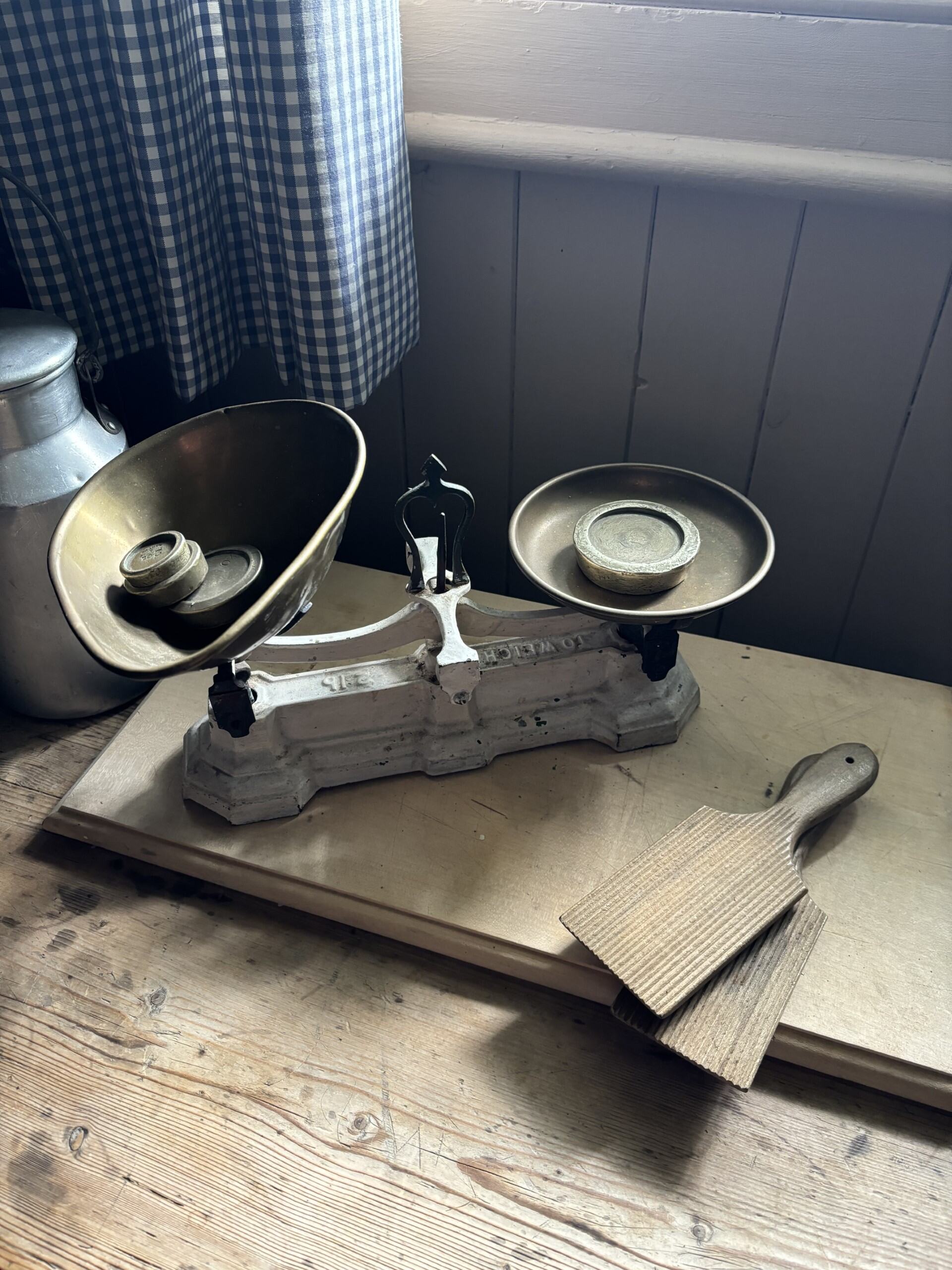
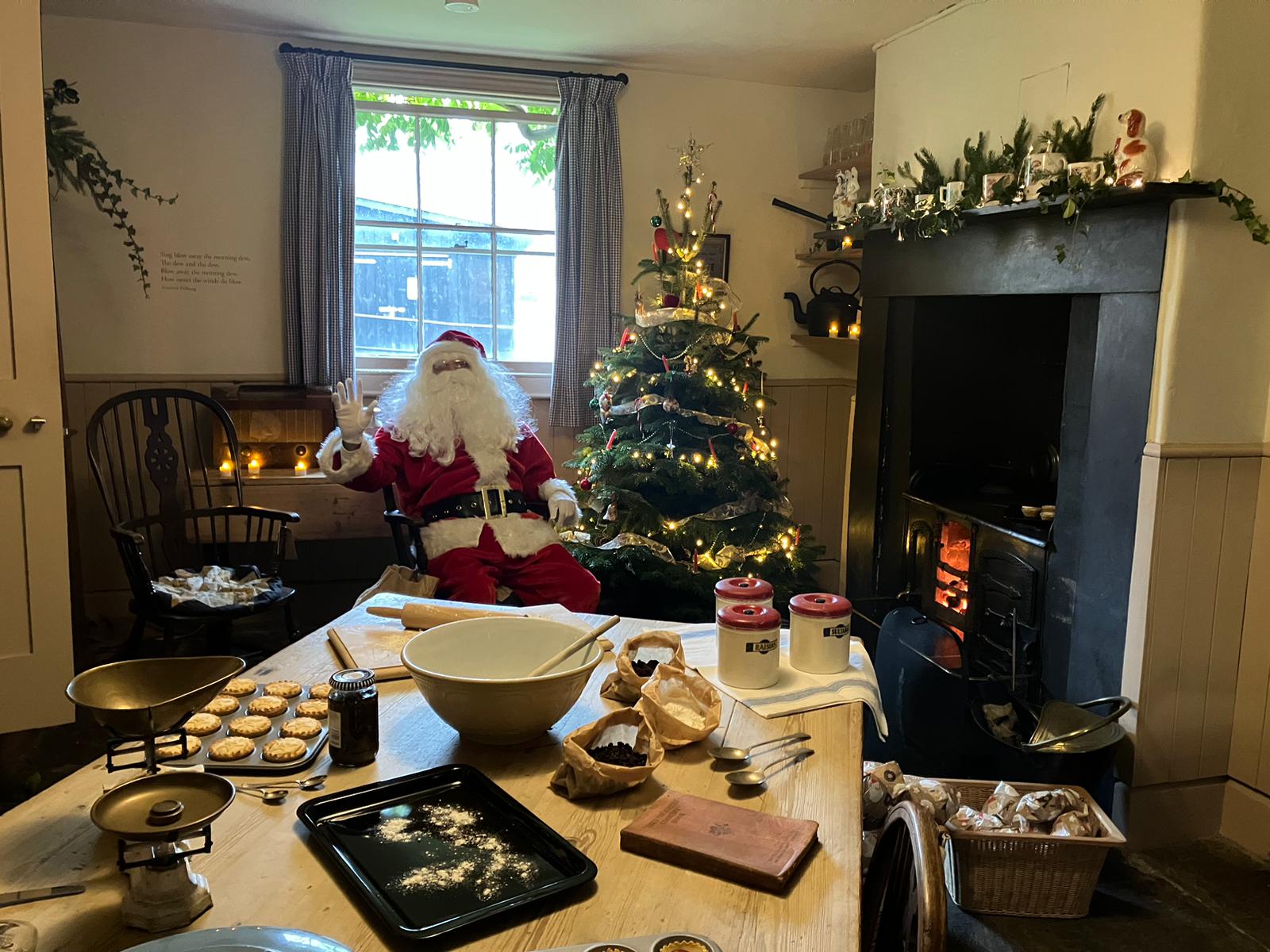
Step back to 1948 in the Farmhouse Kitchen and hear the Mapstone family getting on with their daily lives while the table is laid for dinner. The kitchen represents everyday domestic life for the Mapstone family who lived there, displaying objects from the era, ranging from weighing scales to butter churners.
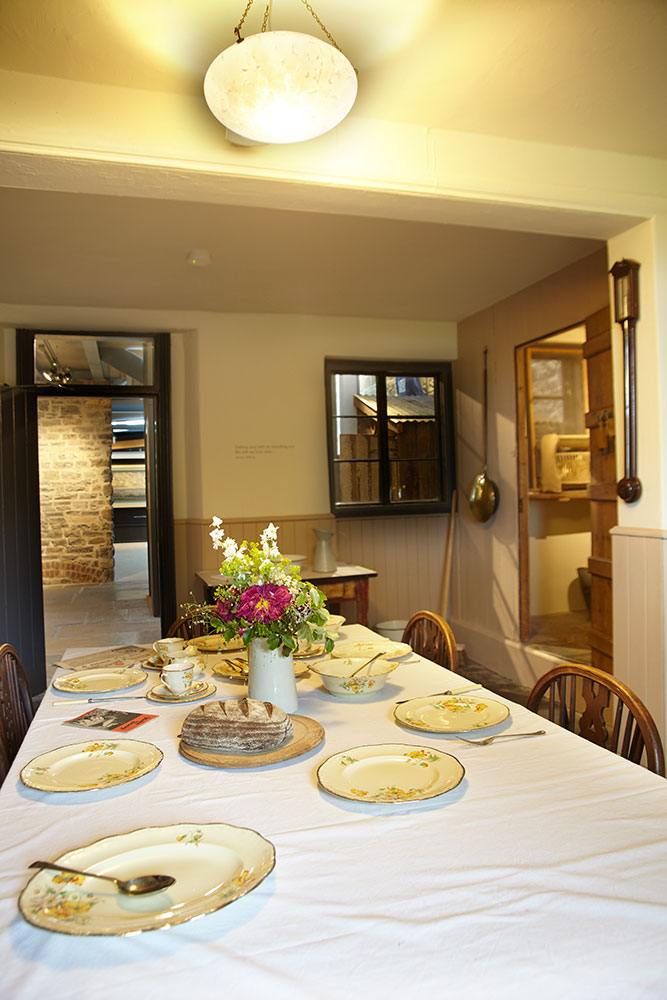
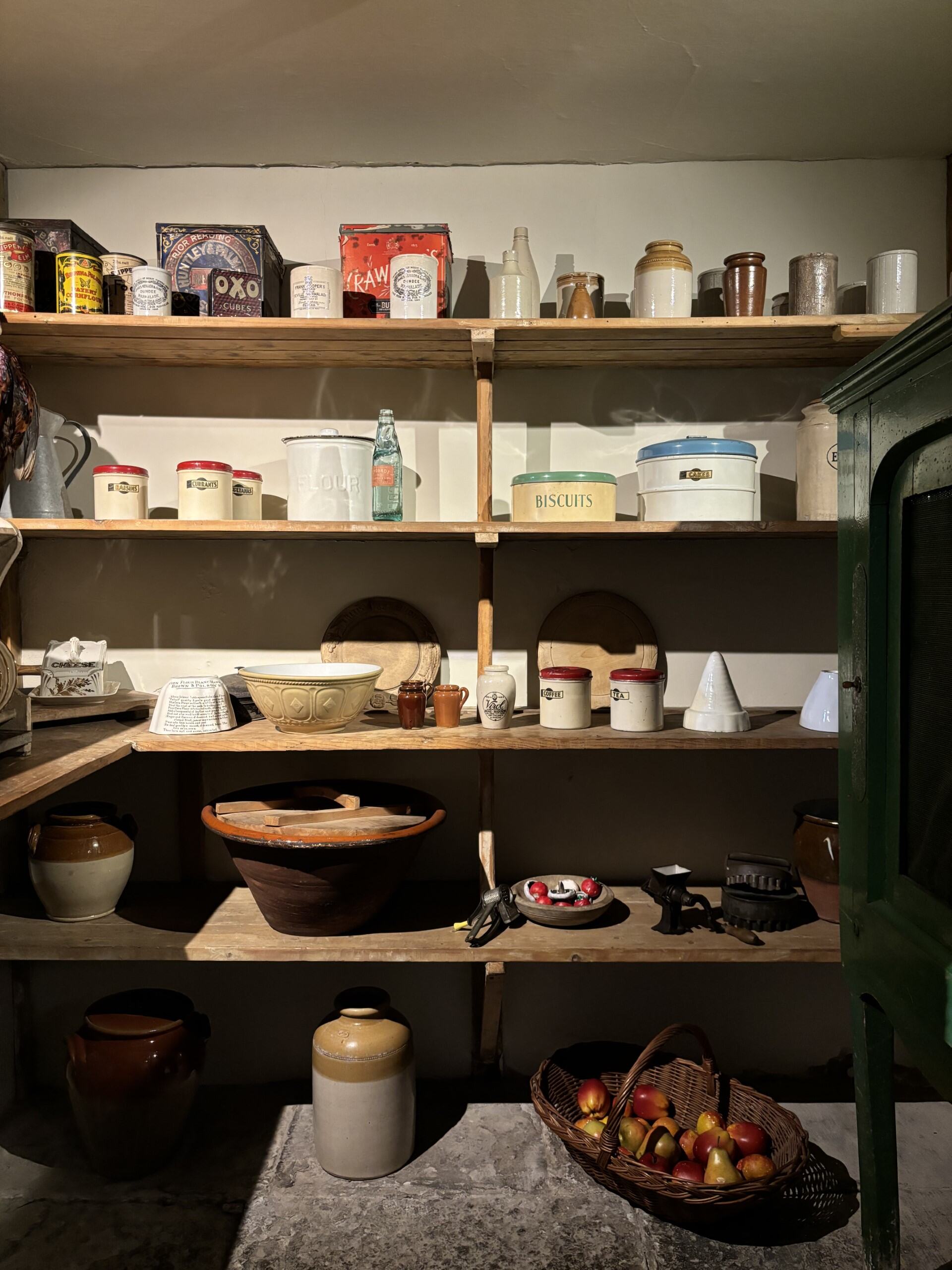
The kitchen of a farmhouse was a warm hub of activity, not just cooking and baking but preserving, churning, sterilizing, weighing, mending, and more. It had to transform fresh produce straight from the farm into delicious family recipes or meticulously preserved food to last through winter. It was a place of shared family traditions, such as Stir Up Sunday.
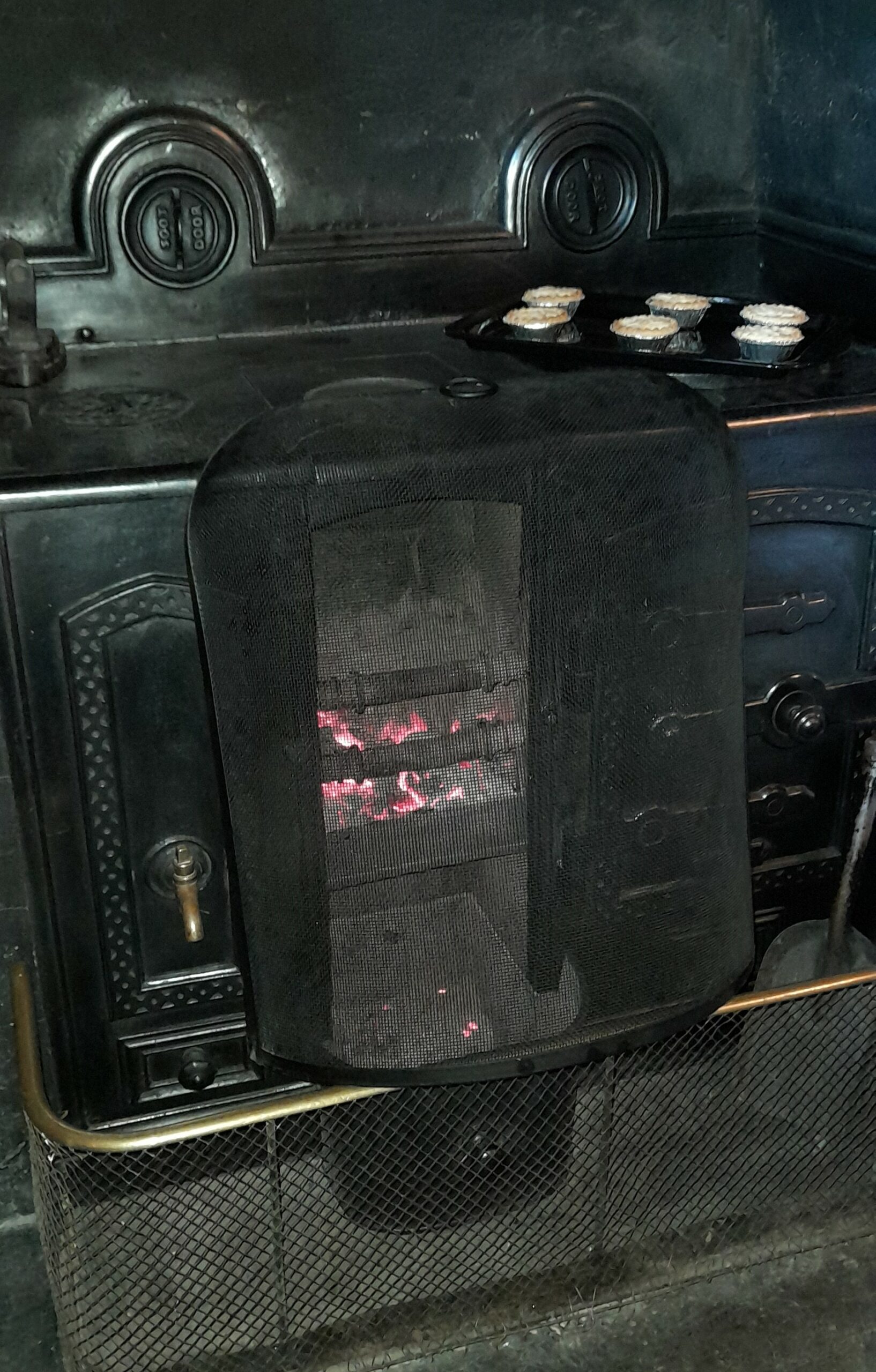
The farmhouse kitchen has a magical quality at Christmastime. There’s often a cast iron kettle and mince pies warming on the stove. The Christmas tree is up and the room is authentically decorated with festive foliage.
What’s in the Kitchen?
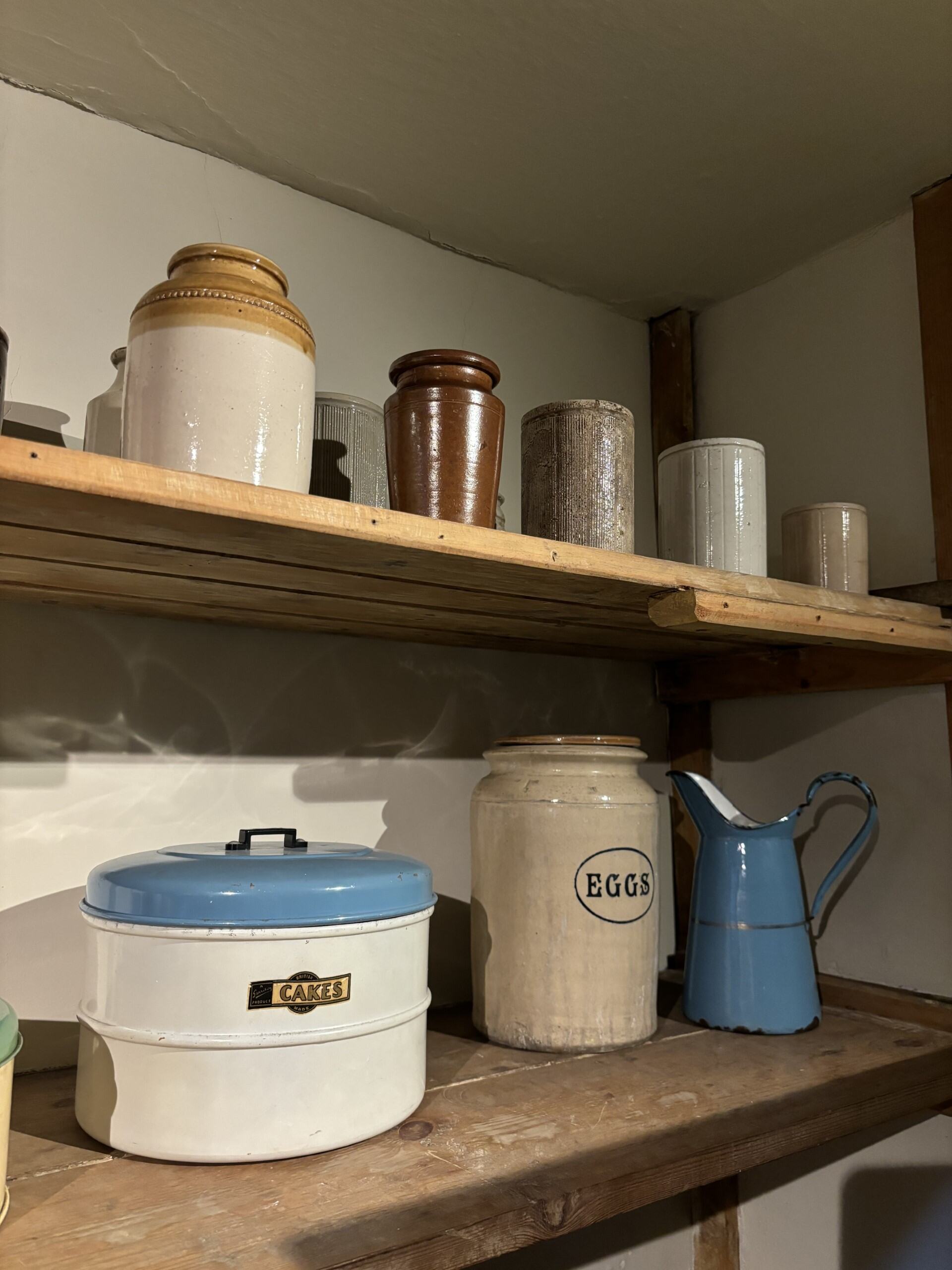
The stove in the Mapstone’s kitchen is the original stove that belonged to the family. You’ll often see smoke rising from the kitchen chimney. There’s a traditional rectangular wooden table for meal preparation and mealtimes. A freestanding kitchen dresser or cabinet with glass cupboard doors displays the best crockery, and drawers lower down stores cooking equipment and utensils. This type of cabinet was the first step that lead towards modern fitted kitchens. If food wasn’t produced on the farm it was bought fresh from the butchers and grocers, it then had to be unwrapped and stored in jars or tin boxes. You may notice there is no fridge, therefore food needed to be carefully stored in the cool pantry or ice box, or preserved.

Who Lived at Abbey Farm?
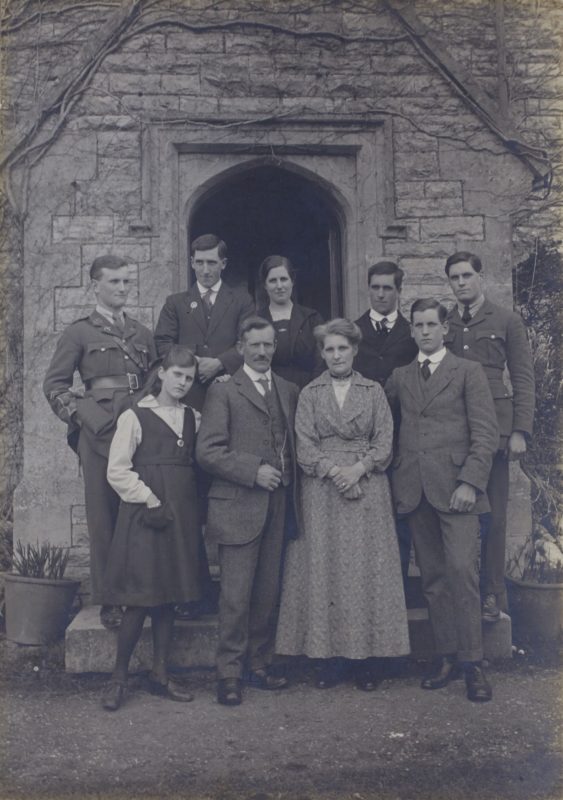
The farmhouse was built in 1894 by a prominent local landowner. George Mapstone became a tenant of the farm in 1917 and lived there with his wife Louisa and their family. Later in 1942 his son Harold Robert Mapstone bought the farm outright.
Abbey Farm was chiefly a dairy farm, but the Mapstone’s also kept sheep, pigs and chickens. The cows grazed the fields nearby and were brought in for milking. To the left of the farmhouse are the dairy and cheese store.
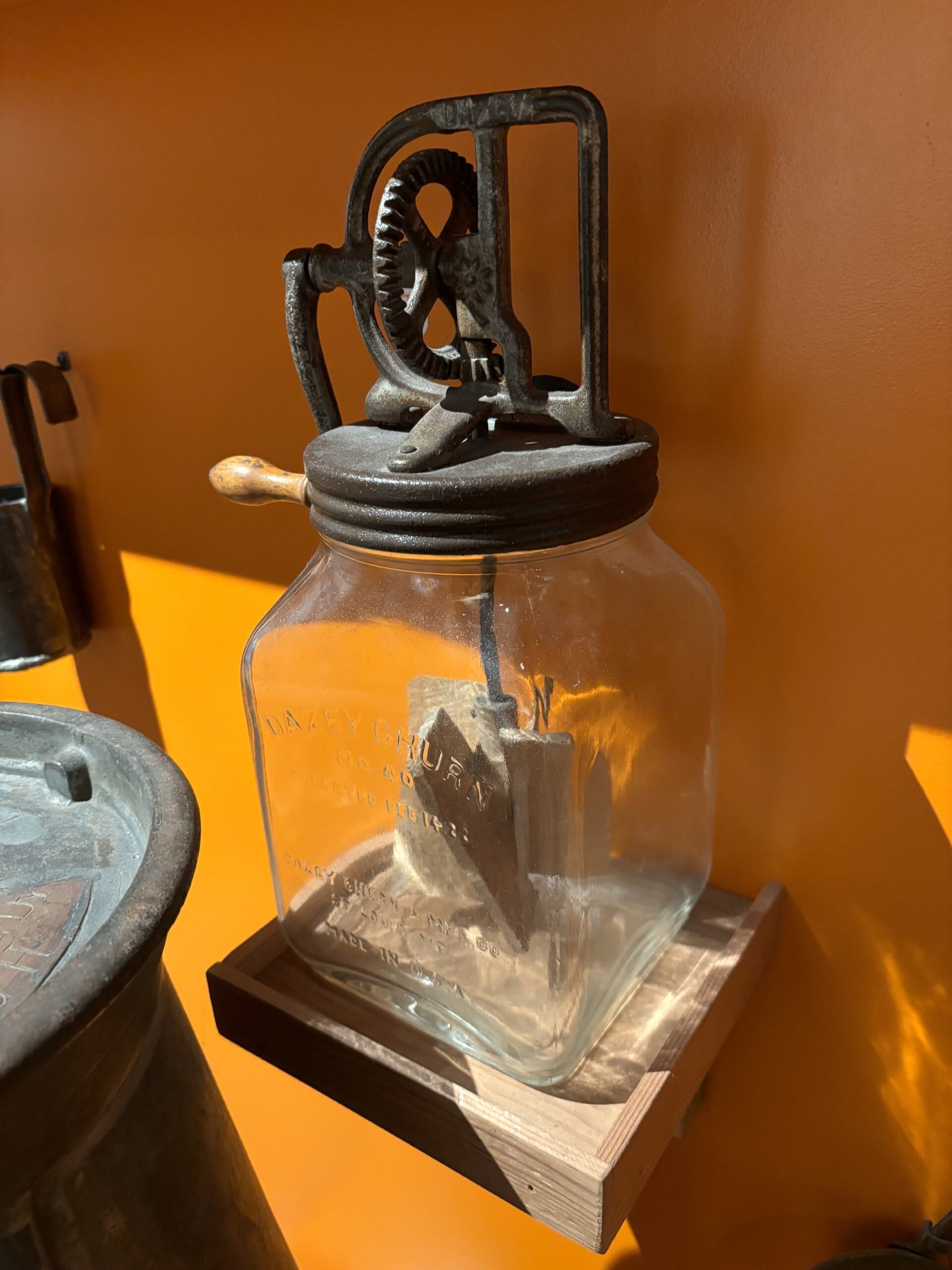
Many households in rural somerset made their own rural butter. Milk was poured into a dish or pan and left overnight so the milk separated from the cream, the cream was then skimmed off so it could be churned into butter. The action of the churns paddle stiffened the cream into butter. Butter scoops were used to take butter from the churn. Pats were then used to shape the butter into blocks.
Visit the Farmhouse
Visit the cosy farmhouse and learn about the rural life of the Somerset family who lived there. Pop into the galleries to discover butter-making tools and dairy equipment. Then relax in the farmyard with a cuppa from the Grain Store Café.
- Visit the cosy farmhouse, and find out about rural family life. Find out more.
- Join us for Stir Up Saturday, 22 November, and mix up a Christmas Pudding in the kitchen. Find out more.