The Somerset Archives and Local Studies Closed Period 2023
Our annual Closed Period provides an opportunity to undertake larger projects that we would not have the time or space to tackle during our normal opening hours. All of the projects help improve the services we offer. As well as continuing to answer a range of enquiries, here is a summary of some of the work we have undertaken during this year’s Closed Period (23 January to 3 February).
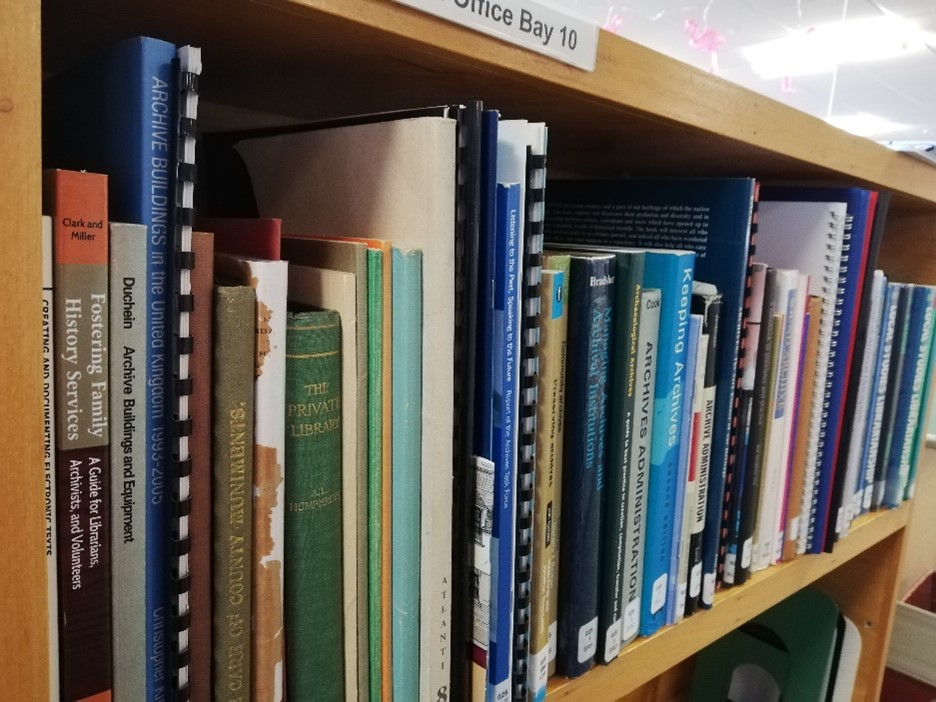
In the Somerset Studies Library, around 20 shelves of material relating to local government administration, as well as journals and loan collections, have been relocated, allowing for extra expansion space in the archive and easier access in the library. Approximately 40 boxes of recently deposited books have been processed and the professional library (including monographs and journals on librarianship, archiving and museum curation) have been reorganised to help make them more accessible. Finally, we have updated the location index of the recently moved journals in the Somerset Archaeological & Natural History Society library.
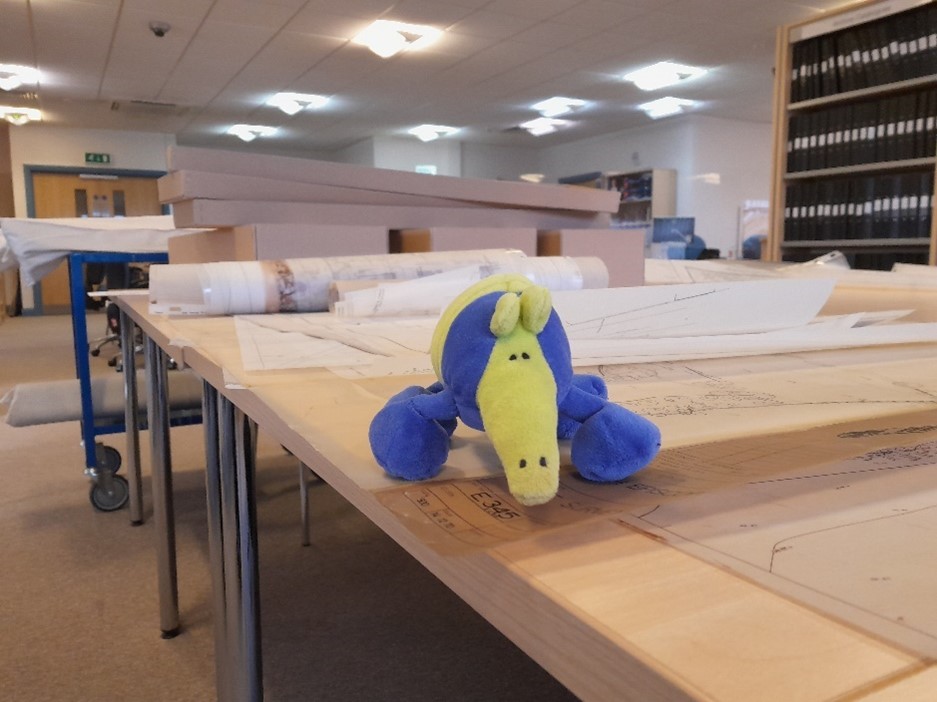
Some of the documents that are deposited with us are a little too large to work on behind the scenes. This year’s Closed Period provided us with an opportunity to use the searchroom to work on an unlisted accession of County Architects’ plans from the Somerset County Council collection (C/CA). Those selected for permanent preservation have now been listed and added to our online catalogue. Err… the yellow and blue armadillo is called Armi; he’s become our mascot.
A large deposit of Bath and Wells Diocesan faculty papers (D/D/cf), providing details of alterations to churches and churchyards in Somerset in 1927 and 2012, has also been catalogued. The new catalogue entries have been uploaded to our online catalogue.
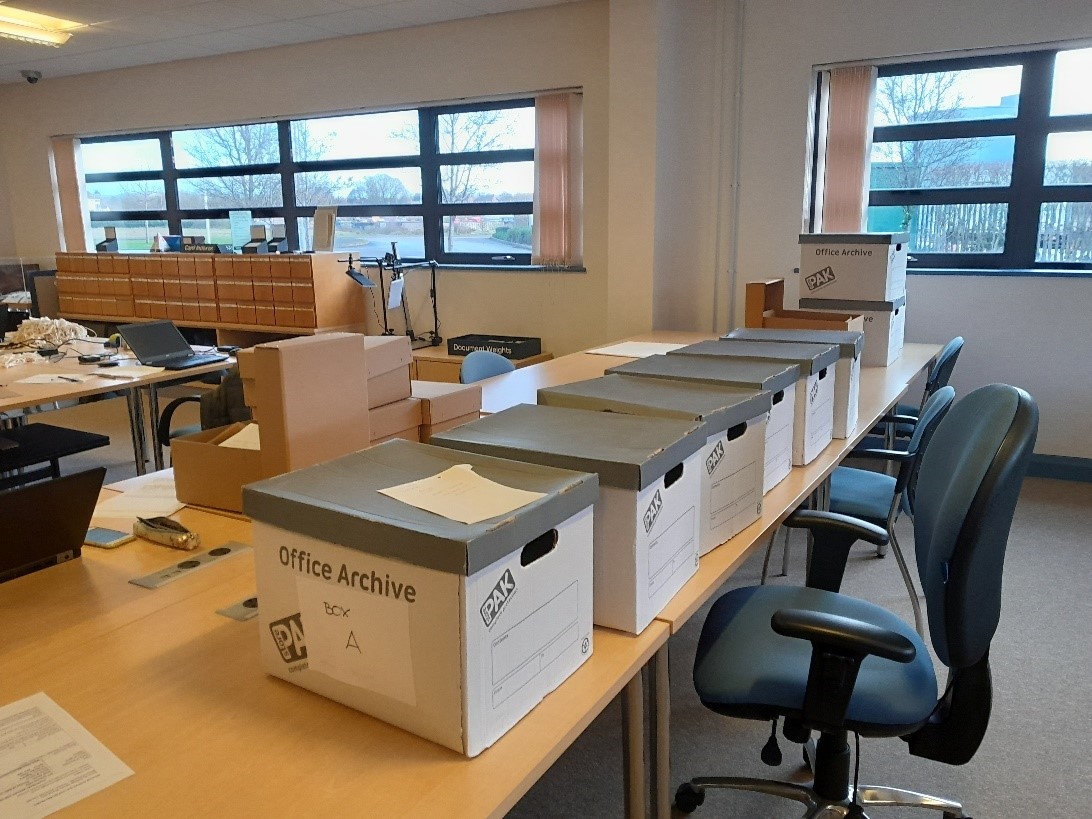
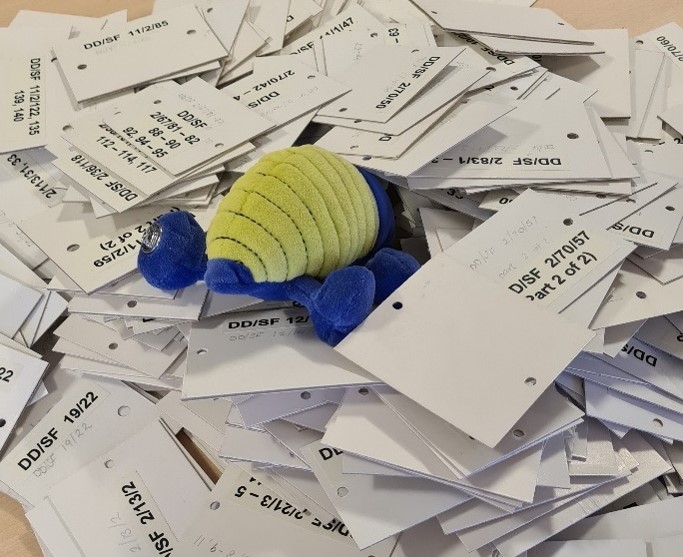
Although the Sandford Collection (DD/SF) was relisted relatively recently, we weren’t able to repackage everything at that time. Over the past two weeks we have made our way through 240 boxes, allocating new acid free labels to bundles of deeds and repacking loosely stored papers into archive folders.
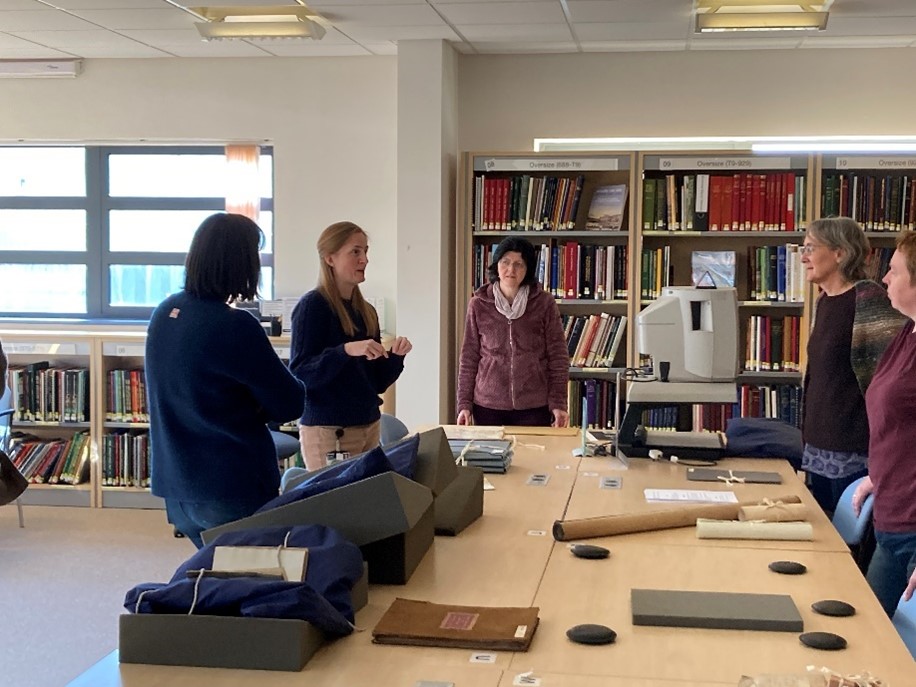
We took advantage of the Closed Period to refresh our training in both document handling and emergency salvage procedures. Led by our new Senior Conservator, Jenny, in the first week we had a session on the best practices in handling archival material, in order to prevent damage to our unique documents whilst they are accessed. These practices include using book supports and wearing nitrile gloves to handle photographs.
In the second week we recreated a small emergency where wet archives (non-archival, sacrificial documents!) were ‘rescued’ and dried using appropriate methods.

As part of the Museums and Schools programme, which is funded by the Department for Education (DfE) and managed by Arts Council England, we are currently working with Oaklands Community Primary School, Yeovil, to research and present exhibition boards on Women’s History. The project was launched just before Closed Period with a visit to the school then planning work during Closed Period included identifying stories and finding documents.

Year 5 students from Oaklands spent the day at the Somerset Heritage Centre on Friday 3 February, enjoying a behind-the-scenes tour and researching stories using original documents from the collections. Emma Carroll, author of books including In Darkling Woods and Frost Hollow Hall, delivered a talk about her Somerset roots and a writing workshop to inspire the young historians.
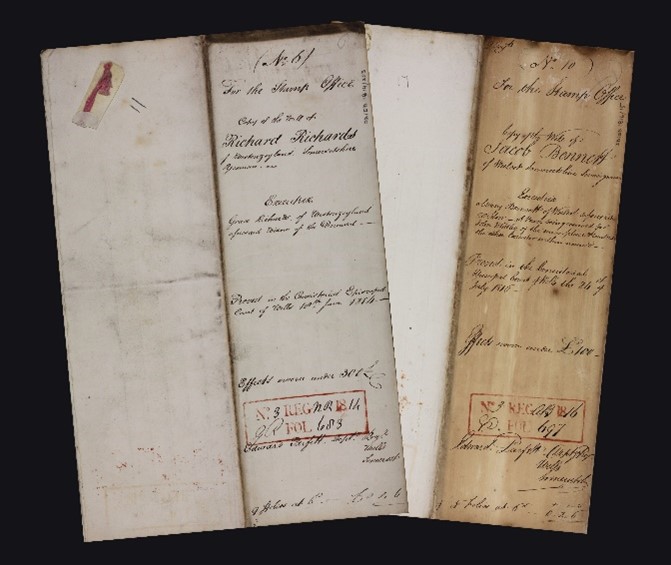
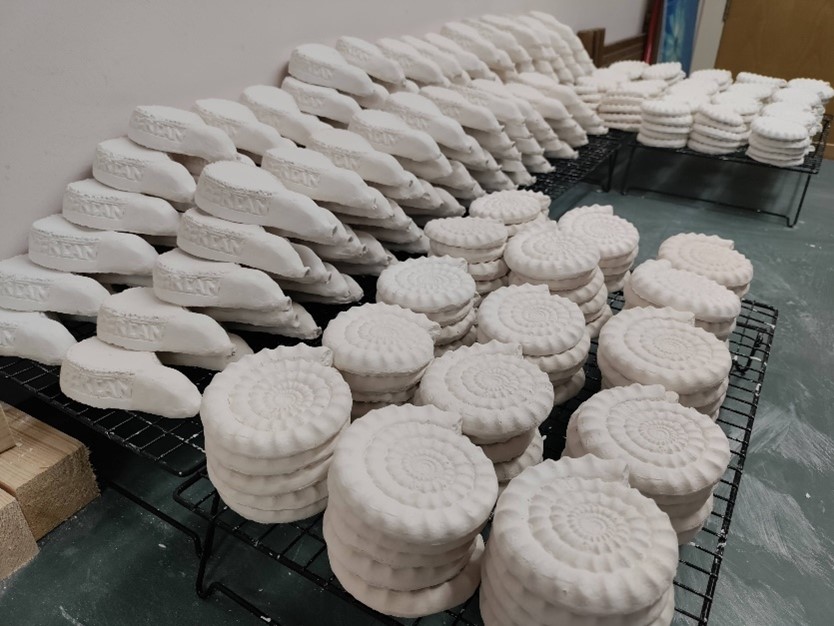
And finally, the Research and Copying Request Service continued to receive a high volume of requests ranging from researching workhouse records to photographing Estate Duty Wills. More of the vast collection of Estate Duty Wills (DD/ED) were catalogued, a project that has been going on behind the scenes, when time allows, for a number of years. Descriptions of the wills that have been catalogued so far can be found on our online catalogue (https://somerset-cat.swheritage.org.uk/records/DD/ED). We have begun the process of transferring digital records from our old digital preservation system to a new one (we have over 1 TB of records to process, but have made a good start: over 10,000 individual files have now been ingested). And last, but not least, one member of the team helped SWHT’s Learning Team create plaster Alfred Jewels and ammonites for use in sessions with children.