
The Museum of Somerset is appealing to members of the public to support the development of a new exhibition about the art and life of Alexander Hollweg (1936-2020).
The retrospective, which opens in November, will be the largest ever show of Hollweg’s art and will feature paintings and sculpture from across the five decades of his career. The museum has been working with the Hollweg family and The Court Gallery for over two years to uncover artworks and stories about the artist. Now they are asking people who knew Hollweg to come forward with their memories of him. They also want to create a database of artworks in private collections and are inviting anyone with an artwork by Hollweg to get in touch.
West Somerset Connections
Alexander Hollweg worked for many years from a studio at Nettlecombe in West Somerset, creating art that translates the ordinary and everyday into surprising, often humorous, reflections on modern life. Space and people were enduring themes. “Landscape was my subject,” he once wrote. “Not the wilderness but the landscape made by man. Farm, factory, city, housing estate. The places where people live and work and play.”
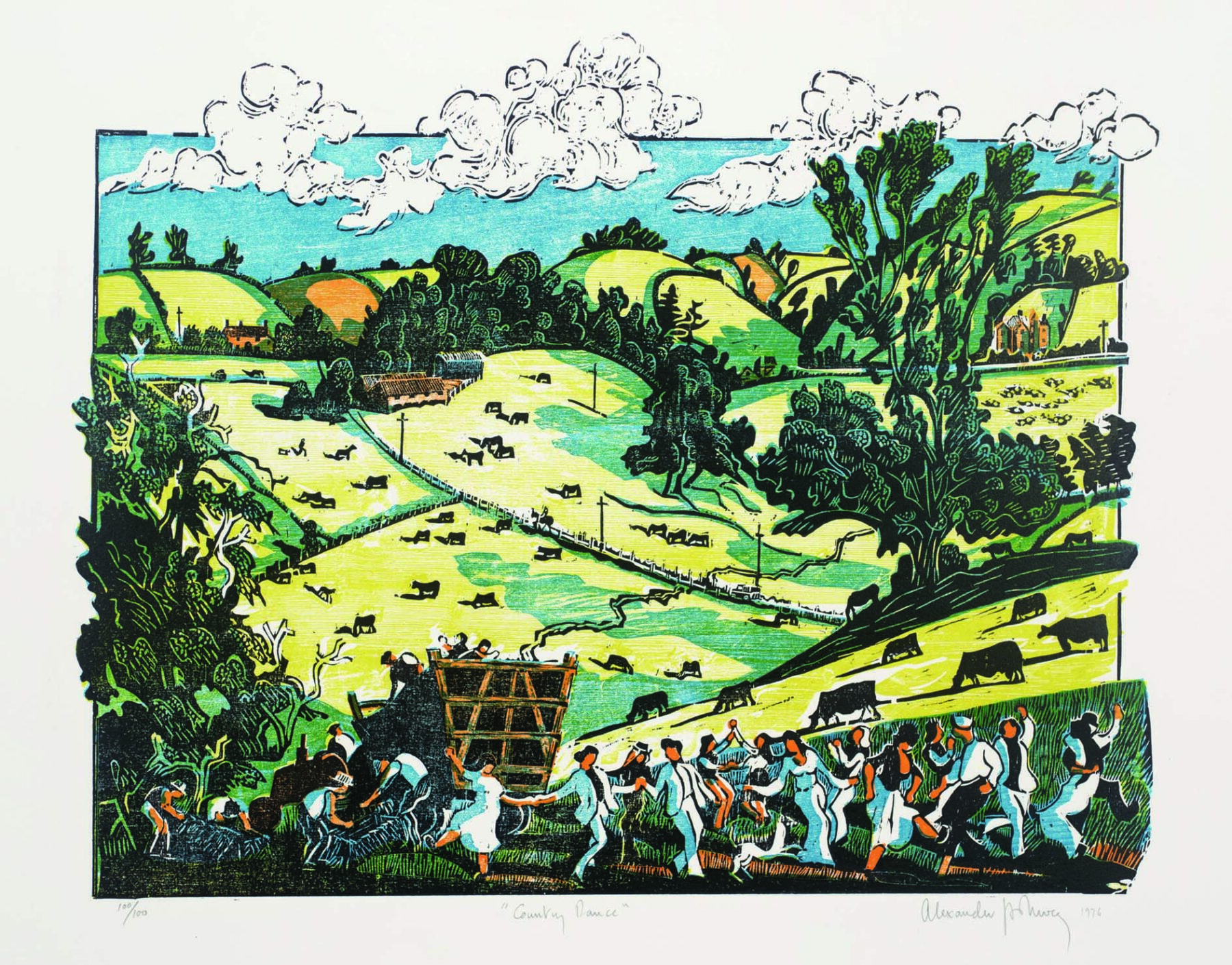
“It was Nettlecombe that inspired Hollweg’s best-known work, his woodcut ‘Country Dance’. It was commissioned to celebrate the bicentenary of the birth of John Constable in 1976 and is now part of the Tate Collection.
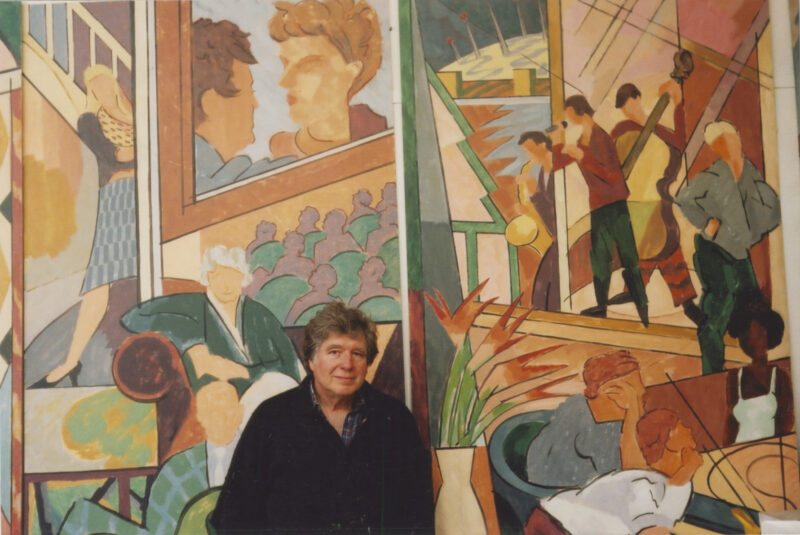
“In the following decades he worked on many major commissions, including the impressive ‘London Life’ mural for the Charlotte Street Hotel in Soho. He never lost his sense of fun, curiosity and positivity, all of which visitors will discover in the exhibition,” Exhibitions and Programme Manager Sarah Cox.
Witty, Intelligent and Serious
Hollweg exhibited internationally during his career, including through long relationships with galleries in New York and Italy, and achieved both commercial and critical success. The New York Times described his works as “secreting a poetic charge, like a three-dimensional haiku”, and as “witty, intelligent and serious investigations of a middle ground that lies somewhere between painting and sculpture.” He was also a gifted teacher of art. Stewart Geddes, a former president of the Royal West of England Academy, who was a student of Hollweg in the 1980s, reflected fondly on his experiences learning from him, and said of his unique artistic output: “Often working between painting and relief forms, his work was mindful of Modernism, whilst coming to terms with the pastoral landscape tradition, particularly in British painting.”
Get In Touch
To share your memories of Alexander Hollweg, or to provide information about artworks in private collections, please contact Sarah Cox, the museum’s Exhibitions and Programme Manager, at sarah.cox@swheritage.org.uk.