
The Solar System
Our solar system is part of the Milky Way Galaxy. It contains eight planets, plus dwarf planets, moons and, of course, the sun. They are (from the closest to furthest away) Mercury, Venus, Earth, Mars, Jupiter, Saturn, Uranus and Neptune.

Welcome to the Solar System from Solar System written by Anne Jankéliowitch, illustrated by Annabelle Buxton, published by Barefoot Books.
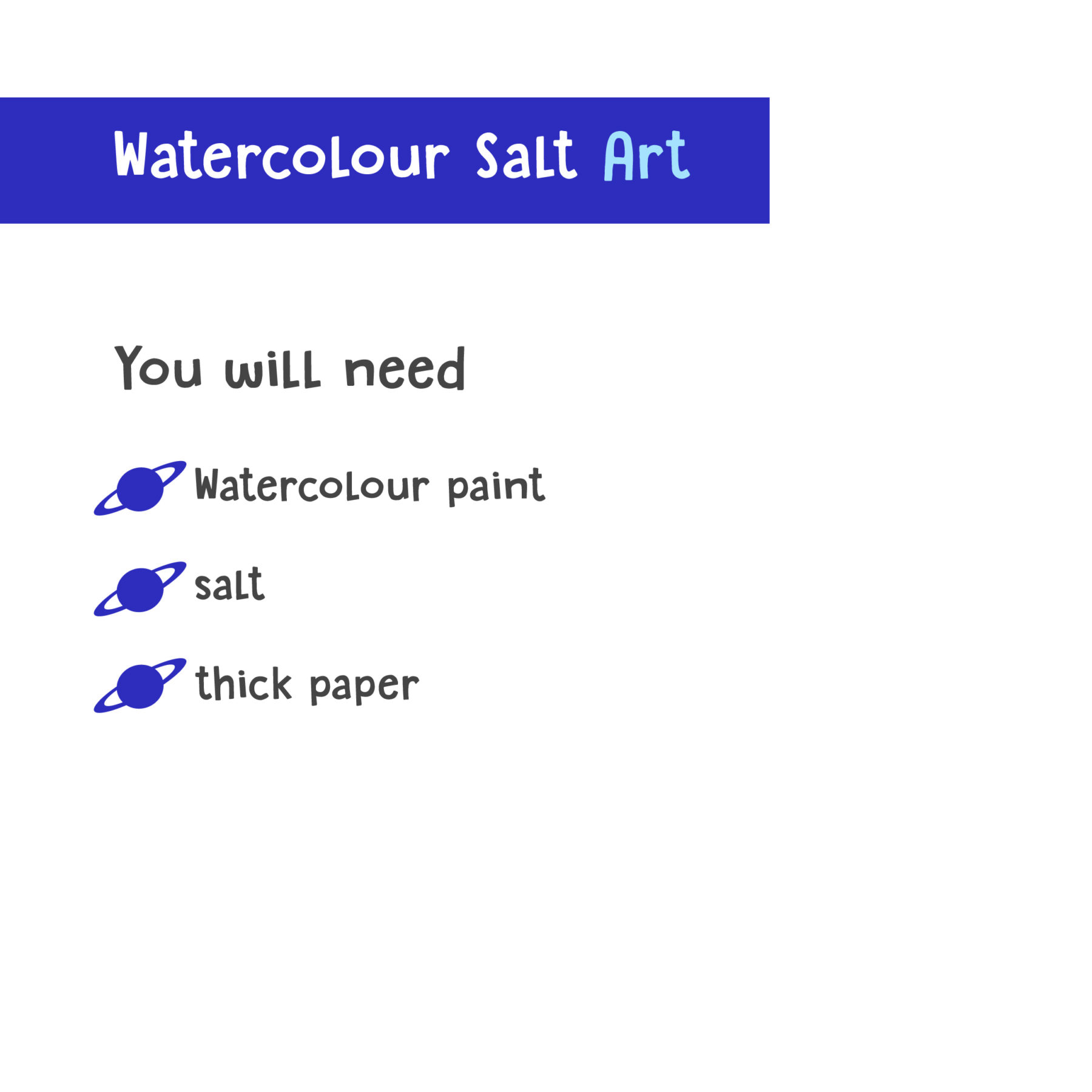
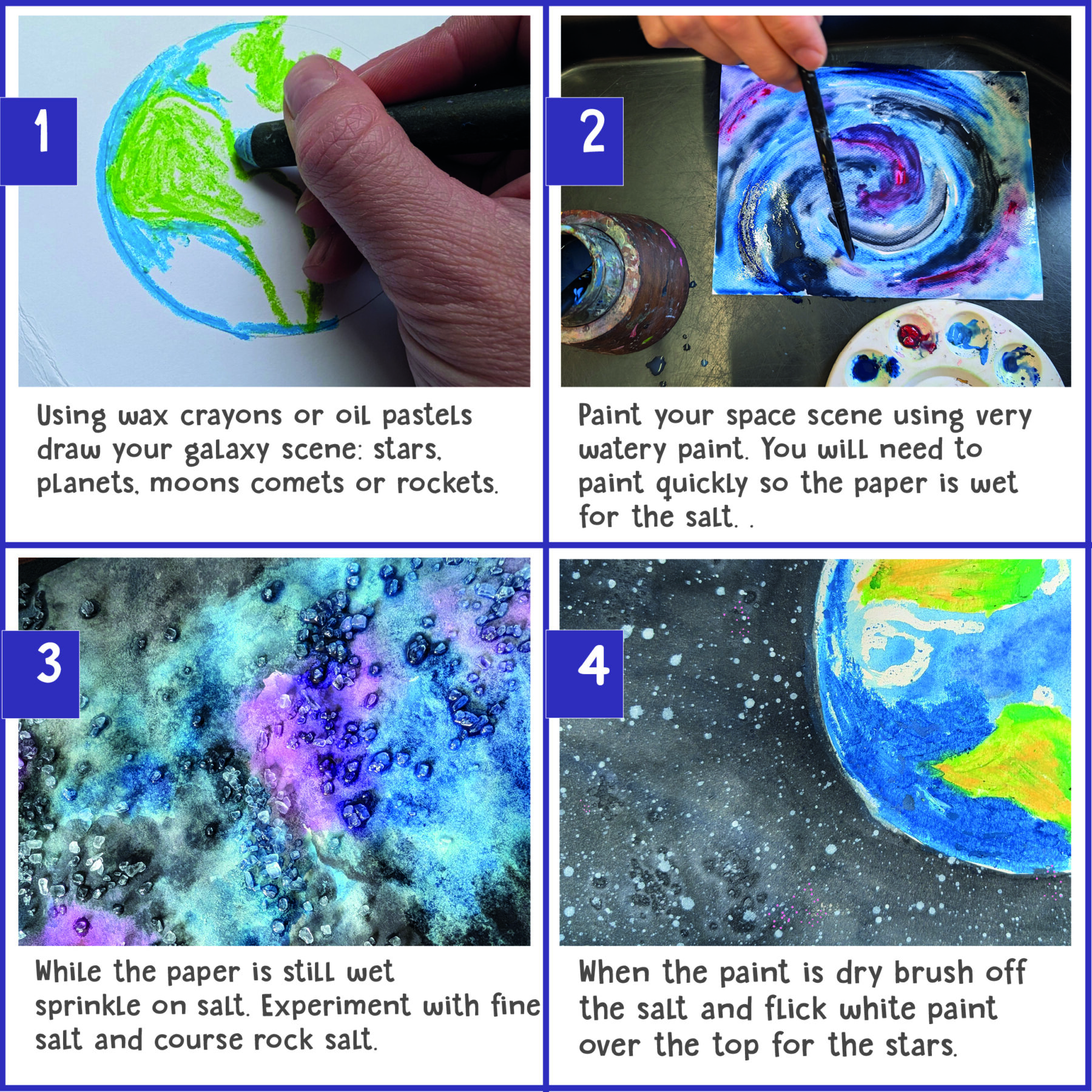
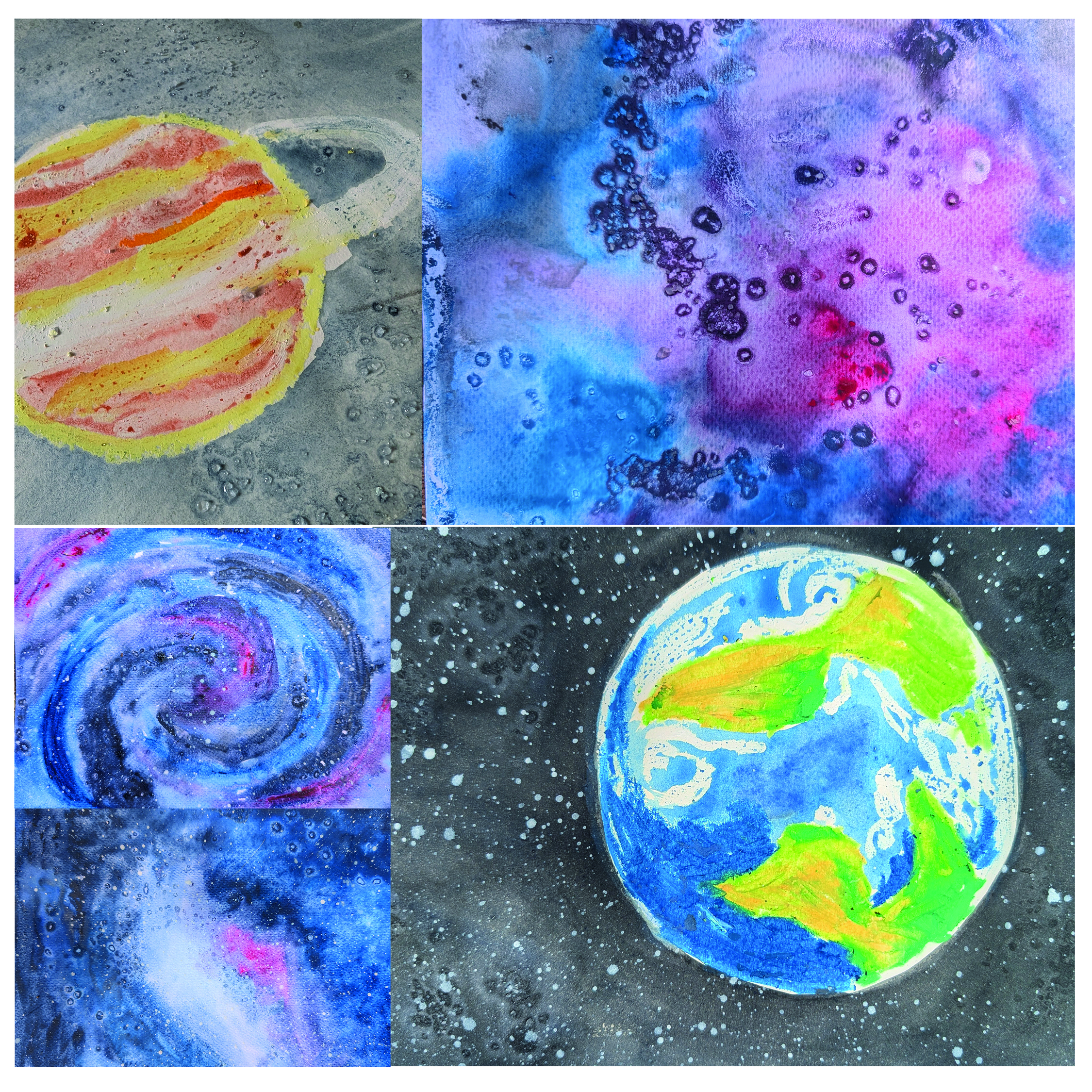
Activity: Design a galaxy artwork using two science techniques
-
Here’s the science:

The wax crayon drawing resists the paint because oil and water don’t mix. Wax is oil-based and it creates a barrier on the paper which repels water-based paints.
The salt soaks up the watercolour paint leaving behind a grainy texture when dry. Salt attracts and absorbs water (it’s hygroscopic), and leaves behind interesting textures on the page. In this experiment the lighter spots that the salt crystals leave behind look like stars in a galaxy.
The Moon
The Moon formed when Earth was 50 million years old and is our planet’s only natural satellites. It shines but it is not a star. It’s rocky but it’s not a planet either.
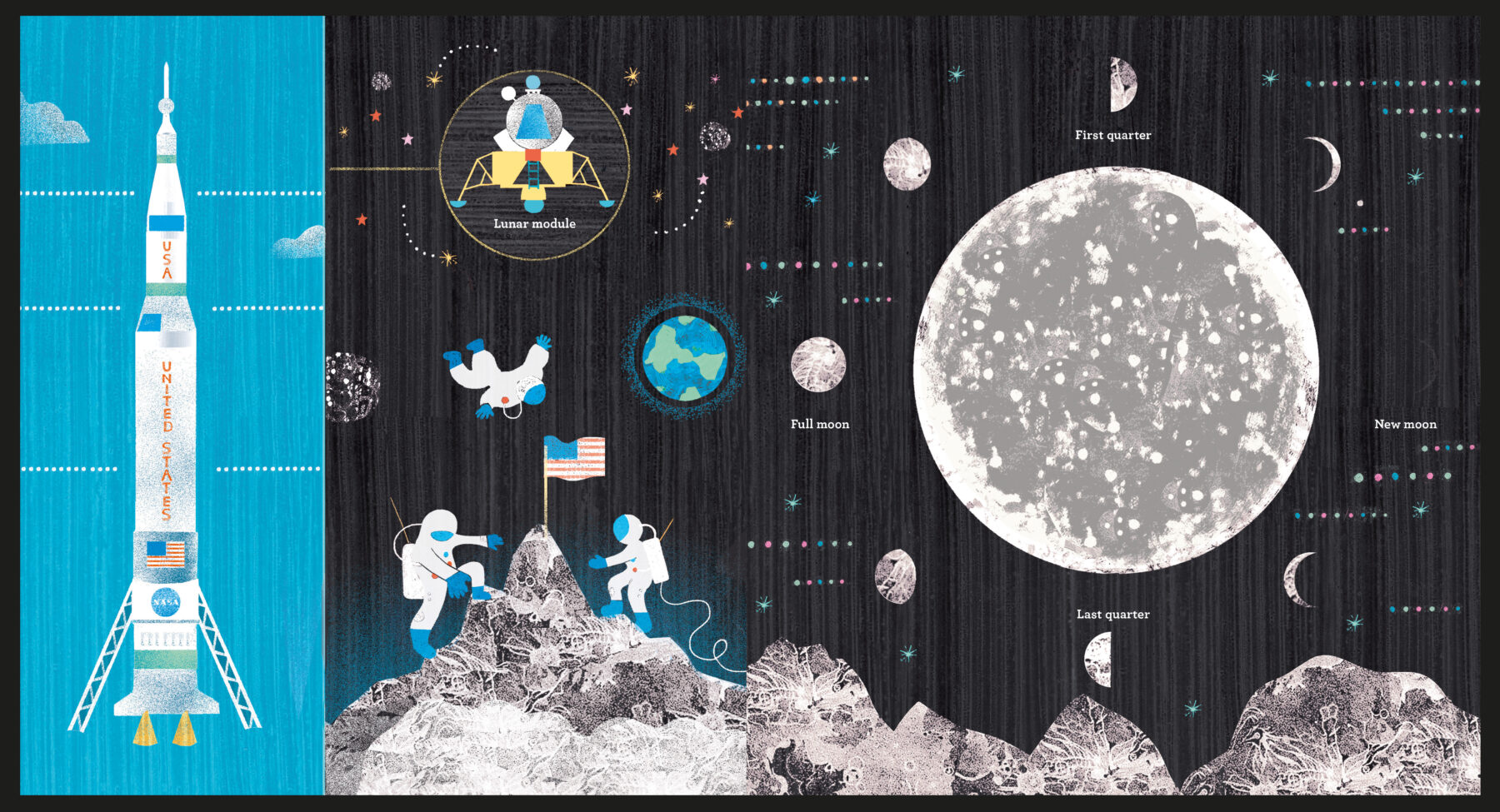
Our Satellite from Solar System written by Anne Jankéliowitch, illustrated by Annabelle Buxton, published by Barefoot Books.
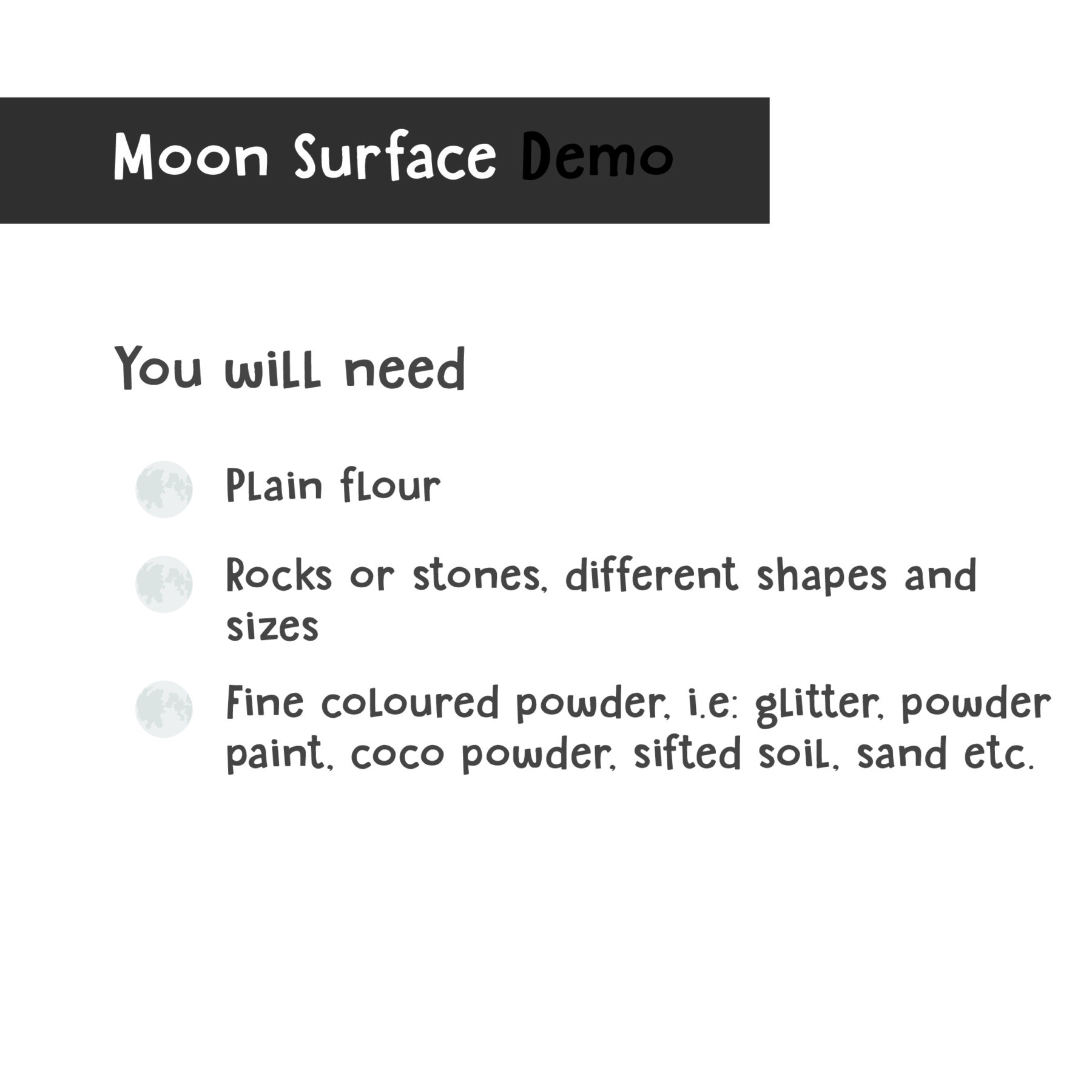
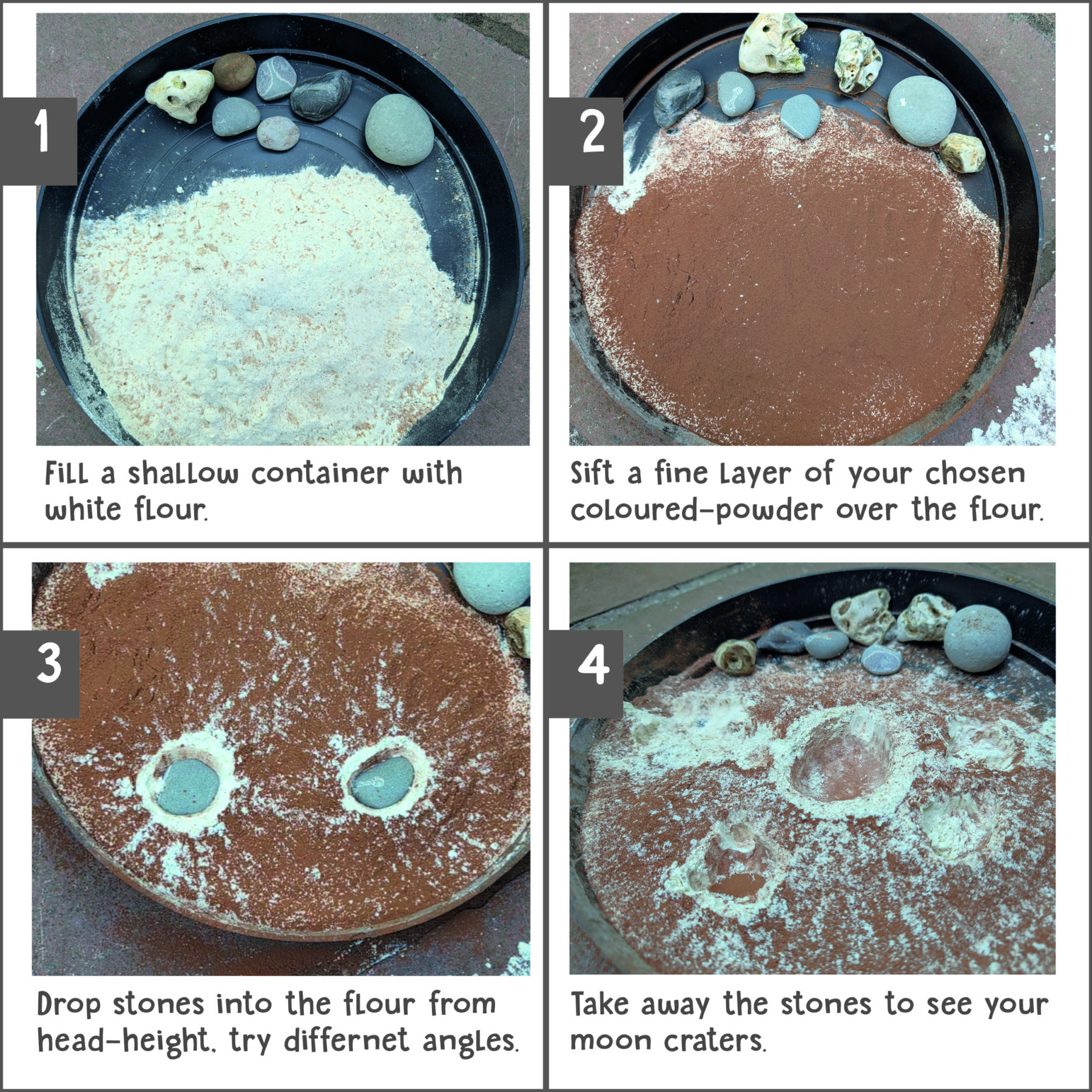
Activity: Recreate your own Moon Surface
-
Here’s the science:
When we look at the Moon from Earth we can see darker patches which are plains of volcanic rock (called maria), and with a telescope we can see highlands, and craters made by a steady stream of comets, asteroids and meteoroids. These constant impacts have broken down the Moon’s surface to rocks and dust. Today, the Moon’s surface consists of a layer of loose, charcoal-grey, powdery dust, and rocky fragments called the lunar regolith.
Safety Notice: Adult supervision is required for all activities.