
Coming up: 29th October 2026
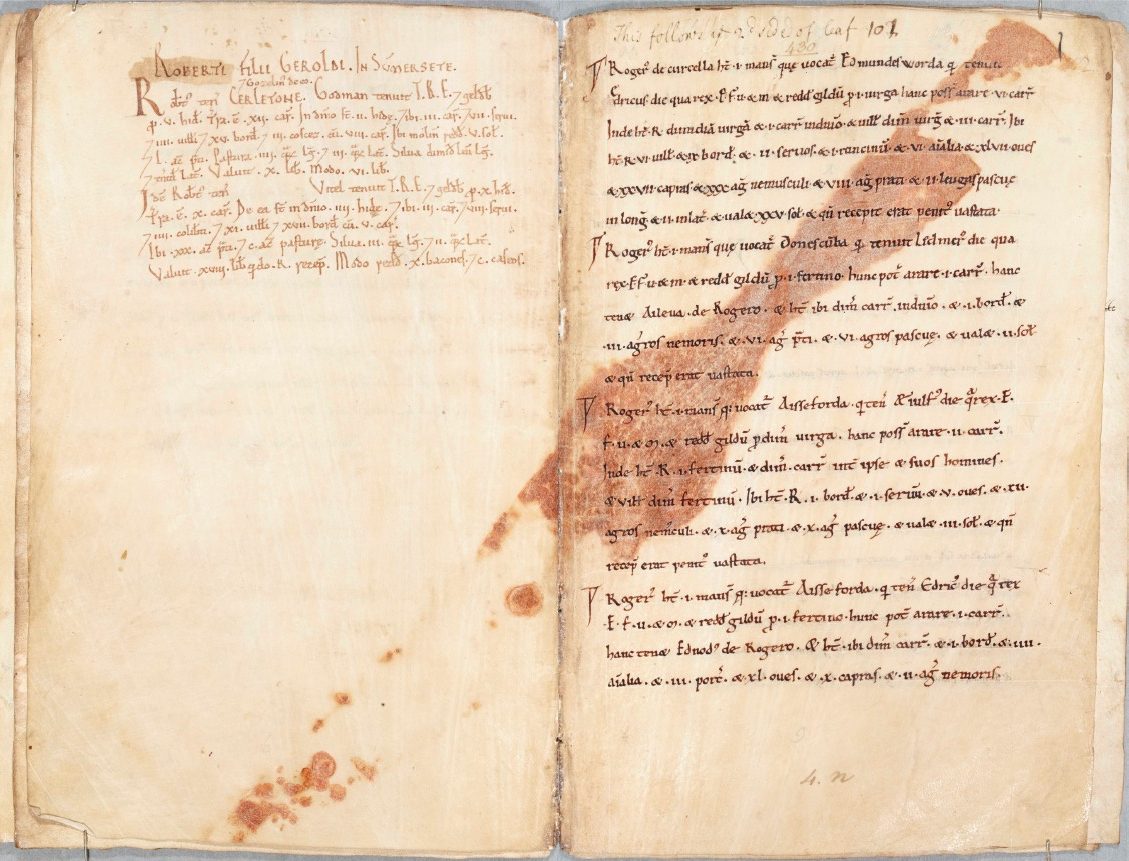
Join author Chris Lewis in uncovering the secrets of Exon Domesday, the oldest but least well-known surviving manuscript from the Domesday survey of 1086.
Domesday Book is rightly famous as England’s oldest public record and an enormous depositary of information about life in conquered England at the end of William the Conqueror’s reign. The oldest but least well known of the three original manuscripts surviving from the Domesday survey of 1086 is Exon Domesday, which covers the five south-western counties. It survives in Exeter cathedral library, having reached there from Wells cathedral soon after 1200. Exon was long recognized as connected with Domesday Book, but its importance has not been fully appreciated until very recently. The publication of Making Domesday: Intelligent Power in Conquered England (Oxford University Press, 2025) was the culmination of a large-scale collaborative research project initiated in 2014.
This talk will reveal some of the secrets of Exon Domesday. Join us to discover why, where, and how it was written; how a collection of copies intended to be thrown away managed to survive; and how important Exon is for understanding the making of Domesday Book and the ambitions and capacities of William the Conqueror’s government. We will also hear about Exon’s gaps and silences, inviting speculation and further research.

Photo courtesy of Exeter Cathedral Library and Archives.
Dates and locations
Thursday, 29th October 2026
@7:30–9:00