
What if you could hold a piece of history in your hand – or even wear it on your finger – without ever touching the original?
The South West Heritage Trust recently worked with Somerset Council’s Library Service to create a detailed 3D scan of the Ilminster Roman Ring. The resulting digital model opens exciting possibilities for the future, including producing an accurate 3D-printed replica that will go on display alongside the original at the Ilminster Ring Discovery Day held at Ilminster Arts Centre on Thursday 20 August.
About the Ilminster Ring
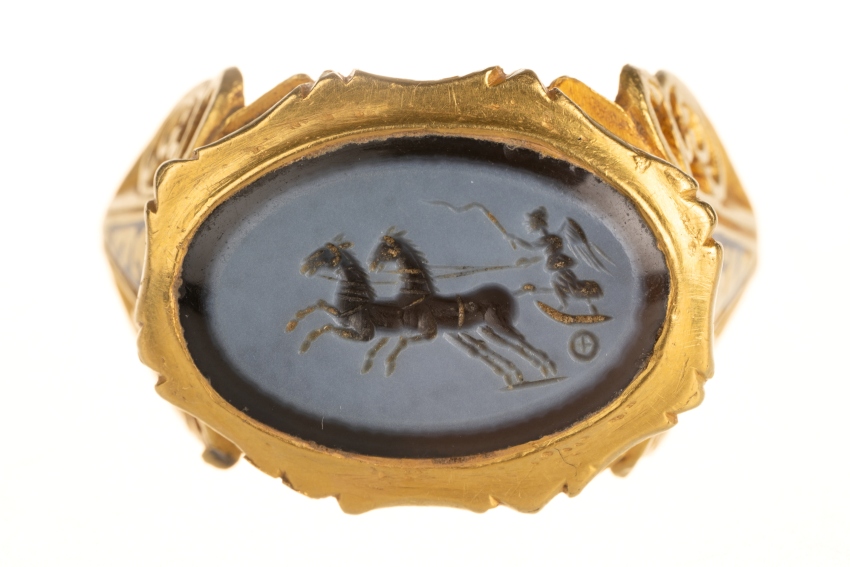
The South West Heritage Trust recently acquired a remarkable Roman gold finger ring and coin hoard. The ring, which was found near Ilminster in South Somerset, will further enhance the Roman collections on display at the Museum of Somerset.
The ring was discovered in 2018 by metal detectorist Kevin Minto. Dating to around AD 297, it was buried alongside a small hoard of Roman coins and is notable for its unusual size and decoration, depicting the goddess Victory driving a two-horse chariot. The ring’s acquisition into the Trust’s collections presented an exciting opportunity to partner with Somerset Council’s Library Service to explore how 3D technology could offer people a new way to experience Somerset’s heritage.
3D Scanning the Ring
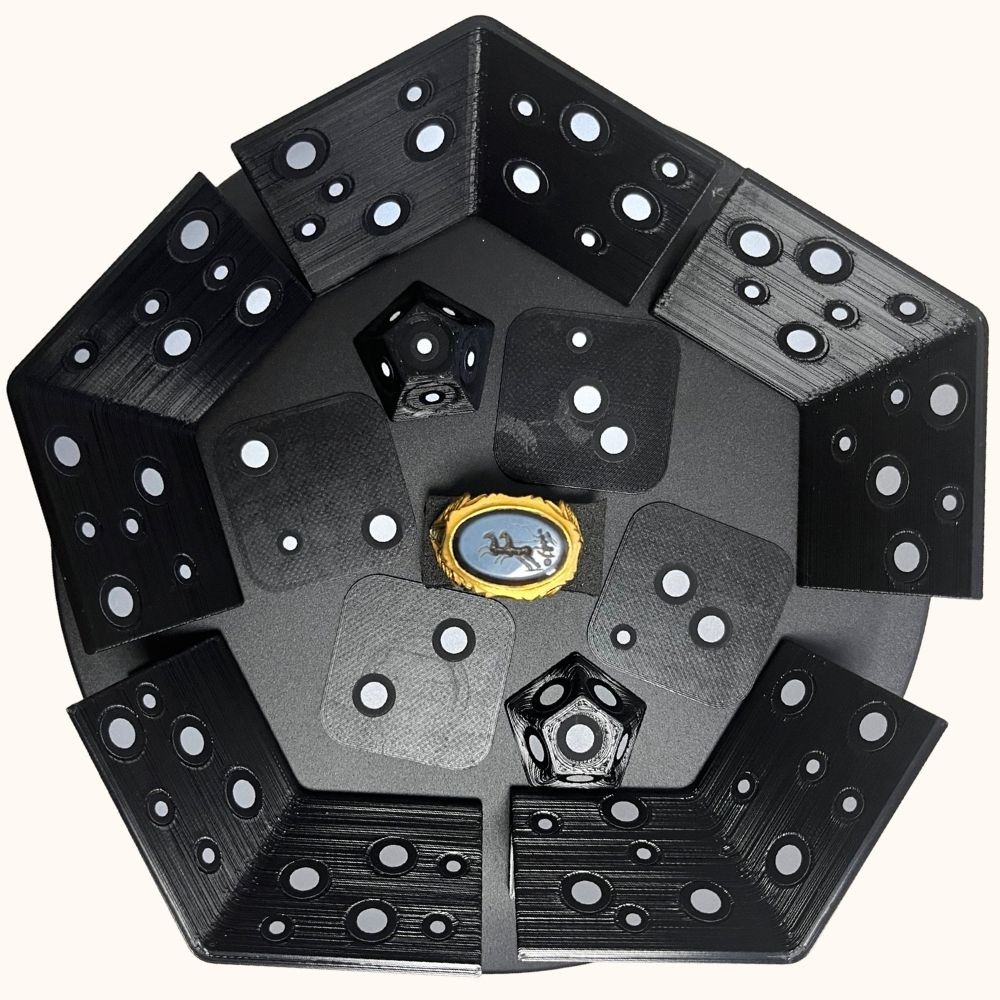
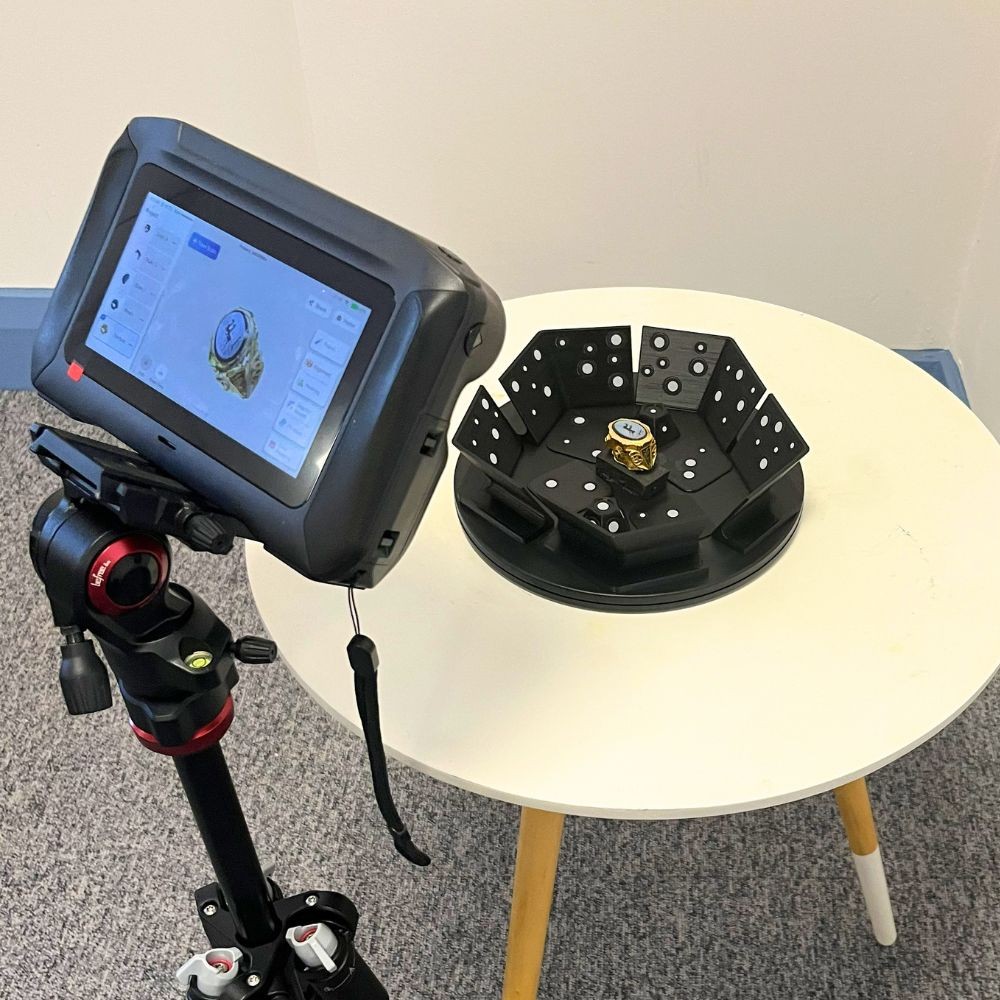
Scanning such an important object required the expertise of Olly Hellis from Somerset Libraries, with Senior Curator Amal Khreisheh on hand to carefully position and move the ring. Resting it on a piece of foam on the turntable allowed the ring to be safely manoeuvred multiple times during the scanning process.
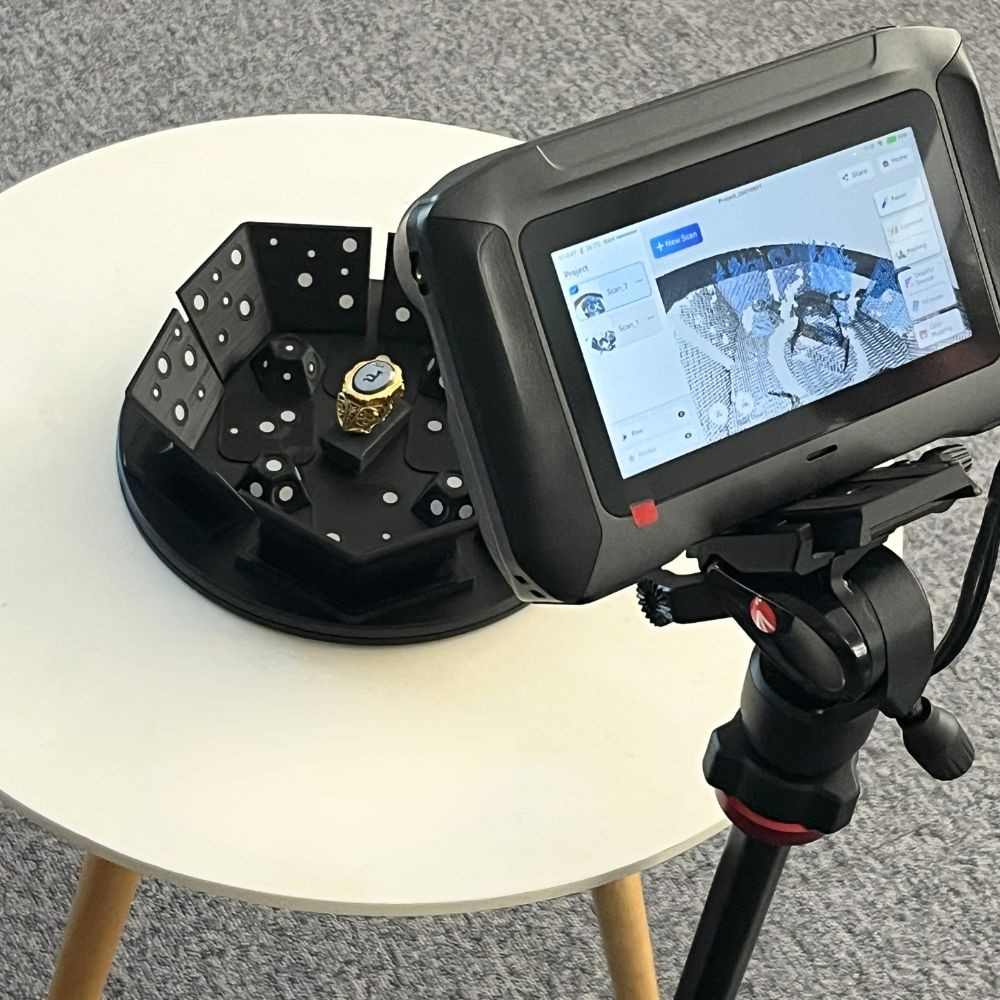
Using equipment from Somerset Libraries – including a Creality Sermoon P1 Scanner placed on a tripod – Olly began the slow process of scanning the ring.
White reference markers placed around the object helped the scanner to keep track of its position as the turntable was slowly moved. As the ring turned, the scanner used a laser to measure the distance to its surface, building up thousands of individual measurements that would be displayed as a cloud of coloured dots on the screen. Green indicated that the scanner was successfully tracking the object, whilst red showed that tracking had been lost. On the few occasions this occurred, Olly had to carefully retrace part of the scan before continuing.
Building the Digital Model
This initial process required seven separate scans due to the hollow ring shape. These could then be combined on screen to create a highly accurate three-dimensional shape. Interestingly, the ring’s slight asymmetry proved useful in the process as its distinctive features gave the software identifiable points that could be used to align the separate scans, allowing them to be easily combined into one model.
Once the scans had been joined together, the digital model needed to be cleaned of any unwanted background information, or ‘noise’, whilst edges were trimmed and any small gaps filled. Olly painstakingly cleaned the model by hand on screen, gradually transforming the collection of individual scans into a complete digital 3D rendering of the ring.
Adding Colour
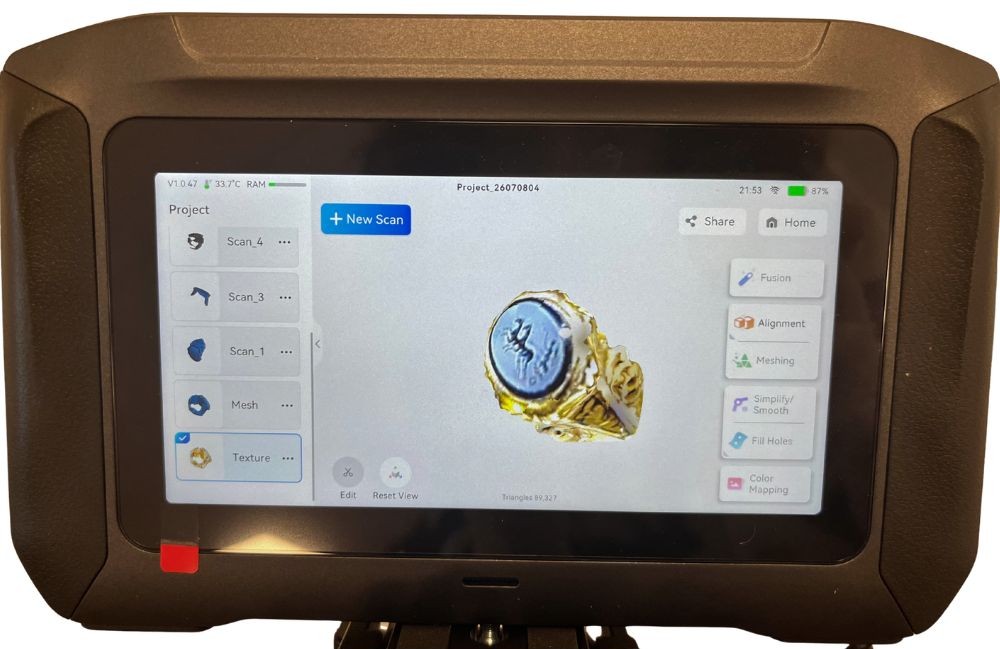
Capturing the shape of the ring was only part of the process, to create a realistic digital replica, its colour and surface appearance also needed to be recorded. Further scans were therefore taken to capture the ring’s intricate details, textures and distinctive gold and blue hues. These scans followed a similar process to the earlier ones, before also being cleaned of any background ‘noise’.
The colour scan could then be ‘wrapped’ around the three-dimensional model, bringing the digital version of the ring to life.
Preserving the Past for the Future
From thousands of individual measurements to the painstaking digital cleaning, every stage of the process contributed to the creation of a detailed digital record of an object that has survived for nearly two thousand years.
This technology opens the possibility of creating a physical replica that would allow visitors to pick up the object and even place it on their finger – offering a sense of what it might have been like to wear a piece of Roman Jewellery.
Acknowledgements
The Ilminster Ring and Hoard were acquired by the South West Heritage Trust on behalf of Somerset Council under the Treasure Act 1996 with generous support from the Arts Council England / V&A Purchase Grant Fund, Art Fund with a contribution from the Wolfson Foundation, and The Headley Trust, alongside vital contributions from the Friends of The Museum of Somerset, Ilminster Town Council, Taunton U3A and Ilminster Education Foundation.