
We’ve been inspired by Romans!
Mosaics
The Roman Villa at Avalon Archaeology is a replica of a Roman dining room complete with a full floor mosaic made using Roman materials and techniques. Read about the process here! A timelapse video of the mosaic construction is also available.
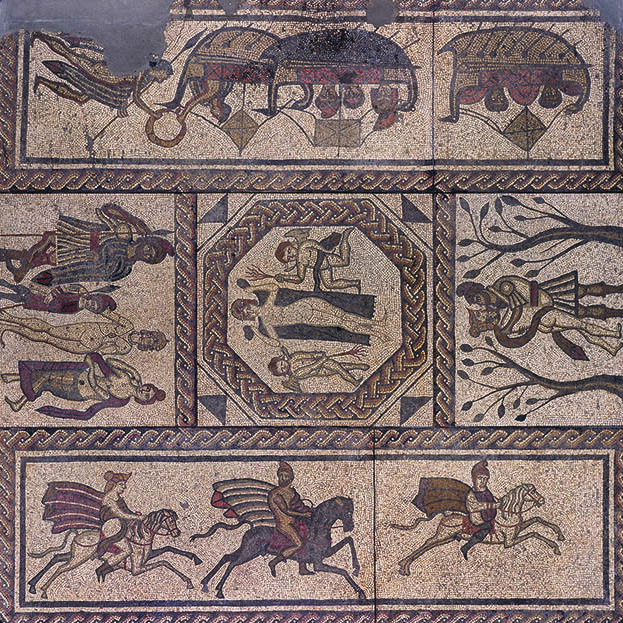
The Low Ham Mosaic in The Museum of Somerset was made in the 4th century AD and is the oldest object in Britain that tells a complete story. It depicts the tragic love story of Dido and Aeneas.

Make a Clay and Bean Mosaic
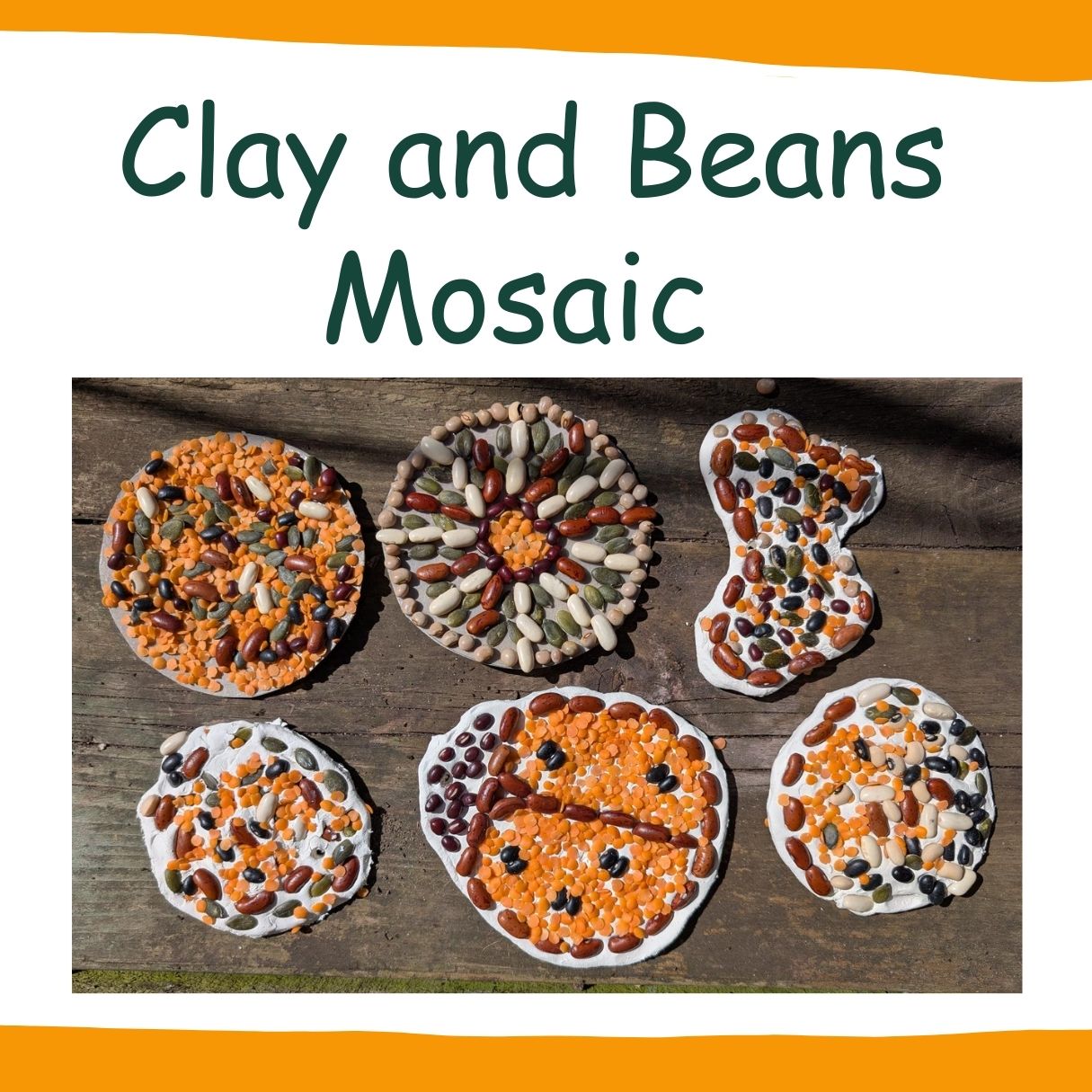
This mosaic activity uses seeds and beans instead of tesserae, or tiles. Roman mosaics would often feature geometric patterns and tell stories about myths, religion, or emperors. But they also showed parts of daily life, including weaponry, food, wildlife or tools. What pattern will you make?
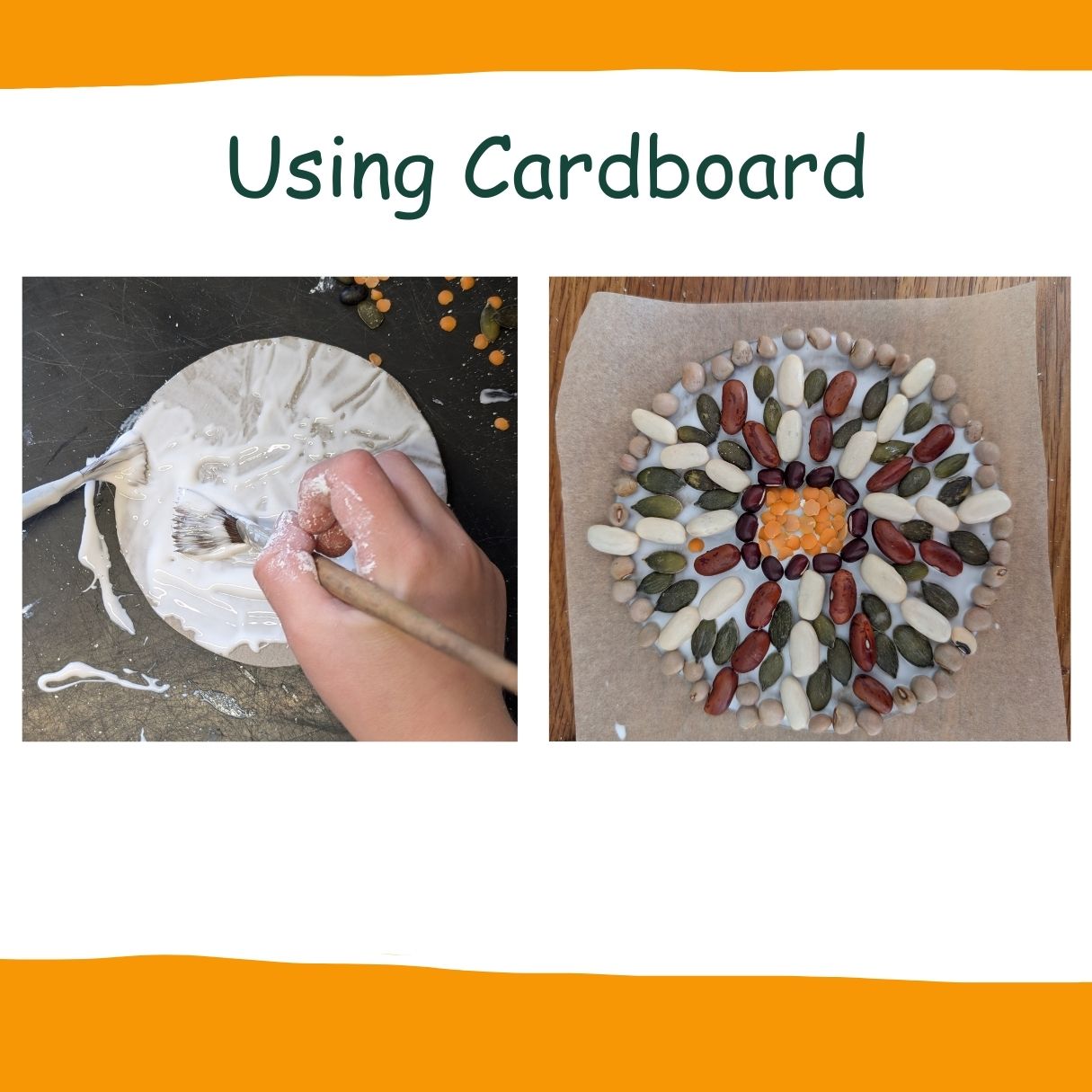
Method: Soften the clay with your hands and roll out to roughly 1cm thick. Shape it using cutters or free hand. Gently squash the seeds or beans into the clay. If using cardboard cut out your desired shape. Then paint all over with glue and start sticking down your beans and seeds!
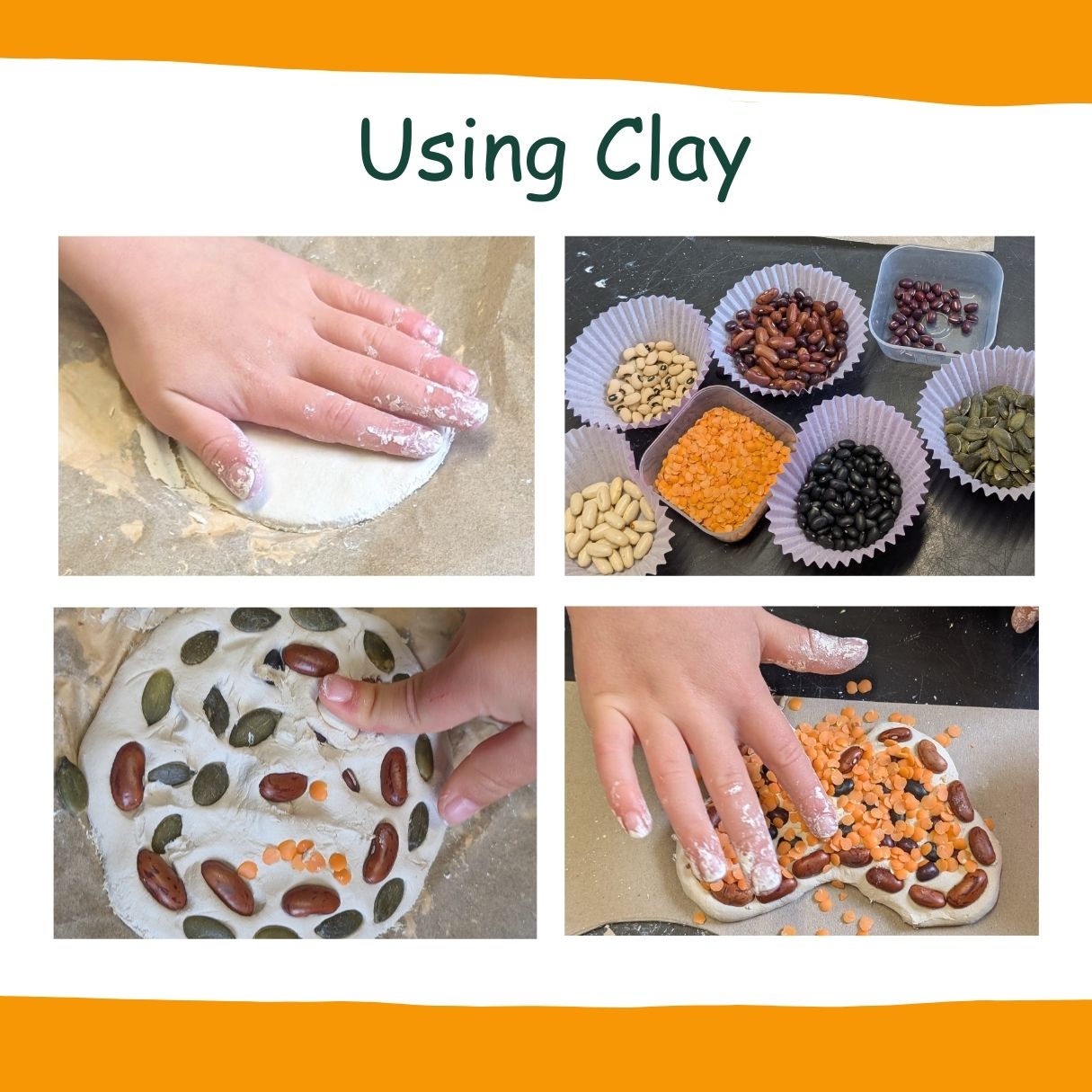
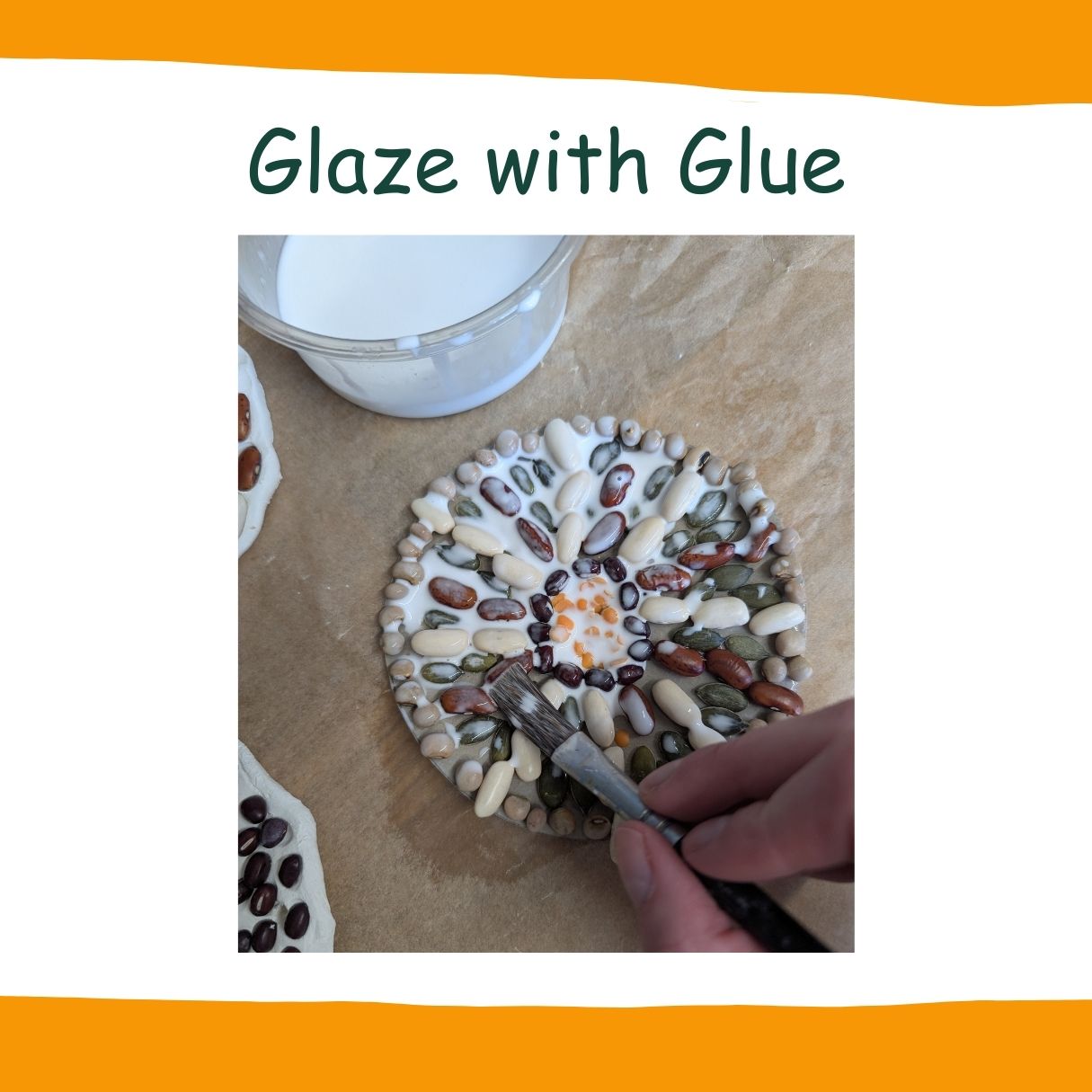
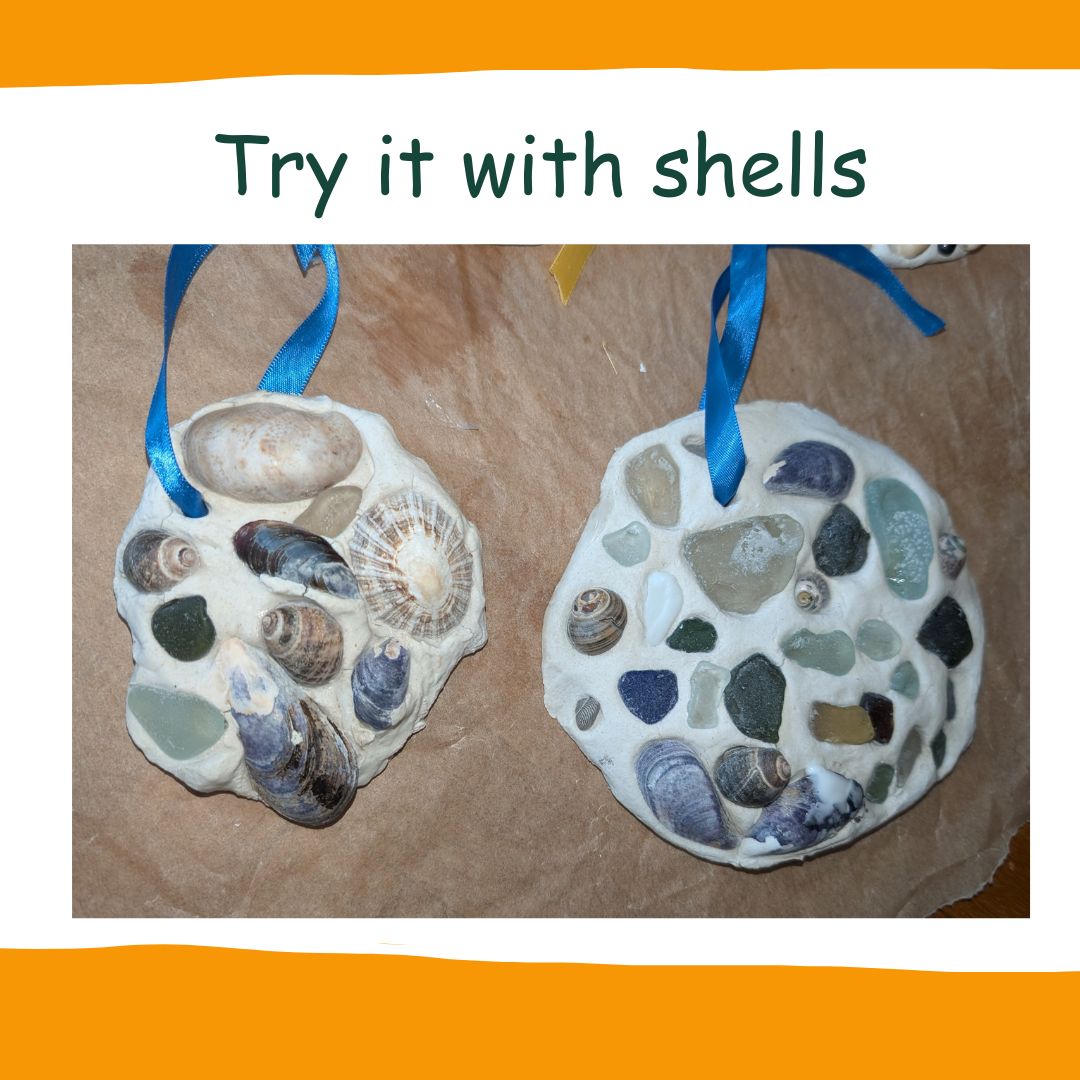
Make a hole at the top to turn your clay creation into a hanging ornament. Leave to dry for 3 – 4 days, then cover with glue to seal it – optional.
Make a Roman Votive Eye Offering
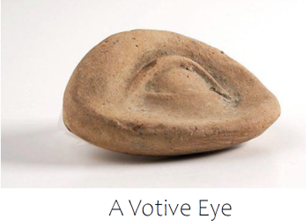
When the Romans asked the ‘Gods’ for favours they would make an offering to their chosen deity with a prayer. Votive offerings were often made in the form of parts of the body, possibly to remind the God to heal them.

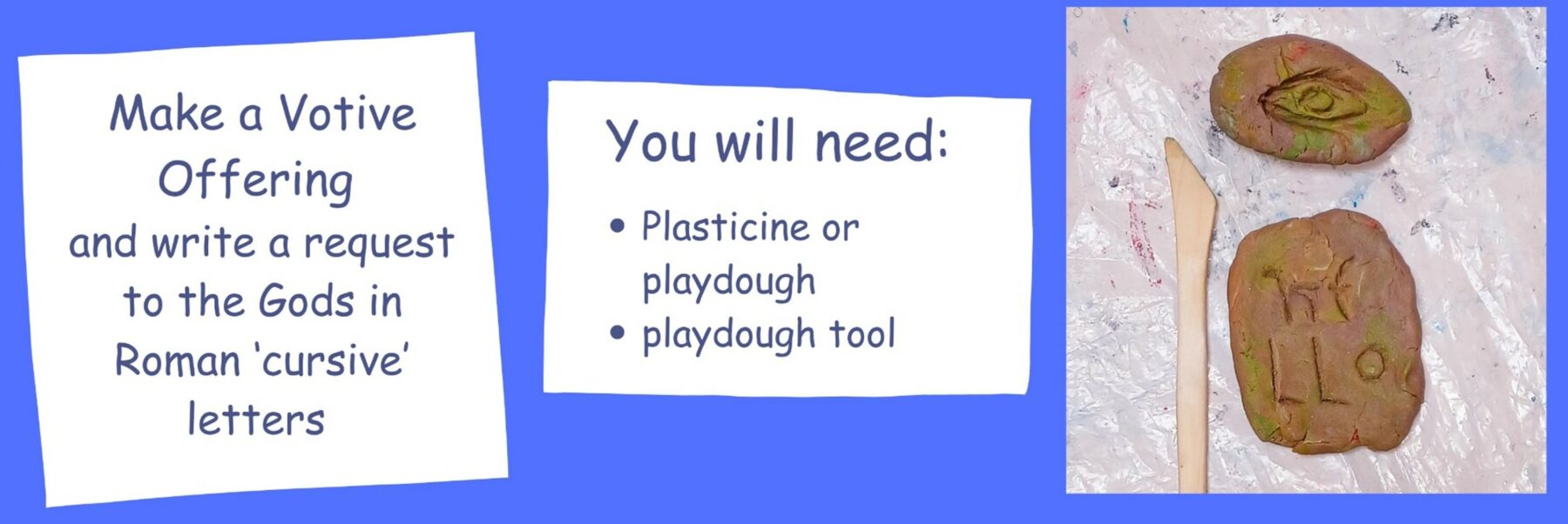
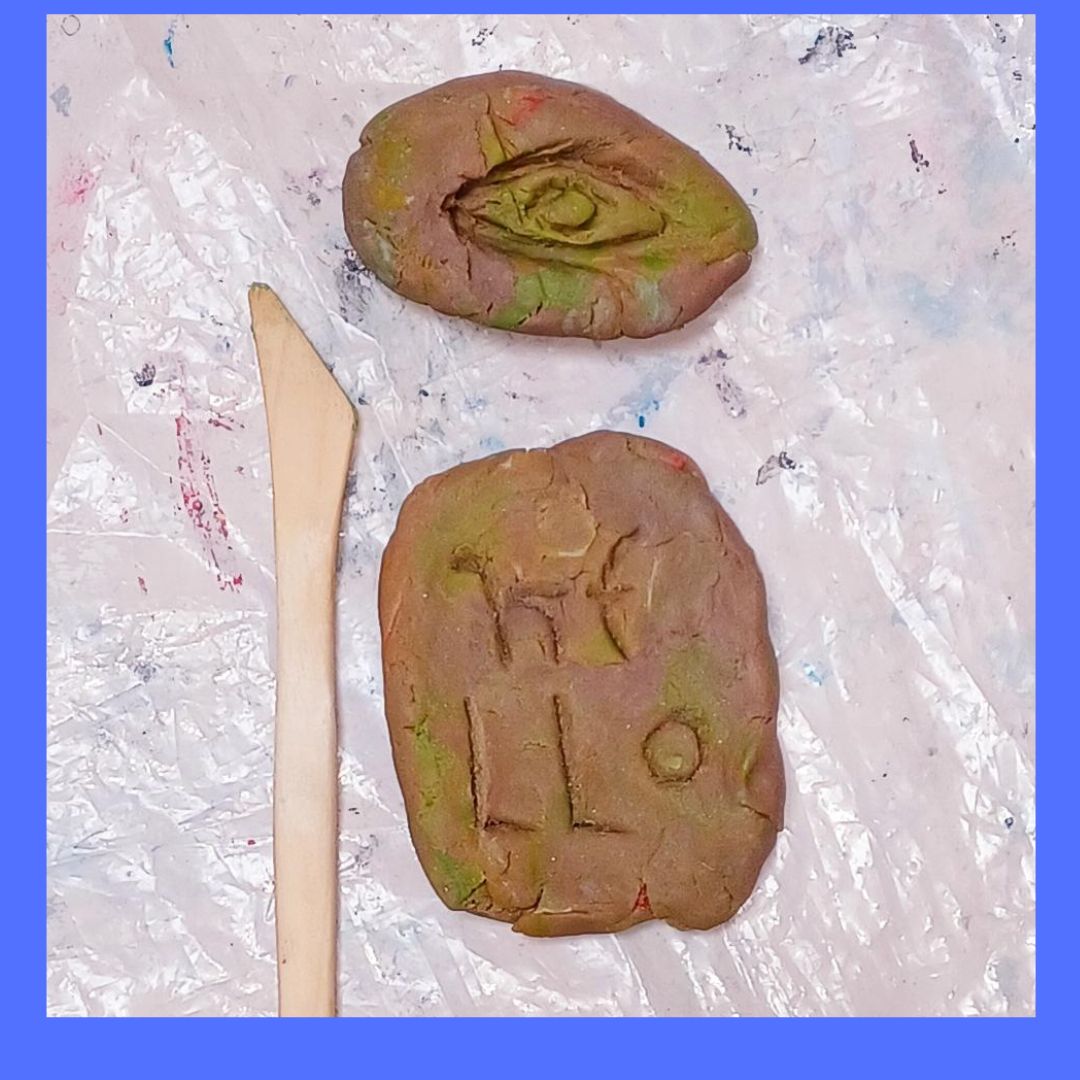
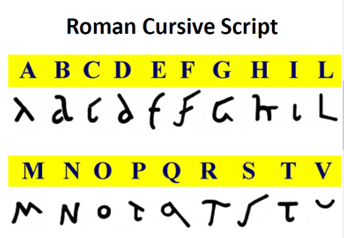
Can you decipher what we’ve written using Roman Cursive script?
Roman-Style Bread
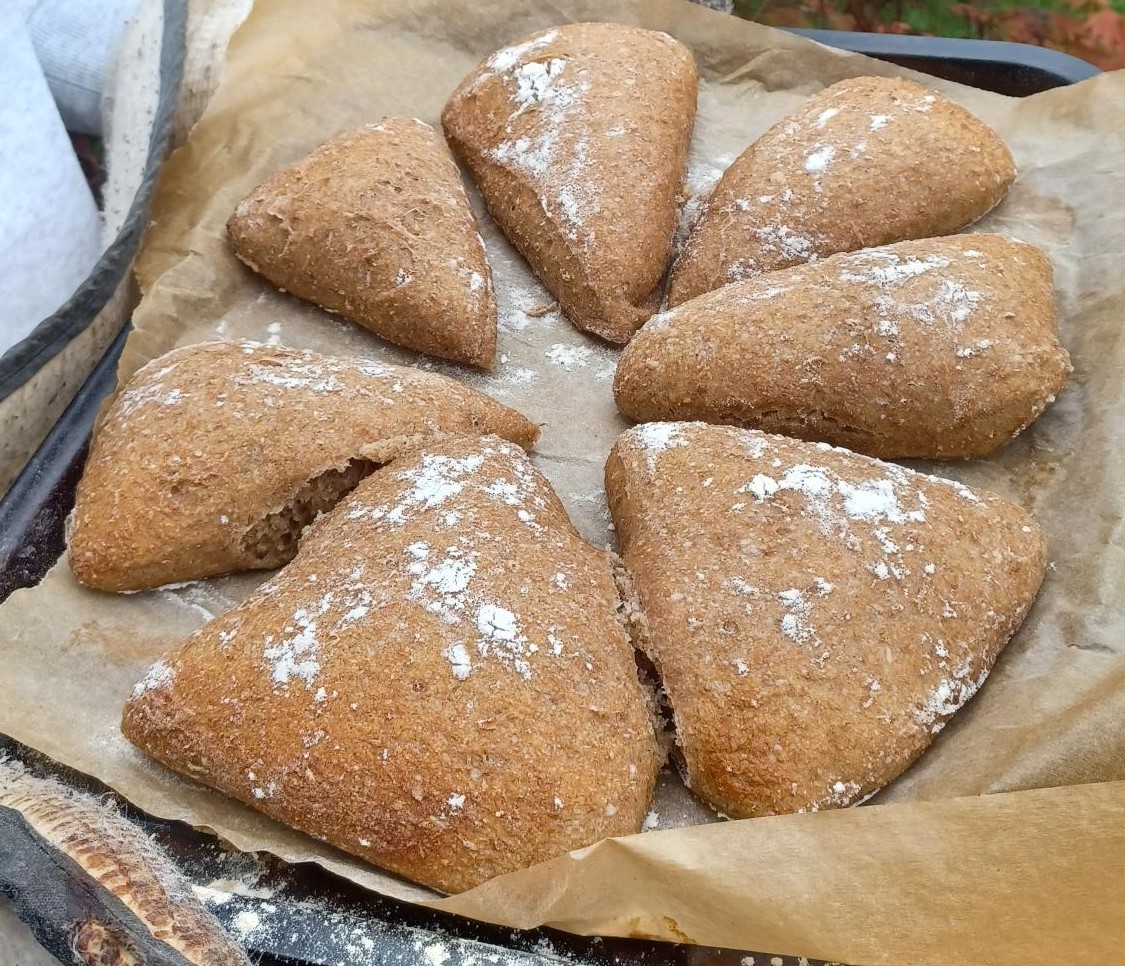
Our Roman-Style Bread is based on the carbonised loaves of bread that have been found in Pompeii and Herculaneum. The Romans called these round sourdough loaves panis quadratus.
For a faster bake we’ve separated our roman-style dough into segments, instead of one large round loaf.
Give it a try!
